
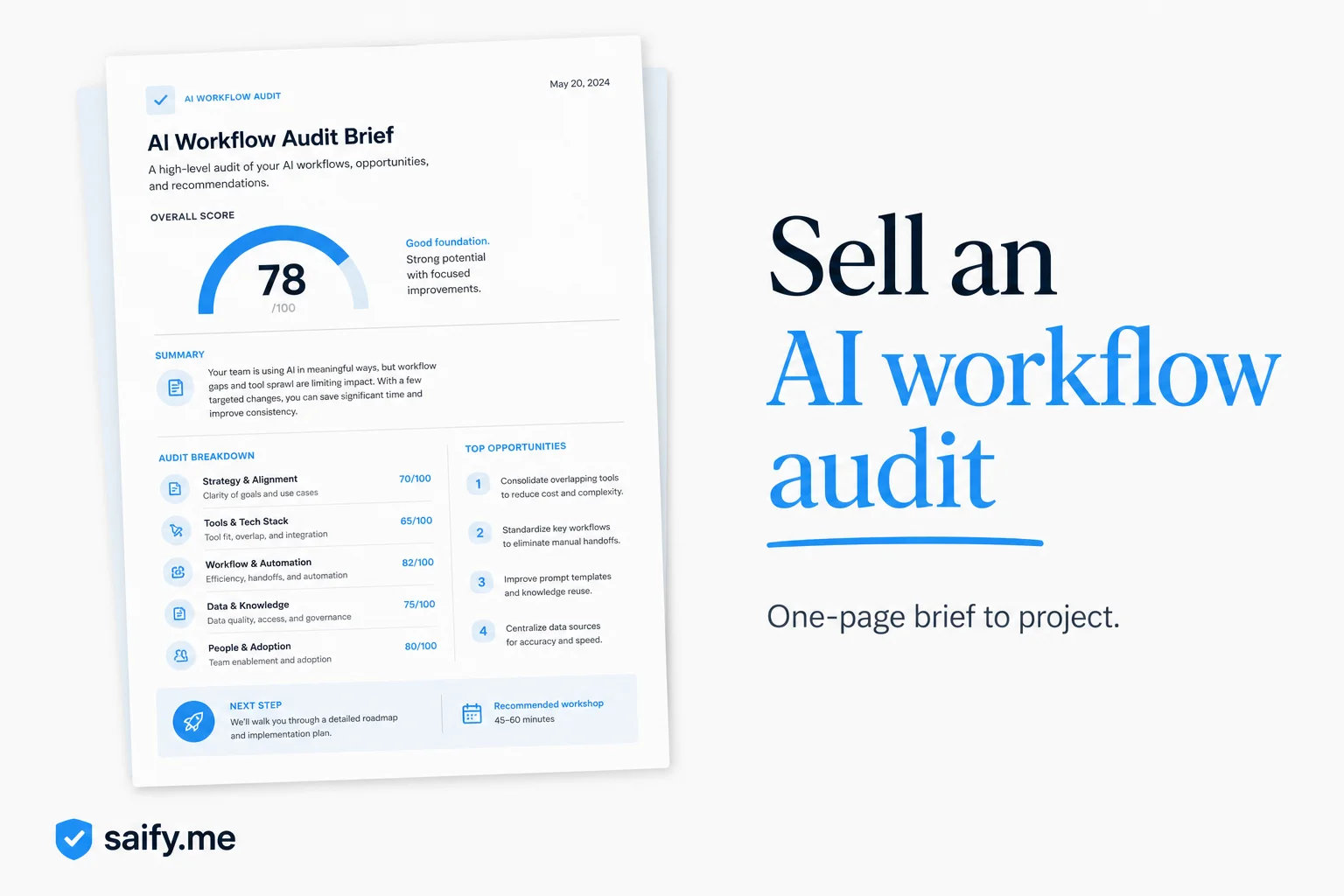
"I do AI" is not a service line. "We remove this specific bottleneck in your ops stack" is.
The Rundown's August 2026 guide on selling a high-value AI workflow audit matches how I actually close implementation work: start absurdly narrow, prove you understand their workflow, hand them a brief they can forward to their CEO.
This post is my version of that playbook for applied AI consultants, automation agencies, and senior engineers going fractional.
Why audits beat generic strategy decks
| Generic AI strategy | Workflow audit |
|---|---|
| 40 slides, no owner | One bottleneck, one owner |
| "Explore LLMs" | "Cut invoice chase from 3 days to 4 hours" |
| Ends in confusion | Ends in a scoped build quote |
Buyers in 2026 have seen enough demos. They want receipts: a score, a ranked fix, and a price band for implementation.
Pillar fit: Applied AI shipping with a soft path to discovery calls.
Step 1: Interview yourself before you pitch strangers
Ask Claude to interview you about:
- Industries you have actually worked in (not "all of them")
- Tools you can debug without Google (CRM, n8n, GHL, Next.js, voice stacks)
- Pain you have already fixed with numbers
Have it propose three consulting angles, each narrow enough for a 1,000-word brief.
Example angles I would ship:
- After-hours lead chase for home services on GHL
- Document intake for accounting firms (OCR + human review)
- Internal SOP generation for 20-person agencies
Pick one per quarter. Say no to the rest until you have case studies.
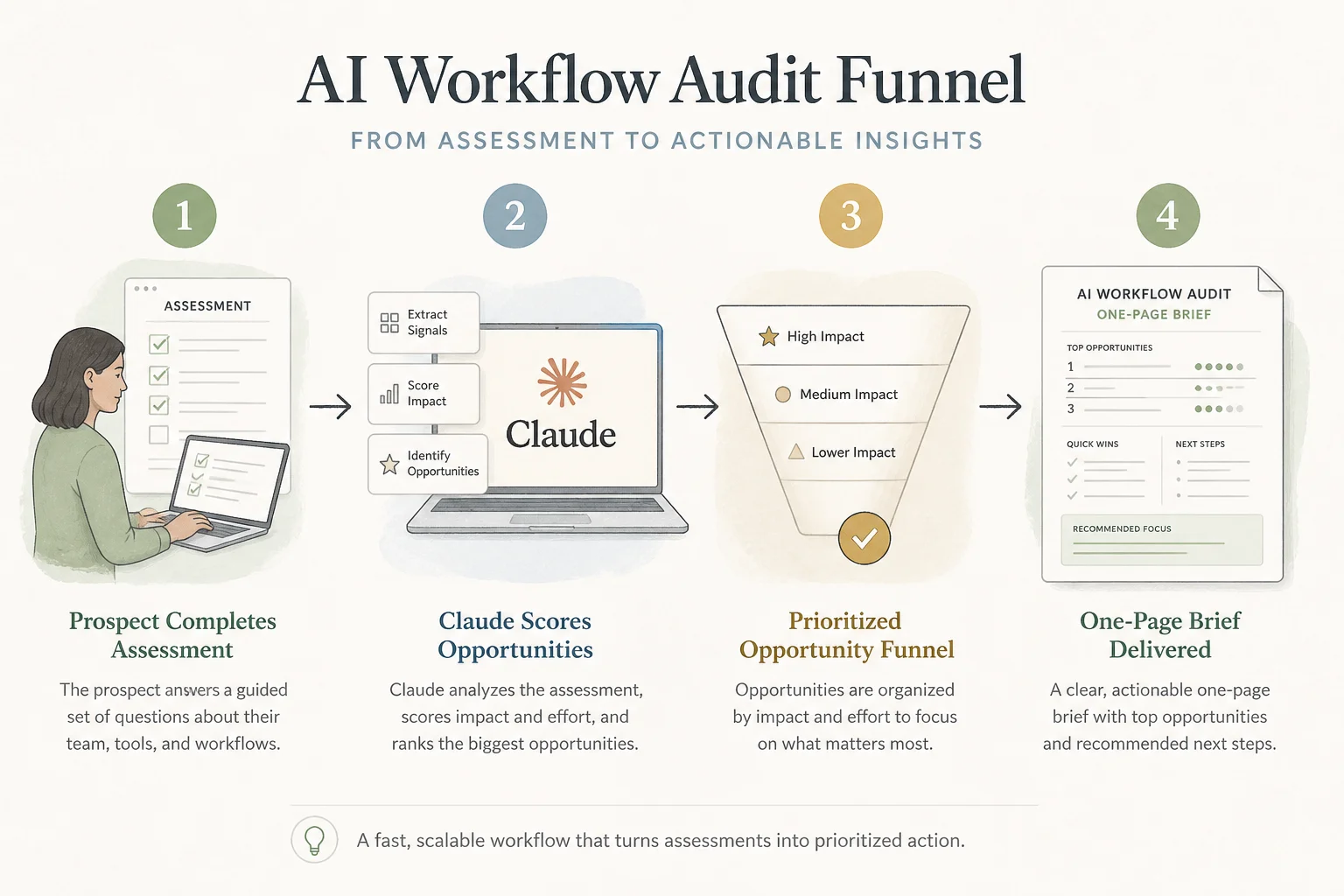
Step 2: Build a scored assessment prospects can complete
The Rundown guide suggests a live Claude Artifact assessment that:
- Uncovers AI opportunities in the prospect's business
- Outputs a score they can screenshot
- Feels finished in under 15 minutes
Keep questions concrete:
| Bad question | Better question |
|---|---|
| "How innovative is your culture?" | "How many hours/week does your team copy data between tools?" |
| "Rate your AI maturity 1-10" | "Which workflow missed SLA most often last month?" |
Publish the assessment link on your site and in outbound. Store responses in Google Drive or your CRM. You are building a pipeline, not a quiz for fun.
Step 3: Turn responses + website into ranked bottlenecks
When a prospect completes the assessment:
- Export their answers
- Feed answers + their website copy into Claude
- Ask for highest-return bottlenecks fixable with AI in 30-60 days
- Demand evidence: quote their form fields, cite their stack mentions
This is where marketing psychology meets ops: anchor on loss ("you are losing X hours") before you pitch gain.
Skip prospects who want a free roadmap with no implementation budget. The audit is a filter.
Step 4: Deliver a one-page brief, not a dissertation
The brief should fit on one page (or five slides max):
- Audit score (simple, explainable)
- Top bottleneck (one paragraph, their words reflected back)
- Practical solutions (2-3 options with trade-offs)
- Sensible next step (paid implementation phase, fixed scope)
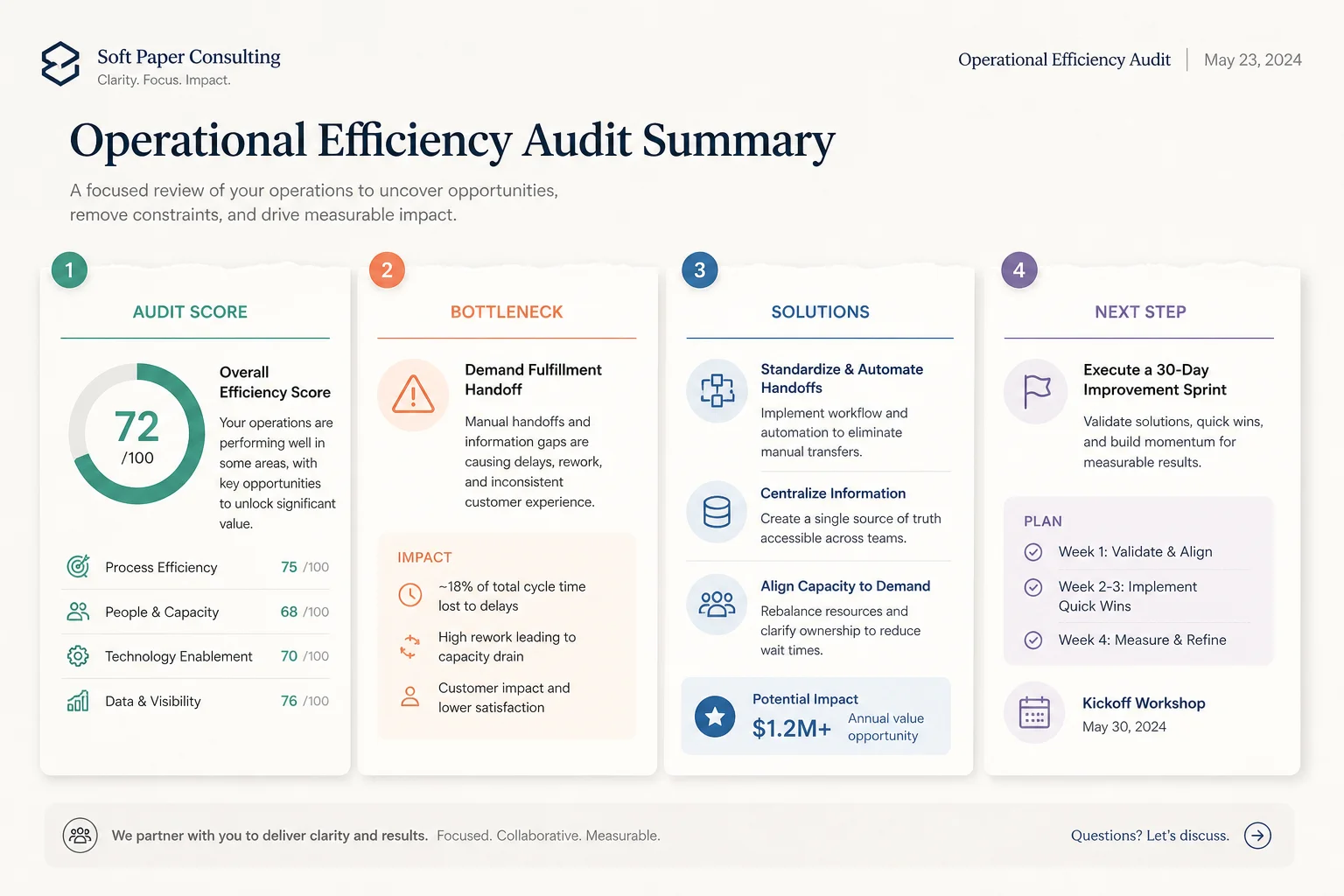
The Rundown's video guide walks through video editors as a vertical example. Same skeleton works for clinics, agencies, or e-commerce ops.
Slide deck prompt skeleton
Create a 5-slide client deck:
Slide 1: Their audit score + one-line interpretation
Slide 2: Bottleneck with quoted pain from assessment
Slide 3: Option A (fast/cheap), Option B (robust), Option C (do nothing cost)
Slide 4: Recommended path with timeline and dependencies
Slide 5: Implementation package + calendar link
Pricing and packaging
| Tier | Deliverable | Price band (example) |
|---|---|---|
| Audit only | Brief + 30-min readout | $1.5K-$3K |
| Audit + prototype | Brief + one automated workflow | $5K-$12K |
| Retainer | Ongoing ops automation | Monthly |
Always separate audit fee from build fee. Waiving the audit for "maybe later" builds trains clients to treat your scoping as free.
Mistakes I see new consultants make
- Too broad: "AI for healthcare" instead of "prior auth fax chase"
- Tool-first: Leading with ChatGPT instead of the bottleneck
- No artifact: Prospects forget you; the scored assessment is marketing
- Skipping implementation offer: Audits that end in "good luck" do not pay rent
Tie-in to content and inbound
Posts like connect AI to CRM and AI automation examples for SMEs are top-of-funnel. The audit is consideration-stage: proof you can diagnose before you prescribe.
Rowan's Corner note from the same digest is relevant: AI-first startups want receipts (screen share, Loom, sample brief). This workflow is how you generate those receipts before the first call.
If you want help packaging your first audit offer or automating the assessment → brief pipeline, book a free discovery call. I build these flows for clients who sell implementation, not slide decks.