
Robot sous-chefs make great LinkedIn posts. They do not fill Tuesday night when your Instagram DM sat unanswered for 40 minutes.
The AI that pays for a restaurant or cafe is boring on purpose: it answers when the floor is slammed or closed, books the table, nudges the guest so they show up, drafts the review reply you keep postponing, and pings you before the Friday rush finds you out of a bestseller. Global pattern. Same leak in Austin, Manchester, Dubai, or Karachi. Different channel mix, same math.
I build these as ops layers on top of tools you already run, not as a second POS. Here is the playbook I use with independent operators.
The cover leak (write the number down)
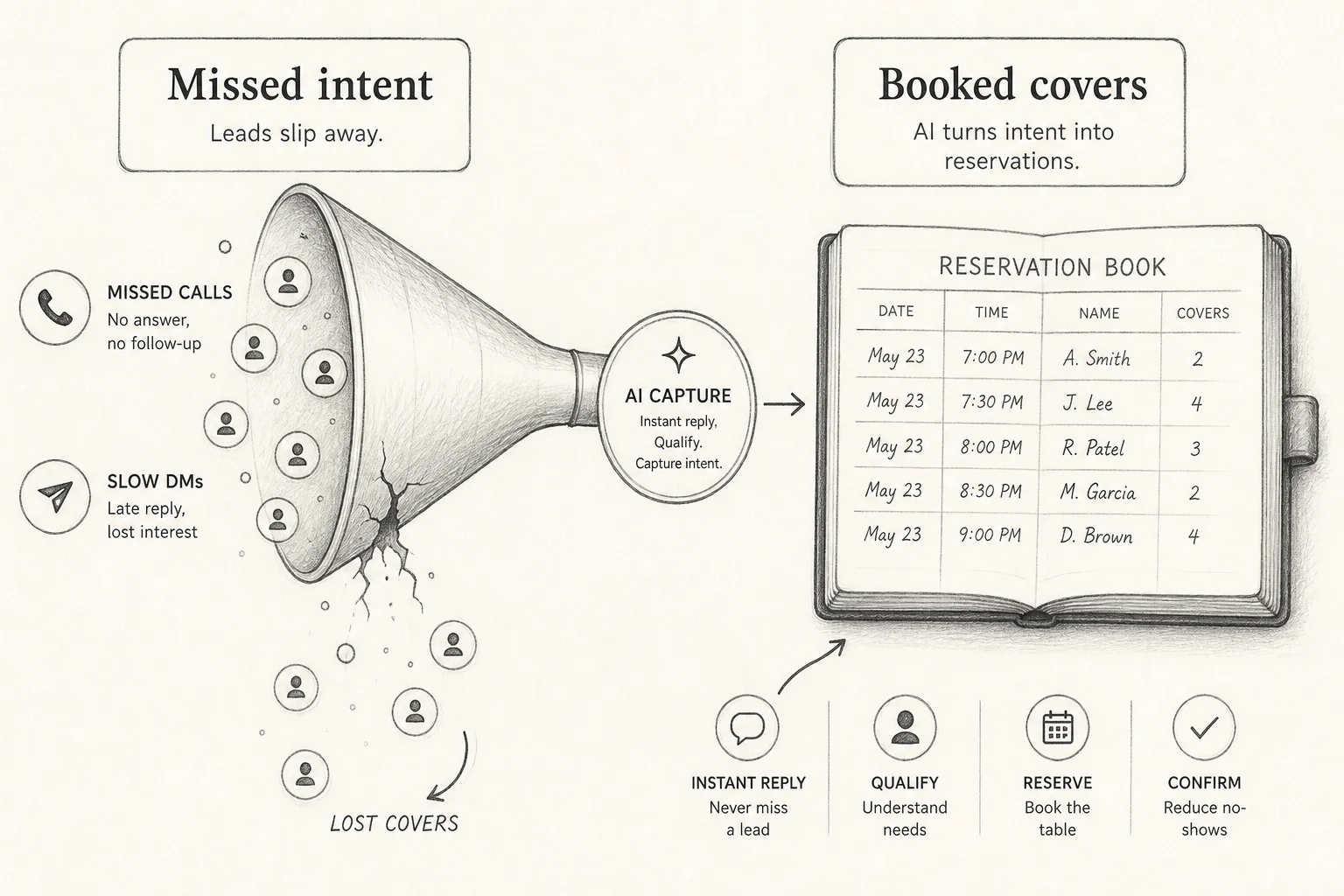
Direct answer: most small food businesses lose covers because intent is short and staff are busy exactly when guests decide. AI does not invent demand. It catches the demand you already paid for with ads, Google, and word of mouth.
Do this for one week without changing anything:
- Count WhatsApp / Instagram / web chats that waited more than 10 minutes, or arrived after close
- Count missed or abandoned calls during service and after hours
- Guess how many of those were bookable (be harsh; use 30 to 50% if you are unsure)
- Multiply by average cover or average ticket
| Example (40-seat neighborhood spot) | Weekly | Monthly-ish |
|---|---|---|
| Slow or missed bookable inquiries | 12 | ~50 |
| Average cover (food + drink) | $45 | $45 |
| Leak if half would have booked | 6 covers × $45 = $270 | ~$1,080 |
That is one quiet cafe. Brunch-heavy or tourist spots leak harder. Delivery-only kitchens swap "covers" for "orders you already had" that bounced to an aggregator after five unanswered minutes.
If the leak is under a couple hundred dollars a month, fix process first. If it is four figures, you have budget for a focused build. Ballpark cost bands for chat and voice sit in AI chatbot and voice cost in 2026.
One more honesty check: if your hosts already reply in under two minutes during open hours and you barely get after-close messages, you may only need reminder templates and a shared inbox. AI is for the gap between guest intent and human availability, not a trophy on the website.
Layer 1: reservations and the no-show loop
Highest ROI for table-service spots.
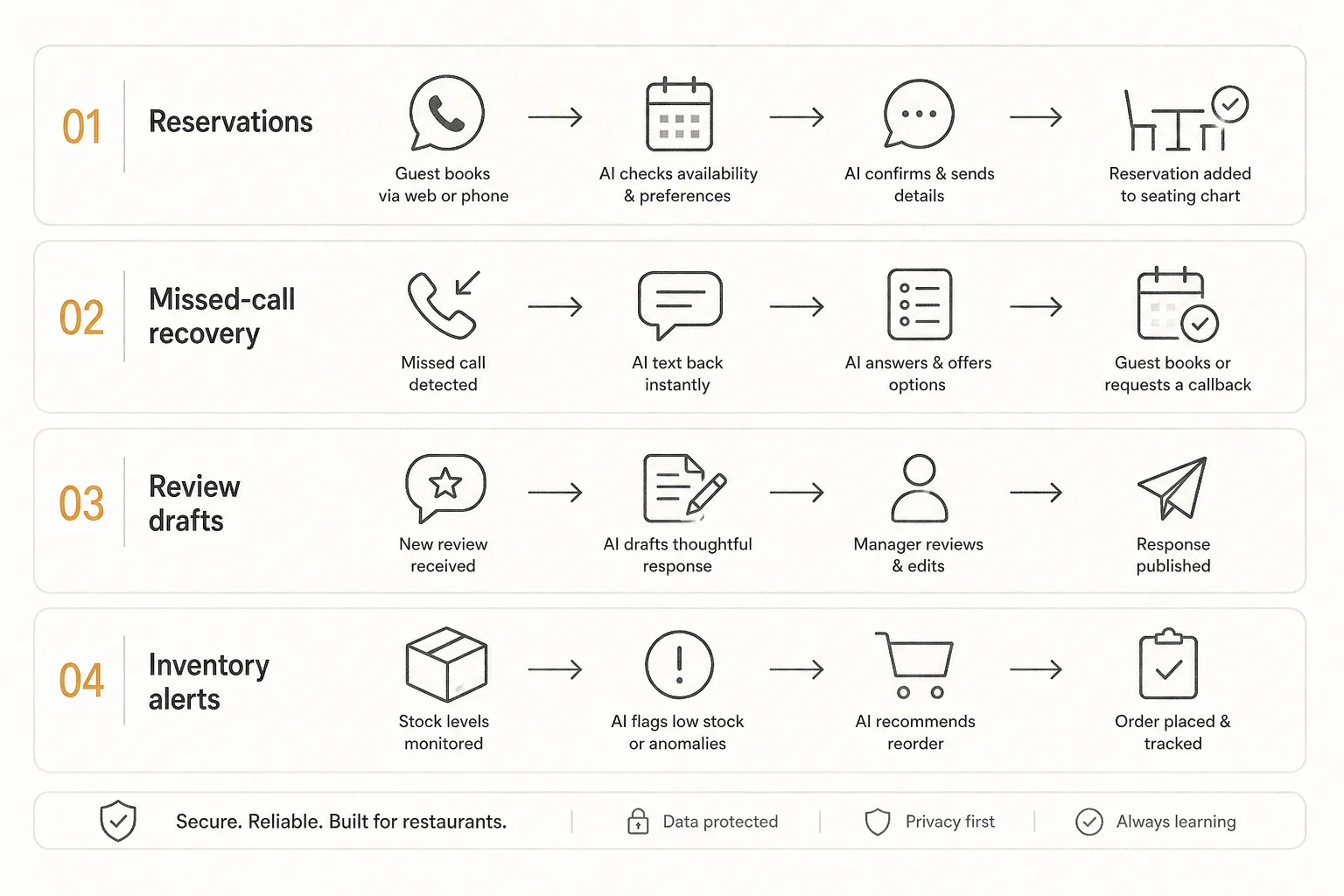
Inbound: guest asks availability on WhatsApp, Instagram DM (where you can bridge), web chat, or phone. Bot answers hours, party-size rules, and live-ish availability, then books or waitlists.
Outbound: confirmation at booking, reminder the day before with confirm / reschedule / cancel. Most no-shows are forgetfulness. Give people a one-tap exit and you free the table for someone who will show.
Stack I like for independents:
- Channel: WhatsApp Cloud API where guests already message; SMS or web chat where they do not
- Booker: keep OpenTable, SevenRooms, Resy, or Google Reserve if guests know it
- CRM / automation: GoHighLevel or a thin n8n layer for reminders and staff alerts
- Optional voice: missed-call text-back or a short voice agent for "do you have a table at 7?" during the dinner rush
Voice is optional. For many cafes, WhatsApp plus SMS recovers more than a full phone agent. For busy phone-first rooms, voice matters. Design the reservation conversation the same way I outline for chat in WhatsApp AI chatbot for business: answer, qualify party size and time, commit to a slot, hand off weird requests (buyouts, allergens that need a chef call).
A note on ordering bots: they look sexy in demos and break on modifiers, 86'd items, and payment edge cases. I usually ship reservations and FAQ first, then ordering once the kitchen trusts the channel. Direct WhatsApp orders also cut aggregator commission on regulars, which is often worth more than the bot fee once volume sticks.
Do not let the bot invent a table the booker does not have. Wrong availability is worse than a slow human.
Layer 2: missed calls during service
Phones ring while tickets fire. Guests hang up. Competitors pick up.
Two patterns that work without hiring a second host:
Missed-call killer: unanswered ring triggers an SMS or WhatsApp within a minute: "Sorry we missed you, want a table tonight or a callback?" Link or bot finishes the booking.
Overflow voice: after 3 to 4 rings, AI answers FAQ and queues a reservation request. Complaints and "I have a severe allergy, need the manager" escalate immediately with a transcript.
Wire both into the same CRM contact so the floor manager sees one thread, not three apps. That CRM discipline is the same as connect AI to CRM.
Layer 3: review replies without living on Google
Abandoned Google profiles look dead. Guests notice. So do rankings over time.
AI drafts are fine. Auto-post everything is not.
My rule:
| Review type | AI role | Human role |
|---|---|---|
| 4 to 5 star, simple praise | Draft personalized thanks in the reviewer's language | Spot-check or auto-send if tone matches your house voice |
| 3 star mixed | Draft | Manager edits before post |
| 1 to 2 star or safety/allegations | Draft optional | Owner or GM only; never auto-send |
Pull themes weekly ("slow lunch service" mentions doubled). That summary is more useful than answering each note in isolation. Tools can draft; judgment stays human.
Layer 4: inventory and prep alerts (phase two)
After the front door stops leaking, add quiet ops automation.
Examples I have actually scoped:
- POS or sheet shows "chicken stock under threshold" by Wednesday noon → Slack or WhatsApp to the sous before the weekend order cutoff
- Saturday brunch covers historically spike when weather is good → Thursday prep reminder with last month's numbers
- 86'd item flagged in POS → bot stops recommending it on chat until cleared
This is n8n (or Make) territory more than "chatbot" territory. Keep it boring. One alert that prevents a sell-out pays for itself. Twenty noisy alerts train the kitchen to ignore the phone.
Aggregators vs direct: use both on purpose
Delivery apps are discovery with a tax. Fine for new guests. Expensive for regulars who already love you.
Practical split:
- Keep aggregator presence for people who never heard of you
- Put a QR on receipts, bags, and the counter that opens WhatsApp or your ordering link
- Let the bot remember "the usual" for opted-in regulars
- Send rare, useful nudges (tonight's special, a released table), not daily spam
If your "AI strategy" is only more DoorDash ads, you are renting the customer forever. Direct chat is where margin lives after the first order.
What not to automate in F&B
Leave these to humans on purpose:
- Comp disputes and chargebacks
- Food safety incidents and allergen emergencies (bot can collect facts, then wake a manager)
- Large catering or private dining negotiation
- Anything that needs tasting, seating politics, or "make it right" judgment after a bad night
The bot's job is speed on repetitive asks. Hospitality still needs a person with keys and empathy.
A 30-day rollout that does not wreck service
Week 1: measure the leak; write top 20 guest questions from hosts' memory.
Week 2: FAQ + reservation queue on one channel (usually WhatsApp or web). Soft launch off-peak.
Week 3: reminders on, missed-call text-back on, review drafts in a shared doc for the GM.
Week 4: review transcripts, fix wrong answers, only then discuss ordering or inventory alerts.
Channel setup and compliance for WhatsApp (opt-in, templates, quality rating) are covered in WhatsApp Business API automation. Do not skip that if WhatsApp is your main guest inbox.
Bottom line for operators
You do not need a "restaurant AI transformation." You need fewer empty chairs caused by slow replies, fewer no-shows, a Google profile that looks alive, and one or two alerts that save a prep mistake.
Start with the cover leak number. If it is real, automate the conversation first. Kitchen robots can wait.
If you want a second set of eyes on that week of missed chats and calls, book a free call. Bring the count. We will see whether a bot, a missed-call flow, or just a tighter host process is the right fix.