
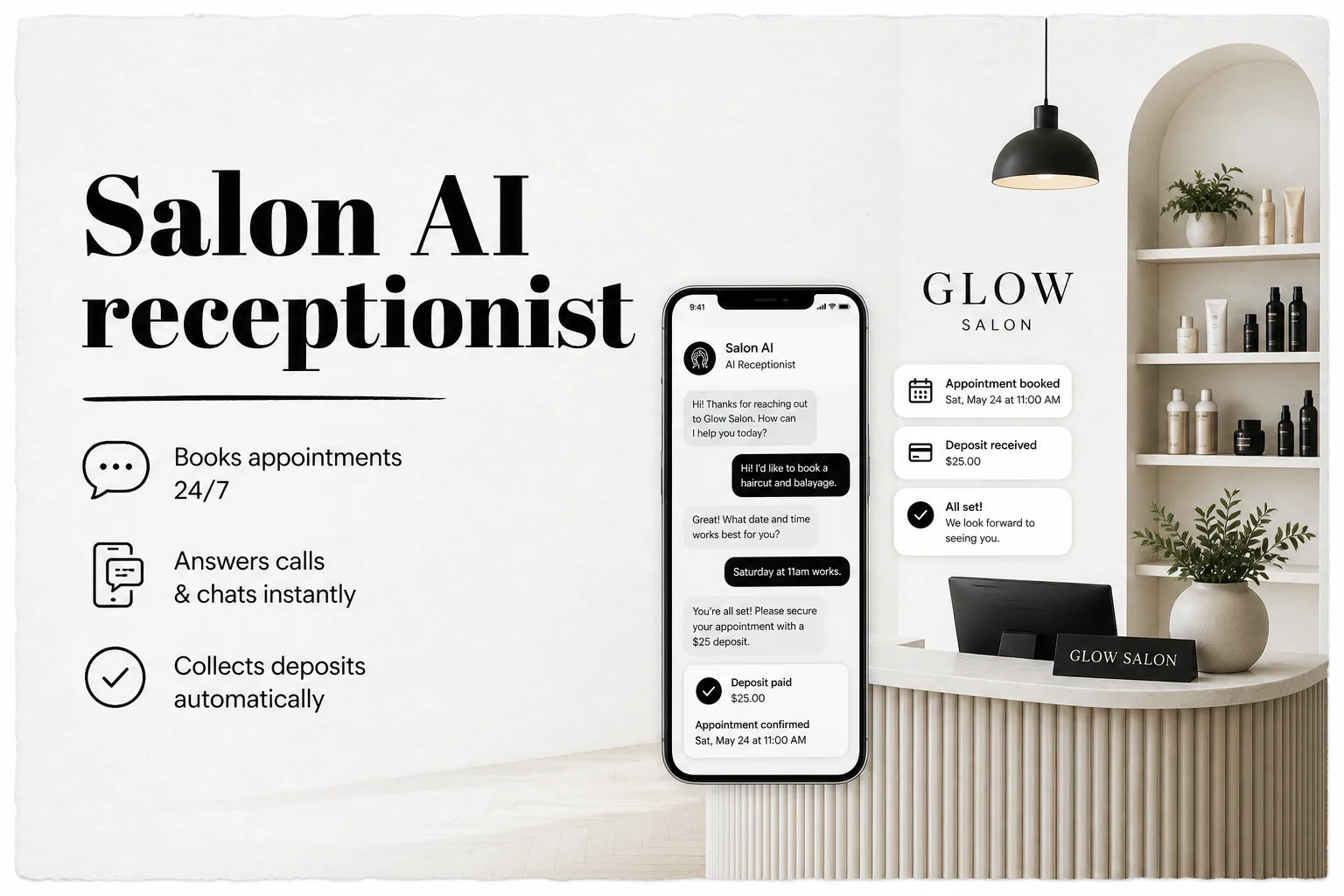
Your colorist is mid-foil. The phone rings. An Instagram DM asks if you have anything Saturday at 4. Neither gets a real answer for forty minutes. By then the Saturday slot is someone else's problem.
I already wrote the clinic and dental version of this stack in AI receptionist for clinics and dentists. Same idea, different business. Salons and spas sell chair time and ritual. No-shows are expired inventory. Deposits are the difference between a full book and a polite ghost. After-hours demand lives on Instagram and WhatsApp, not on a patient portal.
What a salon AI receptionist actually does
Direct answer: a salon or spa AI receptionist is a grounded chatbot (and optional voice agent) that answers service and logistics questions, books or reschedules on your live calendar, runs confirmation and reminder sequences, and can prompt or confirm deposits. It does not invent prices, diagnose skin conditions, or replace the person who greets someone at the door.
The five jobs that pay for the build:
- Answer the same menu questions (duration, prep, patch-test rules, parking, gift cards)
- Offer real slots by service length and, when you need it, by stylist or therapist
- Reschedule and cancel inside your policy window
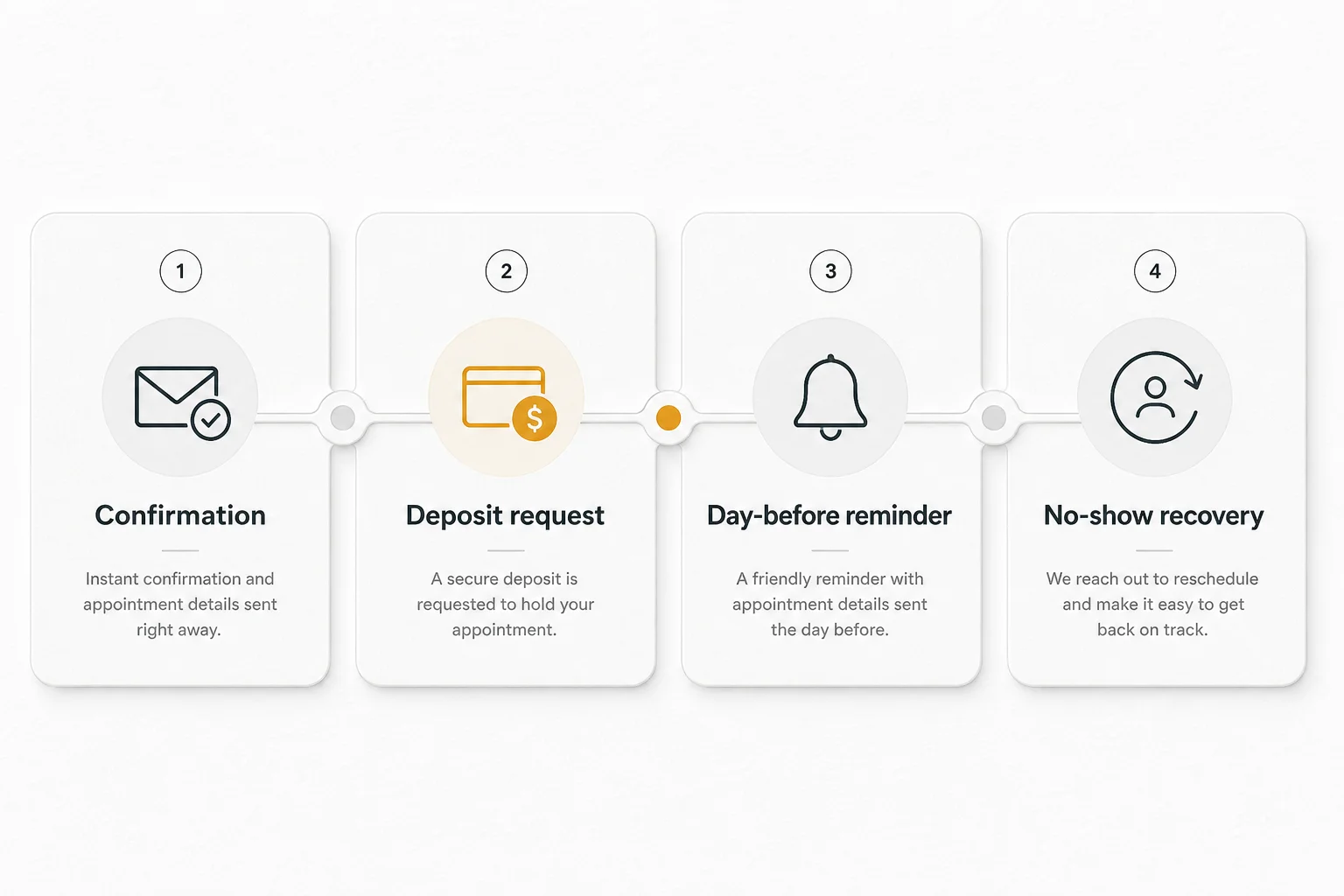
- Send reminders with a one-tap confirm or move
- Escalate complaints, allergies that need a human, and VIP drama with the transcript attached
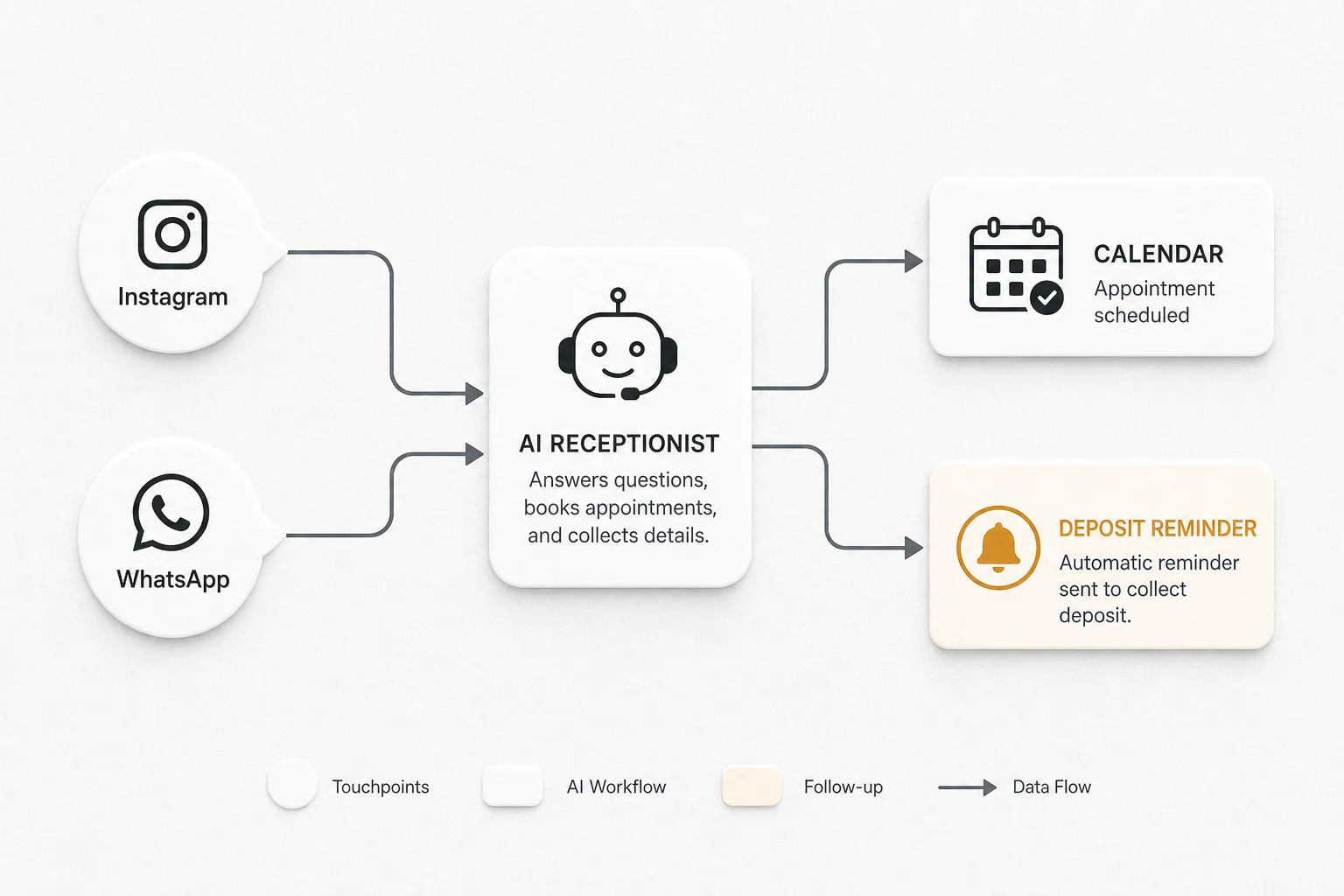
Channels that matter for beauty: WhatsApp first in many markets, Instagram DMs close behind, web chat on the booking page, phone as overflow. Voice-first demos look cool. Messaging usually ships first and covers more of the leak. See WhatsApp Business Platform docs and Instagram API docs if you want the plumbing side.
Why salons leak money in three places
Run this on your own week. Do not invent industry averages and call them yours.
| Leak | What it looks like | What the stack changes |
|---|---|---|
| Missed inquiries during service | Phone and DMs pile up while hands are busy | AI answers in seconds; books or queues a hold |
| After-hours browsing | 9pm "do you have balayage Saturday?" goes cold until 10am | Instant reply + live slots while intent is hot |
| No-shows and late cancels | Empty chair, product already drawn, stylist paid in time | Reminders + clear policy + deposit chase |
Chair-hour math is blunt. If your average ticket is $120 and you eat four no-shows a month, that is $480 of top-line before retail and rebooking. If deposits would have saved half of them, you already know the ROI shape. I want your numbers, not a vendor's case study slide.
Spas add another wrinkle: longer appointments and packages. A missed 90-minute facial hurts more than a missed blowout. Reminder timing and deposit rules should follow service length, not a one-size SMS.
Deposits and cancellation windows (the beauty-specific layer)
Dental builds rarely lead with "card on file for a $50 hold." Salon builds should.
What I wire when the owner is ready:
- Deposit amount by service category (color and long treatments higher than quick cuts)
- Clear cancellation window stated in the booking confirmation (for example 24 or 48 hours)
- Automated reminder that restates the policy without sounding like a threat
- Optional payment link via your existing processor; the bot confirms "deposit received" when the webhook fires
- Human escalate when someone disputes or needs a goodwill exception
The AI is not your lawyer. Your policy text is. The bot quotes what you approved and stops inventing fees.
Tools I see in the wild: Mindbody, Fresha, Vagaro, Square Appointments, and CRM layers like GoHighLevel when marketing and SMS live there. The receptionist should read availability from the system of record, not from a spreadsheet someone updates on Mondays.
Stylist preference, add-ons, and retail (without turning into a novel)
Beauty conversations branch. "I only want Maya on Saturdays" is a real constraint. So is "add a gloss if we have time."
Practical rules:
- If the calendar supports staff-level booking, expose it. If not, book the service and flag preferred stylist as a note for the front desk.
- Keep add-on suggestions short and priced from your list. One offer beats a menu dump in chat.
- Retail and membership pitches belong after the slot is held, or in a post-visit sequence, not before the human can book.
This is where salon flows diverge from dental. Insurance lists and PHI boundaries dominate clinic prompts. Service menus, duration math, and deposit state dominate salon prompts.
After-hours and Instagram: ship messaging before voice theater
People plan hair and spa time at night. Your front desk does not. An AI that replies at 9pm in the customer's language wins the Saturday slot that your competitor's "we'll reply in the morning" loses.
Sequence I recommend:
- Ground a knowledge base (services, durations, prices or ranges, policies, FAQs)
- Connect WhatsApp and/or Instagram + web widget
- Connect live calendar and CRM contact create
- Turn on reminder + deposit sequences
- Measure leftover phone volume; add voice if it still hurts
For US dental phone patterns and GHL voice notes, use the clinics and dentists post. For spa and salon, treat voice as phase two unless your clients are unusually call-heavy.
What it must never do
Boundaries keep reviews intact.
- No medical or dermatology advice ("is this rash okay before a peel?") → human
- No inventing promotions or prices not in the knowledge base
- No arguing about refunds; collect context and escalate
- No storing payment card numbers inside the chat prompt; use your payment provider's flow
- No unsupervised forever: someone reviews transcripts weekly and updates the menu when prices change
If you want the wider ops picture (missed calls, CRM hygiene, follow-ups), score yourself with the ops automation audit checklist before you buy a pretty demo.
Stack sketch and docs
A build that holds up looks like this:
- Calendar / booking system of record (Fresha, Mindbody, Vagaro, or similar)
- CRM or marketing layer for SMS and pipelines when needed (GoHighLevel is common)
- Messaging: WhatsApp Business API and/or Instagram messaging
- Optional voice via GHL or Twilio when call volume justifies it
- Automation glue: native CRM tools first; n8n or Make when you outgrow them (n8n vs Make vs custom)
Useful refs:
Your public site still matters. Slow booking pages kill the handoff from a perfect bot. If the marketing site is the weak link, CRO for service lead sites and WordPress to Next.js for lead sites cover that half.
Bottom line
Salon and spa AI receptionists win on after-hours Instagram and WhatsApp, deposit confirmation, and no-show reminders that actually fire. Steal the clinic playbook for channels and escalation. Rewrite the product layer for chair time, stylists, and cancellation policy. Measure empty chairs and deposit capture for 30 days. Then decide if voice is worth phase two.
If you want to map this to your booking tool and channels, book a free discovery call on cal.com/saifyxpro. Bring last month's no-show count and where inquiries actually arrive. We will scope messaging first unless your call log says otherwise.