
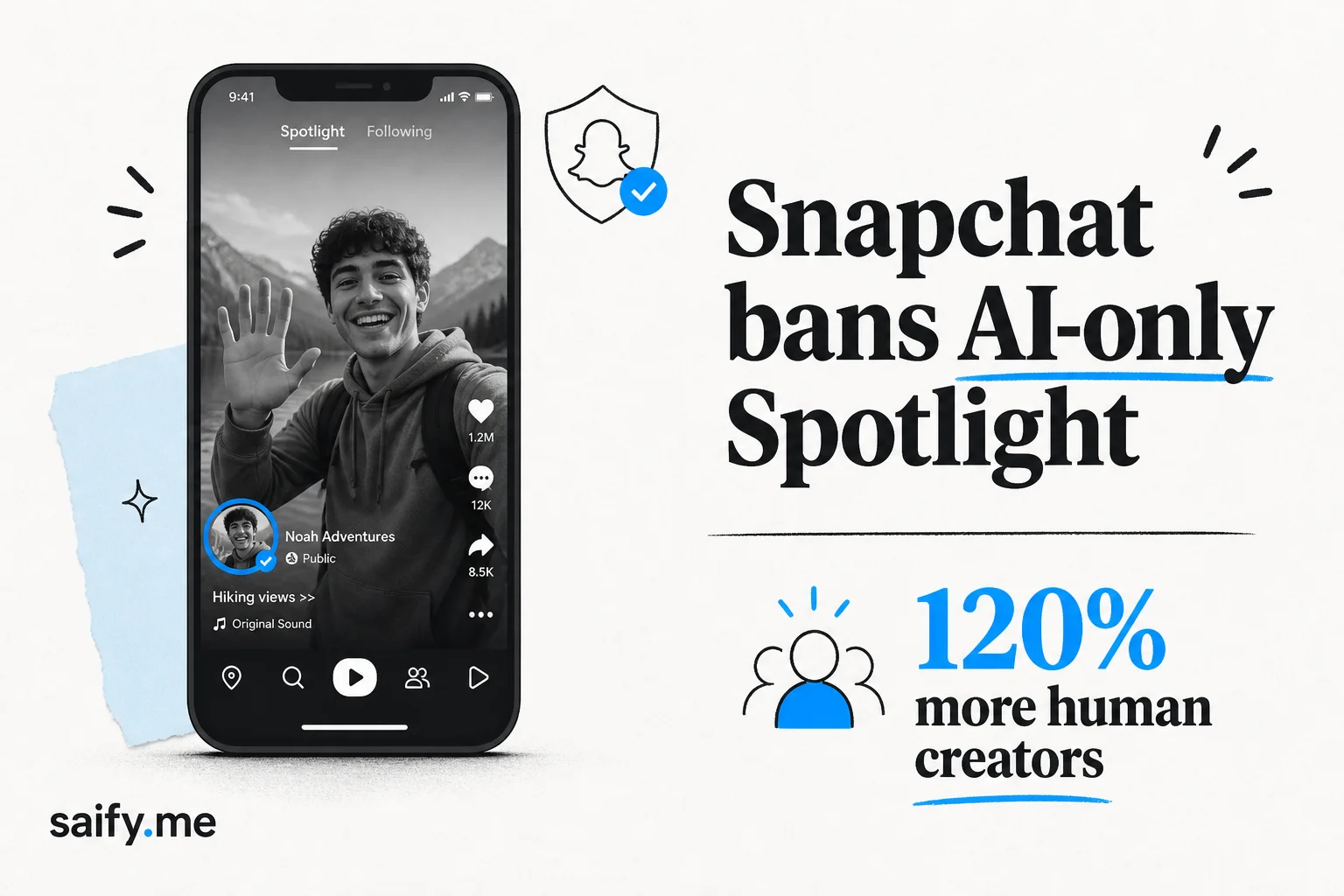
Short-form feeds are splitting into two camps: maximize volume, or protect trust. Snapchat just picked trust for Spotlight.
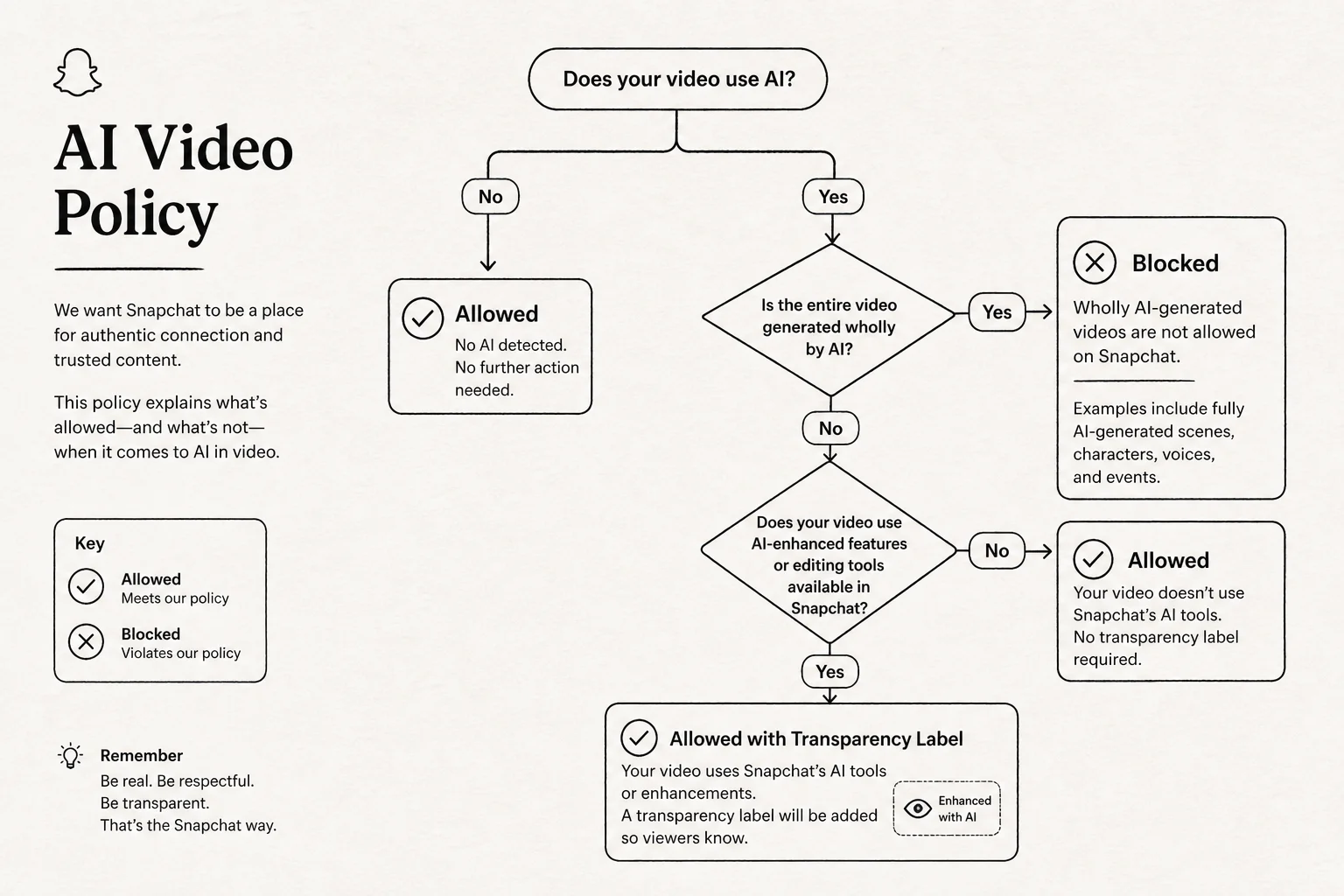
As of July 2026, wholly AI-generated videos are no longer eligible for recommendation on Spotlight. Content edited or enhanced with Snapchat's own AI tools still can be, with transparency labels.
That is a nuanced line. It is also the kind of policy every brand posting AI creative will need to parse.
What changed
Snap's post is explicit:
- Blocked from recommendation: videos that are entirely AI-generated
- Still eligible: human-made content, plus content enhanced with Snap's AI creative tools (with transparency indicators)
- Goal: keep Spotlight a place for "authentic creativity from real people"
Snap also cited growth: unique Spotlight contributors globally up more than 120% year over year. The policy arrives while the product is growing, not shrinking.
| Content type | Spotlight recommendation | Transparency |
|---|---|---|
| Wholly AI-generated video | Not eligible | N/A |
| Human-recorded, no AI | Eligible | None required |
| Human + Snap AI tools | Eligible | Labels included |
| Human + third-party AI only | Unclear; likely treated as AI-generated if wholly synthetic |
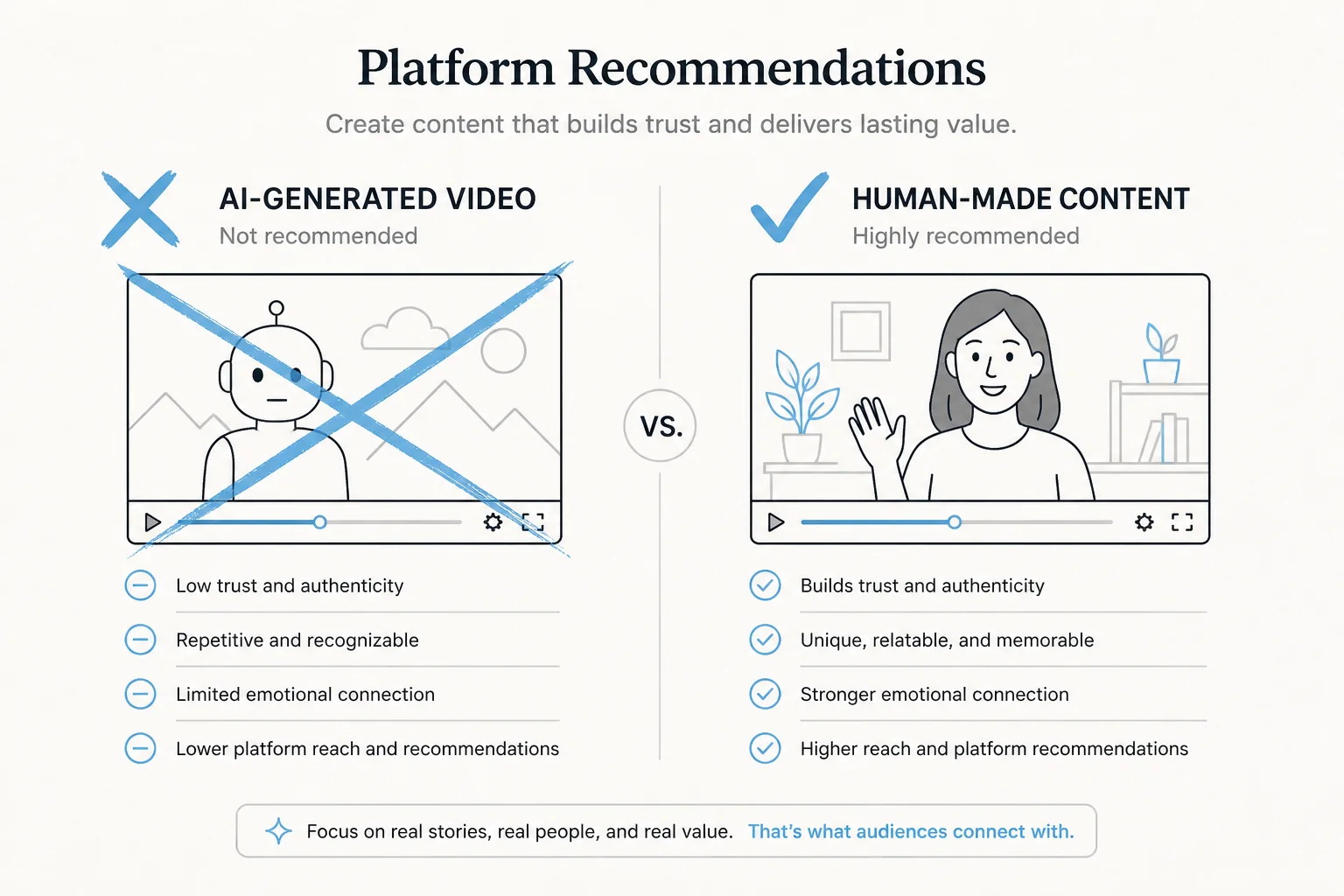
Why platforms care now
Low-quality AI slop scales faster than human creativity. A single prompt can flood a feed with variations. Recommendation systems trained on engagement often amplify novelty first and quality later.
Snap is betting the long-term moat is creator identity, not infinite synthetic supply. That rhymes with:
- EU rules pushing labels on authentic-looking AI (I covered Anthropic's watermark response in Claude text watermarking and the EU AI Act)
- Apple's bug-report caps after AI hallucination floods (reported the same digest week)
- Google pausing Earth AI imagery after misuse tests (see Google Earth Nano Banana rollback)
Different products, same tension: AI makes creation cheap; trust makes distribution expensive.
The detection problem
Snap admits no detection system is perfect. That matters for operators and creators:
- False positives hurt real creators using legitimate editing tools
- False negatives let synthetic content slip through until manual review catches it
- Policy text and enforcement will diverge; plan for appeals and human review
If you run UGC campaigns for clients, document provenance. Keep project files, raw camera footage, and edit timelines. "Human-made" will become a support ticket category.
What this means for marketers and builders
If you post on Spotlight: treat wholly synthetic video as organic reach dead on arrival. Use Snap's native AI tools if you want enhancement plus distribution, and accept the transparency badge.
If you build generative video products: platform risk is now explicit. Distribution APIs may downrank unlabeled or fully synthetic content even when generation is legal.
If you sell AI content services: client contracts should mention platform policies. "We will flood your Shorts/Spotlight/Reels" is a liability when recommendability gates tighten.
If you run brand safety: ask vendors whether outputs are eligible for recommendation on major surfaces, not just whether they violate copyright.
Not anti-AI, anti-slop
Snap's language is careful. They are not rejecting AI. They are rejecting low-quality, repetitive, wholly synthetic video in a feed built on personal perspective.
That distinction will show up in more policies through 2026. The winning creative stack is likely hybrid: human capture for authenticity, AI for editing, captions, localization, and versioning, with labels where required.
Useful references:
The takeaway
Snapchat drew a bright line: fully AI Spotlight videos lose algorithmic reach; human stories plus Snap's own AI tools stay in play. For anyone shipping generative media, recommendability is now part of the product spec, not an afterthought.
If you are wiring AI into content ops and want a second opinion on policy risk and disclosure, book a free discovery call.