
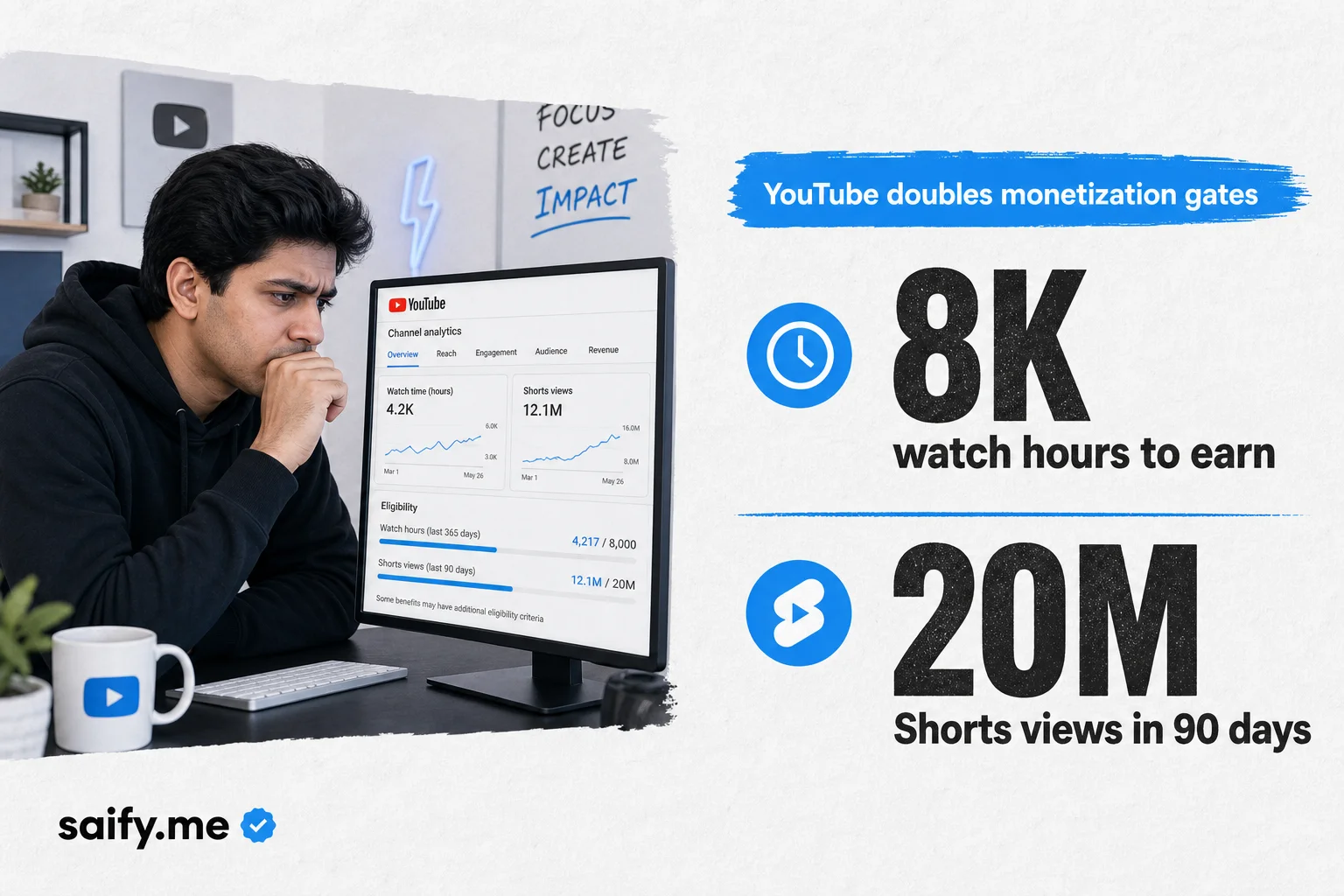
YouTube invented the modern creator paycheck. Now it is moving the goalposts again.
On August 10, 2026, the YouTube Blog announced the first major Partner Program (YPP) changes since 2018. The headline for new creators: double the watch-hour requirement and a much steeper Shorts view cliff before ads and Premium revenue sharing turn on.
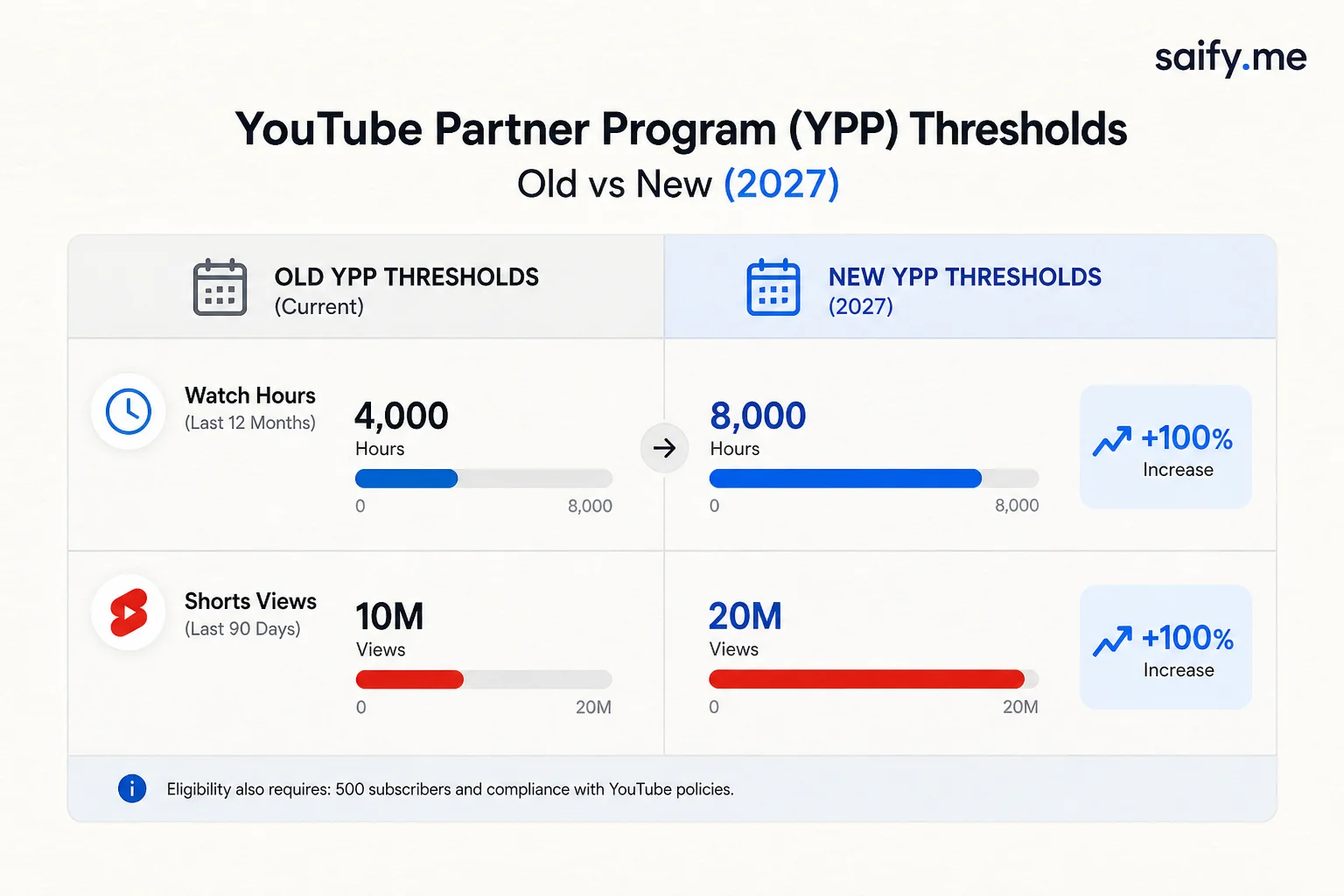
Effective February 1, 2027, new applicants need 1,000 subscribers plus either:
- 8,000 qualified watch hours in the last 365 days (up from 4,000), or
- 20 million qualified Shorts views in the last 90 days (up from 10 million)
That Shorts number is brutal math: about 222,000 views every single day for 90 days just to unlock ad money.
I build lead sites and automations for founders, not YouTube studios. But a lot of my clients publish Shorts and long-form explainers to feed discovery funnels. When the platform tax moves, your content ROI spreadsheet moves with it.
Three buckets of changes
YouTube framed the update as investing in active creators while adding new earning paths. Practically, it splits into three policy blocks.
1. Premium Lite expands globally
Premium Lite (cheaper tier, most content, fewer perks) rolls out everywhere YouTube Premium exists. Creators earn from subscription pools: 30% of net revenue for Premium, 60% for Premium Lite, then the usual 55% / 45% split on long-form vs Shorts from member watch time.
YouTube claims partners earn more on average when a viewer converts from ads to Premium. Good for established channels with loyal watch time. Less relevant if you are still trying to qualify for YPP at all.
2. Shorts revenue gets a 10M view floor (ongoing)
Starting February 1, 2027, channels need 10 million qualified Shorts views in the last 90 days to keep Shorts ad and Premium revenue sharing active.
Drop below that threshold and Shorts monetization pauses until you cross 10M again. Long-form monetization can continue if you are otherwise eligible.
YouTube says creators already earning significant Shorts revenue are unlikely to feel this. Translation: mid-tier Shorts publishers living month to month on viral variance are the stress case.
3. New YPP entry bar for first-time monetization
New creators face the doubled entry requirements above. Fan funding and Shopping tiers stay at the lower thresholds (500 subscribers / 3 public videos in 90 days, etc.).
So you can still sell merch and get tips before you qualify for ads. You just cannot count on AdSense as an early milestone anymore.
Who wins and who gets squeezed
| Creator profile | Likely impact |
|---|---|
| Established long-form (8K+ hours/year) | Minor. Already over the bar. |
| Shorts-native growth hackers | Pain. 20M/90d to start, 10M/90d to stay monetized. |
| New educators / indie devs | Delayed first ad dollar; fan funding becomes the bridge. |
| AI-assisted faceless channels | Volume play gets more expensive; quality and retention matter more. |
YouTube says it expects to pay more total to creators in 2027 than 2026. That can be true in aggregate while individual small channels earn less per hour of effort. Platform economics often work that way.
The AI content angle nobody puts in the press release
A lot of 2026 Shorts volume is semi-automated: templated hooks, AI voice, auto-captions, batch exports from tools like CapCut and custom pipelines.
Doubling view thresholds does not ban AI-assisted content. It raises the bar for distribution moats instead of production speed.
If your workflow was "ship 30 Shorts a day and hope one pops," the new gates punish variance. You need either breakout virality or a catalog that sustains six-figure daily views for a quarter.
That pushes creators toward:
- Long-form depth (tutorials, case studies, podcasts) where 8K hours is achievable with a smaller but loyal audience
- Owned audiences (email, Discord, site) so YouTube demonetization pauses hurt less
- Higher-trust formats where AI assists research and editing but a human face or voice carries the brand
I have been telling local service clients the same thing about Google Business Profiles and Next.js lead sites: rented platforms change rules; owned infrastructure compounds.
Existing partners: do not ignore the January 31 deadline
If you are already in YPP, you must accept the new terms by January 31, 2027. You also need to stay "active" via one of:
- 1,000 watch hours per year
- 1 million Shorts views in 90 days
- Two long-form videos per quarter
The quarterly upload floor is easy to forget. A channel that goes dormant could lose more than Shorts revenue.
What I would do on a creator funnel this quarter
Not financial advice. Operator checklist if YouTube feeds your pipeline:
1. Model revenue with the new thresholds. If you are under 8K hours and under 20M Shorts views, stop treating AdSense as a near-term line item.
2. Bridge with fan funding + site CTAs. Link in bio to a booking page or email list you control. My portfolio runs on Next.js for exactly this reason.
3. Cut Shorts that do not teach or qualify. Vanity view counts that do not convert were always weak. Now they are also monetization dead ends below 10M/90d.
4. Use AI on the slow parts, not the brand. Research summaries, B-roll generation, chapter markers: yes. Generic script voice that sounds like every other channel: DeepMind's hiring team just told us humans notice.
5. Watch for the "new incentive programs" tease. YouTube promised bonuses for Shopping, brand deals, and trend-starting behavior for sub-10M Shorts channels. Details matter. Do not plan payroll around vaporware.
The bigger platform pattern
YouTube is not alone. Every mature creator platform eventually tightens monetization at the bottom to fund incentives at the top. TikTok's Creator Fund drama taught the same lesson in 2023-2024.
If your business model is "get big on someone else's algorithm, then figure out monetization," you are always one policy blog post away from a spreadsheet fire.
Build the site. Capture the email. Sell the service. Use YouTube as distribution, not balance sheet.
Running a creator-led funnel or local service business and want the web layer you actually own? Book a free discovery call.