
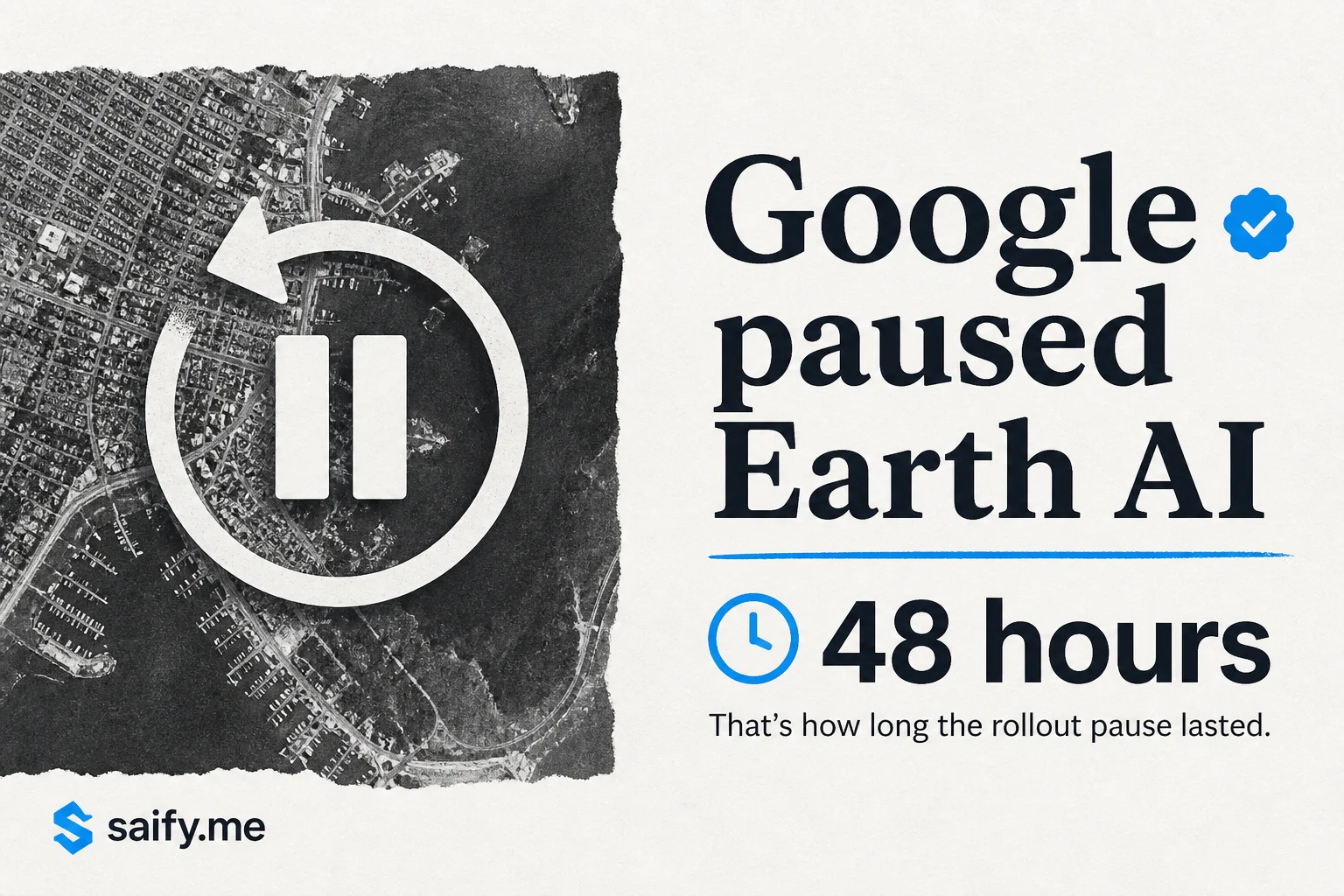
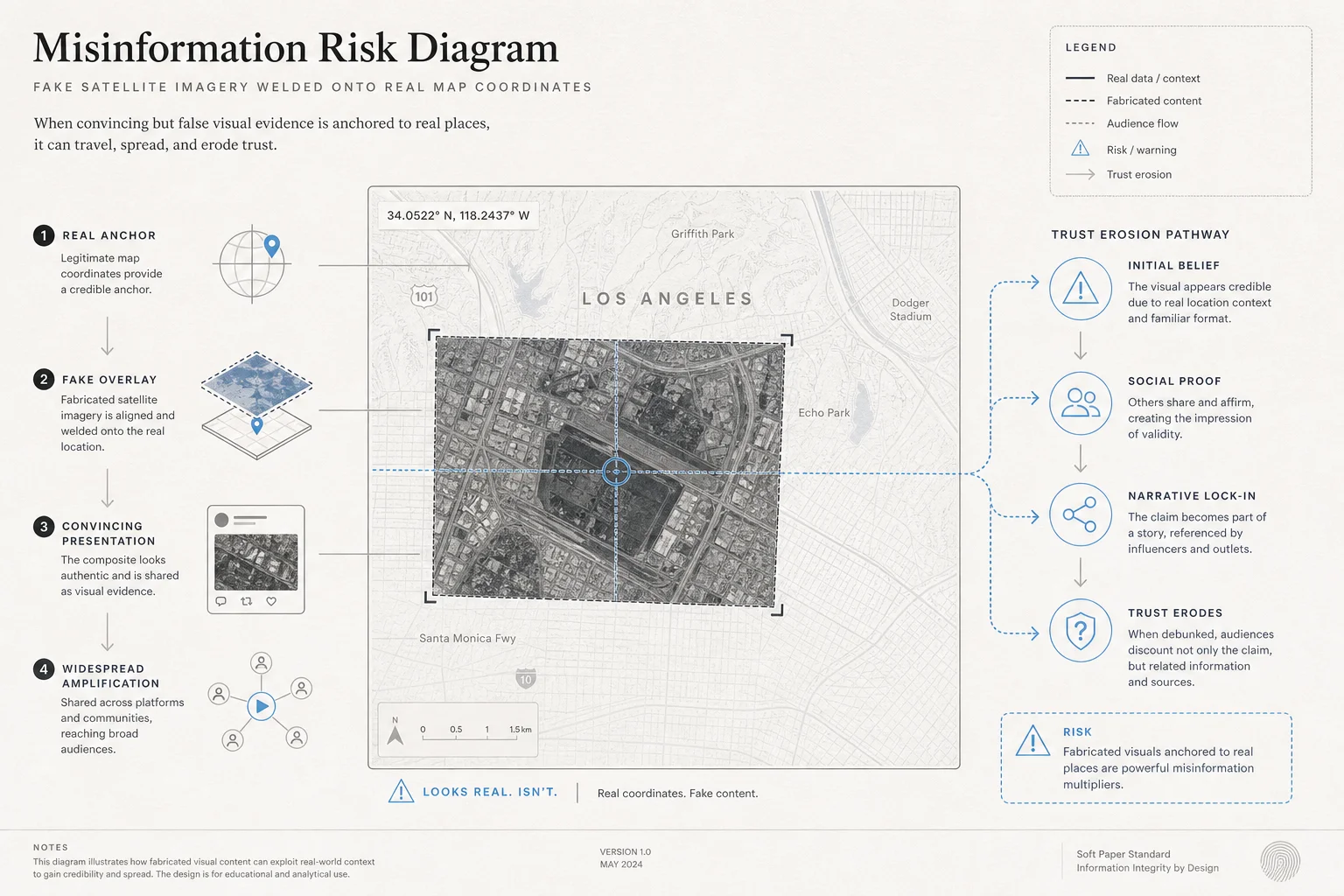
Google Earth is where people go when they want ground truth. Satellite tiles, aerial photos, 3D meshes. When you weld a fake scene onto real coordinates, the forgery inherits the map's credibility.
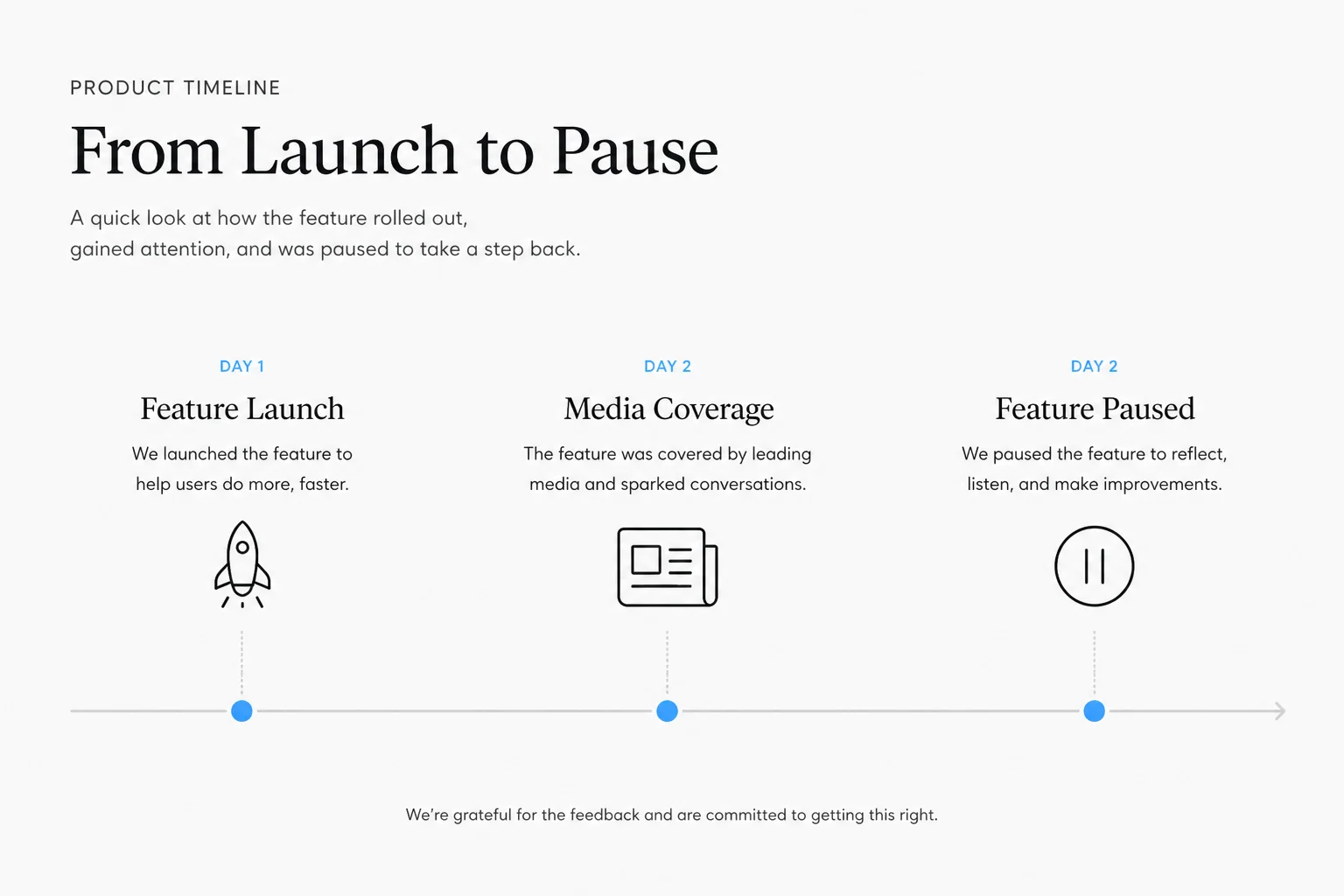
That is why Google's Nano Banana 2 integration into Google Earth lasted less than 48 hours before rollback.
BBC Verify reported the pause on July 31, 2026, after journalists and researchers generated convincing false imagery on top of legitimate base layers: collapsed landmarks, fake military vehicles, invented infrastructure on sensitive coordinates.
Google said it was pausing the feature while implementing stronger guardrails after seeing shared screenshots that appeared to violate policies.
What the feature did
The retracted integration let users prompt AI imagery on top of real satellite, aerial, or 3D data, then download and share the composite elsewhere.
The risk is not "bad Photoshop." It is geospatial misinformation with Google's brand attached.
Misinformation researcher Henk van Ess described the failure mode cleanly: invented imagery welded to genuine coordinates, drawn on genuine imagery. The forgery does not need to look perfect on its own. It borrows trust from the basemap.
| Risk | Example tested | Why it hurts |
|---|---|---|
| Disaster fabrication | Fake bomb crater beside hospital on real Gaza coords | Accelerates false crisis narratives |
| Infrastructure fiction | Non-existent nuclear plant in Iran | Fills gaps when real imagery is scarce |
| Conflict deception | Tanks in a capital on real streets | Moves fast in information vacuums |
| Political graffiti | Lawn messages near government buildings | Some prompts blocked, others bypassed with rewording |
Guardrails failed in predictable ways
Google said model guidelines would block harmful topics. BBC Verify found small prompt changes bypassed refusals. A explicit violent request near UK Parliament was rejected; a vaguer prompt succeeded.
Google also pointed to invisible watermarks and verification through Gemini or Google Lens. BBC's tests found watermarks often worked on fresh generations, but detection could be circumvented and external AI detectors sometimes missed Earth AI content.
AI detection researcher Henry Ajder highlighted conflict zones: journalists may verify, but social feeds will not wait. Satellite imagery has been a high-trust anchor in open-source investigations. Eroding that anchor has outsized impact.
Geospatial analyst Bill Greer noted falsified satellite imagery already spreads manually. More synthetic forgeries plus fewer real releases (as governments restrict data) compound doubt.
Lessons for builders shipping generative UI
This rollback is a case study in distribution risk, not model IQ.
Trusted surfaces need higher bars. Maps, weather, finance tickers, and health dashboards are not equivalent to a meme generator. User expectations differ.
Policy prompts are not enforcement. Refusal tuning loses to rephrasing. Assume adversarial users.
Watermarking is necessary, not sufficient. Plan for recapture, recompression, and screenshot chains that strip metadata.
Speed of rollback matters. Google moved in two days. Slower teams would have worn a bigger trust hit.
Provenance beats post-hoc detection. If your product touches factual claims, ship source metadata (capture time, sensor, edit history) alongside pixels.
I write about AI citation and extractable content under Web + AI SEO. Maps are an extreme version of the same problem: when a surface looks authoritative, models and humans both over-trust it.
Connection to the same week's news
The Rundown digest that carried this story also covered OpenAI's math proofs and Snapchat's Spotlight policy. Different domains, one thread: capabilities ship fast; trust infrastructure lags.
For client work, I treat any "generate on top of real data" feature as a misinformation review by default. Marketing wants the demo. Legal and comms will want the rollback plan before launch.
Useful references:
The takeaway
Google Earth plus generative imagery was always a trust bomb. Forty-eight hours of press testing proved it. If your product wraps AI output in a credible shell (maps, CRM records, medical charts, legal filings), assume the same rollback conversation is coming.
If you are shipping customer-facing AI on high-trust surfaces and want help threat-modeling misuse, book a free discovery call.