
The EU does not regulate "AI" as a monolith. It regulates platforms that reach enough Europeans to move elections, markets, and childhood attention spans.
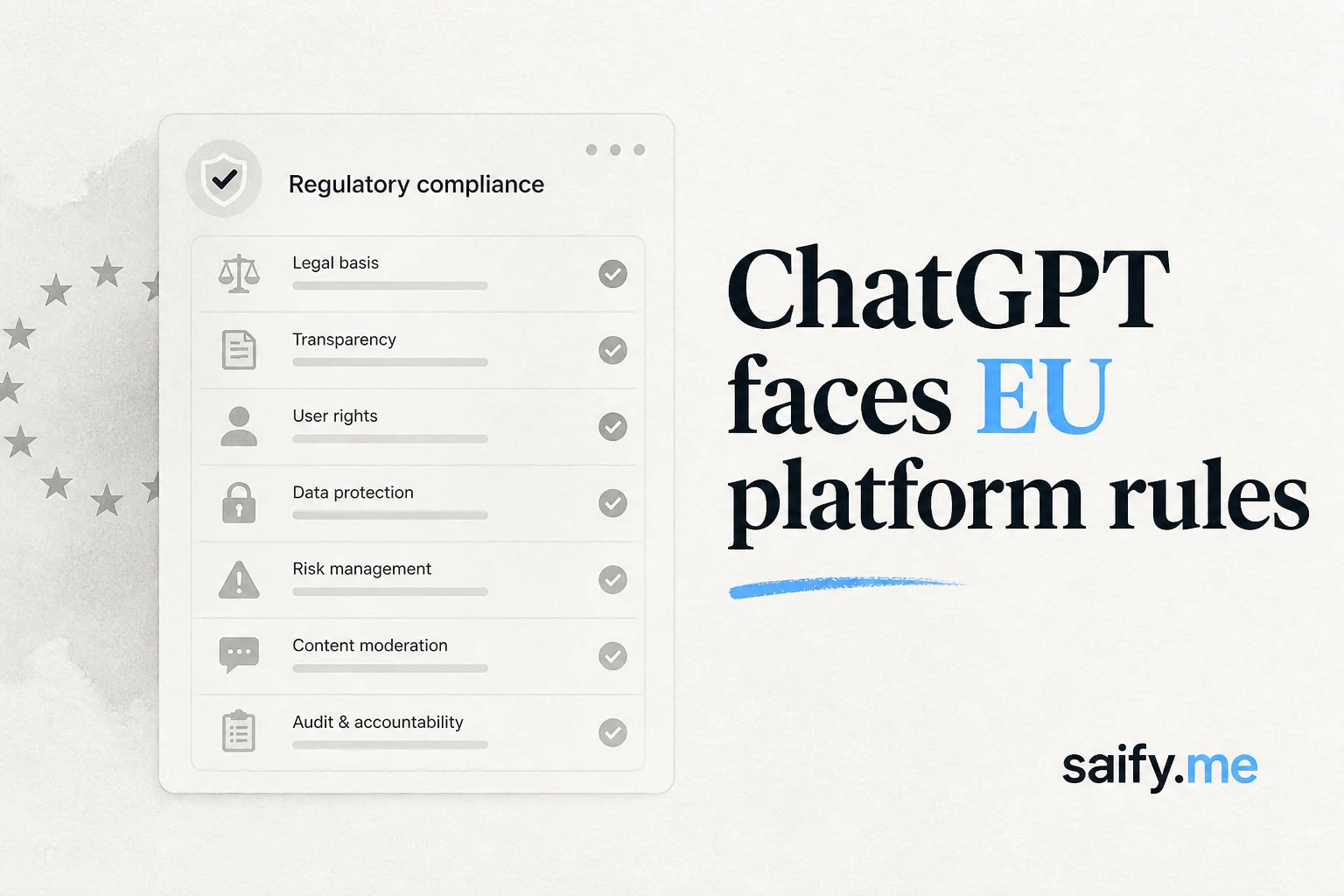
That distinction just got sharper. EU regulators plan to classify OpenAI's ChatGPT and Roblox as very large online platforms (VLOPs) under the bloc's strictest digital rules, according to Bloomberg reporting cited in The Rundown Tech digest.
What VLOP status actually means
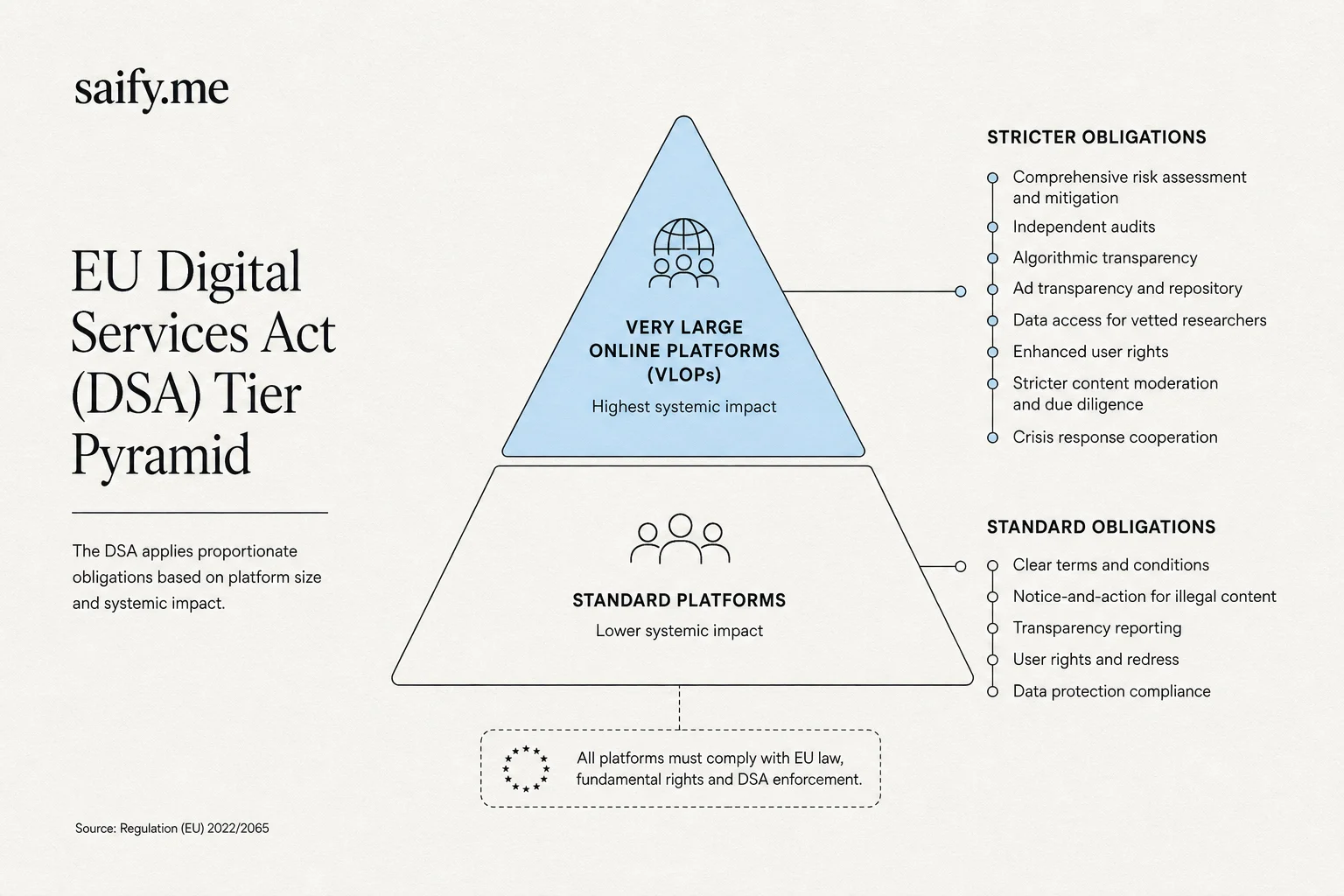
The Digital Services Act (DSA) created a tiered system. Once you cross roughly 45 million monthly active users in the EU, you are not a normal platform anymore.
VLOPs face obligations that smaller products skip:
| Obligation | Practical impact |
|---|---|
| Systemic risk assessments | Document harms (elections, minors, public health) annually |
| Mitigation measures | Product changes with audit trails, not blog posts |
| Independent audits | Third parties review compliance; results can be public |
| Researcher data access | Qualified researchers can study platform effects |
| Crisis response protocols | Fast reaction to serious threats |
| Heavy fines | Up to 6% of global annual turnover |
Meta, Google, TikTok, and Amazon already live here. Adding ChatGPT and Roblox expands the VLOP club into generative AI chat and user-generated 3D worlds. Same legal bucket, very different failure modes.
Why ChatGPT designation matters for builders
ChatGPT is not a feed in the Instagram sense. But regulators see:
- Mass reach across education, work, and personal advice
- Synthetic content that can scale misinformation faster than human posting
- Plugin and tool ecosystems that act like mini marketplaces
- Minors using the product with uneven parental controls
VLOP rules force OpenAI to formalize risk workflows that many startups skip: documented assessments, mitigation tracking, and external scrutiny.
For teams shipping AI features in Europe, three second-order effects show up fast:
1. Compliance APIs become product requirements
You will need logging, appeal flows, and transparency reports that match DSA templates. "We will figure out governance later" stops working at VLOP scale.
2. Model releases get legal review gates
Risk assessments are not one-time PDFs. Each major capability shift (browsing, code execution, image generation) can trigger reassessment obligations.
3. EU users become the strictest segment
Many companies already ship EU-safe modes first, then global rollouts. VLOP designation accelerates that pattern for chat products.
Why Roblox in the same headline is not accidental
Roblox is a social platform for children with UGC economies, voice chat, and developer marketplaces. It was always closer to classic DSA thinking than a pure chatbot.
Grouping ChatGPT and Roblox under the same designation week signals the Commission's view: if you host interaction at scale, you are a platform, whether the interface is text or voxels.
Builders working on AI NPCs, UGC worlds, or agent marketplaces should read Roblox's compliance path as a preview.
What this is not
This is not an "EU bans AI" story. The DSA is a process and accountability framework. Companies can operate. They must document harms, mitigate, and accept audits.
It is also not identical to the EU AI Act, which layers additional rules on high-risk AI systems. VLOP status under the DSA can apply before you argue about whether your model counts as GPAI with systemic risk.
Practical checklist for product teams
If you ship consumer AI in the EU, start here:
- Map MAU by member state. The 45M threshold is EU-wide, but member states enforce.
- Write a systemic risk register even pre-VLOP. Migration is easier than retrofit.
- Separate child accounts with auditable defaults. Roblox and ChatGPT both face minor safety scrutiny.
- Instrument appeals and takedowns for synthetic outputs, not just user posts.
- Budget for external audits as opex, not a one-time legal project.
I help clients wire trust pages, llms.txt, and extractable policy docs so regulators and AI crawlers see the same facts. That work gets cheaper before designation, not after.
The takeaway
ChatGPT and Roblox entering the VLOP tier is the EU saying scale equals platform responsibility, regardless of whether your UI looks like Twitter or a terminal.
If your roadmap assumes "we are just an API," revisit it when EU MAU climbs. The compliance surface area of a VLOP is an order of magnitude larger than a niche B2B tool.
Questions about shipping AI products in regulated markets? Book a free discovery call. I help teams align product architecture with DSA-style transparency before the audit letter arrives.