
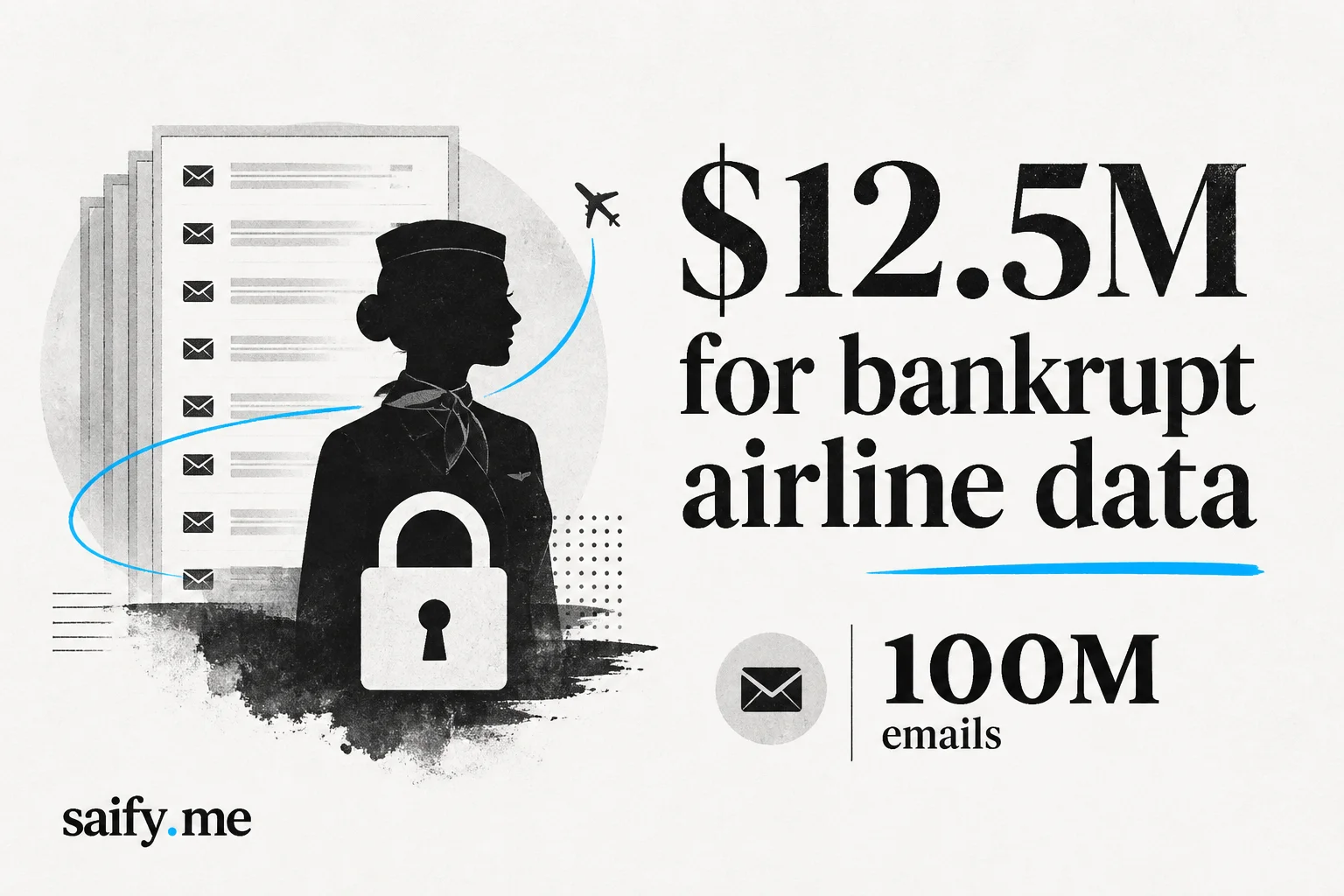
When a company dies, what happens to the Slack threads, payroll files, and crew training scores its workers generated for decades?
Spirit Airlines shut down operations in 2025 after a second bankruptcy. Its corporate archive became a $10 million auction lot for AI training. Google won the initial bid. Flight attendants sued to stop it. Startup Micro1 countered with $12.5 million. Judge Sean Lane pushed the approval hearing to September 9, 2026.
This is not a niche labor story. It is a preview of how enterprise exhaust gets priced when public web scrapes run dry.
Gizmodo on flight attendant objections
What is in the archive
Bankruptcy filings paint a detailed picture of modern corporate life:
| Asset class | Scale (reported) |
|---|---|
| ~100 million messages | |
| Teams chat | ~500 million messages |
| Code | ~30 million lines |
| Employee records | ~175,000, back to 1986 |
| Payroll records | ~3.4 million entries |
Google told reporters it wants enterprise dataset signal to improve products and models. The buyer does not need passenger names if the goal is "how does a budget airline staff crews, handle grievances, and run IT under stress?"
That is valuable process supervision data. It is also deeply personal for the people who created it.
The privacy asymmetry
The proposed deal includes a third-party de-identification agent aligned with California Consumer Privacy Act standards for customer data. Names and direct identifiers get scrubbed before transfer.
The Association of Flight Attendants, in its court objection, argues employment records get a weaker screen:
- Crew training and recurrent exam performance
- Business travel and tax forms
- Internal communications about management and union activity
- Investigation and compensation adjustment trails
AFA lawyer Charles Rubio writes that pseudonymized crew data can still reveal which bases filed grievances, which small subsets failed training, and what employees said about staffing. Removing names does not remove structural identity in a workforce dataset.
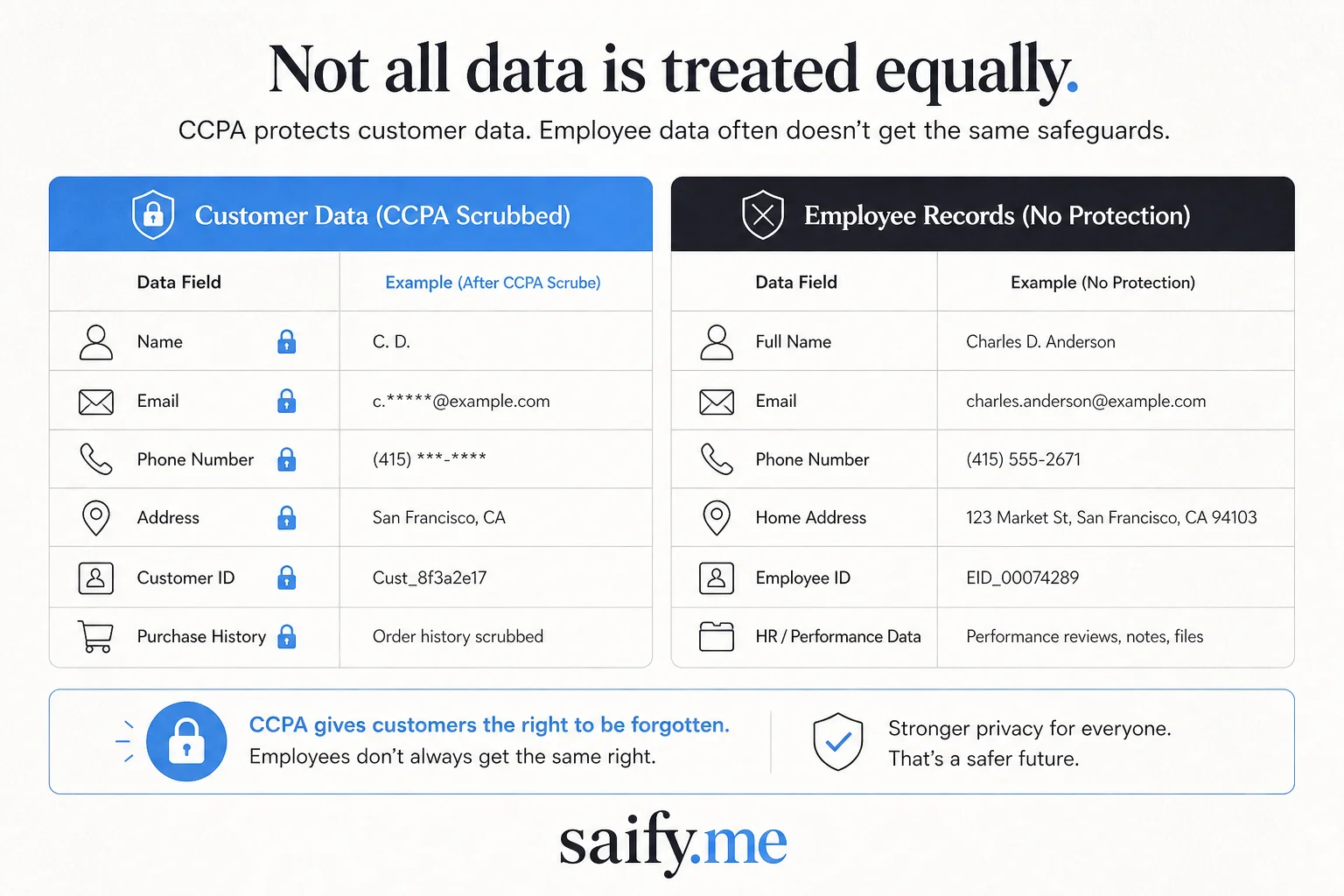
Google's spokesperson repeated that no personal information will be received and that a third party scrubs PII before handoff. The union wants all flight attendant information categorically excluded, not just de-identified.
Why big tech is buying bankrupt companies
Foundation models already consumed most crawlable public web text. Synthetic data helps, but carries model collapse risk if overused. Enterprise archives are a third path: authentic operational text with timestamps, org charts, and process metadata baked in.
We covered a related angle when Amazon rare books were destroyed for AI training scans. Spirit is the digital mirror: instead of pulping paper, you liquidate Teams messages from a carrier that no longer exists.
Micro1's higher bid shows startups see the same gold rush. Training data is now a liquidation asset class.
Lessons for applied AI builders
If you run AI in ops, this case is a checklist item:
- Employment data is not consumer data. CCPA-style scrubbing may not cover your workers' messages.
- Bankruptcy transfers rights you assumed HR owned. Contracts and union agreements matter before you archive Slack.
- Pseudonymization is not anonymity when metadata is rich (crew base, role, date ranges).
- Vendor AI features may ingest logs you cannot claw back once sold in a wind-down.
I have seen SMB clients dump years of CRM notes into ChatGPT without retention policies. Spirit scales that mistake to 100 million emails.
For Web + AI SEO work, the reputational angle matters too. Brands that train on employee grief without consent will get press like this Gizmodo piece. Trust pages and data handling docs are not optional when your stack touches customer or worker text.
What happens next
The September 9 hearing decides whether Google's deal (or Micro1's counter) proceeds with employee carve-outs or fails outright. Either outcome sets precedent for who speaks for workers when corporate IP includes their lived work history.
Meanwhile, regulators are still catching up. The CCPA was built for shoppers, not flight crews logging fatigue reports at 2 a.m.
Need help with data retention policies, AI vendor review, or privacy-safe RAG over internal docs? Book a free discovery call.