
Your LinkedIn feed did not get worse because people forgot how to write. It got worse because writing got free.
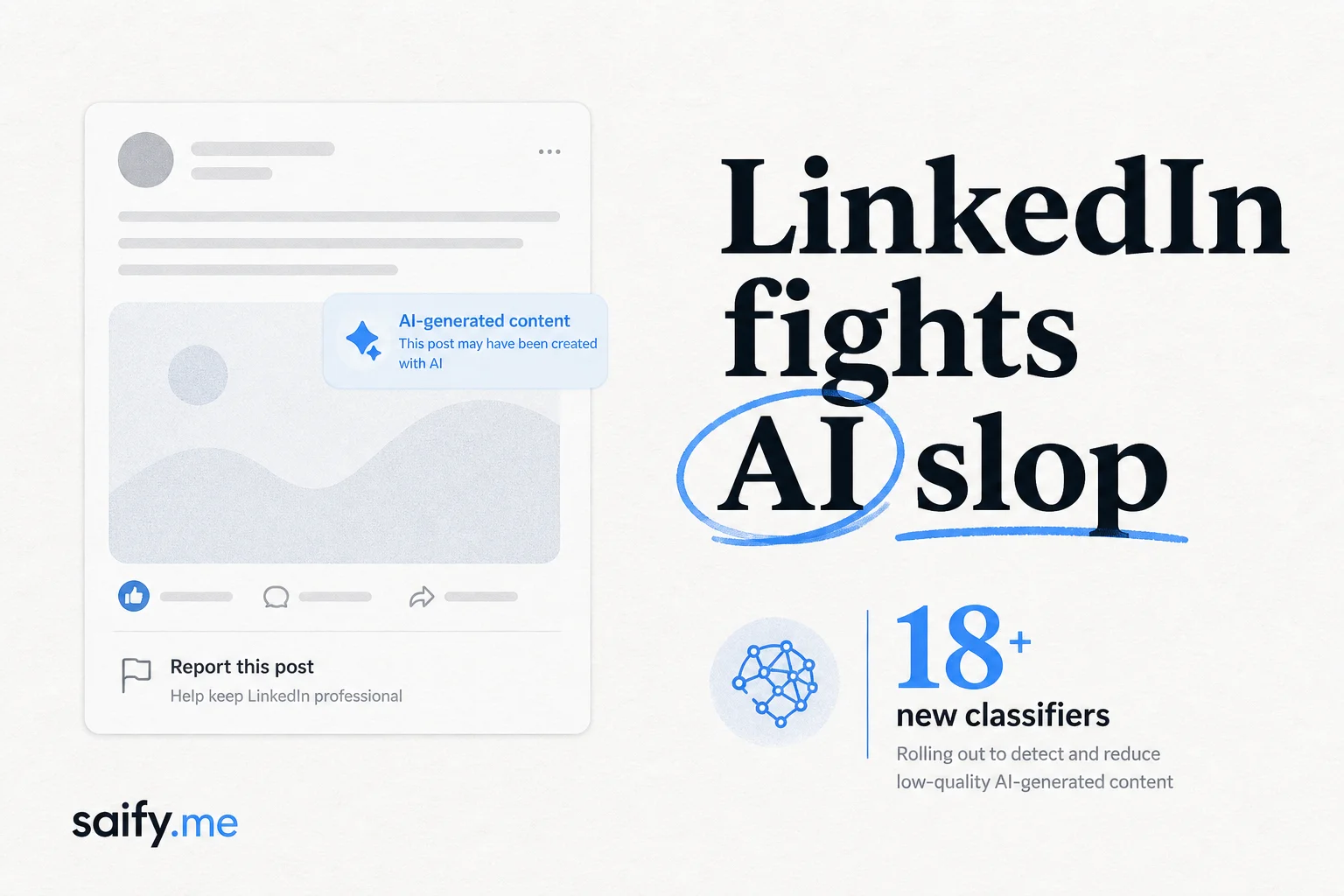
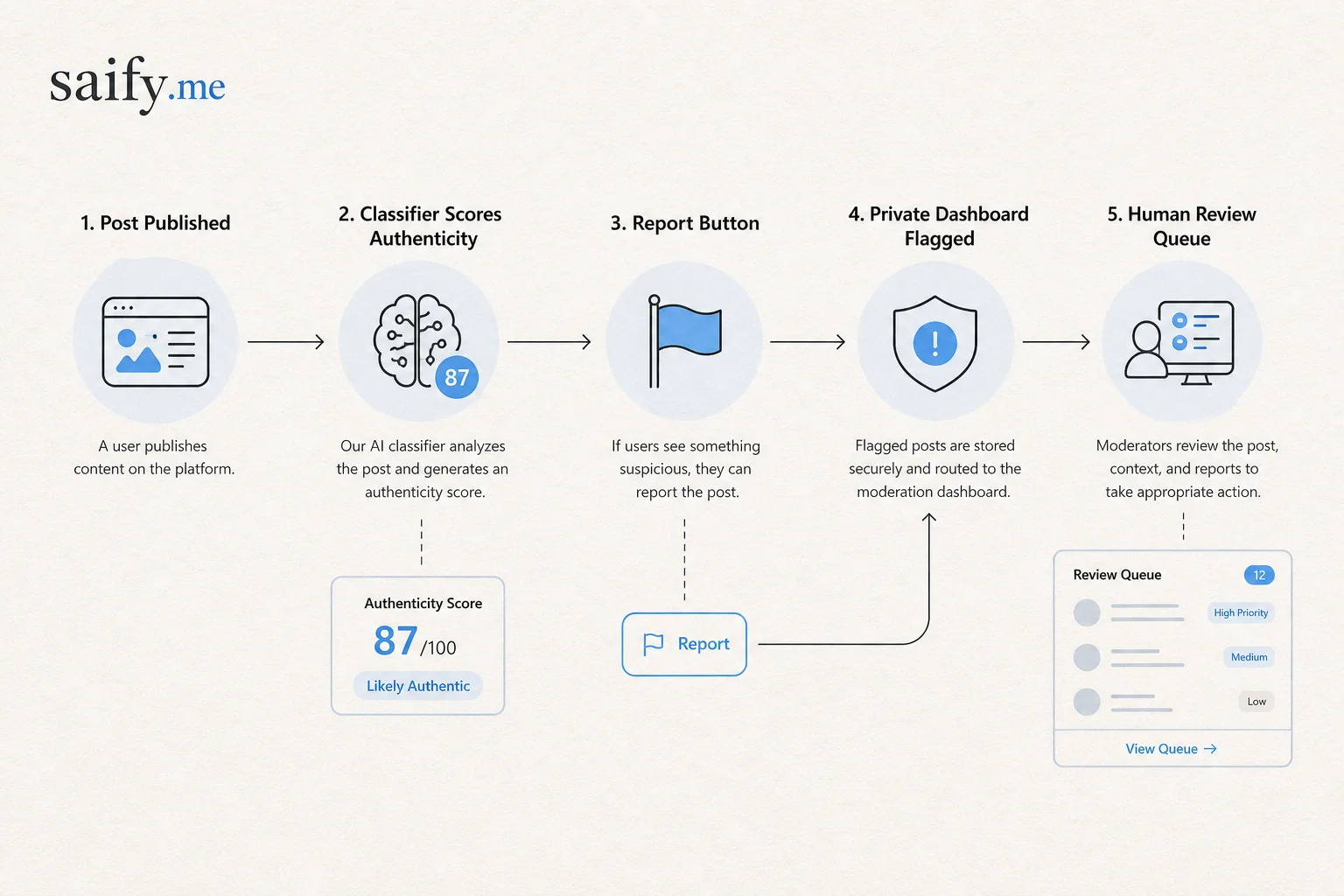
LinkedIn is finally treating that as a product emergency. The company is rolling out a "seems like AI slop" report button, new slop-detecting classifiers, and private dashboard flags for posts that read as inauthentic, according to a post from Hari Srinivasan, VP of Product for Identity, Groups, and Communities.
What LinkedIn shipped
The Rundown Tech digest summarized three concrete moves:
- User-facing report flow with explicit "AI slop" language, not vague spam reporting.
- New classifiers trained to score inauthentic or templated content patterns.
- Private creator dashboard flags so authors see when their posts trip slop detectors before public embarrassment.
That third piece is underrated. Most platforms only punish after viral damage. Private feedback gives creators a chance to edit before distribution amplifies the post.
| Signal type | Who sees it | Purpose |
|---|---|---|
| User report | Trust & safety queue | Crowdsource edge cases |
| Classifier score | Ranking + moderation | Scale detection |
| Private dashboard flag | Author only | Behavior change before penalty |
Why this matters beyond LinkedIn
Professional networks sell trust density. You open LinkedIn expecting career signal: hiring updates, technical posts, deal news, thoughtful disagreement.
AI slop breaks the contract. When every third post is the same "I asked ChatGPT to..." carousel, engagement metrics might look fine short term while reply quality collapses.
Platforms that ignore this follow the Facebook clickbait arc: optimize impressions until users leave for smaller, higher-trust communities.
For anyone building extractable content (see my AI SEO work), slop detection also changes what gets cited. Models and humans both down-rank generic templated pages. Authentic voice with specific numbers still wins.
Detection is not the hard part
LinkedIn has smart engineers. Building a classifier that spots "In today's fast-paced world..." openings is solvable.
The hard parts:
Ranking incentives still reward volume
If the feed ranks posts by early engagement velocity, slop farmers will optimize hooks and emoji spacing until classifiers retrain. Detection becomes whack-a-mole unless ranking down-weights suspected slop before it trends.
Private flags need teeth
A dashboard warning only works if creators care. Many growth hackers will treat "slop risk: medium" as A/B test data. Enforcement (reach caps, label requirements) has to follow.
False positives hit real writers
Non-native English speakers, engineers who write plainly, and people using AI as an editor (not a ghostwriter) can trip pattern matchers. Human review queues must stay funded.
Transparency builds trust
Users should eventually see why a post feels slop-like: repetitive structure, synthetic engagement patterns, or mass posting cadence. Black-box "this seems fake" labels backfire.
Lessons for teams shipping generative features
I see three parallels for client work:
1. Do not ship generation without provenance. If your product helps users draft posts, add source metadata and encourage human specifics (numbers, names, failures).
2. Treat classifiers as product surfaces, not backend secrets. LinkedIn naming it "AI slop" publicly is good UX. Users know what to report.
3. Measure reply quality, not just impressions. Slop can inflate views while killing conversation depth. Track comment length, unique repliers, and save rate.
What authentic posts still look like in 2026
Classifiers will keep improving. The content that survives has traits machines still struggle to fake at scale:
- First-person failure stories with messy timelines
- Specific metrics tied to a named project
- Disagreement that risks social capital
- Screenshots and artifacts that match the narrative
That is also what AI search systems prefer to cite: pages with verifiable specifics, not SEO-shaped generalities.
The takeaway
LinkedIn's slop fight is admission that generative AI broke the feed economics of professional social. Detection tools are necessary. Ranking and incentive changes are what actually clean the timeline.
If you are building content systems for your company (blog, newsletter, sales outreach), design for extractability and human signal from day one. Get in touch if you want an AI SEO audit on whether your pages read like slop to both humans and crawlers.