
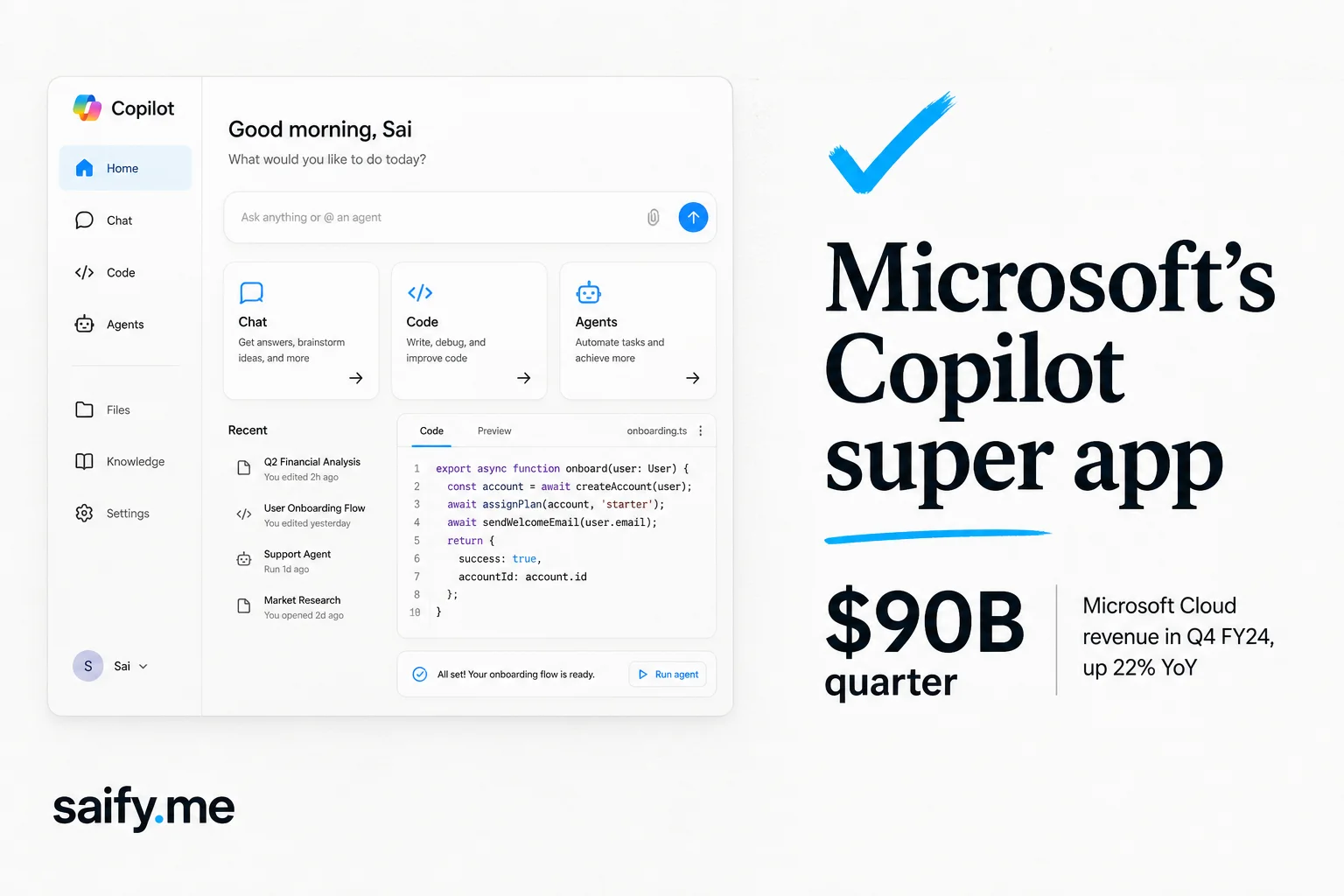
Every AI platform starts as a chat box. The ones that win turn into the place you open when work begins.
Microsoft just confirmed that move for Copilot. On a July 2026 earnings call, CEO Satya Nadella said the company is building an AI super app that spans both consumer and commercial experiences and launches this year.
What Nadella actually said
The quote that matters:
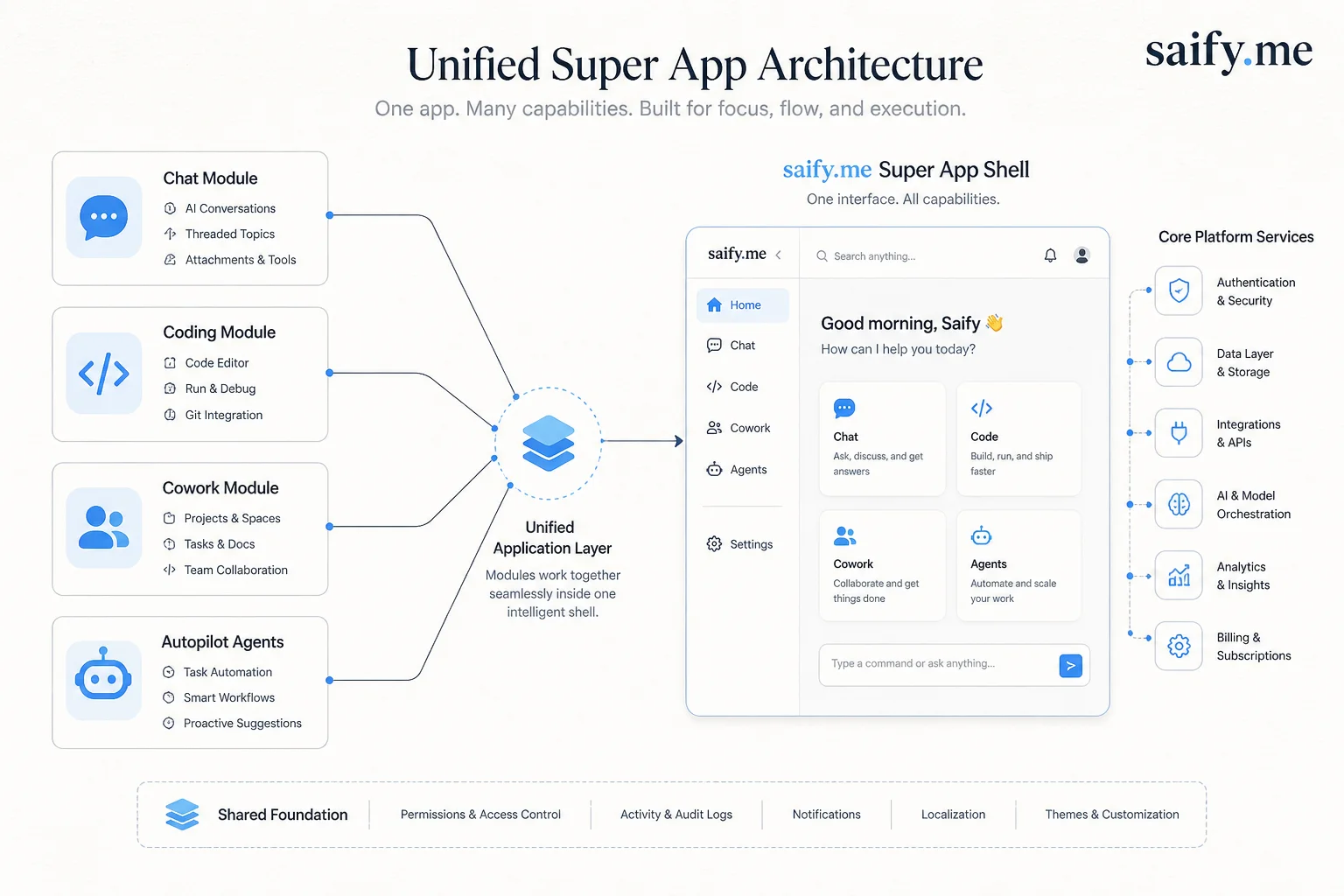
"Copilot is evolving rapidly from chat to Cowork to Autopilots. This quarter, we are bringing these Copilot experiences together, including code, in one super app."
That is not a feature bundle slide. It is a distribution strategy.
The Verge reported that the app will merge:
- Copilot chat
- GitHub Copilot coding assistant
- Copilot Cowork (collaborative agent workflows)
- Agentic Autopilot systems
Microsoft's revenue hit $90 billion for the quarter, with AI and cloud as the growth engine. The super app is how Microsoft keeps that growth attached to a daily habit, not a sidebar experiment.
Why super apps are showing up everywhere now
This is not a Microsoft-only trend. OpenAI recently revealed ChatGPT Work, combining ChatGPT and Codex in one workspace. Google keeps folding Gemini into Search, Workspace, and Android surfaces. The race is for default entry point, not best single feature.
| Company | Unified shell | Modules inside |
|---|---|---|
| Microsoft | Copilot super app | Chat, Code, Cowork, Autopilots |
| OpenAI | ChatGPT Work | ChatGPT, Codex |
| Gemini across surfaces | Search, Docs, Android assistant | |
| Anthropic | Claude desktop + Cowork | Chat, coding, scheduled agents |
For builders, the implication is uncomfortable: standalone AI features get absorbed or die. If your product is "an AI tab," you are competing with the OS-level default.
What a unified Copilot app changes in practice
1. Context portability
Today, many teams run chat in one window, code in the IDE, and agents in a third tool. A super app promises shared memory: the bug you discussed in chat becomes the Codex task, which becomes the Autopilot job that opens a PR.
The hard part is not UI tabs. It is permission boundaries between personal, team, and enterprise data.
2. Agent orchestration as the default mode
Nadella's "chat → Cowork → Autopilots" framing matches what I see in client projects. Users tolerate chat. They pay for agents that finish workflows.
Cowork-style shared sessions and Autopilot background jobs belong in one shell because handoffs are where agents fail today.
3. Commercial vs consumer in one binary
Nadella explicitly said consumer and commercial. That means Entra identity, M365 tenant policies, and family safety controls must coexist without turning the app into IT wallpaper.
Ship one app, two trust zones. That is expensive engineering.
Risks Microsoft has to solve
Tab fatigue in reverse. One app can become a junk drawer if every Copilot variant gets equal billing. Users need a clear "what mode am I in?" signal.
IDE lock-in tension. Developers love GitHub Copilot inside VS Code and Cursor. A super app must feel additive, not like Microsoft is dragging coding out of the editor.
Agent safety at scale. Autopilots that act across mail, files, and code need audit trails. Enterprise buyers will ask for replay logs before they let interns run background agents.
What I would watch as a practitioner
If you build on Microsoft stack today, treat the super app as a integration target, not a rumor.
- Design APIs assuming Copilot is the client. Your SaaS should expose MCP tools or structured actions agents can call.
- Separate "chat answers" from "completed work." Metrics that matter: tasks closed, not messages sent.
- Plan for identity sprawl. Personal Microsoft account vs work tenant vs GitHub org will collide in one UI.
I have been wiring agent workflows for ops teams where the bottleneck is never the model. It is the handoff between chat, code, and scheduled jobs. Microsoft's bet is that owning the shell fixes the handoff.
The takeaway
The Copilot super app is confirmation that 2026's platform war is about unified agent workspaces, not better autocomplete.
If your product strategy still assumes users will copy-paste between five AI tools, revisit it. The defaults are consolidating.
Need help designing agent workflows that survive a super-app world? Book a free discovery call. I help teams ship MCP integrations and production agent patterns that outlive whichever shell wins the home screen.