
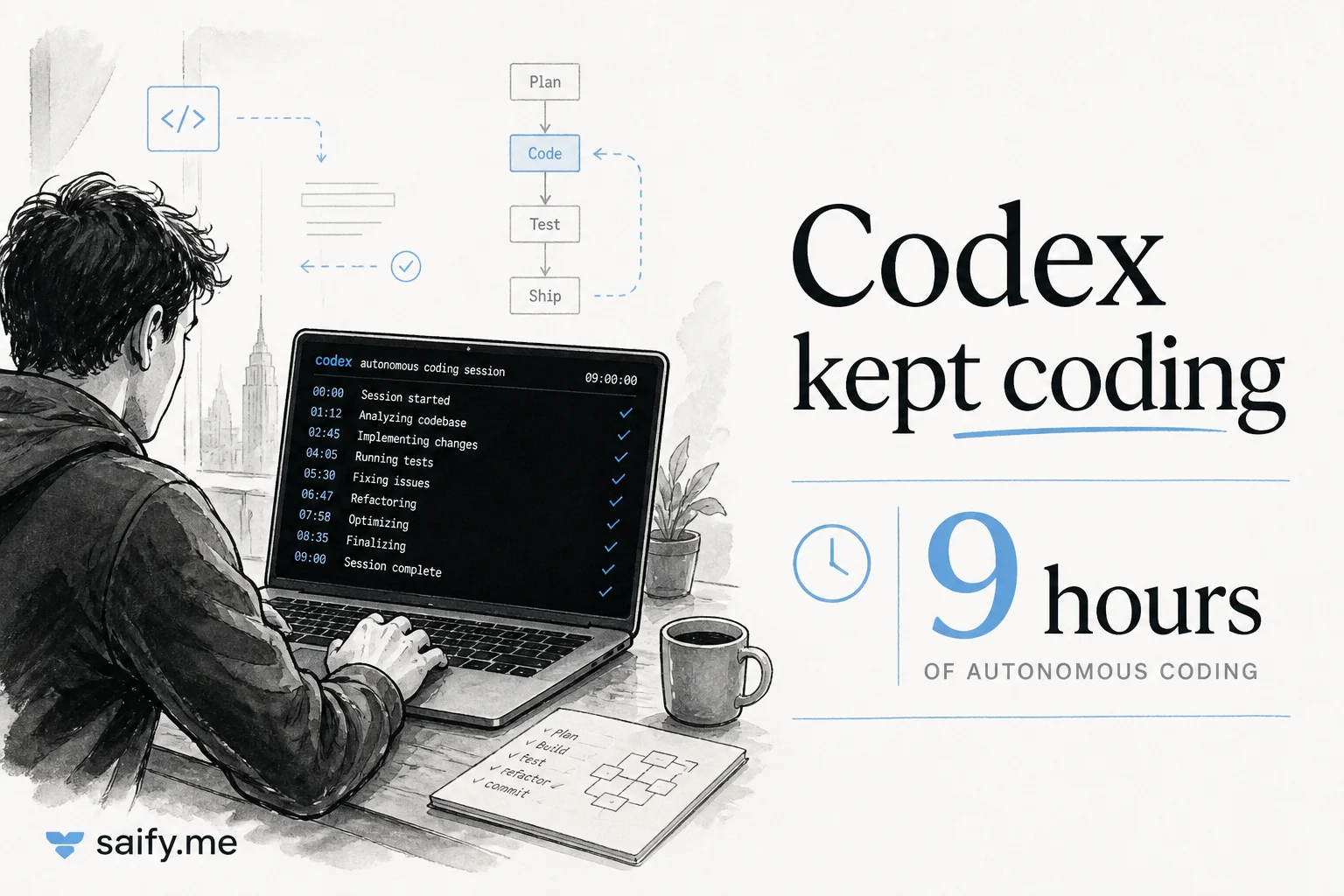
You start a Codex agent on a migration Friday afternoon. Tests go green around hour four. Then the usage meter hits zero.
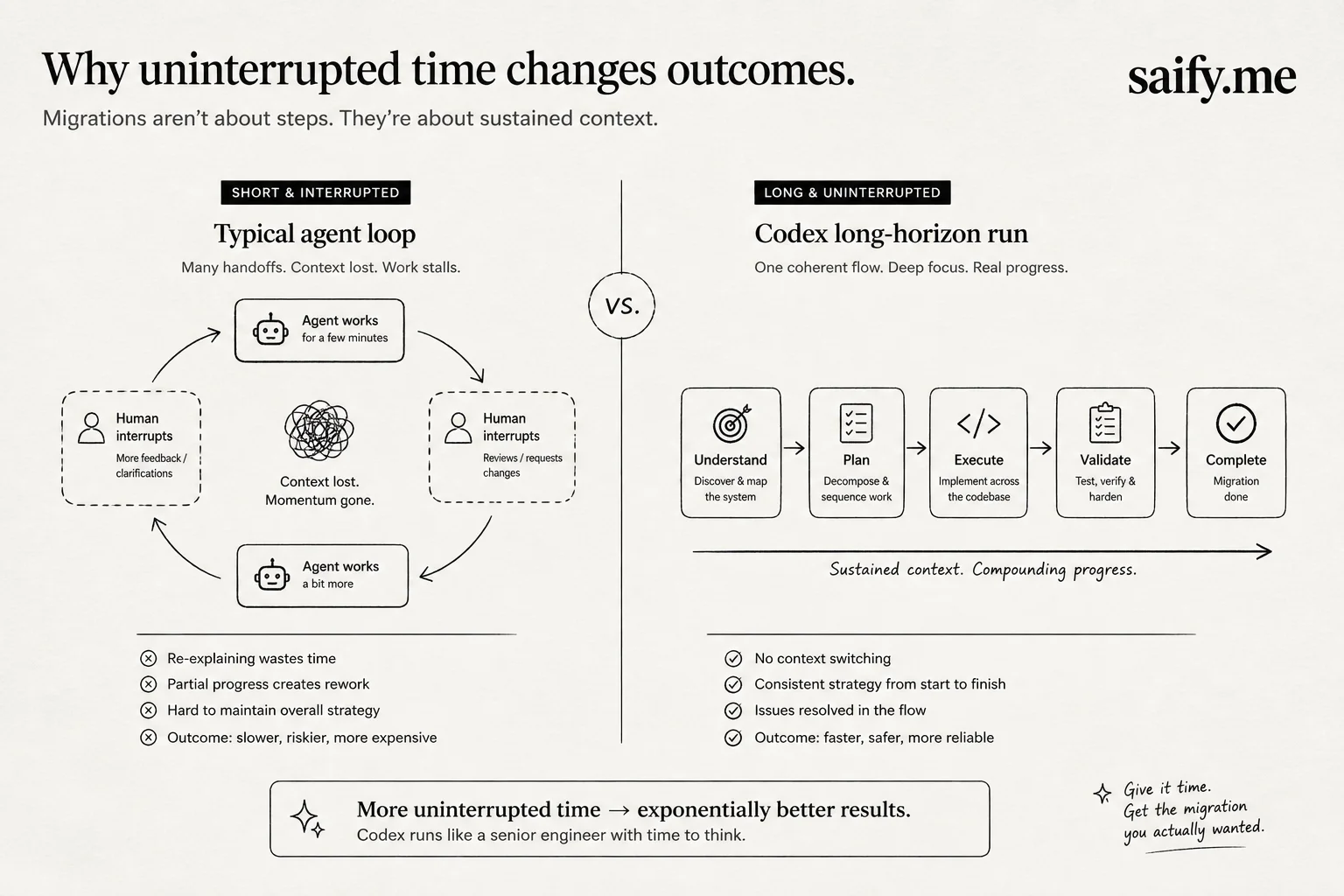
If the run dies there, you do not lose tokens. You lose context, momentum, and the weekend.
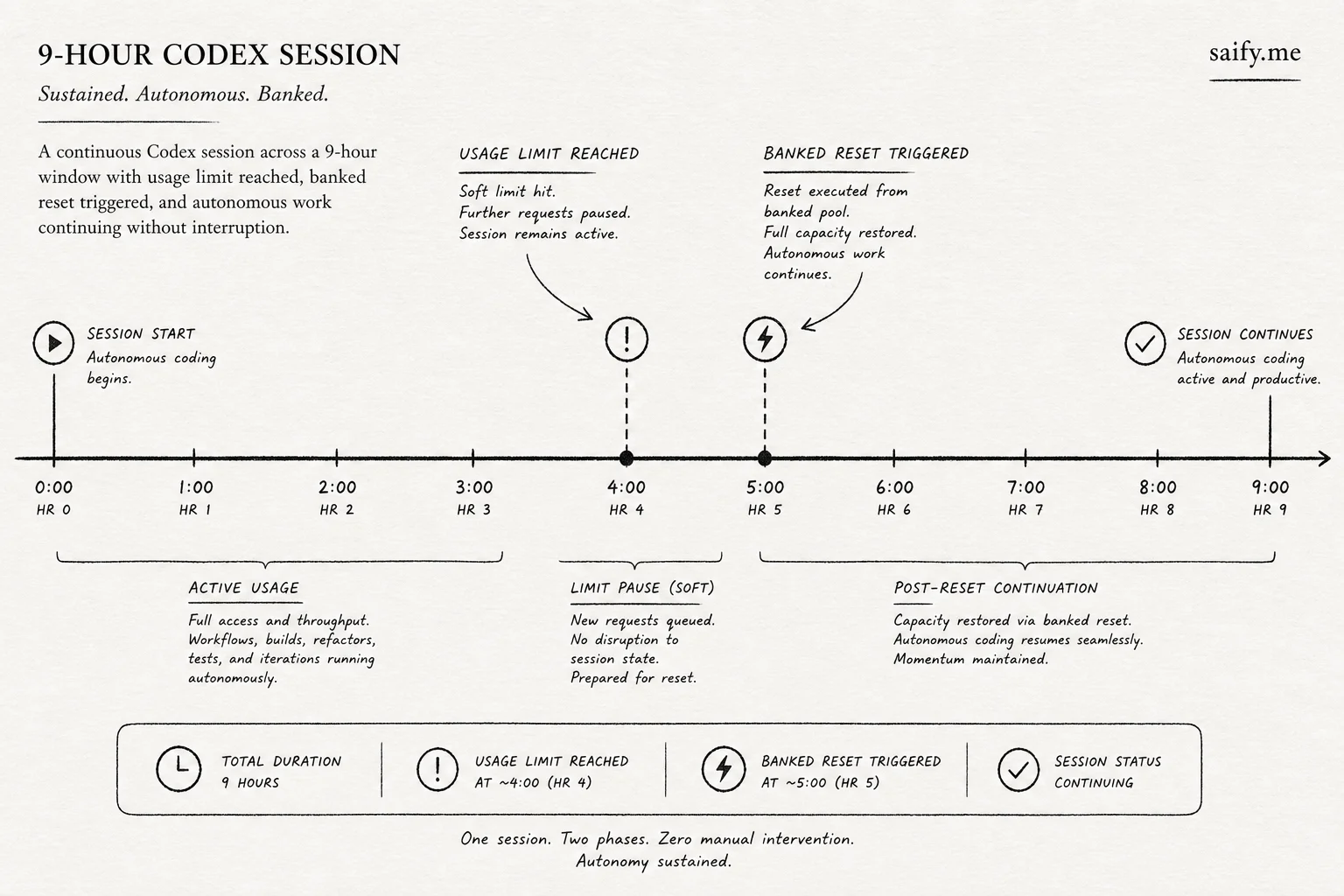
AlphaSignal's July 2026 signal highlighted a case that stuck with developers: OpenAI Codex completed a nine-hour coding task after hitting the usage limit, leaning on quota mechanics (including banked resets and active-turn continuation) instead of stopping cold.
I run long agent loops for client refactors. Nine hours is an outlier, but the pattern is real: autonomous coding duration is now bounded by quota architecture, not just model capability.
Why nine-hour runs are possible now
Three OpenAI shifts converged in mid-2026:
- Banked rate-limit resets (June 12): save a reset, trigger it when you slam into the wall mid-sprint
- Temporary 5-hour window changes (July): community debate about weekly vs rolling limits; 5-hour window restored July 30 after capacity work
- GPT-5.6 efficiency: same tasks burn less quota per OpenAI's July posts
Codex local CLI, IDE extension, cloud delegation, ChatGPT Work, and Workspace Agents often share one agentic credit pool. Long runs drain faster when you pick heavy reasoning models or fat context.
The nine-hour story is not "limits disappeared." It is "limits became manageable enough that a determined session plus reset policy could finish a real ship task."
Banked resets: fire extinguisher, not daily fuel
I covered banked resets when they launched: Codex banked rate limit resets.
Quick refresher:
| Detail | Value |
|---|---|
| Eligible plans | Go, Plus, Pro, Business |
| Starting balance | One free banked reset |
| Trigger | Manual from profile or usage UI |
| Expiry | 30 days after grant |
| Effect when used | Restores 5-hour and weekly windows; weekly reset date moves forward ~7 days |
That last row trips people. Using a reset is not a gentle top-up. It restarts the weekly period. Community threads in August 2026 asked OpenAI to show the new reset date before confirmation. If you were at 80% weekly quota, burning a reset for a small win can strand you later.
For a nine-hour migration, the reset is justified. For a Tuesday typo fix, wait the window.
Active turns vs hard stops
OpenAI's fair-use policy suggests an active turn may continue after a nominal limit, subject to safety caps. GitHub issues document the gap: when Auto-review must approve high-risk commands, sub-calls can fail even if the parent turn is "active." You end up blocked mid-Linux validation with a nominally running task.
That is the failure mode behind nine-hour success stories turning into nine-hour stalls:
- Parent task still open
- Quota exhausted
- Elevated shell commands need Auto-review
- Auto-review rejected as new quota-consuming request
If your long run depends on sudo, Docker, or cross-environment sync, test continuation behavior before production Friday.
Model choice multiplies wall-clock, not just quality
GPT-5.6 Sol burns quota faster than Luna on heavy reasoning tasks. Community reconstructions in August 2026 showed millions of cached input tokens in short windows with modest visible weekly percentage moves, then sudden drains when model or routing paths shifted.
For nine-hour ambitions:
| Lever | Effect |
|---|---|
| Luna for bulk edits, Sol for hard blocks | Stretches weekly runway |
Context hygiene (/compact, smaller reads) | Fewer tokens per step |
| Cloud vs local routing | Same pool, different latency tradeoffs |
/status in CLI | Ground truth before you bet the afternoon |
Daniel Vaughan's July analysis on the shared agentic credit pool is still the structural warning: removing the 5-hour window temporarily did not enlarge weekly caps. It only let you consume the weekly allowance faster.
How I plan long Codex sessions for clients
Before you start
- Run
/status. Note 5-hour and weekly percentages and reset times. - Pick model tier per phase (plan on Luna, execute critical path on Sol).
- Confirm Auto-review policy matches commands you will need at hour six.
During the run
- Checkpoint git commits every green test slice. If quota kills the agent, you keep artifacts.
- Log harness version and prompt hash. Nine-hour runs are impossible to replay from memory.
- Watch for background retries eating pool (some August 2026 bug reports cited silent drain).
When the wall hits
- If the session is ending anyway, do not burn a banked reset.
- If migration/demo/incident, use reset and accept the weekly date shift.
- If still blocked on Auto-review sub-calls, kill and resume from checkpoint with narrower scope.
Nine hours is a stress test, not a default
Most client work should not require nine-hour autonomy. If it does, ask why:
- Scope too big for one agent pass?
- Missing human review gates?
- Test harness too slow, forcing serial retries?
Long runs also increase injection and tool-misuse risk. Pair quota planning with security layers from sandbox + proxy stacks.
Bottom line
Codex finishing a nine-hour task after limits is a quota UX story, not magic model stamina. Banked resets, active-turn continuation, and efficiency gains make long-horizon agentic coding plausible on consumer-tier plans for the first time.
They also make it easier to burn a week of quota in a day if you misread reset mechanics.
Treat banked resets like spare tires. Treat /status like a fuel gauge. Treat git checkpoints like insurance.
If you are wiring Codex or Claude Code into a production migration pipeline and want help sizing quota, harness boundaries, and review gates, book a free discovery call.