
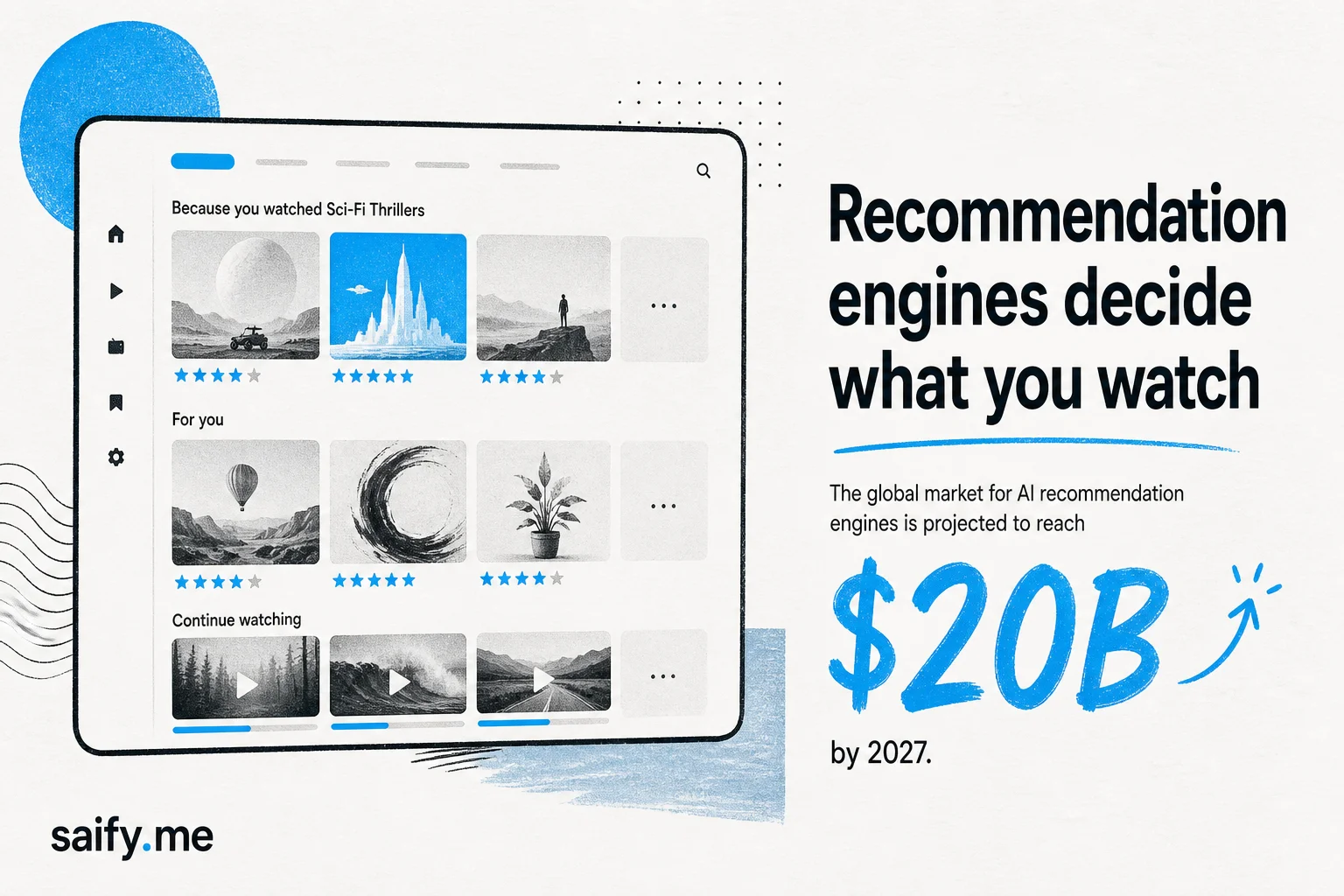
Disney already owns the characters, the parks, and the screens. What it does not own is the habit loop that keeps people on Netflix for another episode at midnight.
That is the bet behind Josh D'Amaro's reported overhaul of Disney+. The new CEO wants the streamer to stop behaving like a digital cable box and start thinking like a product company where the recommendation row is the product.
What changed in leadership thinking
D'Amaro came up through Disney's parks division, where he watched prices climb steadily on his watch. Disney+ has already run a similar playbook on the software side: price hikes, ad tiers, and password-sharing crackdowns.
Those levers buy revenue. They do not buy engagement depth.
Bloomberg reported that D'Amaro is signaling a more aggressive tech-first strategy for Disney+, pushing product, personalization, and data over legacy TV distribution habits.
The company is also rethinking its content playbook. The goal is not just more originals. It is better matching between Disney's massive IP library and what each household actually wants to watch next.
| Lever already pulled | What it optimizes | What it does not fix |
|---|---|---|
| Price increases | ARPU | Churn from weak discovery |
| Ad-supported tier | Subsidized subs | Session length |
| Password crackdowns | Paid accounts | Recommendation quality |
| Bundle with Hulu/ESPN | Cross-sell | Unified taste graph |
The super app angle matters for builders
Back in May, Disney also said it was exploring a super app that would merge Disney+ with park tickets, cruise bookings, and Navigator-style trip tools into one platform.
That is not a branding exercise. It is a data graph problem.
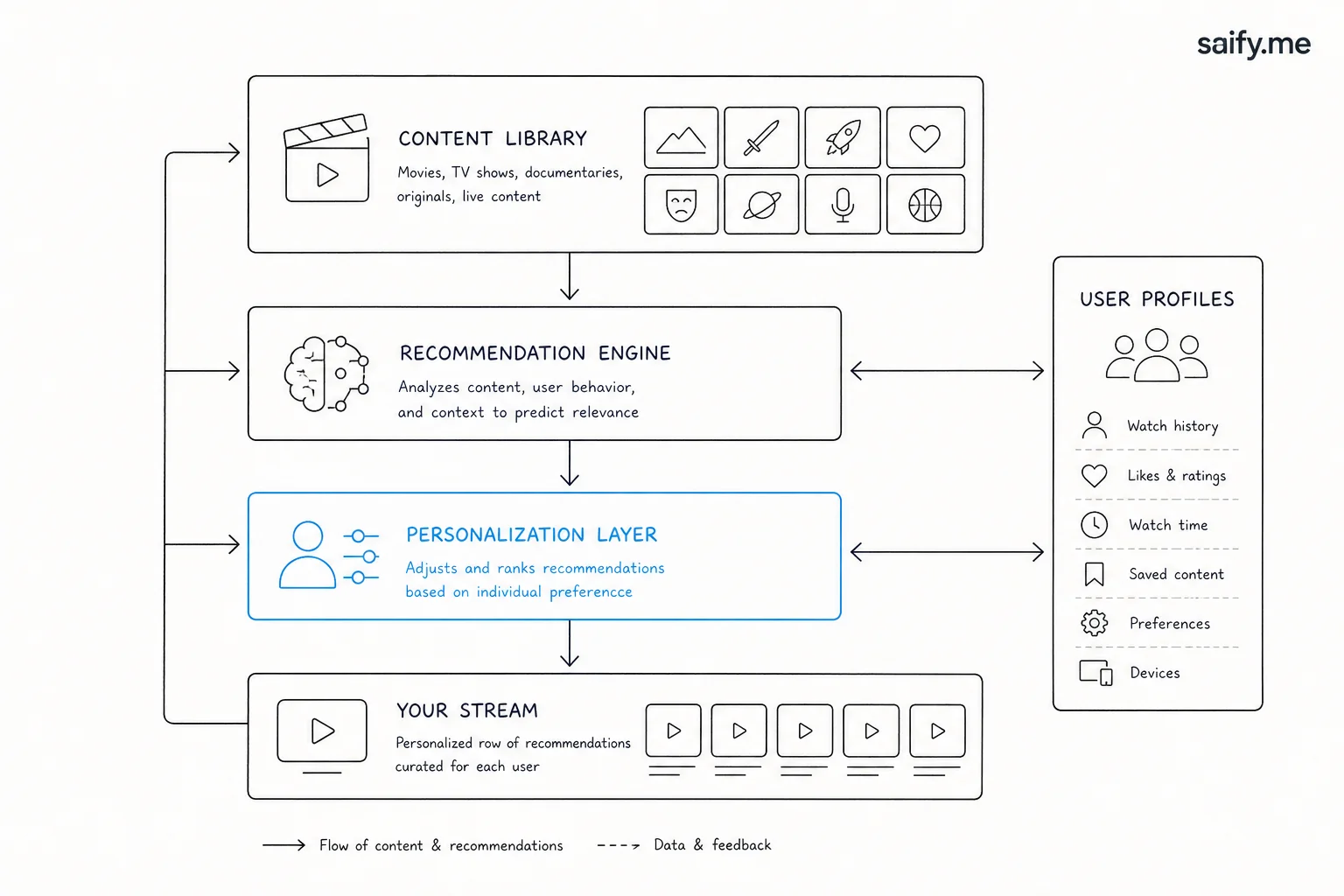
If Disney can connect what you watch, where you travel, and what you buy in parks, the recommendation engine gets richer than any pure streamer can build from watch history alone. Netflix knows what you binge. Disney could know what you binge and which princess your kid hugged at Magic Kingdom last month.
For applied AI teams, the lesson is blunt: the moat is not the model. It is the cross-surface identity layer.
Why recommendations are the hard problem
Disney+, Hulu, and ESPN cleared $20B in sales last year. That puts the bundle third behind Netflix and YouTube. Subscriber growth stalled anyway, and the share price followed.
Netflix spent more than a decade turning recommendations into a core competency. Not just "people who watched X also watched Y." Home row ordering, artwork personalization, autoplay timing, kids profile separation, and constant A/B tests on thumbnail variants.
Disney has world-class IP. It does not yet have world-class session extension.
Closing that gap means:
- Unified profiles across Disney+, Hulu, and ESPN without breaking kids mode and brand safety rules.
- Cold-start handling for new releases across Marvel, Star Wars, Pixar, and sports, where taste clusters look nothing alike.
- Explainability for parents when the algo surfaces mature content adjacent to family franchises.
- Real-time feedback loops from ad-tier viewers, not just premium subs with cleaner signals.
None of that is a single model swap. It is product, data engineering, and experimentation culture.
What I would ship first on a team like this
If I were advising a streaming overhaul, I would not start with a foundation model press release. I would start with instrumentation.
Week 1–4: measure the gap
- Track
time_to_first_playafter app open. - Segment by franchise affinity vs generic browsing.
- Compare completion rates for algorithmic rows vs curated rails.
Month 2: ship one high-trust surface
- A "Because you finished X" row with explicit reasoning text.
- Parents trust transparency more than black-box magic.
Month 3: connect off-platform signals
- Park visit data, merchandise purchases, and newsletter clicks as features, with strict consent walls.
Ongoing: treat thumbnails as a ranking problem
- Netflix proved artwork is a first-class ML surface. Disney's character library is visual gold if the test infra exists.
The builder takeaway
Disney's overhaul is a reminder that distribution and IP are not substitutes for product engineering. You can own the most valuable content catalog on earth and still lose the session if the home screen feels like a grid of logos.
For client work, I see the same pattern in smaller products: teams ship a chatbot or a dashboard, then wonder why retention is flat. The missing layer is usually contextual ranking across user journeys, not another model endpoint.
If you are wrestling with personalization in a product that spans multiple surfaces (CRM, voice, web app), book a free discovery call. I help teams wire the data graph before they buy another recommender API.