
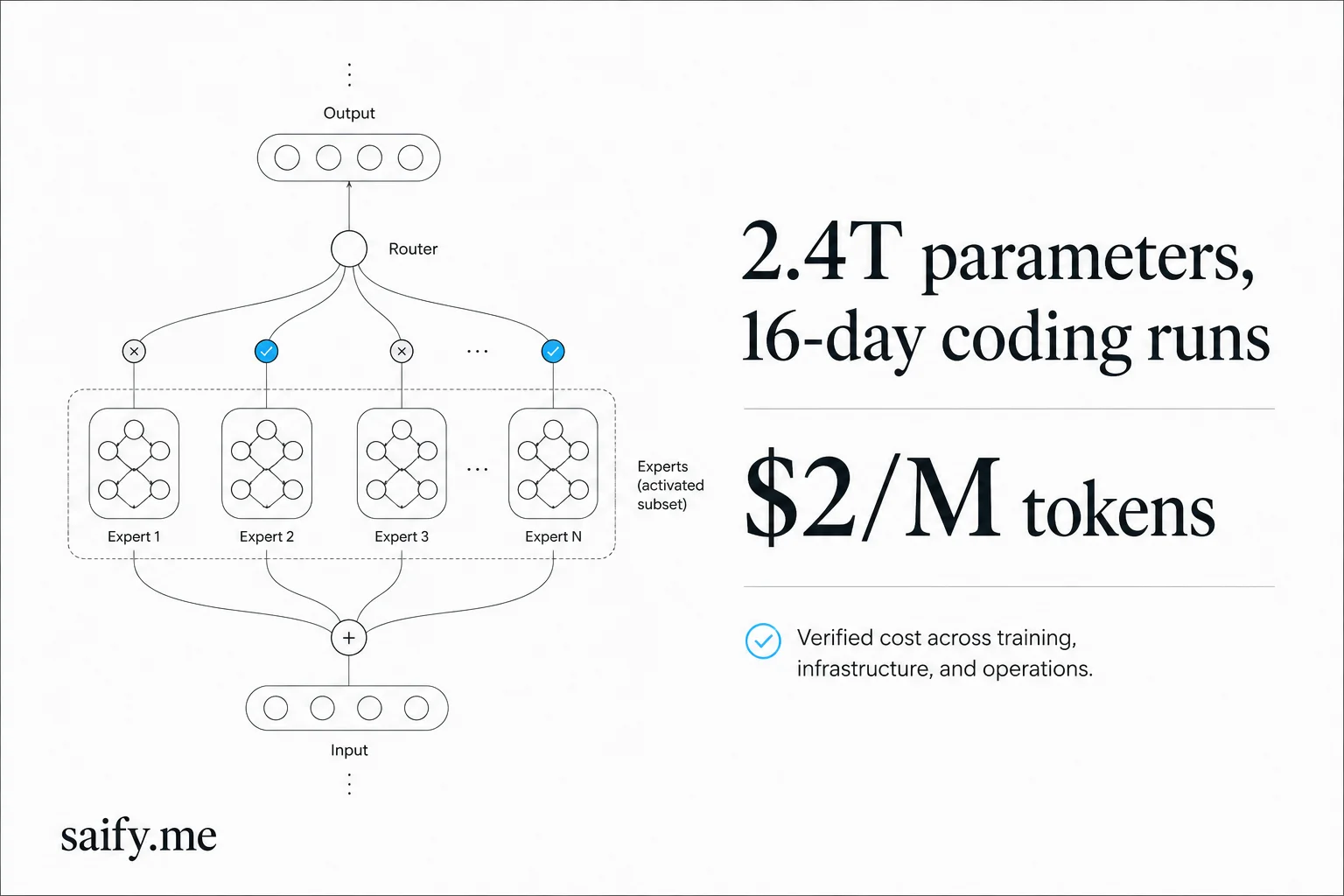
Alibaba just moved the open-weight frontier again. Qwen3.8-Max is a 2.4 trillion parameter mixture-of-experts model with 95 billion active parameters, priced at $2/$6 per million tokens, and marketed on endurance: multiday coding runs, self-directed research loops, and WebDev scores that beat Claude Fable 5 on Arena's leaderboard.
I ship agent systems for clients who care about cost per completed task, not leaderboard vanity. This release hits both nerves.
What changed from Qwen3.7 Max
The Qwen line has been climbing fast. I covered Qwen3.7 Max for its million-token context and 35-hour agent demos. Qwen3.8-Max is a different bet: frontier reasoning at a discount, with open weights coming for the Max class for the first time.
| Spec | Qwen3.8-Max (reported) | Why it matters |
|---|---|---|
| Total parameters | 2.4T MoE | Large capacity without activating every weight |
| Active parameters | 95B per pass | Inference cost tracks active size, not total |
| API input / output | $2 / $6 per 1M tokens | Undercuts Fable 5 pricing at launch |
| WebDev Arena | Ahead of Fable 5 | Real UI coding, not synthetic trivia |
| Weight release | Hugging Face (Max first) | Local eval and fine-tune without vendor lock |
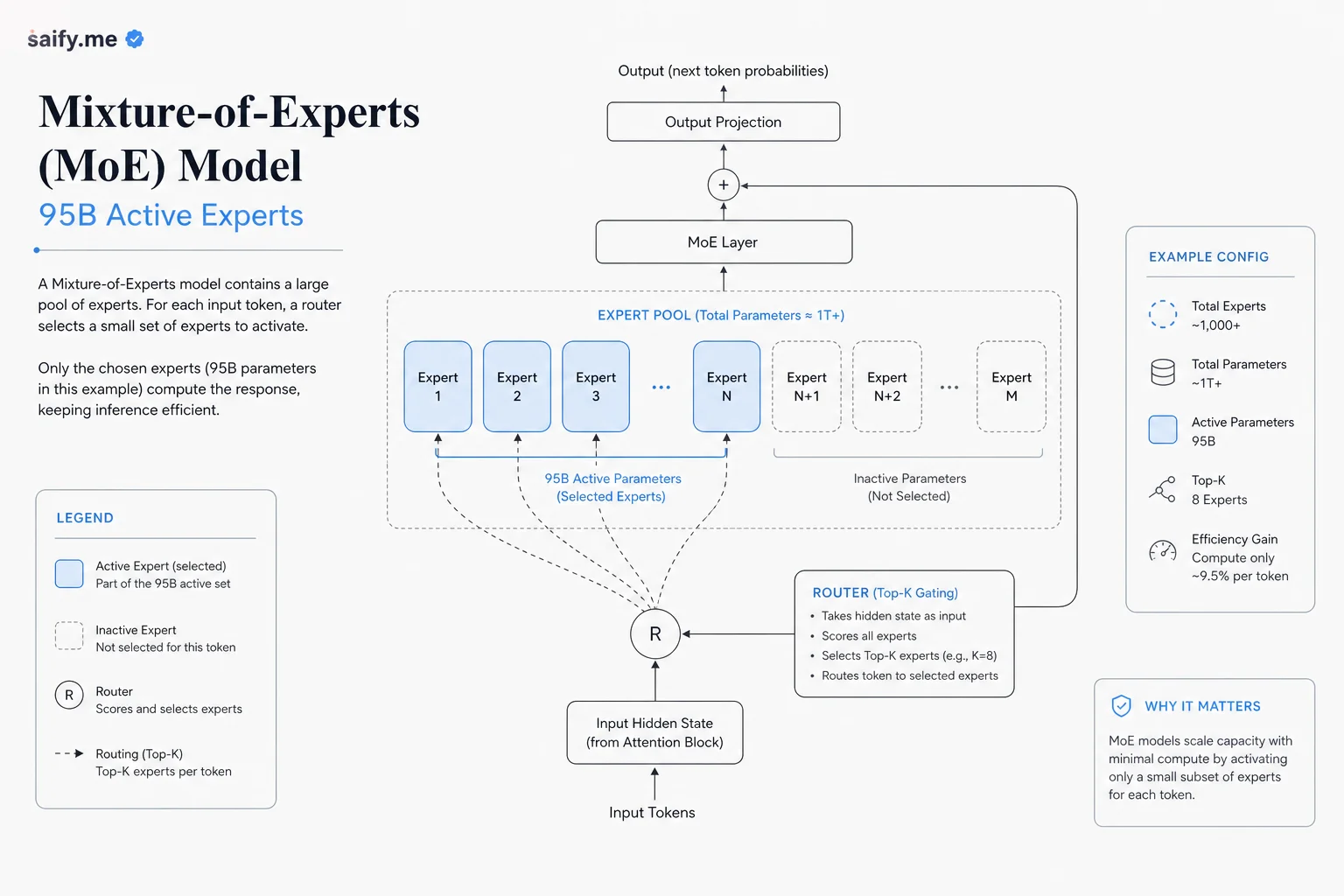
MoE is not magic. It is routing: each token activates a subset of experts. You get large-model capacity with smaller per-step compute. The trade-off is engineering complexity, load balancing, and eval variance when experts specialize unevenly.
The 16-day coding demo is the headline
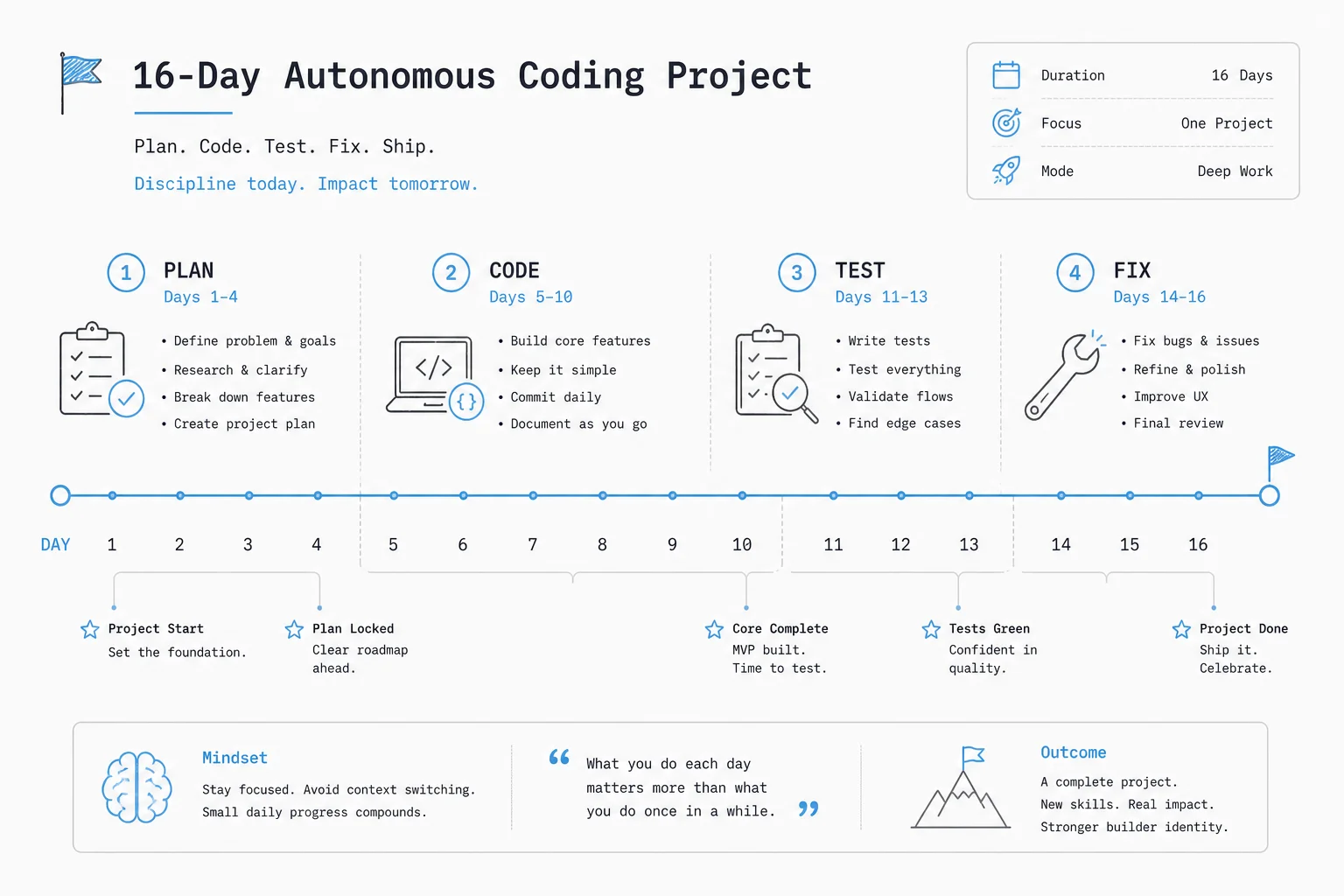
Alibaba's launch story included a 16-day autonomous run building a command-line tool. The model turned feedback into tasks, wrote code, ran tests, and fixed failures in a loop.
That is the same narrative Kimi K3 pushed earlier in 2026: agents measured on calendar time, not single-shot answers. Qwen3.8-Max adds a research loop story too: it reportedly rebuilt a paper's experiment, invented 18 follow-up ideas, tested them, and picked up 2.7 points on AIME24.
Vendor demos are not your production sprint. Still, the direction is clear. Frontier labs now sell sustained execution alongside IQ.
What I would demand before trusting marathon runs for a client:
- Hard sandbox boundaries on network, secrets, and write paths
- Human review gates before merge to main
- Per-task cost caps, not just list token prices
- Fallback models for routine steps (see agentic coding model routing)
Open Max weights change the economics
Qwen's smaller open models already power local stacks. I wrote about Qwen3.8-27B on a single RTX 4090 with Unsloth quants. Max-class weights on Hugging Face is a bigger shift: teams can benchmark the flagship without routing every experiment through Alibaba Cloud.
That intensifies the debate Kimi K3 started. Near-frontier performance at a fraction of closed-model prices makes premium API tiers harder to justify for bulk agent work. It also raises export-control and safety questions when Max weights are downloadable.
For applied builders, the practical move is parallel eval:
- Run your real ticket shapes against Qwen3.8-Max API
- Compare cost per merged PR or per resolved support thread
- Keep a closed frontier model for high-stakes steps only if the delta pays for itself
Useful references:
Where this lands in a client stack
Most of my consulting work is not "pick the highest SWE-Bench number." It is wiring agents into CRMs, voice lines, and internal tools with predictable bills.
Qwen3.8-Max is interesting when:
- You need long-horizon coding or research agents with Anthropic-compatible harnesses
- Web/UI generation quality matters (WebDev Arena is a better proxy than trivia benchmarks)
- API cost dominates your unit economics
It is less interesting when:
- You need airtight safety policy on day one (open weights shift that burden to you)
- Your workload is short copilot bursts (smaller Qwen or local 27B may be enough)
- Compliance requires a specific vendor attestation
The takeaway
Qwen3.8-Max is Alibaba's answer to "frontier agents at commodity prices." The 2.4T/95B MoE stack, multiday coding story, and impending Max weights on Hugging Face are the parts worth tracking. The part worth testing is whether your harness survives 16 days without blowing the budget.
If you are choosing models for a production agent stack and want help mapping benchmarks to your actual workflows, book a free discovery call.