
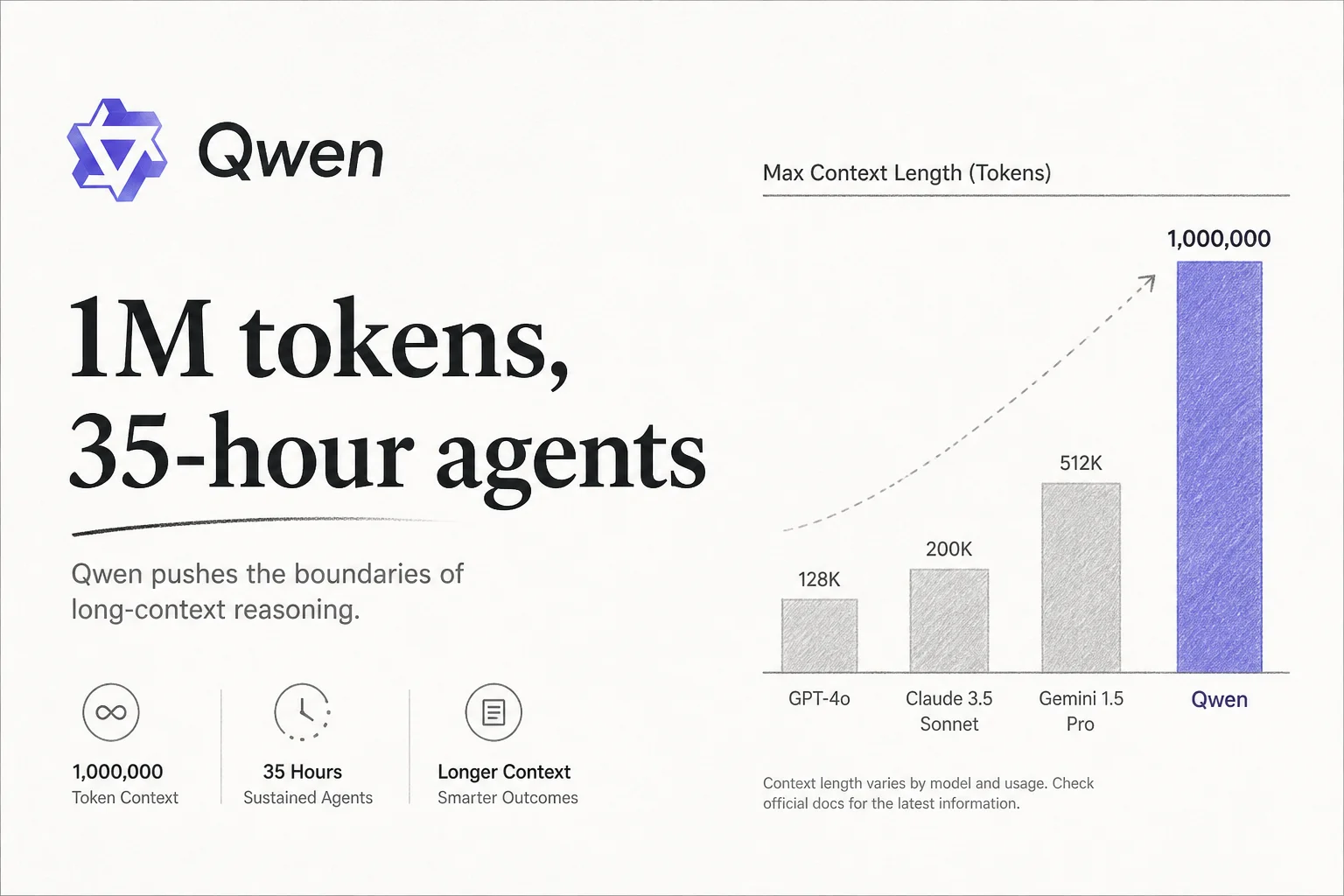
The AlphaSignal digest headline was endurance, not IQ. Alibaba's Qwen3.7 Max is the model that fits that story: a reasoning flagship with a 1 million token context window, strong coding benchmarks, and internal demos of 35-hour autonomous runs with 1,000+ tool calls.
I care about this because my clients do not ask "what scored highest on a leaderboard?" They ask "can this agent hold a whole codebase and still finish Friday?"
The numbers worth verifying
Qwen3.7 Max landed in May 2026 as Alibaba's top Qwen3.7 tier. Vendor tables and independent trackers align on several headline stats:
| Benchmark | Qwen3.7 Max (reported) | What it measures |
|---|---|---|
| SWE-Bench Verified | 80.4% | Real GitHub issue resolution |
| SWE-Bench Pro | 60.6% | Harder, contamination-resistant coding |
| Terminal-Bench 2.0 | 69.7% | CLI agent workflows |
| GPQA Diamond | 92.4% | Graduate-level science Q&A |
| Context window | 1M tokens | Full-repo and long-horizon input |
Pricing on Alibaba Cloud Model Studio has been quoted around $2.50 per million input tokens and $7.50 per million output tokens, with aggressive cached-input discounts. Treat list prices as directional; your route (direct API vs gateway) changes the bill.
Why 1M context is not just a spec sheet flex
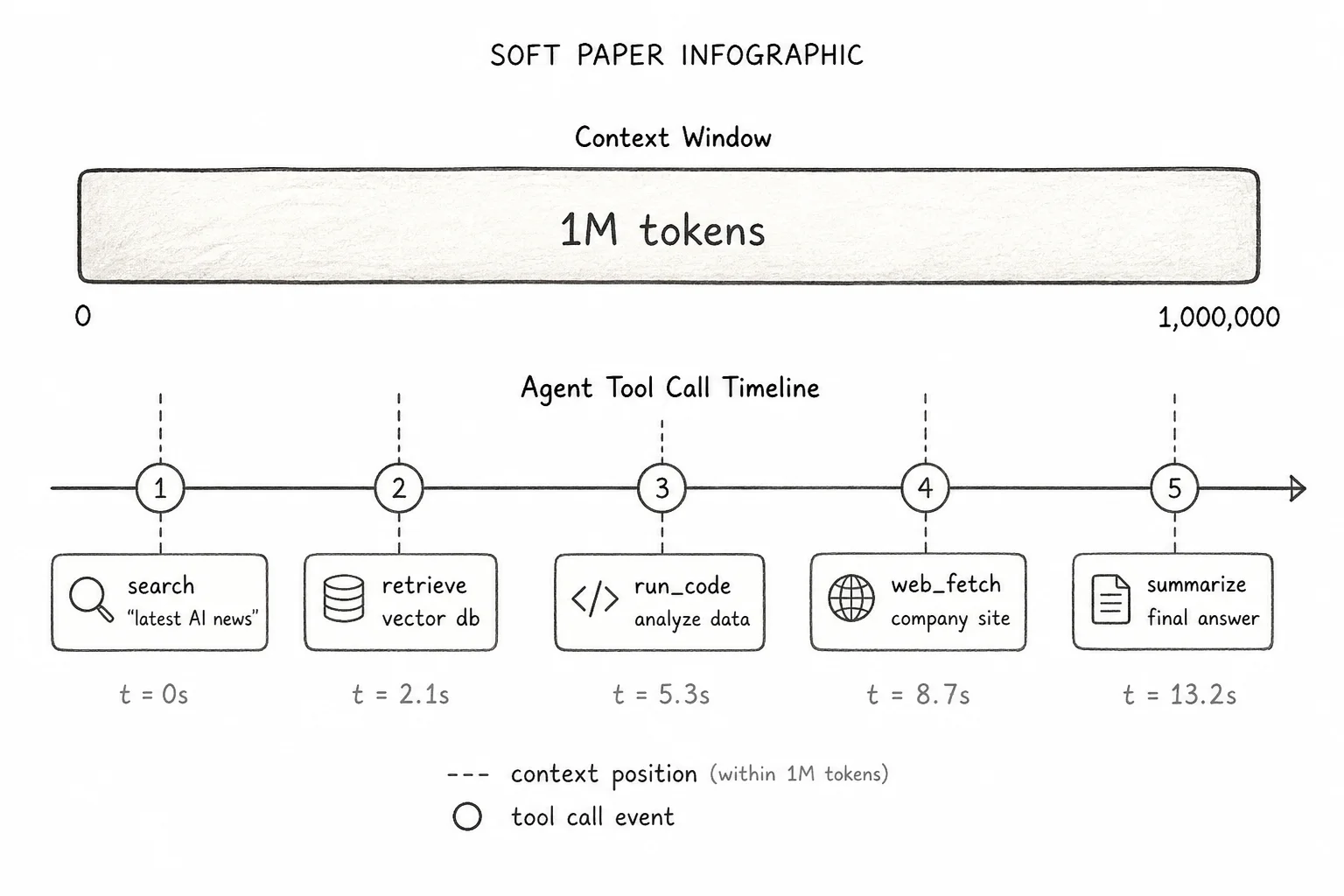
A million tokens is roughly 2,000 pages of text. In agent terms, that is "drop the repo, the design doc, and three weeks of Slack exports into one session" territory.
That helps two classes of work I see in consulting:
- Greenfield modules where the agent needs product context, API contracts, and style guides simultaneously
- Legacy refactors where the failure mode is the agent "fixing" one file while blind to callers three layers up
Context length does not replace retrieval. It changes how often you pay the tax of re-ingesting files after every tool loop. For long-running agents, that tax compounds.
Alibaba also highlights Anthropic API protocol support, which is the practical hook for teams already running Claude Code-style harnesses. Swap the model endpoint, keep the tooling. Less rewrite, faster experiments.
The 35-hour run: impressive, not automatic
The digest cited a 35-hour autonomous kernel optimization with 1,000+ tool calls. Vendor demos are not your sprint board.
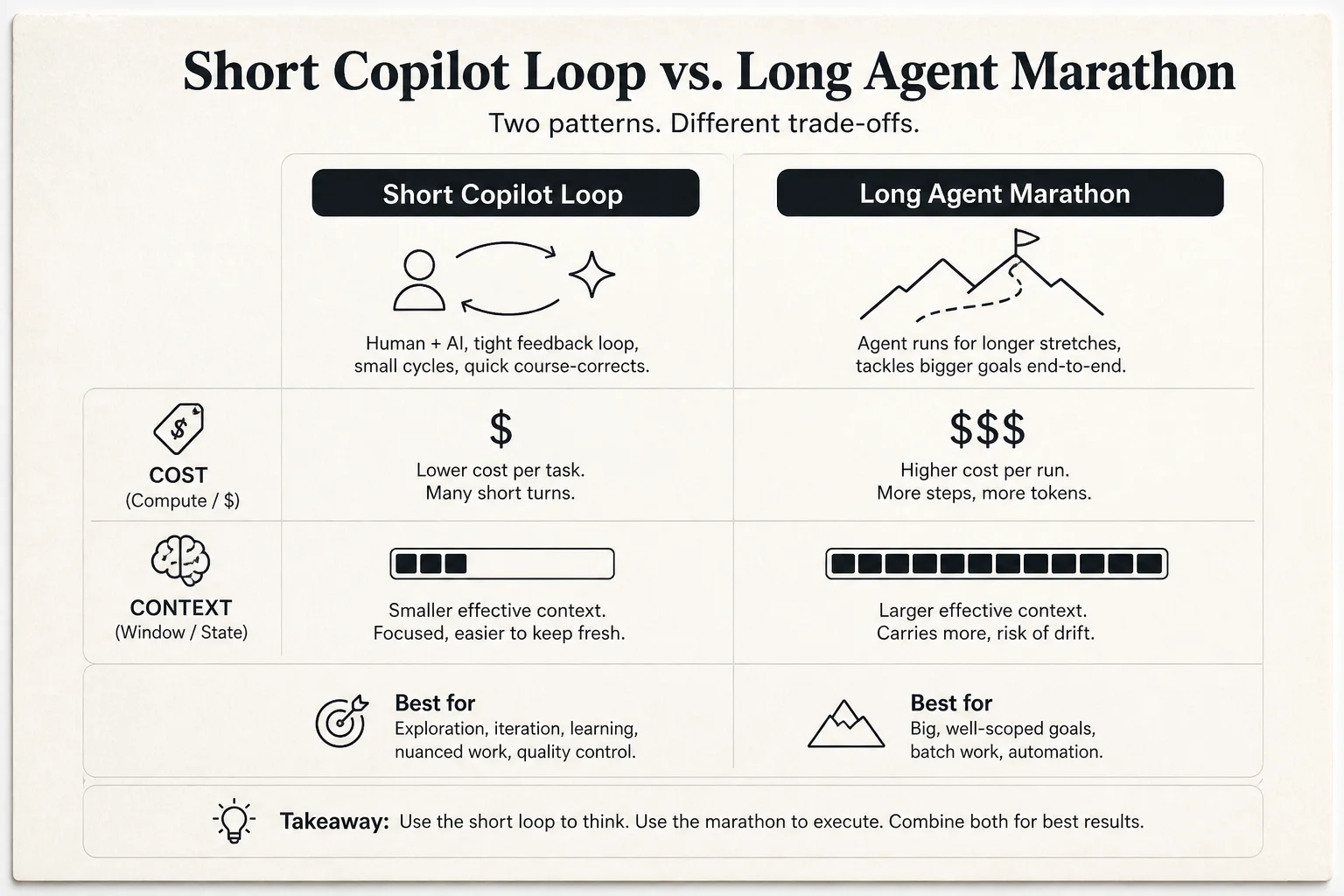
Still, the direction matches where agent products are headed: models marketed on sustained execution, not single-shot chat quality. Qwen3.7 Max sits in that lane alongside GPT-5.5's agentic coding push and frontier models tuned for Terminal-Bench-style work.
What I would demand before trusting marathon runs in production:
- Hard sandbox boundaries (network, secrets, write paths)
- Checkpointing and human review gates on merge
- Cost caps per task, not just per token list price
- Fallback models for routine steps (see my notes on model routing for agent loops)
Closed weight, Go tier, and what changed after launch
Qwen3.7 Max is not open weight. If you need local inference, look at smaller Qwen3 dense models (I covered Qwen3 8B for local agents separately) or later open releases in the Qwen3.8 line.
The digest note about landing in the Go tier matters for budget teams: you get flagship agent behavior without automatically routing every turn through the most expensive frontier SKU.
Useful references:
- Alibaba Cloud Qwen3.7 Max docs
- Alibaba Cloud
- Artificial Analysis (independent model tracking)
The takeaway
Qwen3.7 Max is Alibaba's bet that agent workloads need duration and context, not just another reasoning bump. For applied AI builders, the actionable questions are harness compatibility, cost per completed task, and whether your review process survives 35-hour autonomy.
If you are choosing models for a production agent stack and want help mapping benchmarks to your actual ticket shapes, book a free discovery call.