
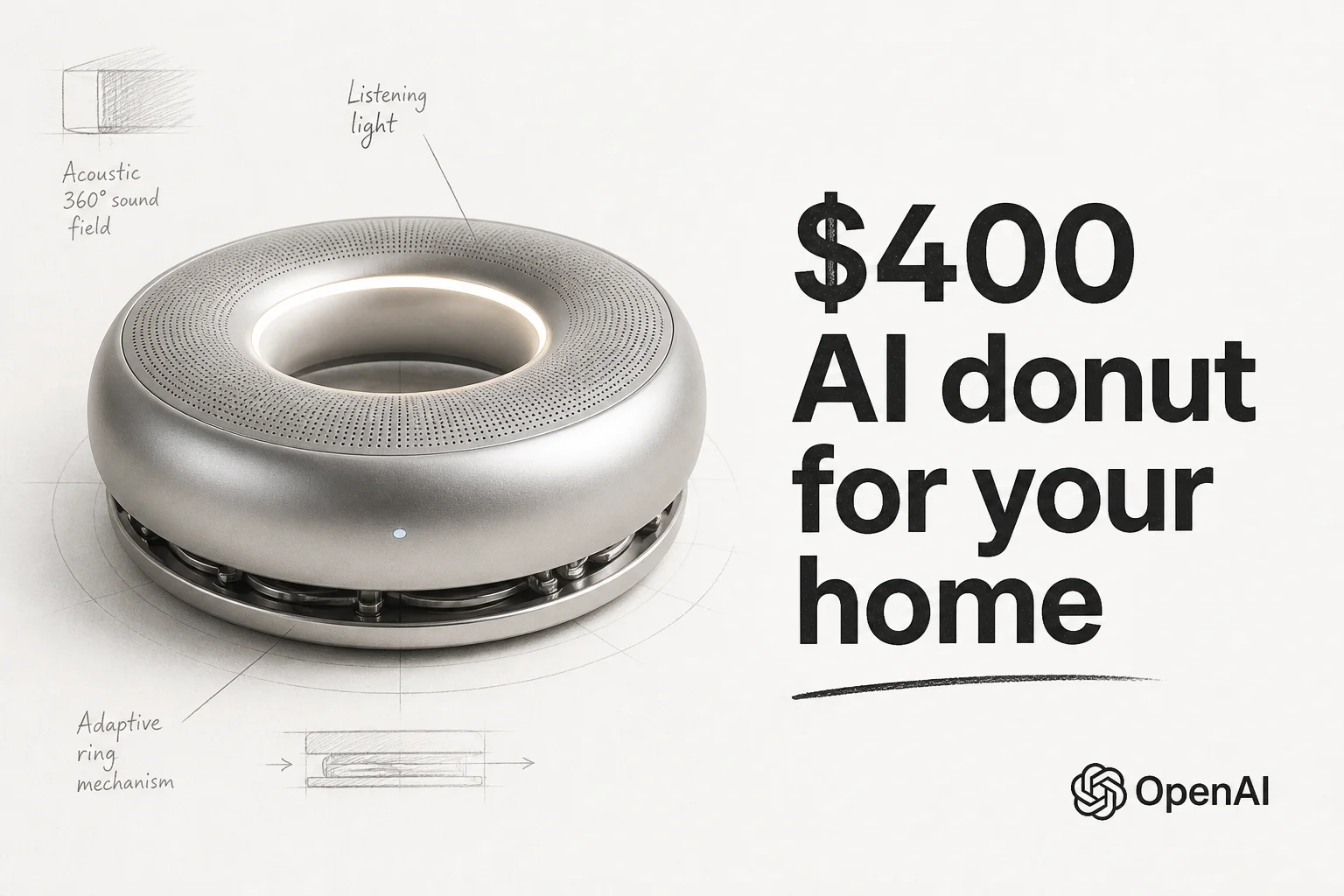
OpenAI's first gadget is not a phone. It is not glasses (those are reportedly coming later). According to Bloomberg's Mark Gurman, it is a donut-shaped, screenless smart speaker that costs somewhere between $300 and $400 and ships in 2027.
I build voice agents for clinics, trades, and service businesses. When a company that already owns ChatGPT's mindshare moves into always-on home hardware, I pay attention. This is not just another Echo clone. The reported specs read like a portable voice endpoint with eyes, memory, and mechanical feedback designed to feel alive in a room.
What we know about the device
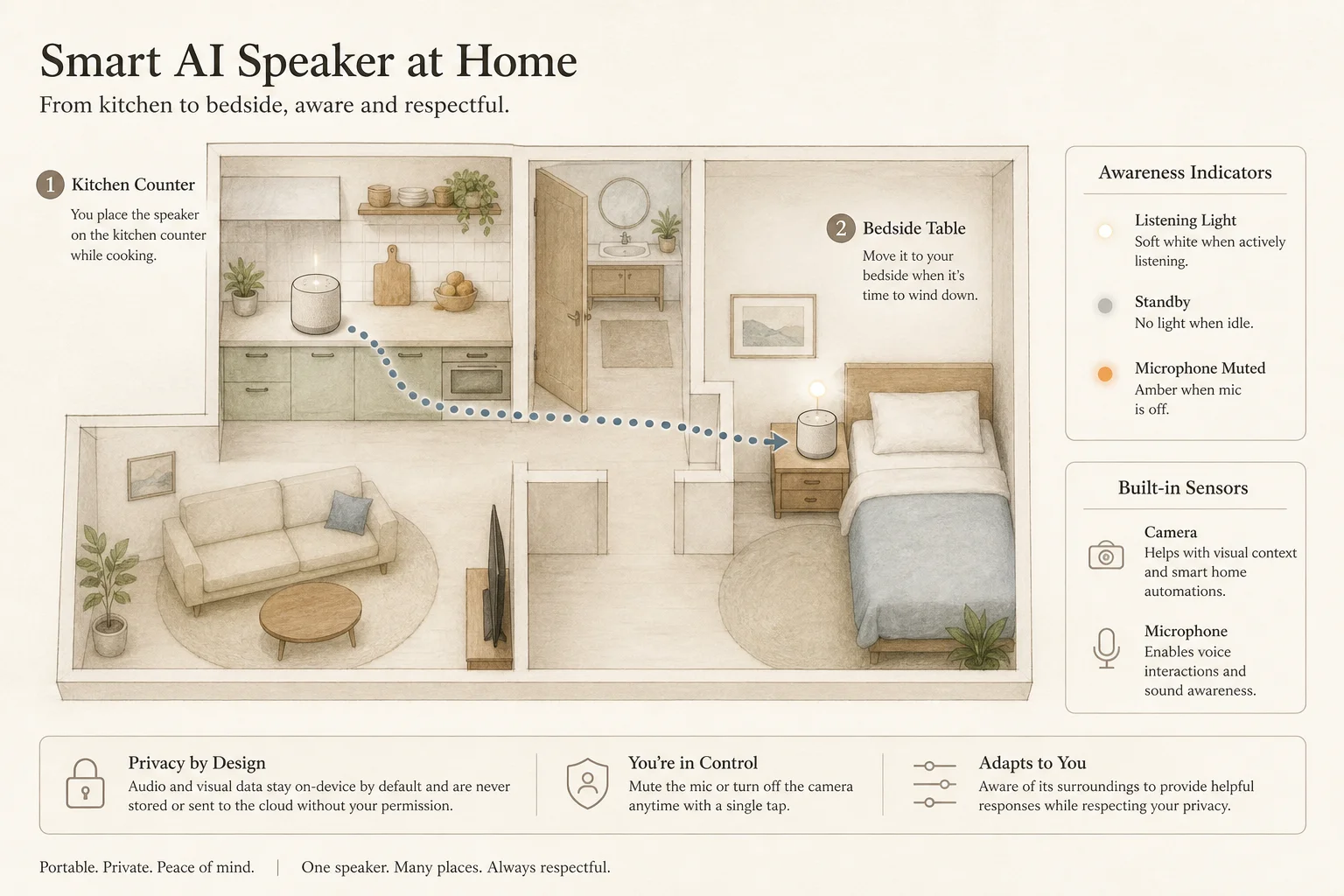
Gurman's sources describe a product that is roughly hockey-puck sized, battery-powered, and easy to carry with one hand from the kitchen to a bedside table. Think Amazon's discontinued Tap speaker, but with a much bigger AI stack behind it.
| Feature | Reported detail |
|---|---|
| Shape | Donut / hockey puck, high-quality metal |
| Price | $300 to $400 |
| Release | 2027 (possible unveil earlier) |
| Design | LoveFrom (Jony Ive's studio) |
| Sensors | Cameras, microphones, ambient sensors |
| Feedback | Moving mechanical parts + lights for listen/respond states |
| Screen | None |
OpenAI internally does not call it a speaker, according to follow-up reporting from The Next Web. They describe it as an AI-first computer: something that controls smart home gear, plays media, answers questions, handles messages, and reaches into the rest of ChatGPT.
The voice layer matters most. The device is expected to run a more advanced version of GPT-Live, OpenAI's real-time voice mode that can listen and talk at the same time. It is also designed to learn about you over time and tailor conversations accordingly.
Why the moving parts are not a gimmick
Every smart speaker I have tested shares the same UX failure: you talk to a dead cylinder on a shelf. Alexa lights up. Google Assistant chimes. Siri glows. Then it goes back to being furniture.
The reported mechanical elements are a direct swing at that problem. When you talk to this device, parts physically shift. Lights change with them. You can tell whether it is listening, thinking, responding, or working on a background task without guessing.
That matters for adoption. In the voice builds I ship, the hardest part is not speech recognition. It is trust. People need to know when the system is active, what it heard, and whether it is still working. A moving, lit object in the room communicates state better than a static LED ring ever did.
If OpenAI nails that feedback loop at the hardware level, it sets a bar every voice product will have to match.
The price problem (and the Amazon lesson)
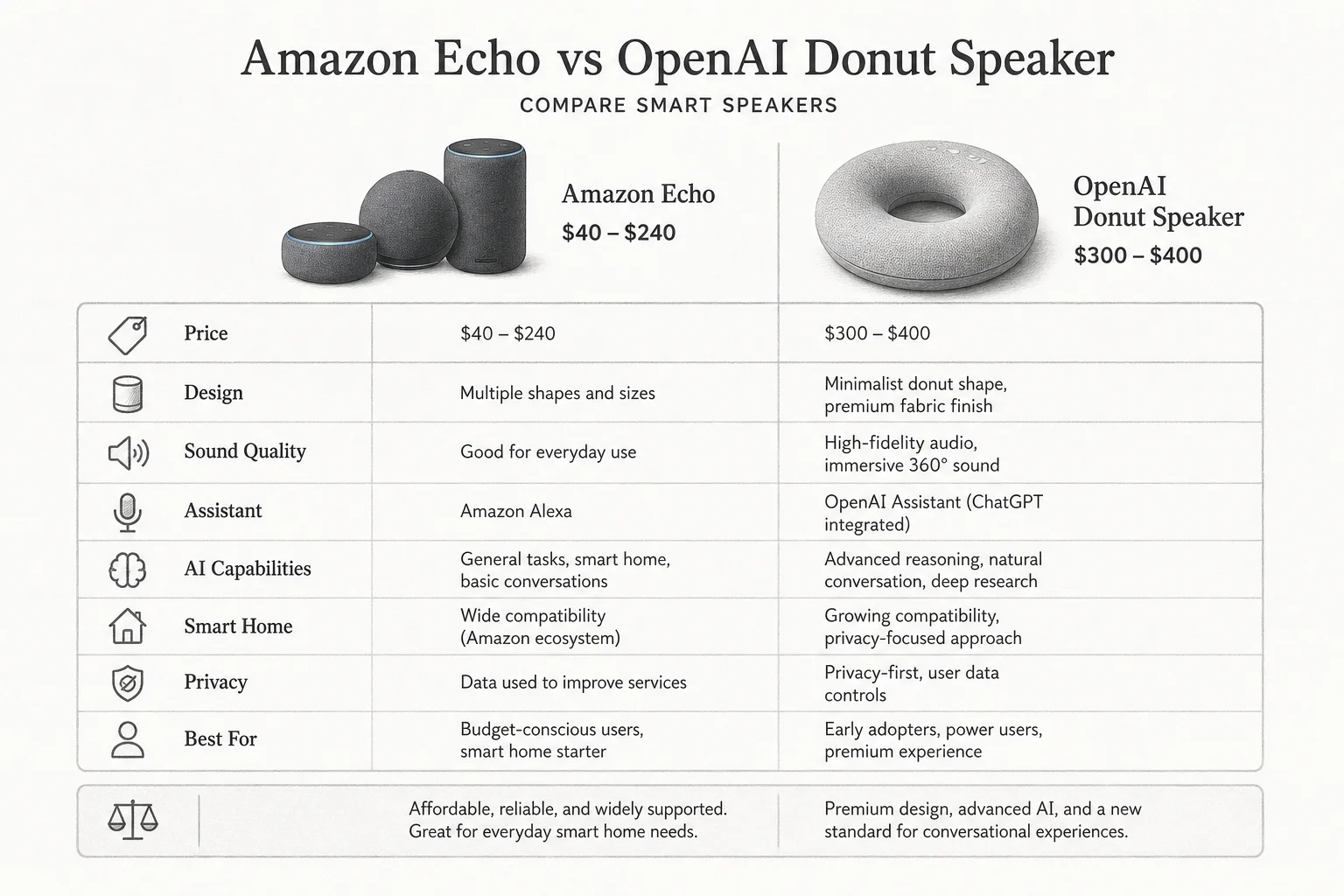
At $300 to $400, this device costs more than every mainstream smart speaker on the market. Amazon's Echo line runs from about $40 to $240. Google Nest speakers sit in a similar band.
Amazon spent years selling Alexa hardware at a loss to build a platform. Smart speakers were never the profit center. The ecosystem was.
OpenAI is taking the opposite bet: charge premium upfront and sell the AI experience, not subsidized plastic. That only works if the device does things Echo and Nest genuinely cannot. Gurman's reporting points to persistent memory, environmental awareness through cameras, and humanlike voice interactivity as the differentiators.
For operators like me, the interesting question is not whether consumers will buy one donut. It is whether always-on, context-aware ChatGPT in every room changes what people expect from business voice agents too.
If your customers get used to an AI that remembers yesterday's conversation, sees the room, and responds with natural back-and-forth at home, a rigid phone tree at your clinic feels ancient by comparison.
Cameras, privacy, and the Apple lawsuit
The device reportedly includes a camera system that feeds visual context back into the model. Earlier reporting from The Rundown AI also mentioned Face ID-like facial recognition for purchases.
That is a lot of sensing for a product category that already makes people nervous. OpenAI will need a privacy story that goes beyond "trust us" if this ships into bedrooms and kitchens.
Timing adds another wrinkle. Apple is suing OpenAI over trade secrets, alleging the company stole hardware know-how. OpenAI denies wrongdoing. An injunction could complicate a 2027 launch even if the product itself is ready.
Meanwhile, Apple is pushing its own home hub plans with iOS 27, and Amazon is rolling out Alexa+ with deeper AI integration. OpenAI's window to define the category is real, but it is not unlimited.
What this means if you build voice products
I do not think every SMB needs to wait for OpenAI's donut. Most of the revenue I see in voice AI still comes from solving boring problems: missed calls, after-hours booking, WhatsApp qualification, CRM logging.
But the bar for what "good" feels like is about to move.
Here is what I am watching:
Persistent context. Home devices that remember you raise expectations for business agents that recall prior appointments, past quotes, and open tickets. Stateless FAQ bots will feel cheaper.
Ambient awareness. Camera-fed context at home is different from a phone call, but the underlying idea (know where you are in a workflow, not just what you said last) applies directly to multi-step voice flows.
State communication. Moving parts and lights that show listen/think/respond states are a UX pattern worth stealing for any voice surface, even a phone line with a text-back confirmation.
Premium positioning. OpenAI is not racing Amazon on price. If you sell voice automation, compete on outcomes (booked jobs, logged leads, fewer no-shows), not on being the cheapest widget.
Useful references while you think through your own stack:
- OpenAI Realtime API docs
- Vapi for programmable voice agents
- Retell AI for production voice deployments
- My pricing breakdown: how much AI chatbots and voice receptionists cost in 2026
The bottom line
OpenAI's donut speaker is a $300 to $400 wager that always-on, context-rich ChatGPT belongs in the physical home, not just on a phone screen. The hardware details (portable, camera-equipped, mechanically expressive) suggest they understand that voice UX is as much about trust and presence as it is about model quality.
Whether it sells at volume is a 2027 question. Whether it resets user expectations for voice AI is already happening.
If you are wiring voice into ops today, build for memory, clear state feedback, and natural conversation. That is what the next generation of users will compare you against.
Building voice or chat automation for a service business? Book a free discovery call and we can map what actually moves revenue before you buy more hardware hype.