
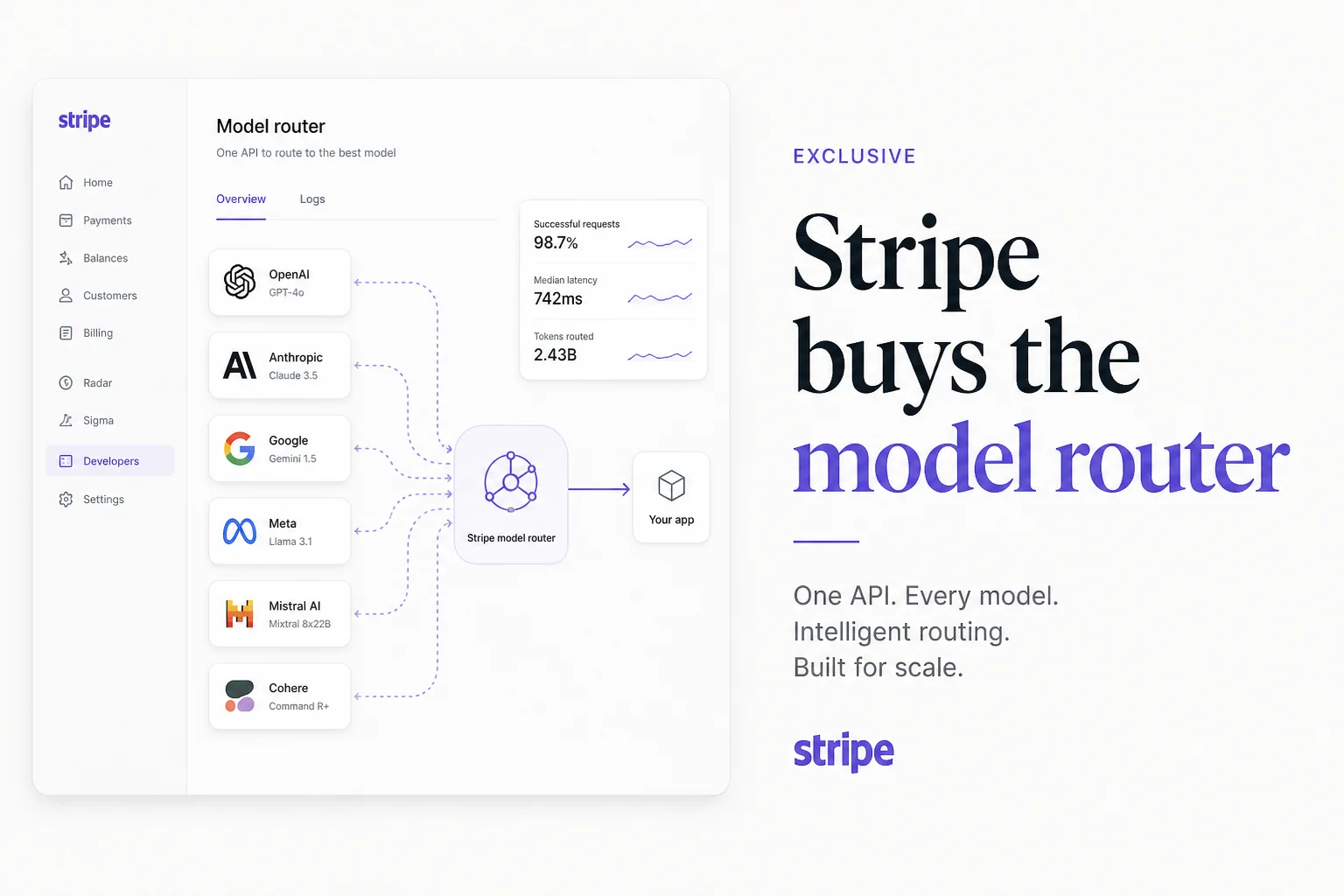
Stripe is reportedly close to acquiring OpenRouter for more than $7 billion, according to Bloomberg . That is more than five times the valuation OpenRouter raised at just months ago.
If it closes, the payment company that already sits on most SaaS checkout flows also owns the switchboard developers use to hop between OpenAI, Anthropic, Google, Meta, and dozens of smaller models without rewiring auth and billing every week.
What OpenRouter actually does
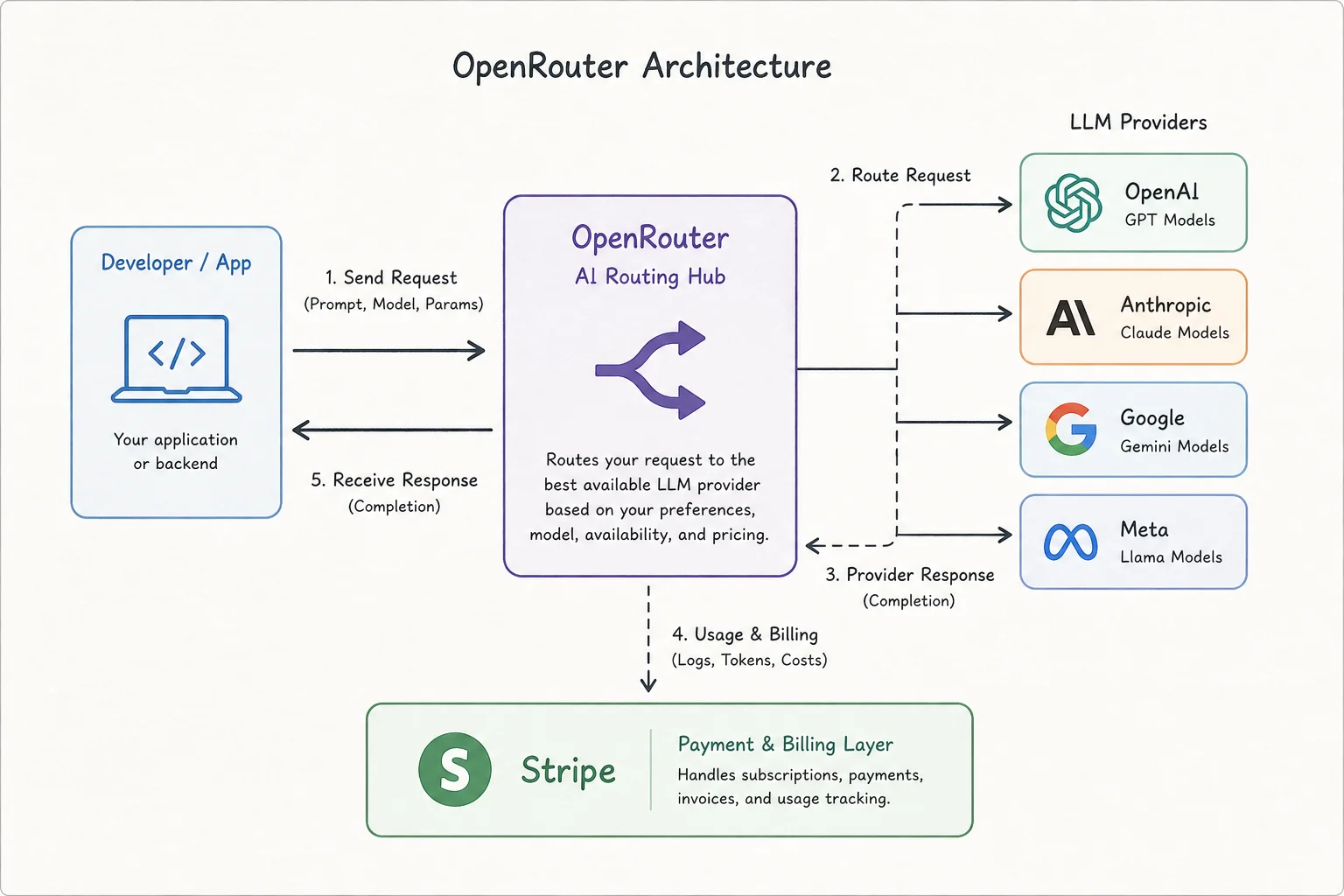
OpenRouter is a unified API in front of many model providers. One key, one request shape, routing to the model you pick (or failover rules you configure). Developers use it to:
- A/B test models without separate vendor accounts
- Fail over when a provider rate-limits or deprecates a snapshot
- Compare cost and latency across hosts serving the same weights
It became the default "model marketplace" for indie hackers and startups that did not want six dashboards. Enterprise teams use it too, often as a staging layer before committing to direct contracts.
Why Stripe makes sense as a buyer
Stripe's core insight has always been: own the financial plumbing everyone else builds on. Checkout, subscriptions, invoicing, tax, fraud. If AI apps bill per token or per seat, Stripe already wants that flow.
Owning OpenRouter adds the upstream switch:
| Layer | Today | With acquisition |
|---|---|---|
| Model access | OpenRouter API | Stripe-managed routing |
| Billing | Stripe meters + invoices | Native tie from route to line item |
| Compliance | Split across vendors | Single vendor story (in theory) |
For applied AI shops, the dream is one dashboard where you see which model burned margin on which customer feature. Stripe has the incentive to build that if they own both sides.
What could go wrong
Consolidation cuts both ways.
- Neutral routing dies slowly. Will Stripe prioritize models that pay better rev-share? Developers will watch failover policies closely.
- Pricing power. A $7B price tag gets amortized. Expect pressure on take rates or bundled Stripe fees.
- Enterprise procurement. Teams that blocked "yet another vendor" already trust Stripe. That accelerates OpenRouter inside Fortune 500, but also raises concentration risk.
I still recommend direct provider contracts above certain spend thresholds. OpenRouter shines under experimentation volume, not when you have dedicated Anthropic or OpenAI commits.
Impact on how I build client systems
My default stack for prototypes:
- Route through OpenRouter or direct APIs depending on client compliance
- Log prompts and model IDs per feature flag
- Keep an escape hatch to swap providers in config, not code
If Stripe absorbs OpenRouter, that escape hatch likely stays (Stripe is not foolish enough to kill the API). The billing story gets easier. The politics of model neutrality get harder.
For voice and ops automations, routing is usually secondary to latency and tool use. For agentic coding and RAG products, routing is the product. This deal matters more in the second bucket.
Context from the same news cycle
The Rundown digest bundled this with Cursor Origin and mega infra plays. Different headlines, same theme: the AI stack is consolidating. Editors, hosts, routers, and power plants are all becoming strategic assets, not commodities.
OpenRouter was the friendly neutral bazaar. Stripe turning it into a payment-adjacent platform is on-brand and a little ominous for anyone who liked a pure marketplace.
Bottom line
A $7B OpenRouter acquisition would cement Stripe as the financial and routing layer for a huge slice of AI apps. Builders win on integrated billing. They lose some comfort that the router is agnostic.
Watch for official confirmation and whether indie API pricing survives the integration. That detail determines if this is infrastructure or enclosure.
If you are designing multi-model agent architecture and want help choosing between direct APIs, routers, and future Stripe bundles, book a free discovery call.