
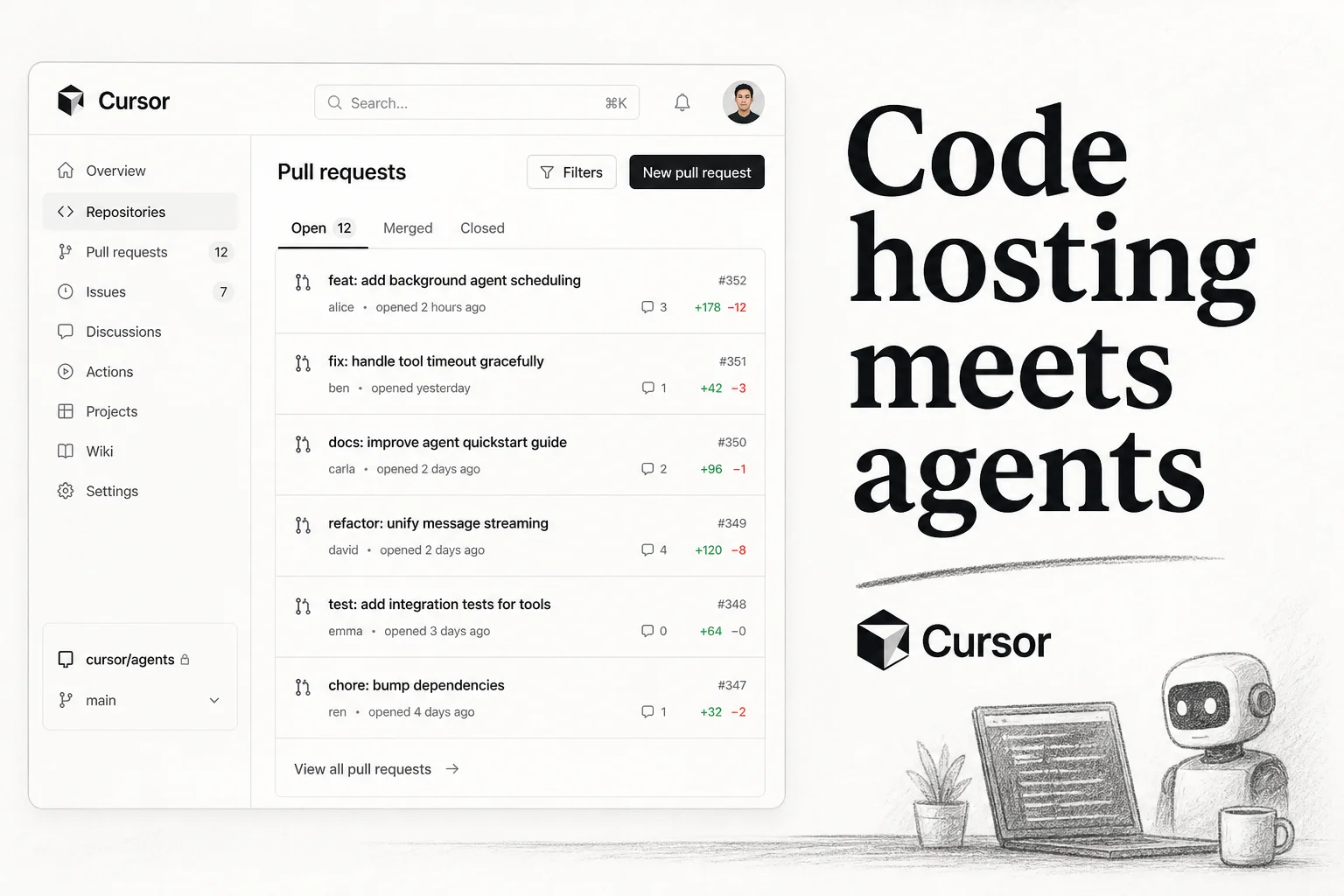
On August 17, 2026, Cursor rolled out Origin, its own code hosting layer. Same morning, GitHub spent more than six hours in degraded mode. Pull requests, APIs, enterprise SSO, and Copilot all took hits. Error rates climbed toward 20% on core traffic and closer to 50% on archive downloads, per GitHub's incident log.
Cursor did not plan the outage. Their own team reportedly delayed the launch because GitHub was down. But the timing made the pitch obvious: if your agents live in Cursor, why route every push through a platform that still optimizes for human tab browsing?
What Origin actually ships
Origin is in early beta for paid Cursor plans (enterprise orgs can opt out). The first release covers four pillars from the Origin changelog :
| Surface | What you get today |
|---|---|
| Repos | Create hosted repos under a named codebase (cursor.com/codebase/your-org) |
| GitHub sync | Mirror existing repos; GitHub stays source of truth for synced projects |
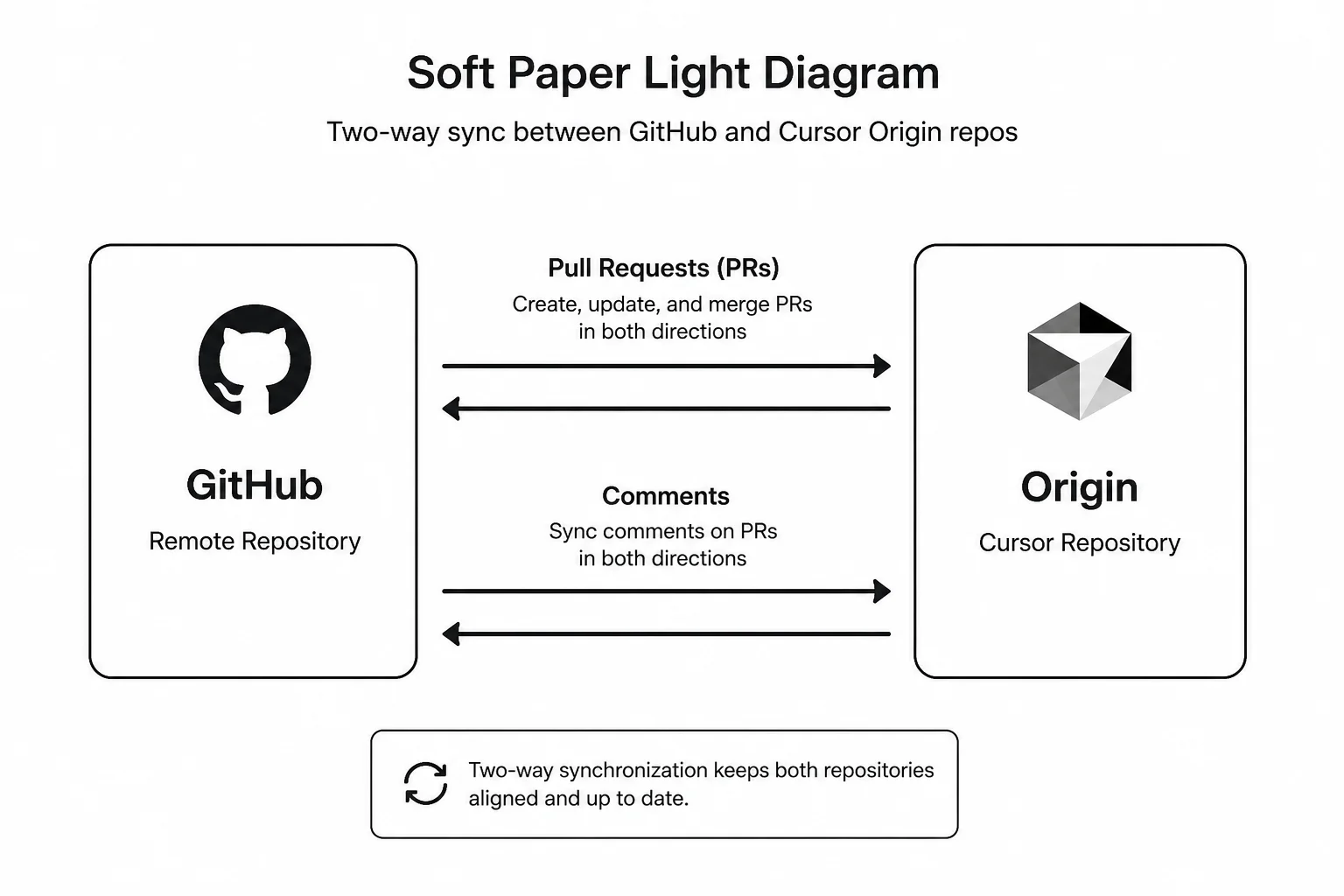
| Pull requests | Timeline, diffs, comments, merge, two-way sync with GitHub |
| Apps | Vercel previews, Depot and Buildkite CI on connected repos |
The Codebase tab is the home screen. Click + New, name a repo, install the CLI, push. For GitHub imports, connect your org, pick repos, and Cursor mirrors them in real time. Icons distinguish Origin-hosted repos from synced GitHub copies.
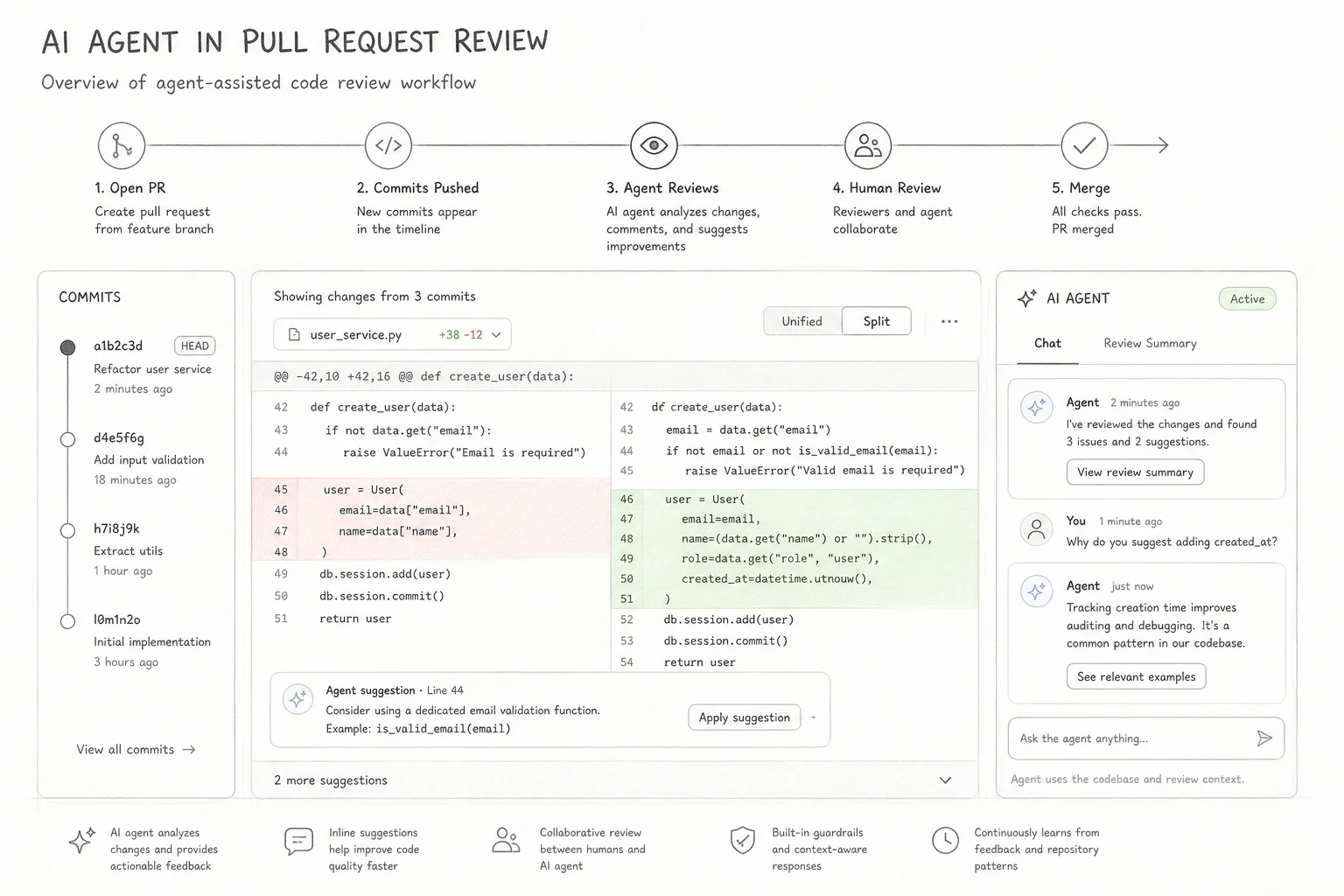
Agents are woven through browsing and PRs. Ask questions on code you're reading. Request edits, branch pushes, or PR updates without leaving the same UI. That is the product thesis: hosting is not a sidebar feature. It is the control plane for agent-native development.
Why this is more than a GitHub clone
GitHub won on network effects, Actions, and eighteen years of muscle memory. Cursor is not trying to beat that on day one with a better diff viewer.
They are betting that agent scale changes procurement. When one human directs five workers that open branches overnight, you care about:
- Parallel merge behavior tuned for agents, not just humans
- Review surfaces where agent output and human approval share one timeline
- CI and preview deploy hooks that agents can trigger and read back
Partners already live: Vercel (preview deploys per PR), Depot, Buildkite. Guillermo Rauch posted that Origin deploys to Vercel while running on Vercel. The meta joke wrote itself during the outage.
Synced repos are the migration wedge. You do not have to rip out GitHub on day one. Push still lands on GitHub for anything that started there. Cursor mirrors for browse, search, and agent work inside the editor. If the agent-native loop feels faster, teams drift hosting decisions over time.
The GitHub outage context
VentureBeat and others documented the August 17 incident in detail. SAML, OIDC, SCIM, and Team Sync failed alongside core git operations. For teams running agent pipelines that depend on webhooks and PR APIs, six-plus hours of pain is not abstract downtime. It is blocked merges and frozen automations.
Origin does not fix GitHub's reliability. It offers an alternate rail owned by the same vendor as your coding agents. That matters when you are standardizing on Cursor for implementation and want fewer cross-vendor failure modes.
What is still missing
Read the changelog twice and notice what is not there yet:
- Public open-source hosting at GitHub scale
- Enterprise compliance story as mature as Microsoft's
- Deep agent-native features (called out as "ship soon")
If you are SOC2-bound or need fine-grained audit exports, Origin in beta is a sandbox, not a production migration target. Cursor knows this. The GitHub sync path exists precisely because trust takes years.
How I'd evaluate it on a client project
I would not move a regulated monorepo on launch week. I would run a parallel experiment:
- Sync a low-risk internal tool repo from GitHub.
- Open a PR in Cursor, comment on GitHub, confirm two-way sync within seconds.
- Connect Vercel and verify preview URLs surface on the PR timeline.
- Run an agent task that spans browse, edit, and PR update without context switching.
- Measure whether review latency drops when agents and humans share one PR surface.
If step 4 saves real minutes per iteration, hosting becomes a workflow question, not a religion.
The bigger picture
Coding agents already pushed IDEs into orchestration territory. Antigravity 2.0, Claude Code, Codex, and Cursor itself treat the editor as a director console. Origin extends that stack downward into repos and merges.
Microsoft's response will not be passive. GitHub Copilot, Actions, and enterprise contracts are deeply entangled. Cursor's play is vertical integration: model, harness, editor, and now hosting tuned for the same workload.
My read: Origin is not a GitHub killer this quarter. It is a forcing function. Engineering leaders will start asking whether code hosting should be agent-first, and what governance looks like when pushes come from workers that do not sleep.
If you are designing agent workflows and want help drawing the boundary between "automate in Cursor" and "keep humans on the merge button," book a free discovery call.