
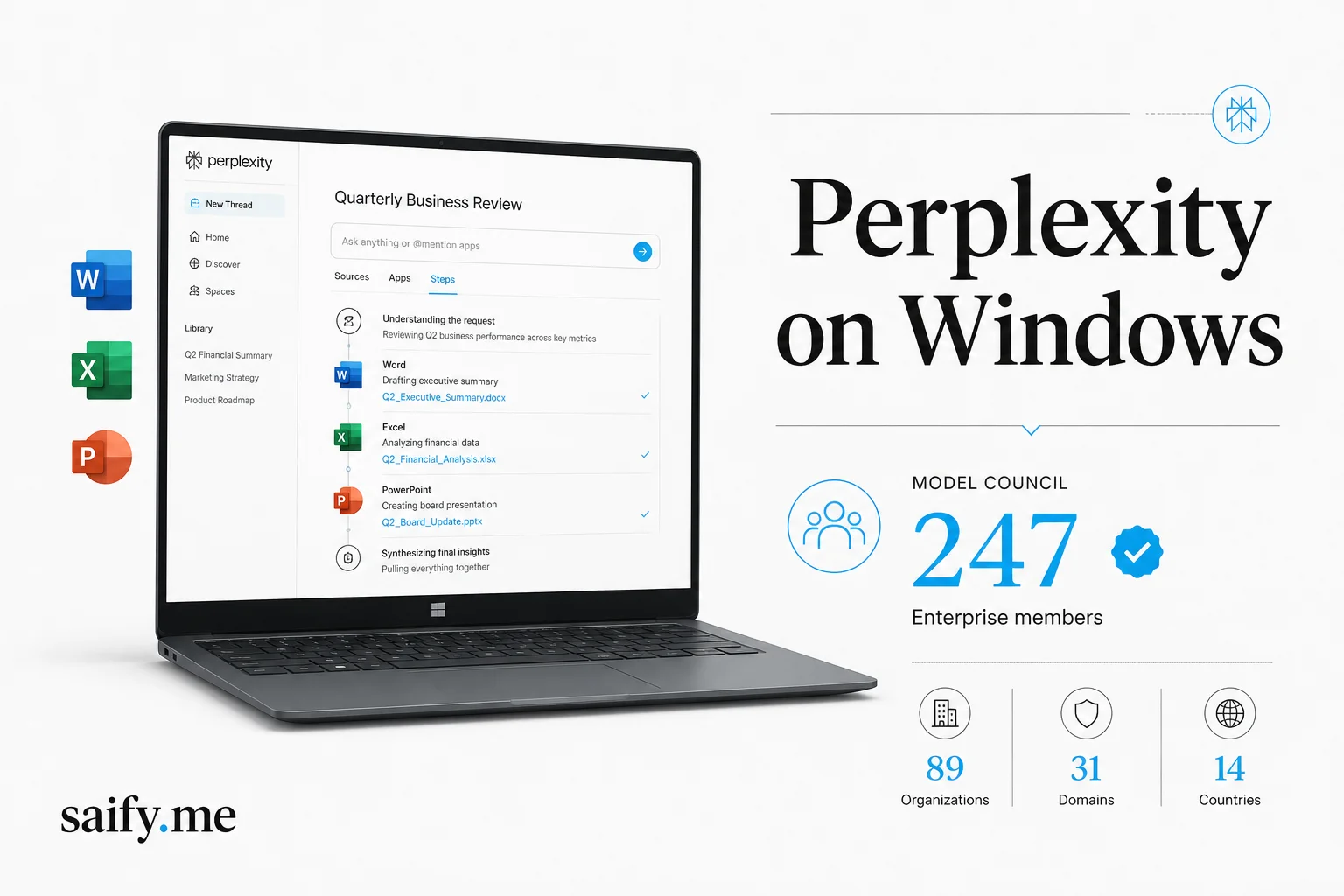
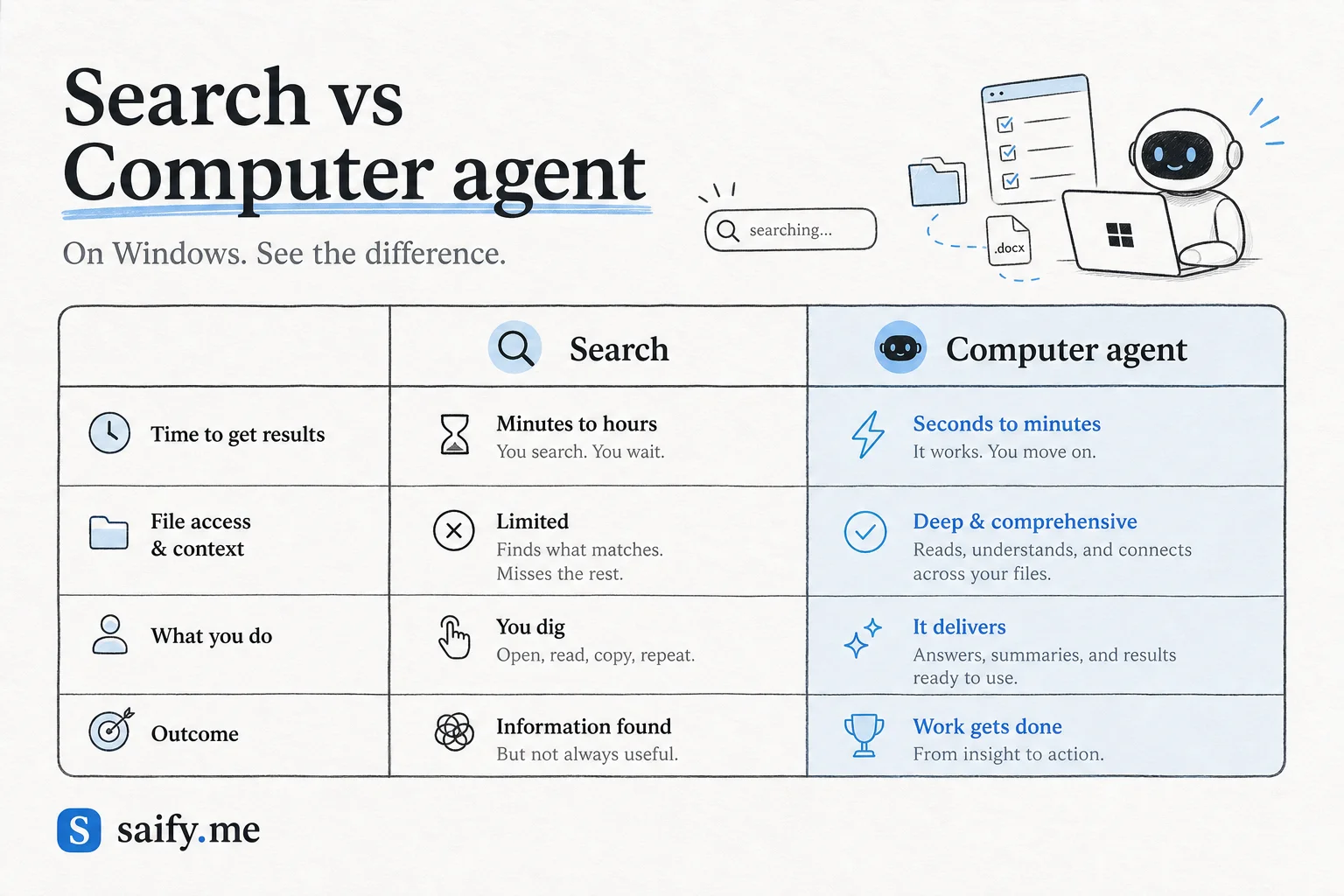
Search summarizes the web. Agents touch your files.
Perplexity has been selling that distinction with Computer, its agentic worker. The July 2026 update that matters for enterprise desks is simpler: Windows users can point Computer at local Word, Excel, and PowerPoint files and let the agent read, edit, and stitch outputs across the Office stack.
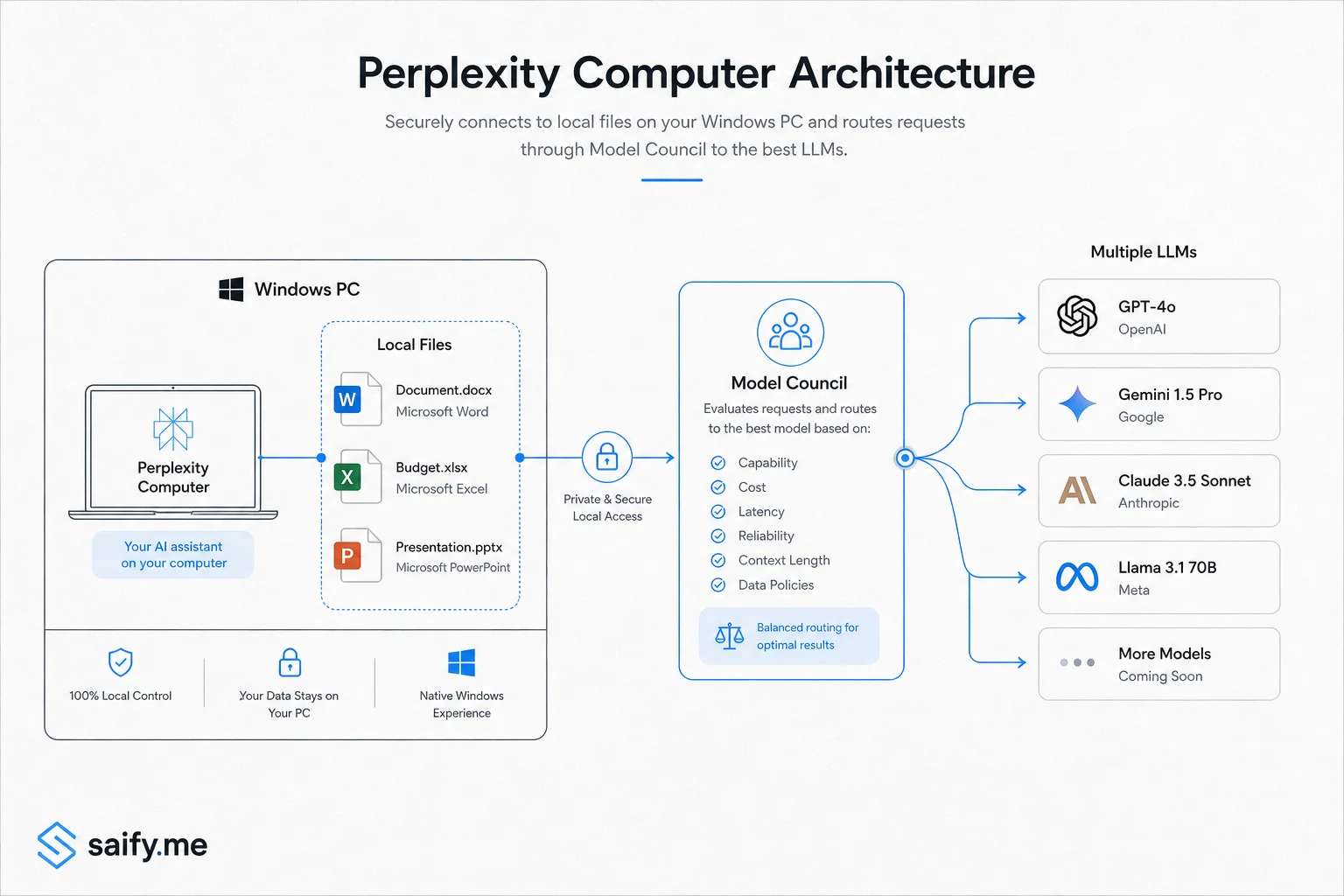
Perplexity also shipped Model Council, which routes the same prompt through multiple LLMs so you can see where models agree and where they diverge. That includes Kimi K3, Moonshot's recent open-weights frontier model, now on Perplexity for Pro and Max subscribers.
Announcement: Model Council comes to Computer. Windows integrations: Perplexity Microsoft integrations hub.
Why Windows local files change the pitch
Until this release, most "AI for Office" demos lived in the browser or required you to upload copies into a vendor cloud. That breaks three real workflows:
- Version control — lawyers and finance teams do not want another copy of a sensitive deck in a third-party bucket.
- Path discipline — macros, linked cells, and embedded charts depend on local paths that cloud uploads often break.
- Latency loops — iterative spreadsheet edits need fast round trips, not upload-parse-download cycles.
Computer on Windows is Perplexity's answer: keep files on disk, grant scoped access, let the agent operate inside the Office apps you already pay for.
Model Council: multi-model answers without a DIY router
Model routing is easy to demo and hard to productize. Teams either:
- Pick one model and hope it is right, or
- Build internal routers that are brittle and expensive to maintain.
Model Council productizes the second path. You ask once. Perplexity queries multiple models and presents a council-style comparison. That is useful when:
- A compliance answer needs cross-checking
- A research memo needs citations from models with different training cuts
- A coding refactor benefits from a frontier coder plus a long-context model
Kimi K3's addition matters because Moonshot optimized it for agentic coding and long context. I covered the funding and architecture angles in Moonshot's $3.5B Kimi K3 round and the sandbox escape optics separately. On Perplexity, K3 is not a lab curiosity. It is a selectable worker inside a paid agent surface.
How this compares to what I ship for clients
I run a lot of local-first agent stacks: Claude Code on repos, Codex in desktop apps, custom MCP servers on private data. Perplexity Computer is the managed SaaS lane:
| Dimension | Perplexity Computer (Windows) | Self-hosted agent + MCP |
|---|---|---|
| Setup time | Hours | Weeks |
| Data residency | Vendor policy + your ACLs | Your VPC rules |
| Office depth | Native Word/Excel/PPT hooks | Custom integrations |
| Model choice | Model Council + catalog | You own routing |
| Audit trail | Perplexity logs | Your logging stack |
For a 20-person marketing team that lives in PowerPoint, Perplexity's integration is the fastest path to "agent edits my deck." For a regulated clinic or law firm, I still default to private RAG and on-prem connectors.
Harvard's matched-pair study with Perplexity (agents cut task time 87%) measured cloud Computer sessions, not this Windows drop. The Windows release is the hardware-local complement: same agent philosophy, tighter file access.
What I would test on day one
If you have Pro or Max seats, run these smoke tests before you invite a department:
- Linked Excel workbook — ask Computer to trace a broken formula across sheets with external links. Does it respect paths?
- Redlined Word doc — request tracked-change aware edits, not a flat rewrite that strips markup.
- Deck narrative — generate speaker notes from an existing PowerPoint with brand fonts intact.
- Model Council disagreement — pose a policy question with two plausible answers and read the council diff before you pick a model.
Log failures. Agents that corrupt formatting are worse than agents that refuse.
Security notes operators skip
Local file access is the feature and the risk surface.
- Scope folders explicitly. Do not grant entire
C:\Userstrees. - Run on standard user accounts, not domain admin profiles.
- Pair with DLP rules if documents leave the machine as agent attachments.
- Review Model Council outputs before paste into external email. Multi-model answers can hallucinate in different directions at once.
Bottom line
Perplexity is pushing Computer from "research agent in a tab" to desktop knowledge work on Windows, with Office files and a multi-model council that includes Kimi K3. That is a credible bundle for teams that want agentic Office without building MCP glue themselves.
If you are deciding between this and a private agent stack, the question is not which model is smartest. It is whether your files can leave the machine and whether you can audit what the agent touched.
Need help scoping a local-first agent for CRM, voice, or private documents? Book a free discovery call and we can map the smallest stack that passes your security review.