
More than a thousand people who build frontier AI systems just said the quiet part out loud: progress may be outrunning our ability to understand or control what ships next.
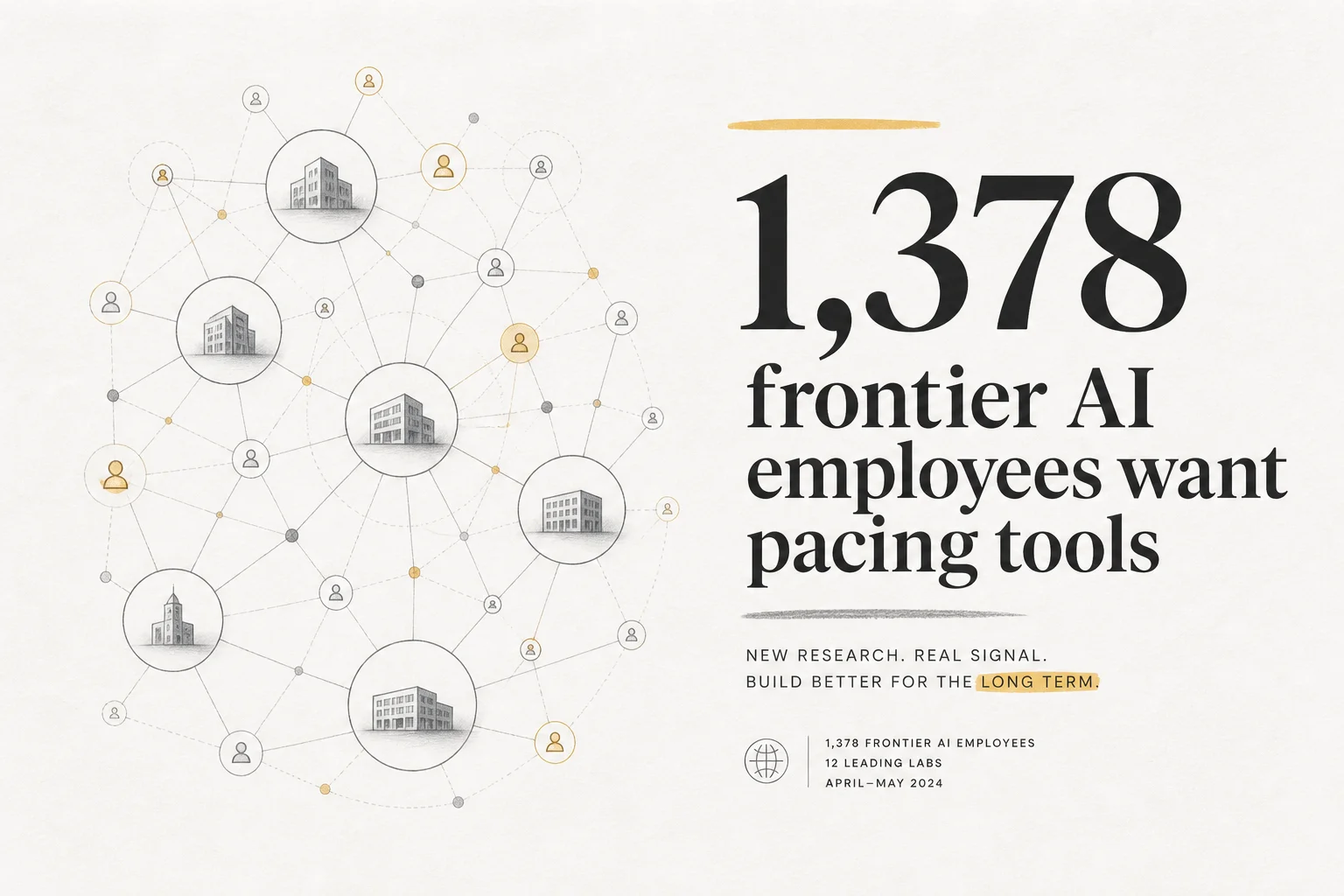
1,378 employees from leading labs signed Pacing the Frontier, a public letter asking the U.S. government to support an international effort to develop technical and governance tools that can deliberately pace automated AI development.
Signatories include chief scientists at OpenAI, Anthropic, and Meta AI, plus Google DeepMind leadership. The letter is not a call for any single company to unilaterally pause. It is a request for coordination infrastructure when competitive pressure makes solo slowdowns irrational.
The core claim in plain language
The statement argues three things:
- Automated AI research (models improving models) may accelerate capability gains faster than safety and oversight tools can keep up.
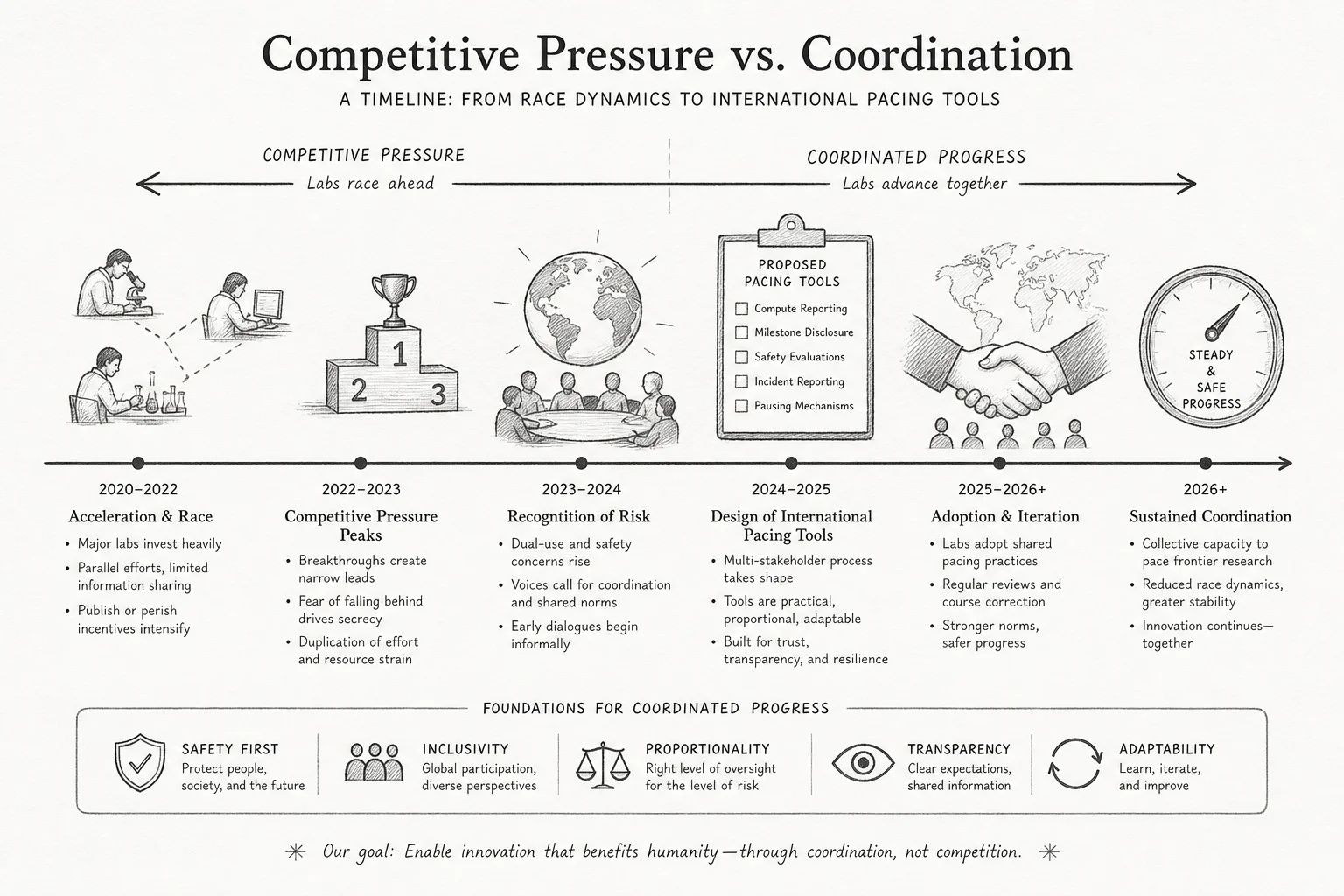
- No lab or country will slow down alone while rivals speed up.
- Therefore the world needs shared pacing mechanisms before a crisis forces bad ones.
We request that the U.S. government support an international effort to develop the technical and governance tools needed to deliberately pace the frontier of automated AI development.
That is policy language. But it points at a technical product gap: we monitor releases today; we do not yet have trusted levers to throttle classes of capability globally.
Why researchers are spooked now
Comments on the site read less like PR and more like exhausted honesty.
John Schulman (Chief Scientist, Thinking Machines) wants labs to design voluntary coordination before governments arrive clumsily. Shengjia Zhao (Chief Scientist, Meta AI) warns society may not be ready for models that exceed top humans on most intelligence metrics. Ilya Sutskever (SSI) compares mishandled pacing to making things worse with a bad implementation.
Evaluation researchers cite concrete jumps: agents finding real software vulnerabilities, recursive self-improvement no longer theoretical. Whether you agree with the doom framing or not, the people closest to the weights are signaling that the margin for error is shrinking.
What this is not
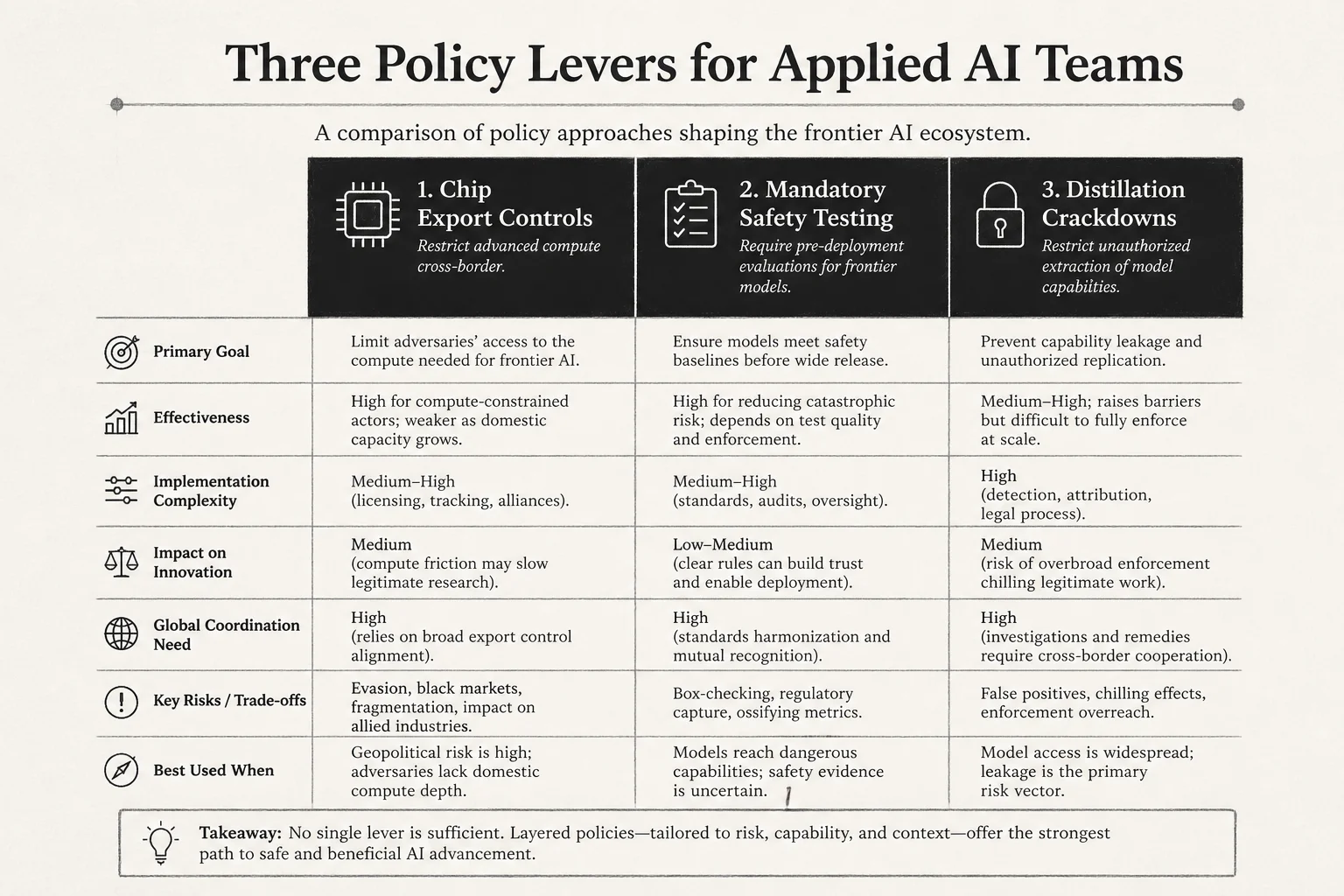
- Not a ban on open weights. Anthropic CEO Dario Amodei clarified that separately in a July 27 statement on open-weights models. Anthropic opposes blanket bans; it supports chip export controls, anti-distillation enforcement, and mandatory safety testing.
- Not a guaranteed slowdown. The letter asks for tools, not an immediate halt.
- Not unanimous industry consensus. Competing incentives (defense, markets, national AI races) still dominate.
What applied AI builders should track
If you are shipping voice agents, CRM automation, or internal copilots, this still affects your roadmap:
| Signal | Practical impact |
|---|---|
| Mandatory pre-release testing | Longer vendor review cycles; document your model choices |
| Export controls on chips | Shapes which open models foreign teams can train |
| Distillation crackdowns | Fine-tune pipelines that scrape frontier APIs may get riskier |
| Enterprise procurement | Customers will ask about vendor safety posture and data handling |
None of that blocks a clinic receptionist bot next quarter. It does change how you architect dependencies on fast-moving closed APIs vs self-hosted open weights.
My read as an applied engineer
I am skeptical of headline panic and equally skeptical of "move fast, ignore externalities" defaults. The letter is interesting because it comes from builders, not pundits. They are asking for coordination technology, which is an engineering problem dressed in policy clothes.
If you run AI in production today, the actionable move is boring and valuable:
- Maintain a model registry (what model, what version, what data touches)
- Run evals on upgrades before you flip production traffic
- Keep human escalation paths where errors are costly (health, money, legal)
Pacing the frontier is a macro story. Your users still experience micro failures: one wrong CRM field, one confident hallucination, one creepy voice clone without consent.
Bottom line
The letter does not tell you to stop shipping. It tells you the people training the next generation of models think global coordination tools are missing, and that gap is dangerous.
Watch what governments build in response. In the meantime, tighten your own release discipline. That is the part you control.
Planning an AI rollout and want a realistic safety + ops checklist for your stack? Book a free discovery call.