
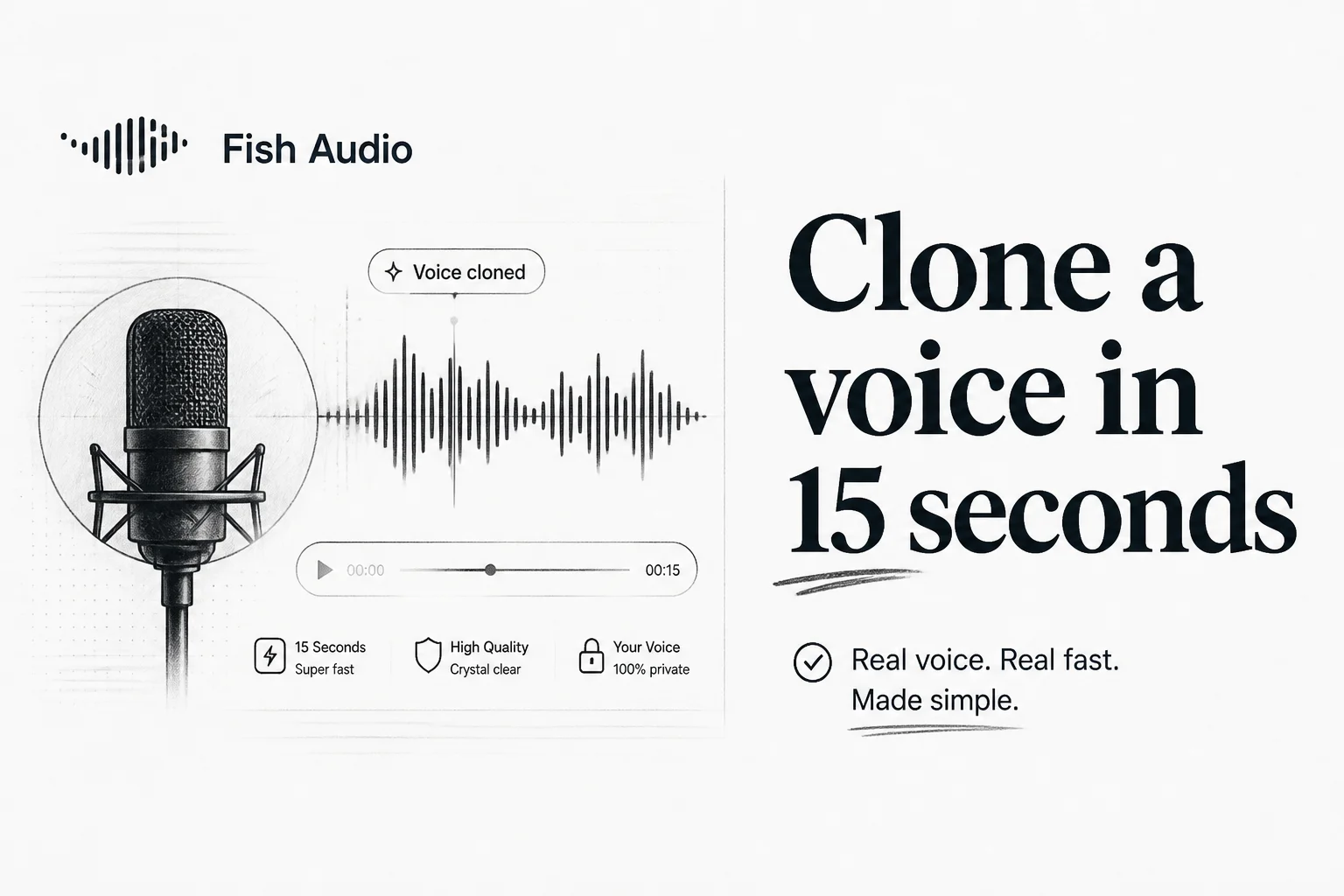
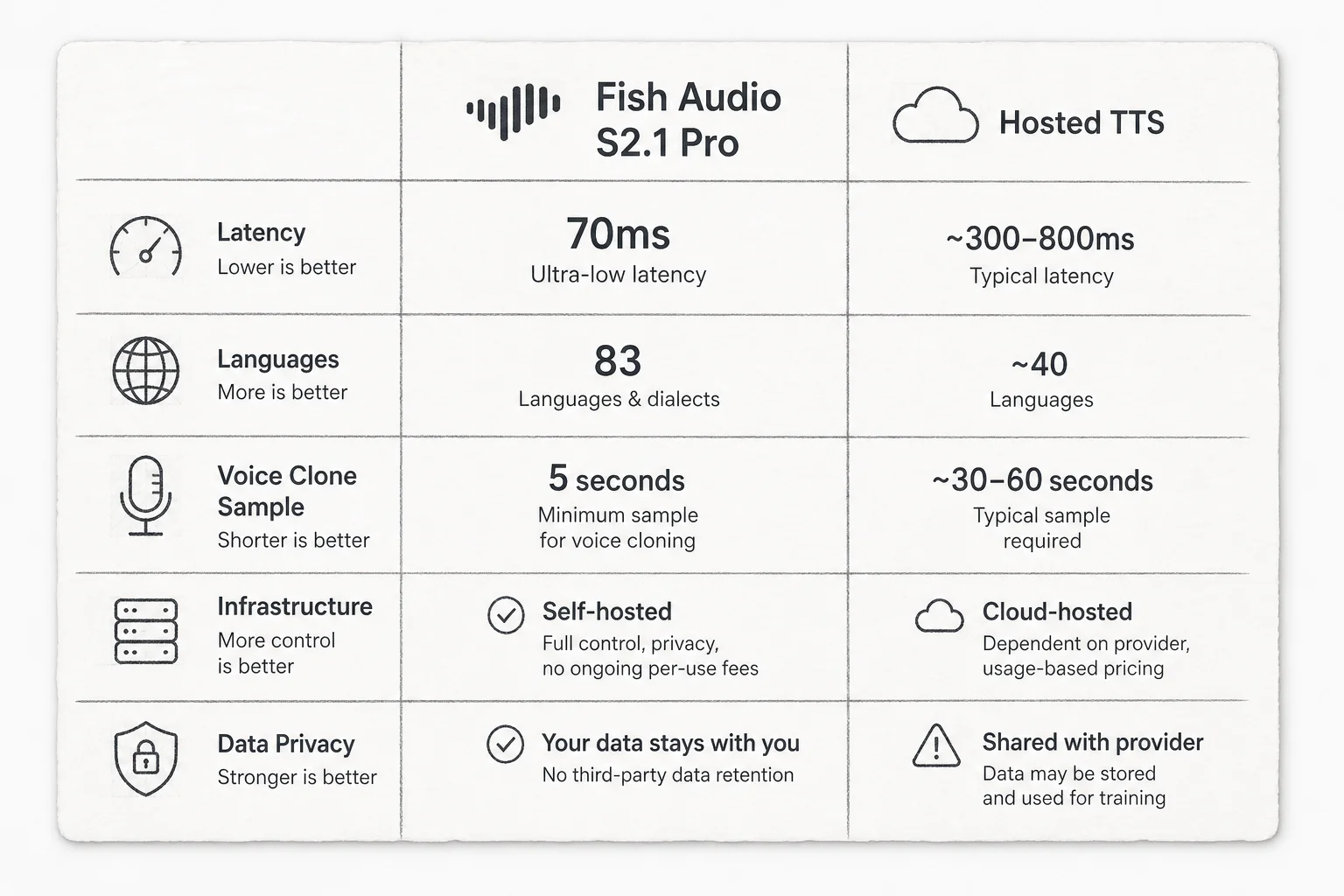
Voice agents live or die on two metrics: how human the voice sounds and how fast the first syllable arrives. Fish Audio is betting both can get dramatically better at once. Its new S2.1 Pro model clones a voice from a short reference clip, supports 83+ languages, and claims roughly 70ms time-to-first-byte on its hosted API.
The company also announced $52 million in seed funding on roughly $21M ARR and 8M+ users in its first year. That is not a side project anymore. It is infrastructure.
Demo thread: Fish Audio founders cloning their voices live. API docs: docs.fish.audio. Try it: Fish Audio text-to-speech app.
What S2.1 Pro actually ships
Fish Audio started as an open-source passion project called Fish Speech (31k+ GitHub stars). S2.1 Pro is the closed, production-grade stack on top of that foundation.
| Claim | Detail |
|---|---|
| Voice clone sample | ~5 seconds of reference audio |
| Clone setup time | ~15 seconds (company demo) |
| Languages | 83+ |
| First audio (hosted) | ~70ms TTFB cited in press materials |
| Free API tier | s2.1-pro-free through August 31, 2026 |
| Enterprise | On-prem, zero-data-retention, HIPAA configs |
Co-founders Rissa Cao (ex-Amazon Alexa) and Shijia Liao (ex-Nvidia) leaned into a community-first model: open weights for older speech models, paid API for latency, uptime, and the newest Pro stack. Customers named in coverage include HeyGen, Sanas, LiveKit, and Retell.
The business model is the interesting part
Fish Audio gives away a lot. S2.1 Pro is free on the API for developers through August 2026 (Fair Use limits apply). Three earlier speech models are open source. The money is in guarantees: latency SLAs, enterprise compliance, and the wiring around inference.
That pattern is showing up across voice AI. Open weights win mindshare. Hosted APIs win production contracts where procurement asks about HIPAA and data retention before they ask about MOS scores.
Lead investor Osuke Honda (Coreline Ventures) framed the risk bluntly: community growth only sticks if creators trust consent, transparency, and attribution. Voice cloning without that stack is a liability, not a feature.
How I would evaluate it for a client voice stack
I build voice front desks and WhatsApp follow-ups. Here is the checklist I would run before swapping TTS providers:
- Measure TTFB on your phrases, not theirs. Marketing numbers are on H100-class serving. Your telephony path adds codec, jitter buffer, and carrier delay.
- Blind listen on your scripts. Fish cites ~67% preference in internal listening tests. Run your own A/B on greetings, apologies, and appointment confirmations.
- Test emotion controls. S2.1 Pro advertises word-level emotion with thousands of natural-language controls. Flat delivery on "your appointment is confirmed" is a conversion killer.
- Check clone consent workflow. If you clone staff voices, document consent and retention. Regulated clients will ask.
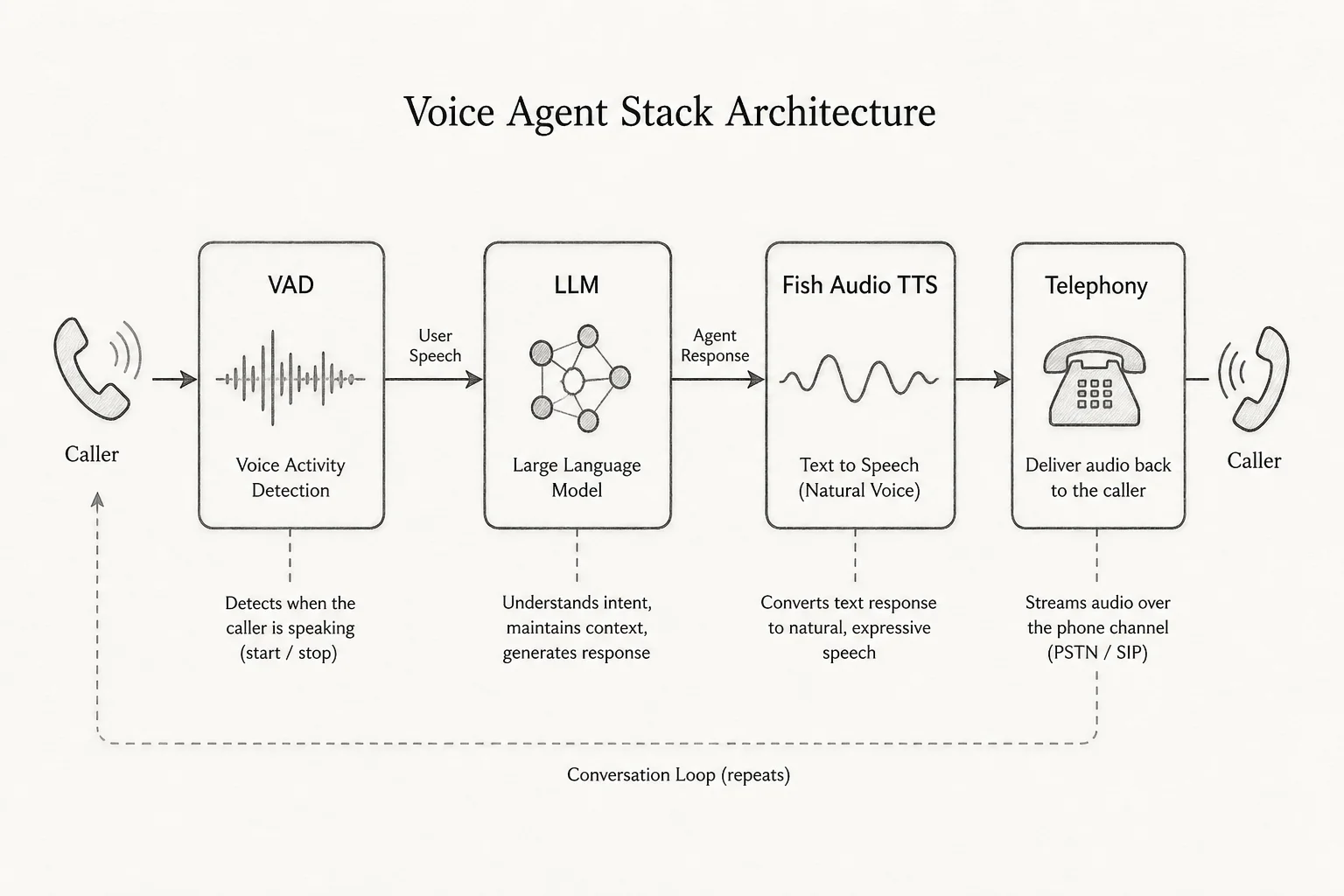
- Plan the full stack separately. TTS is the mouth. You still need VAD, endpointing, LLM routing, tool calls, and CRM writes.
import requests

response = requests.post(
    "https://api.fish.audio/v1/tts",
    headers={"Authorization": "Bearer YOUR_API_KEY"},
    json={
        "text": "Thanks for calling. How can I help you today?",
        "reference_id": "your-cloned-voice-id",
        "model": "s2.1-pro-free",
    },
)
audio_bytes = response.content
Where it fits vs open weights like MisoTTS
If you need full control inside your VPC, open weights still win. I wrote about MisoTTS 8B for teams that self-host emotive speech.
Fish Audio is the opposite trade: less DIY, faster time-to-demo, stronger enterprise packaging. For a clinic or real estate team that wants a working receptionist in two weeks, that matters more than owning every weight file.
Risks I am watching
- Deepfake abuse scales with clone speed. Product guardrails and account review matter.
- Free tier sunsets. Build with a budget line for paid API before September 2026.
- Closed Pro weights. You are betting on the vendor's roadmap, not your own fork.
Bottom line
Fish Audio S2.1 Pro is the clearest signal yet that voice cloning left the demo stage. Sub-second clone setup plus ~70ms first audio is the bar for conversational agents in 2026.
If you are shipping voice in production, run a one-day bake-off against your current TTS. The gap between "good enough" and "caller hangs up" is often 200ms and one flat sentence.
Building a voice front desk or ops agent? Book a free discovery call and we can map latency, compliance, and CRM wiring before you pick a TTS stack.