
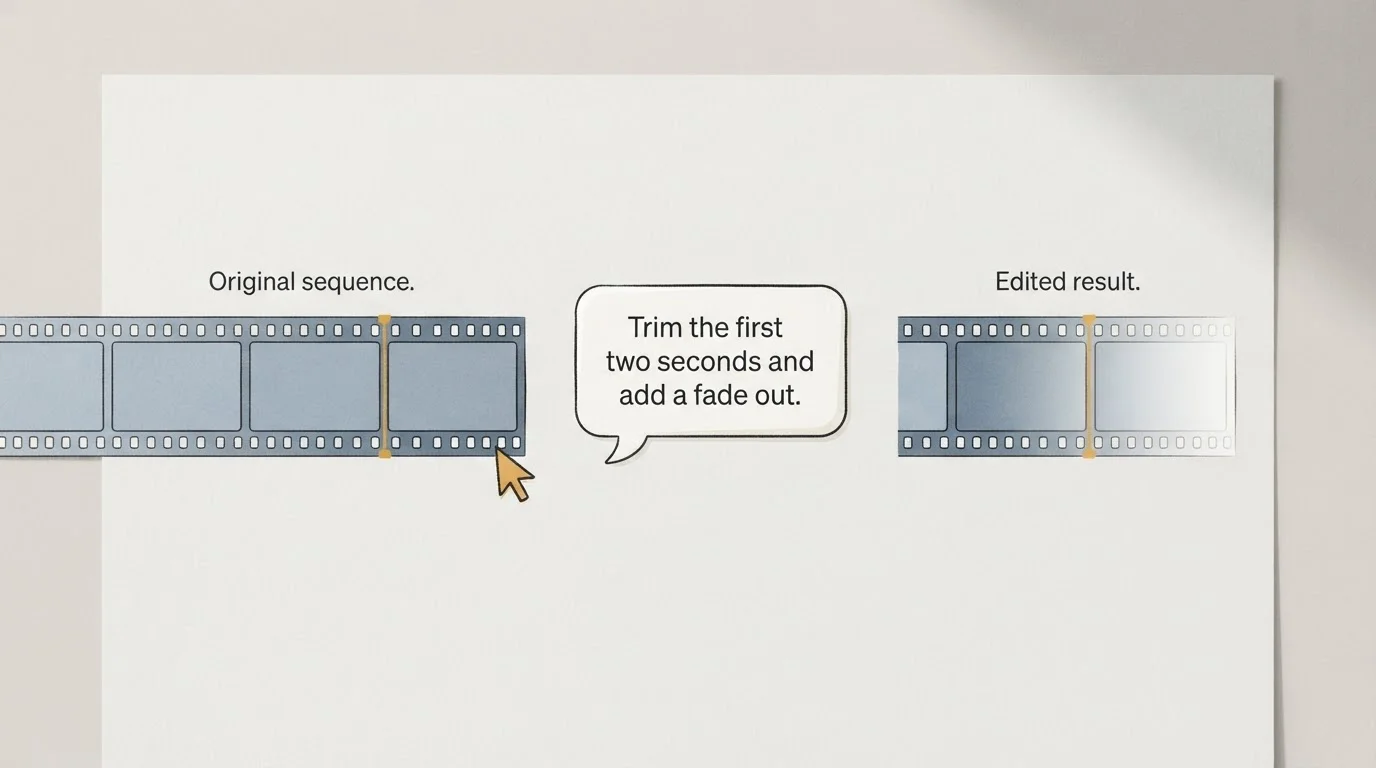
Last year Google made image editing feel like a chat with Nano Banana. At I/O 2026 they did the same move for video. Gemini Omni Flash takes any mix of text, image, audio, and video, then generates or rewrites a clip based on what you say next.
I've watched a lot of "text to video" demos that look great until you try to fix one awkward frame. Omni's bet is different. The video you already have becomes the starting point, and each instruction builds on the last instead of regenerating from scratch.
What Gemini Omni Flash actually is
Gemini Omni is Google's family of models that combine Gemini's reasoning with generative media. Omni Flash is the first shipping model in that family, focused on video creation and conversational editing.
You can:
- Edit an existing clip with plain language (change lighting, action, objects, camera)
- Keep characters consistent across edits once you define them
- Mix inputs: a photo, a voice clip, and a text prompt into one output
- Generate short clips grounded in Gemini's world knowledge, not just style transfer
Today clips top out around 10 seconds, with longer durations on the roadmap. Access is live in the Gemini app, Google Flow, and YouTube Shorts for Google AI Plus, Pro, and Ultra subscribers. API access for developers is rolling out after the consumer launch. An Omni Pro tier is planned for heavier workloads.
| Turn | What you say | What should hold |
|---|---|---|
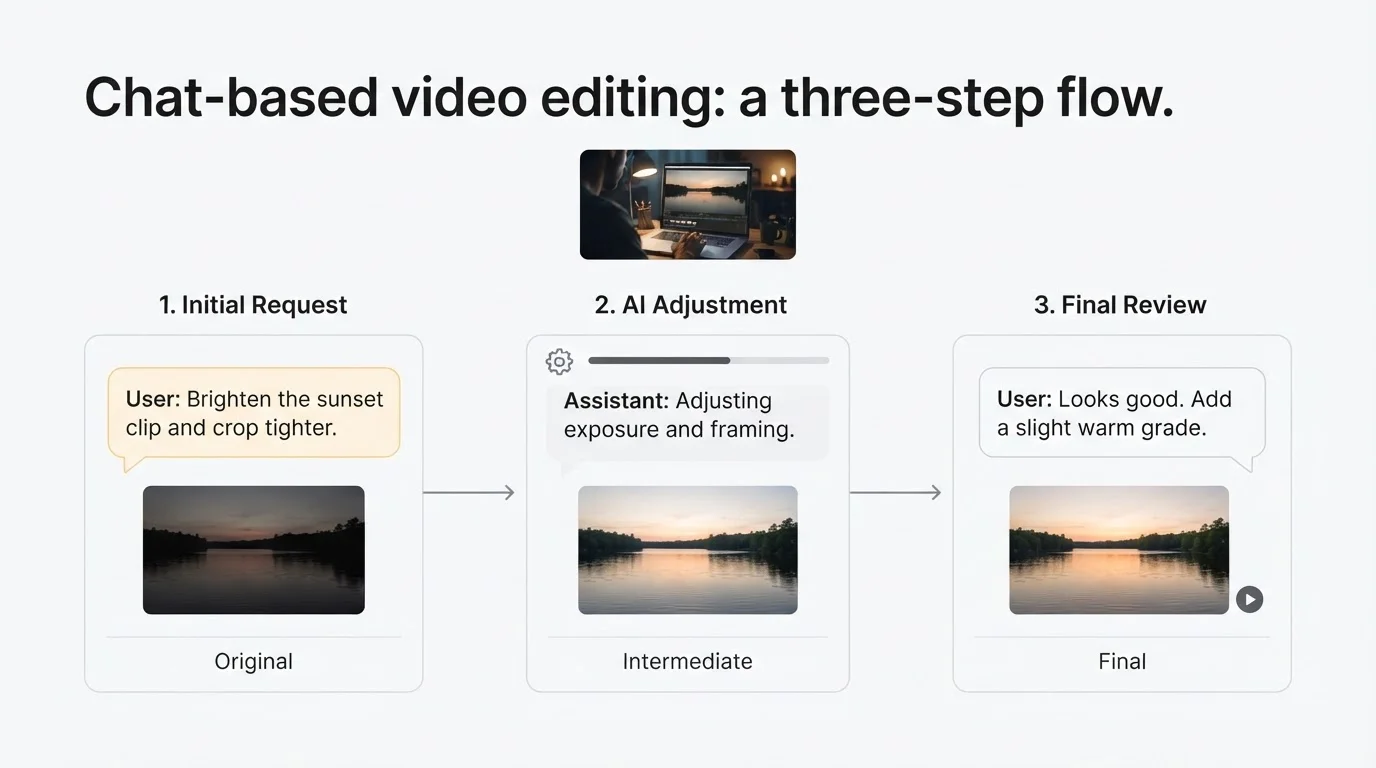
| 1 | "Make the lake a sunset" | Subject, framing, and motion stay intact |
| 2 | "Dim the lights" | Same clip memory, only lighting shifts |
| 3 | "Over-the-shoulder camera" | Character identity survives the camera change |
Why conversational editing is the real story
Most video generators still behave like slot machines. You pull the lever, get a clip, then pull again and hope the next one is closer. That works for novelty. It falls apart when you need a product demo, a training clip, or a brand-safe Short that matches last week's character.
Omni treats the timeline like a conversation state. Prompt: "when the person touches the mirror, make it ripple like liquid." Then: "dim the lights." Then: "change the camera to over the shoulder." Each step keeps the scene memory.
That matters for anyone shipping content systems. Your workflow stops being "generate 40 variants and pick one" and starts looking like iterative design. Same muscle memory you already have in Figma or code review.
Physics and culture, not just pretty pixels
Google is pushing hard on world understanding. Omni is supposed to respect gravity, fluid motion, and cultural context better than prior generative video stacks. The demos include chain-reaction marble tracks, claymation explainers of protein folding, and alphabet sequences that actually match the letters they claim to show.
I'll believe the physics claims after I've broken them myself. Marketing always oversells coherence. But the direction is right. If your model can't keep a hand attached to an arm across three edits, conversational editing is theater.
Where this fits if you build products
If you run content ops, marketing, or AI features for a product team, a few practical angles:
- YouTube Shorts / social: free-tier access on Shorts lowers the barrier for rapid A/B creative. Expect a flood of mid-quality AI Shorts. Differentiation moves to taste and iteration speed.
- Product explainers: short clips that start from a real screen recording, then get restyled or annotated via chat, could replace a lot of After Effects grunt work.
- API pipelines: once the API lands, think batch jobs that take reference assets from your DAM and produce localized 10-second variants. Keep a human review gate. Trust but verify.
Don't rip out your current stack tomorrow. Ten seconds is still ten seconds. Brand safety, likeness rights, and speech editing restrictions (Google is limiting some voice-change capabilities while they study misuse) are real constraints.
| Input | Role in the clip |
|---|---|
| Photo / still | Character or product reference |
| Voice clip | Timing, tone, or spoken direction |
| Text prompt | Edit instruction layered on prior state |
| Existing video | The timeline you keep editing instead of regenerating |
How I'd evaluate it this week
If you have a Google AI subscription, run three tests before you write strategy docs:
- Take a real phone video of your product. Ask Omni to change only the background. Check whether labels, hands, and UI stay intact.
- Define one character from a still. Drop them into two different scenes. Check clothing, face, and lighting consistency.
- Do a five-turn edit chain on the same clip. Note where identity or physics falls apart.
Write down failure modes. Those become your acceptance criteria when the API ships.
The bigger pattern
Omni is part of a wider shift: generative tools are moving from one-shot generation to multi-turn creation with memory. Nano Banana did it for images. Omni is doing it for video. Antigravity 2.0 is doing something similar for coding agents (many agents, one goal, shared project state).
If you build applied AI for businesses, the lesson is not "video is solved." The lesson is that users now expect to steer generation the way they steer a junior teammate: give context, correct course, keep going.
What to watch next
- Developer API latency and pricing (this decides whether Omni becomes a feature or a toy)
- Omni Pro capabilities and clip length
- Whether speech editing opens up with clearer safety controls
- How YouTube's ranking treats obviously AI-edited Shorts
If you're experimenting with generative media in a product and want a second pair of eyes on architecture or evaluation, book a free discovery call. I'm happiest when the demos survive contact with real assets.