
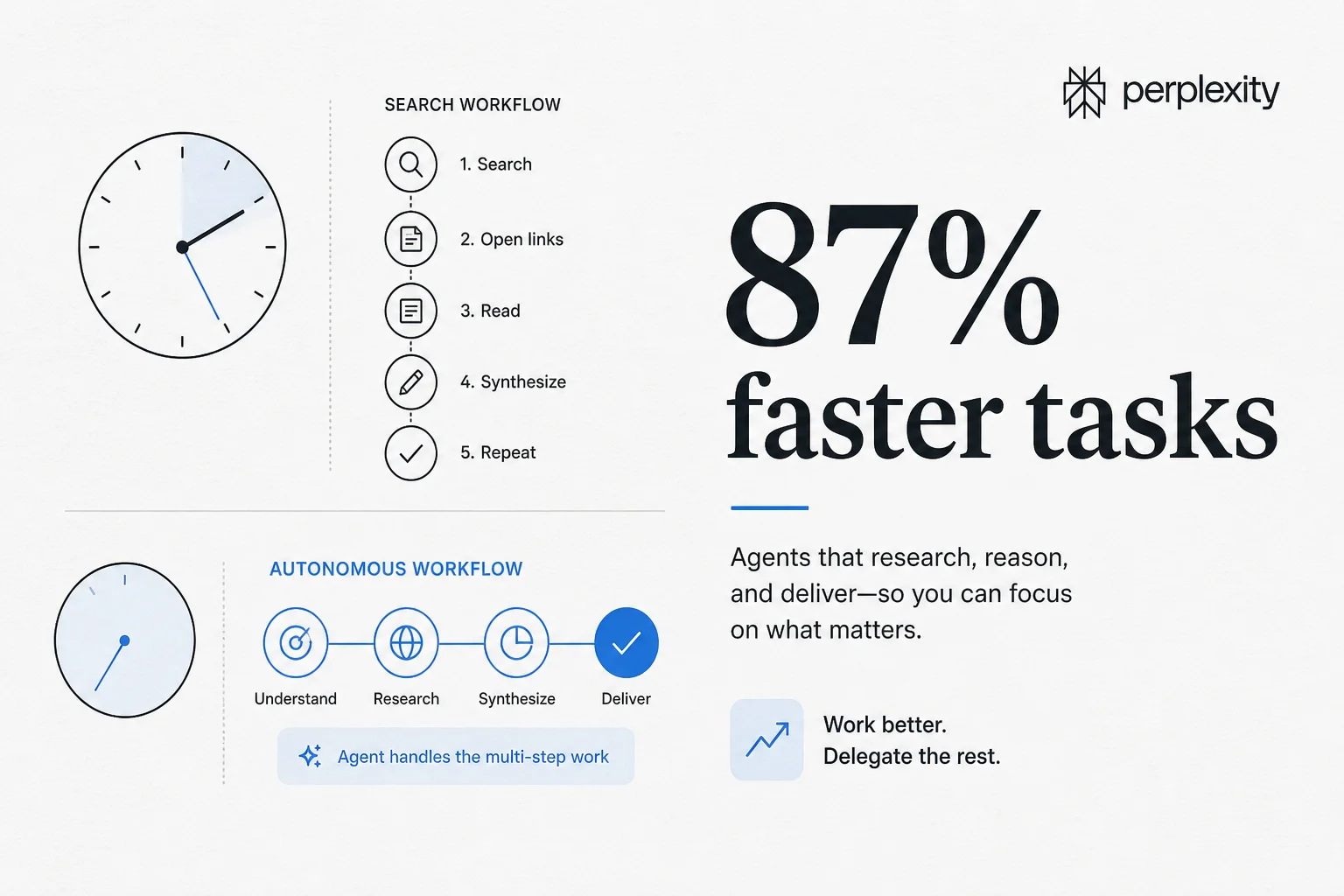
Search gives you answers. Agents execute the middle.
That distinction sounds like marketing until someone publishes 10,000 matched pairs where the same person asked nearly the same question to both tools. Harvard Business School researchers working with Perplexity did exactly that in June 2026, and the productivity numbers are large enough that I would not dismiss them as vendor fluff without reading the methods.
Spoiler: the methods section is the interesting part.
The headline numbers
Harvard Business School AI Institute's summary of the paper "How AI Agents Reshape Knowledge Work" (arXiv:2606.07489) reports:
| Metric | Search + human | Computer + human | Change |
|---|---|---|---|
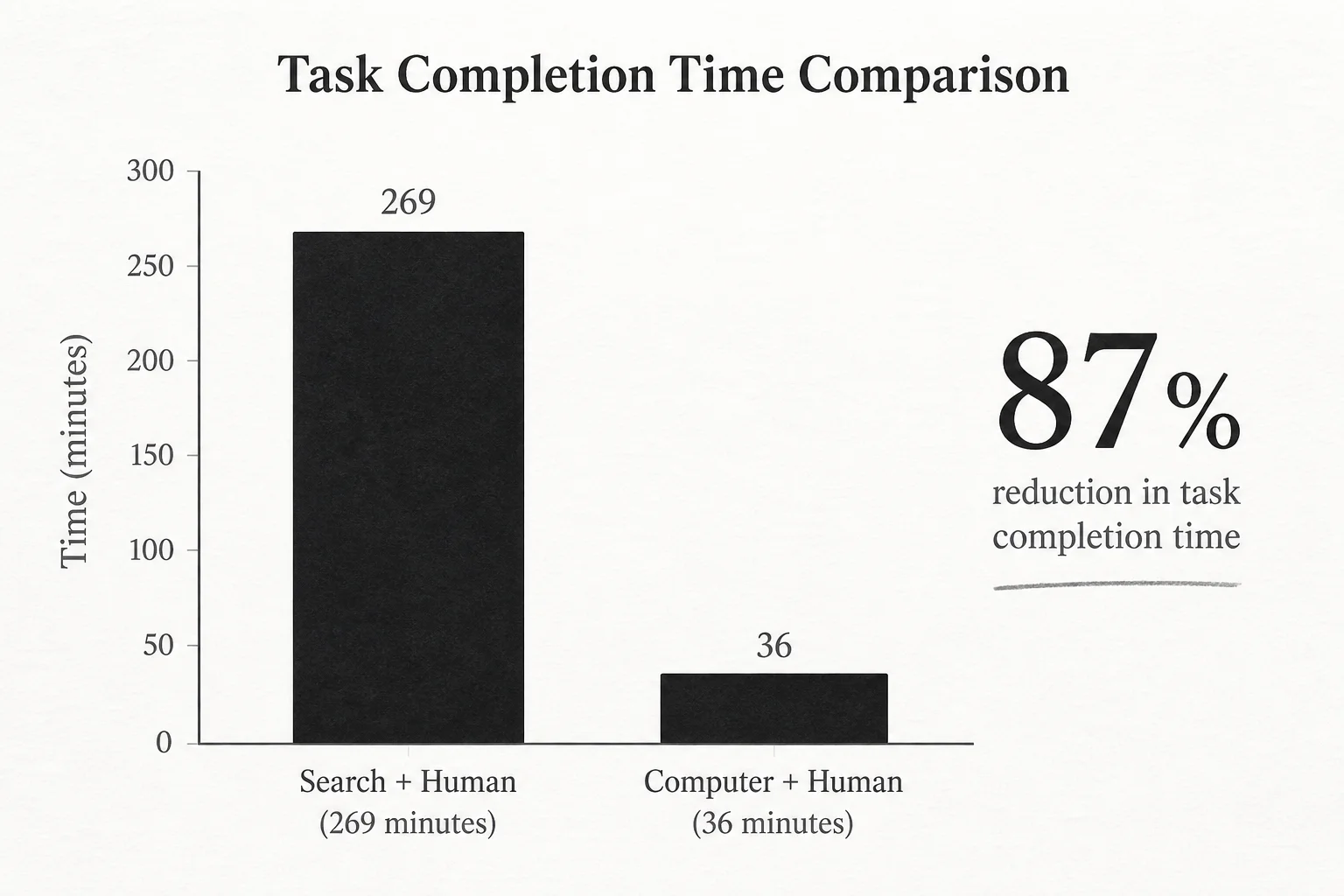
| Estimated task time | 269 min | 36 min | -87% |
| Estimated task cost | (BLS wage model) | (BLS wage model) | -94% |
| Machine work per session | ~33 seconds | ~26 minutes | ~48x |
Perplexity's blog summary adds adoption context: cumulative Computer queries reached 84x first-week volume by study end, concentrated in software, finance, and marketing.
Why matched pairs matter
Observational AI productivity studies often compare unlike tasks. This paper's natural experiment is tighter:
- Same user
- Near-identical initial query
- One path through Search (conversational answers)
- One path through Computer (agent with execution tools)
Researchers filtered Computer sessions to those that actually did work: at least one "do" tool (code, browser, file write, external connector). Chat-only sessions dropped out.
Time and cost estimates used three approaches: tool-by-tool timing, an independent LLM estimator, and Bureau of Labor Statistics wage data, cross-checked with 25 user interviews.
That does not eliminate bias. It does beat "we asked users if they feel faster."
Autonomy changes the shape of work, not just speed
The paper's framework treats agents as having higher fixed delegation cost but lower marginal execution cost per step. That matches how I see clients behave:
- Search: cheap to start, expensive per manual step you still run
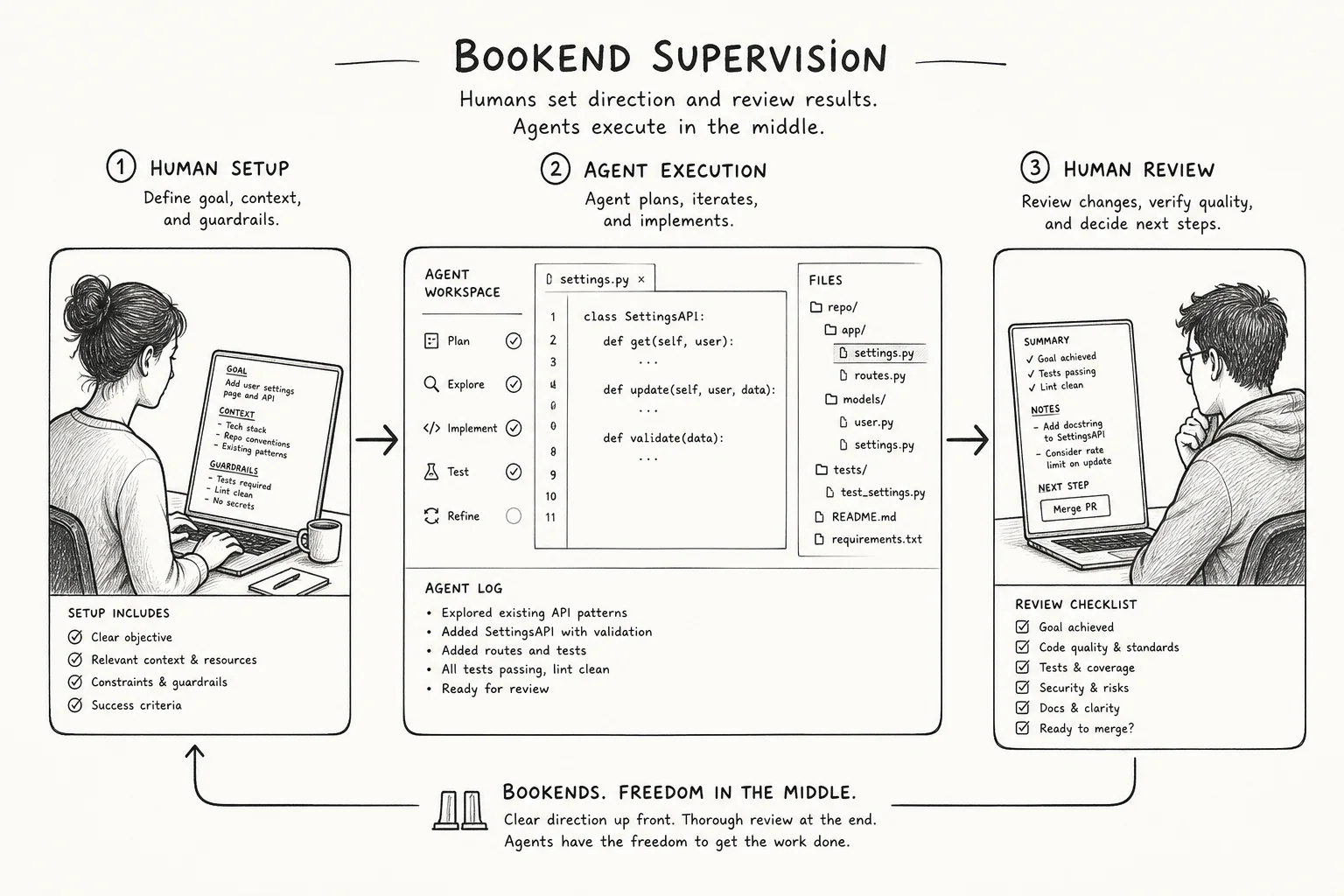
- Computer: more setup, agent runs the middle, human reviews bookends
Empirical findings beyond time savings:
| Finding | Detail |
|---|---|
| Follow-up query shift | Users move from "how do I do X" to verification and extension |
| Dissatisfaction | ~55% lower medium-to-high dissatisfaction on Computer vs Search |
| Task scope | Computer queries cross more occupational boundaries |
| Composite tasks | Users bundle subtasks that never appeared in their Search history |
Computer made about 12x more external connector calls per session than Search (7.9% vs 1.8% of sessions using connectors, per LinkedIn summary). Agents reach past the browser tab more often.
Savings held across 18 domains in Perplexity's writeup: software, finance, marketing, healthcare, legal, education, and others. Interview medians reported 25x faster personal workflows; some users claimed 300x on narrow tasks.
The 87% figure is an average on matched tasks. Your mileage varies wildly by how much of the job is judgment versus copy-paste.
What I would not overclaim
Three limits I would put in front of any executive deck:
1. Perplexity Computer is not your private agent stack
The study measures one product's orchestration over 20+ frontier models. Your n8n plus Claude Code loop will not automatically replicate 87% savings.
2. Supervision still shows up in the label
"Computer + human" includes human review time. Fully unsupervised numbers would look different (and riskier).
3. Search is not useless
Search stays the right tool when you need fast orientation, not execution. The paper's point is task fit, not "delete search."
How this maps to ops work I sell
Knowledge work categories leading adoption in the study:
- Research and analysis (~25.8% of Computer queries)
- Document and asset creation (~18.6%)
That is exactly the work founders want automated until they see the first wrong PDF attached to a client email.
My implementation checklist after reading the paper:
| Step | Action |
|---|---|
| Classify tasks | Separate "answer me" from "do it" workflows |
| Measure baselines | Time human steps on a sample week before agents |
| Require execution artifacts | Files, diffs, logs, not chat summaries |
| Keep humans on approval gates | Billing, external send, schema migrations |
The 87% number is a wake-up call. The harness design is still your job.
Bottom line
Harvard and Perplexity's June 2026 evidence says agents reshape scope, quality, cost, and time together on matched real-world tasks. Search optimizes the first minute. Agents attack the next 200.
If you want help turning that research into a measured pilot on your ops stack (with honest baselines, not hype slides), book a free discovery call.