
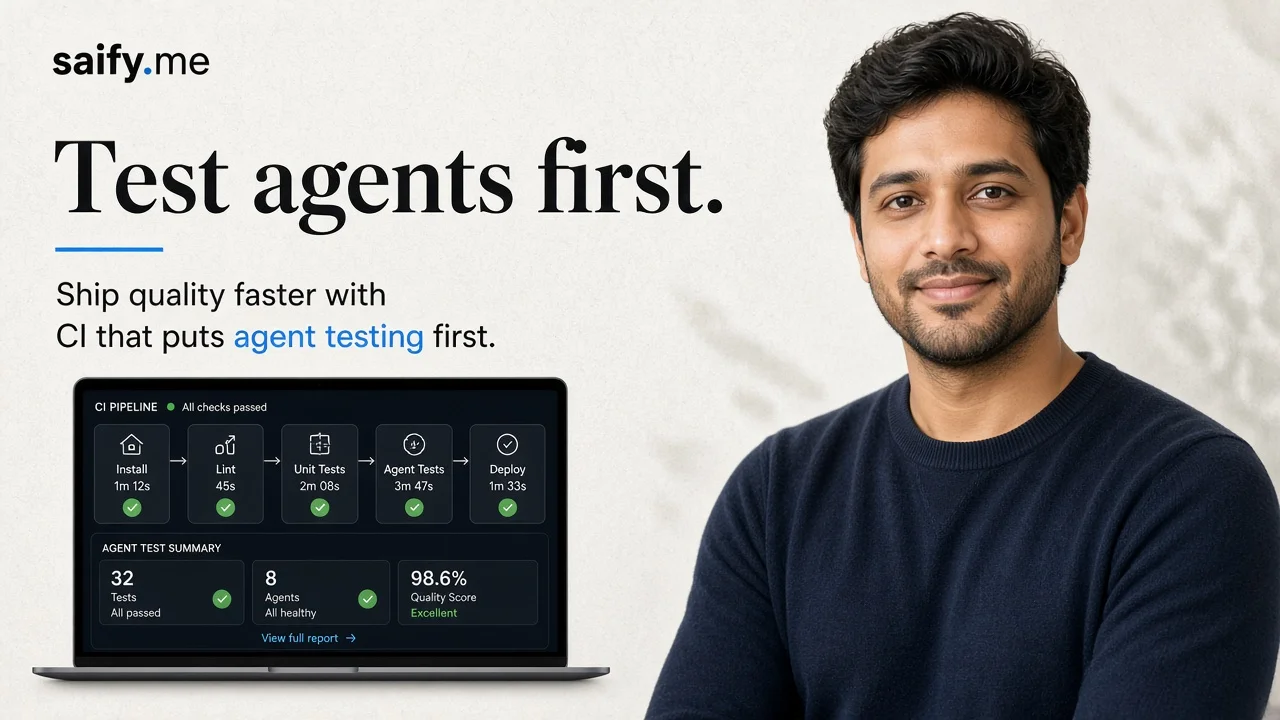
I used to treat CI as a gate before deploy. With agents in the loop, CI is the first reviewer, and humans are the appeals court.
That sounds harsh. It is also how you keep async agents from turning your senior engineers into full-time diff janitors.
Direct answer: generate tests and scenarios as fast as agents generate code. Fail branches in minutes. Humans only see diffs that survived proof.
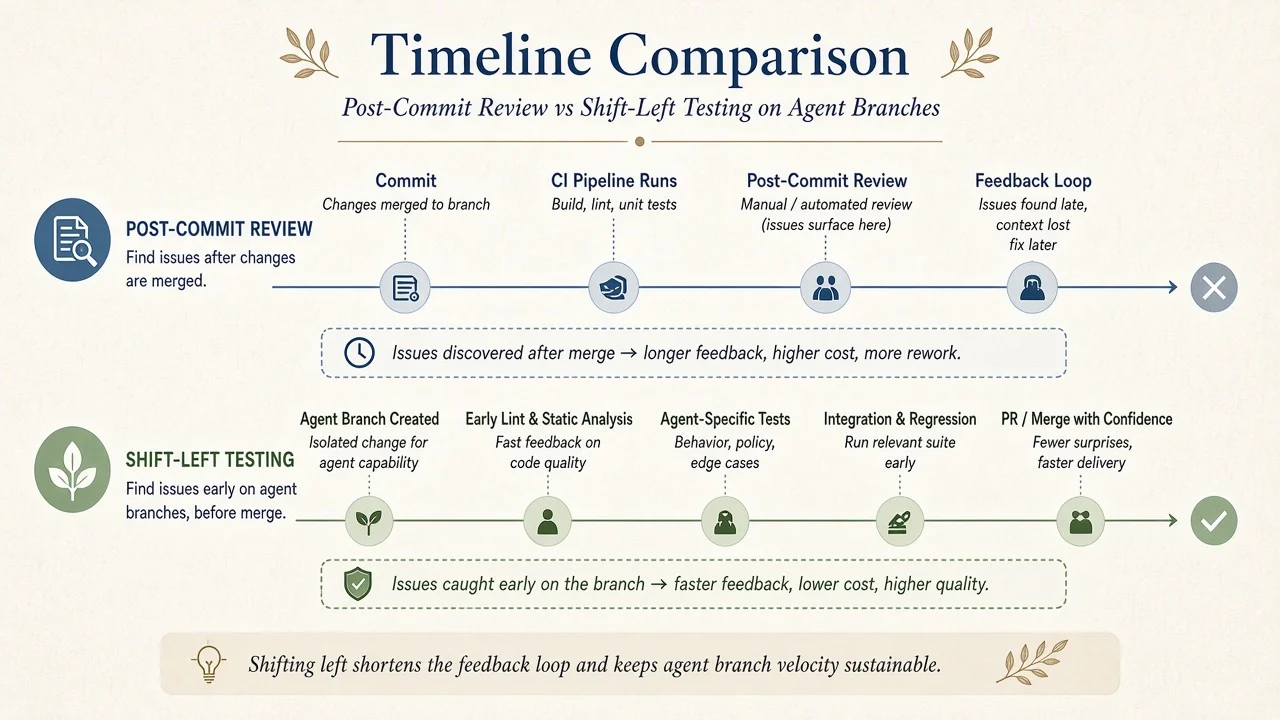
Why post-commit scanning is too late
AlphaSignal's recap of the MIT and Wharton pipeline study makes the point in newsletter language: autonomous agents write at machine speed, so traditional post-commit vulnerability scans miss the moment when bad code competes for attention.
The fix is not "review harder." It is review less code that already failed cheap checks.
Pair that macro story with the ADLC testing section in From SDLC to ADLC and the discard mindset in Knowing which AI code to discard . Together they describe one system: generate wide, filter hard, merge narrow.
Loop design I reuse across clients
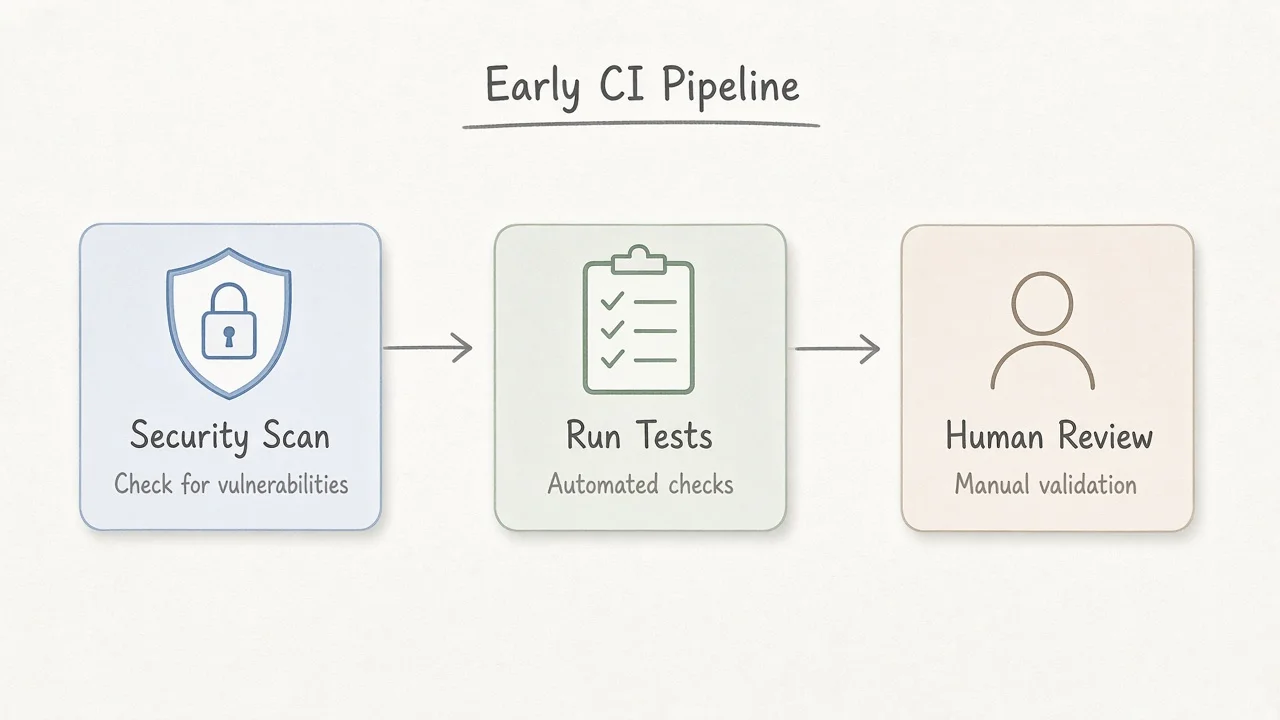
| Stage | Owner | Output |
|---|---|---|
| Spec / issue | Human | Acceptance criteria, risk tag |
| Implementation | Agent | Branch + draft PR |
| Fast gates | CI | Lint, types, unit tests |
| Scenario agent | CI or bot | New cases from spec + logs |
| Runtime slice | Sandbox job | Smoke URL, API trace, screenshot |
| Human review | Staff engineer | Architecture, security, product call |
The scenario row is where testing agents earn their keep. Given a spec paragraph, an agent proposes edge inputs you forgot. Given a failing trace, it proposes a regression test. Humans curate which cases enter the suite.
Tools like Greptile TREX push the runtime slice into PR comments with logs and screenshots. You do not need that exact vendor to copy the pattern: attach evidence, not opinions.
Security and quality move together
DORA's 2025 report stresses that AI adoption without platform quality raises instability. Shift-left security for agent code means:
- Secret scanners on every push
- Dependency audit with fail-on-high
- SAST on changed paths
- Optional dynamic scan for internet-facing routes
Run these before @mentioning a human reviewer. If you need a deeper pass on agent-generated auth changes, see
Claude security scans for enterprise repos
for how vendors are productizing that lane.
Metrics that prove the loop works
Stop celebrating commit counts. Track:
- Time from agent push to green CI (should fall as harness matures)
- Human review minutes per merged agent PR (should fall or stay flat as volume rises)
- Defects found post-merge from agent PRs (should fall quarter over quarter)
If CI time rises linearly with agent output, your test suite is the new bottleneck. Parallelize, shard, or generate fewer but sharper cases.
What I would ship
This quarter I would stand up a single template repo for agent tasks: Makefile targets, test harness, sandbox compose file, and PR checklist baked in. Agents clone the template; humans never renegotiate basics per ticket.
For teams shipping MCP integrations or internal agents, the same loop applies: tool calls get contract tests before anyone demos to leadership.
If merge queues are green but releases still stall, I can help map where your verification loop breaks. Book a free discovery call or start with the free ops automation audit.