
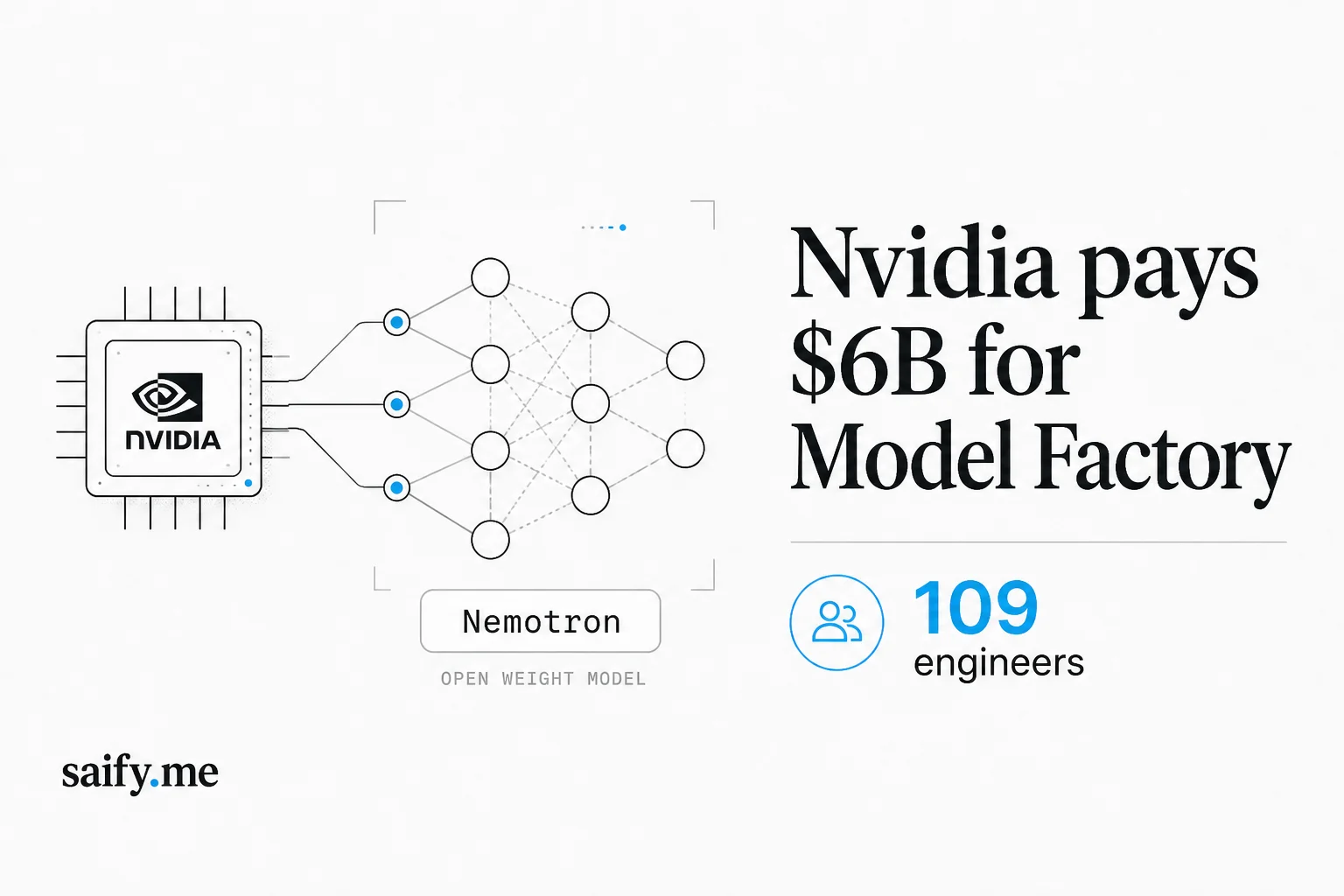
Nvidia built a multitrillion-dollar business selling shovels for the AI gold rush. The August 2026 Poolside deal looks like Nvidia grabbing the map.
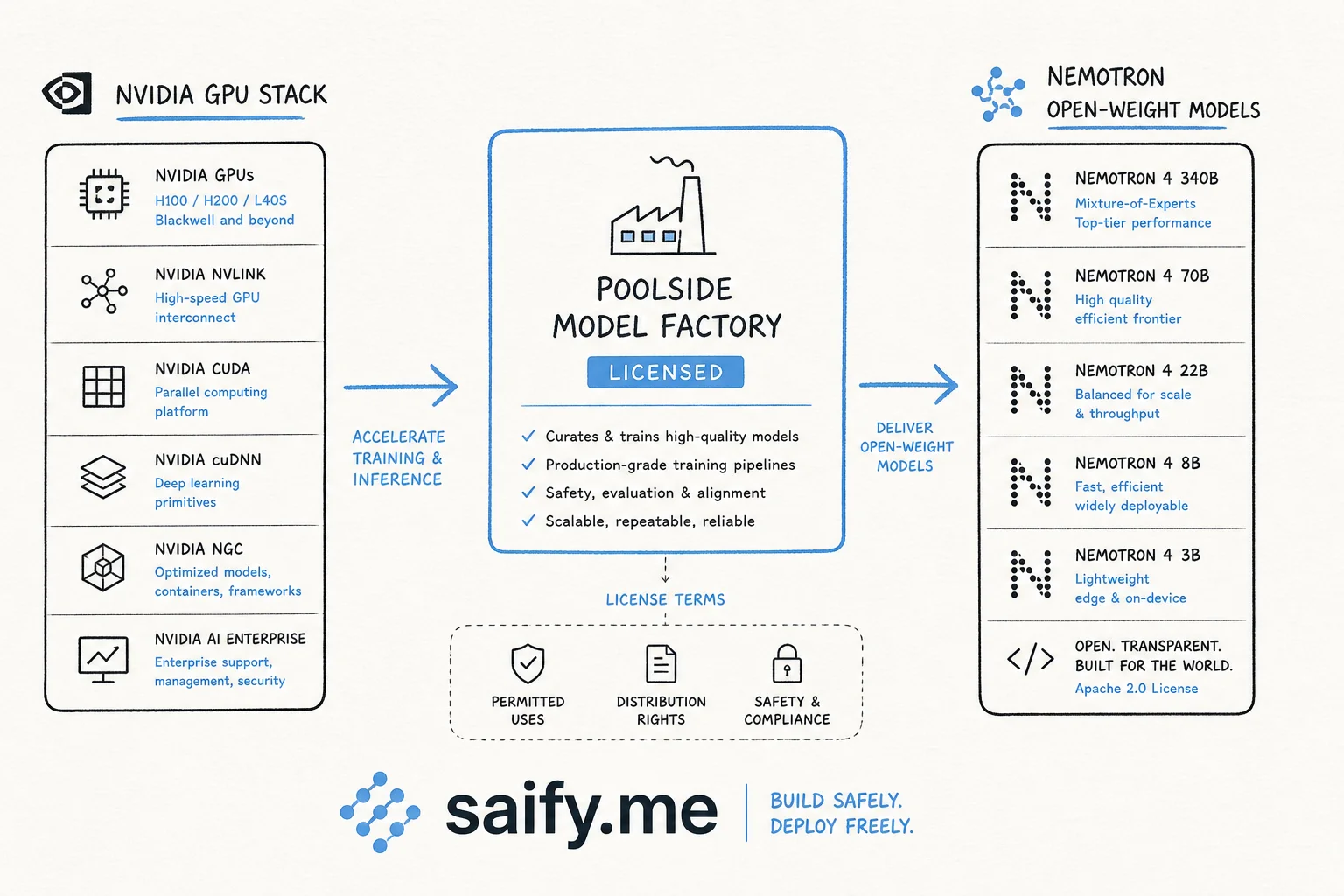
The chip giant agreed to pay Poolside $6 billion to license its Model Factory, invest $1 billion at a $12 billion pre-money valuation, and hire 109 engineers onto its Nemotron open-weight program, according to reporting from the Wall Street Journal, Forbes, and The Next Web.
Not an acquisition, still a restructuring
Poolside's shareholder letter (reviewed by WSJ) is explicit: not an acquisition, not an acqui-hire.
| Component | Detail |
|---|---|
| License fee | ~$6B for Model Factory (non-exclusive) |
| Equity | $1B investment at $12B pre-money |
| Talent | 109 engineers join Nvidia Nemotron team |
| Founders | Stay at Poolside on unspecified research |
| Payout timing | License proceeds expected to investors before end of next year |
Jason Warner (ex-GitHub CTO) and Eiso Kant built Poolside in 2023 after a failed $2B funding round left them short on compute. Nvidia was already an investor with up to $1B committed last October.
The pattern mirrors other Nvidia "license + hire" deals totaling roughly $27B across recent transactions, per TNW. Nvidia buys training velocity without absorbing full corporate baggage.
Why open weights now
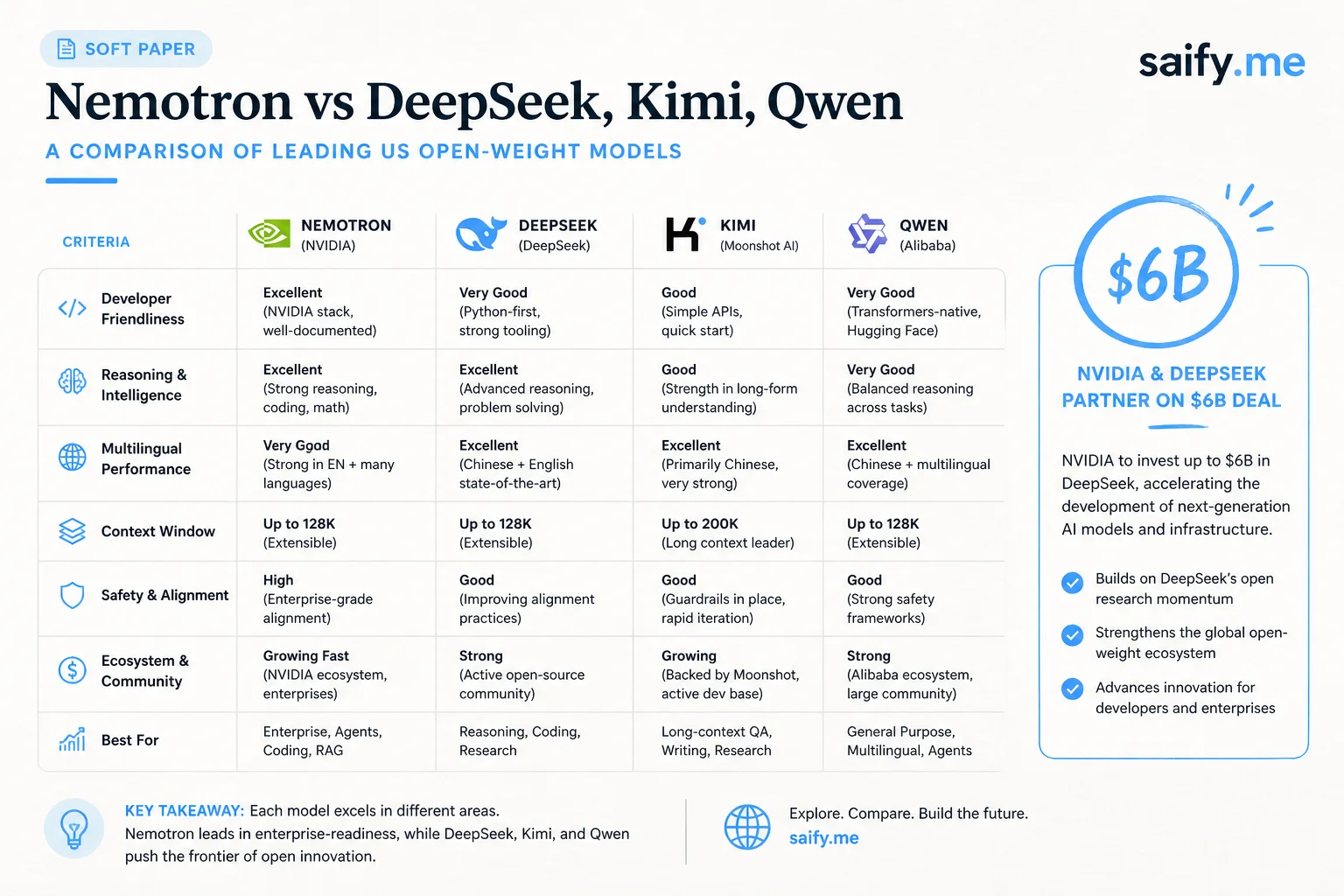
Chinese labs shipped downloadable models that enterprises can fine-tune and run cheaply: DeepSeek, Moonshot's Kimi K3, Alibaba's Qwen. US frontier labs still lead on closed API quality, but cost and customization moved downstack.
Poolside's Laguna family was pitched as a Western open-weight answer, trained on Nvidia servers. Nemotron is Nvidia's own open line. TNW reported Nvidia is working toward a trillion-parameter open model.
Nvidia does not need to beat OpenAI in chat UX. It needs models that pull GPU purchases the way CUDA pulled developer lock-in.
Give away the model. Sell the inference fleet.
That is the CUDA playbook applied to weights.
What builders should watch
- Laguna + Nemotron roadmap: expect faster open coding models tuned for Nvidia stacks (see also Coinbase AI Gateway routing)
- License non-exclusivity: Poolside can license Model Factory elsewhere. Watch for second-source training pipelines
- Enterprise procurement: open weights reduce API bill shock but shift risk to hosting, safety, and eval. Your model routing sheet needs an on-prem column
- Geopolitical framing: WSJ framed the deal as a US alternative to Chinese AI. That affects which models pass vendor review in regulated accounts
OpenRouter's stealth drops (Ox Alpha) and Nvidia's $6B factory bet are the same market tension from two angles: anonymous frontier previews vs named open-weight infrastructure.
If you are choosing between API frontier models and self-hosted open weights for agentic coding, I help teams run that math with real task shapes, not hype. Book a free discovery call.