
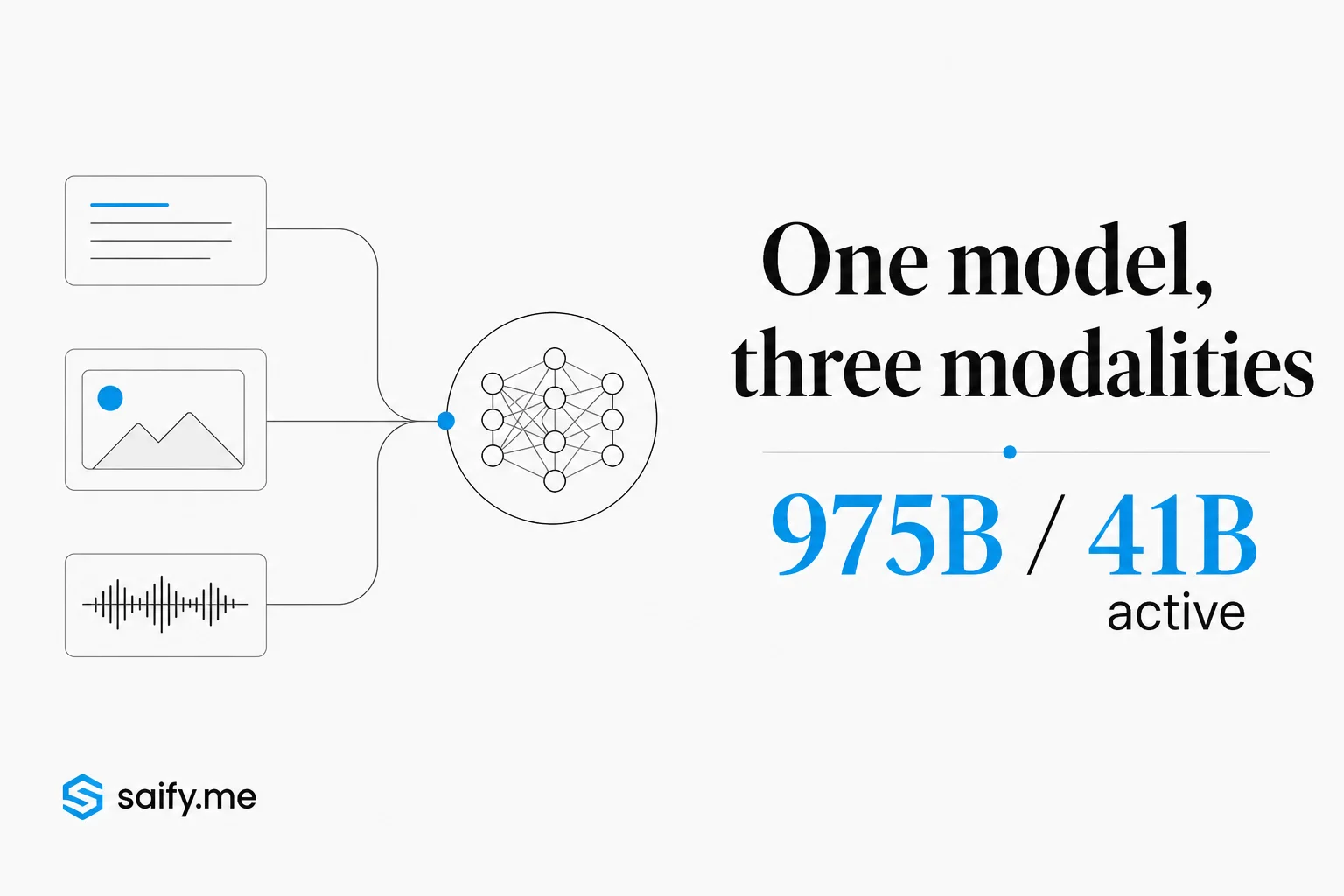
Most multimodal stacks still feel duct-taped: a vision encoder, a speech module, and a text LLM held together with glue code. Thinking Machines Lab's Inkling is the opposite story. One sparse MoE transformer ingests text, images, and audio natively, reasons over all three, and ships as Apache 2.0 open weights on Hugging Face.
I fine-tune models for clients who cannot send every document to a hosted API. Inkling is the first July 2026 release where I would sketch a private multimodal agent without apologizing for the integration layer.
What Inkling actually is
Inkling launched July 15, 2026 from Thinking Machines Lab, the company Mira Murati built after leaving OpenAI. The team is explicit about positioning: Inkling is not the strongest overall model today, open or closed. It is a broad, balanced base you can adapt.
| Spec | Inkling | Inkling-Small (preview) |
|---|---|---|
| Total parameters | 975B | 276B |
| Active per token | 41B | 12B |
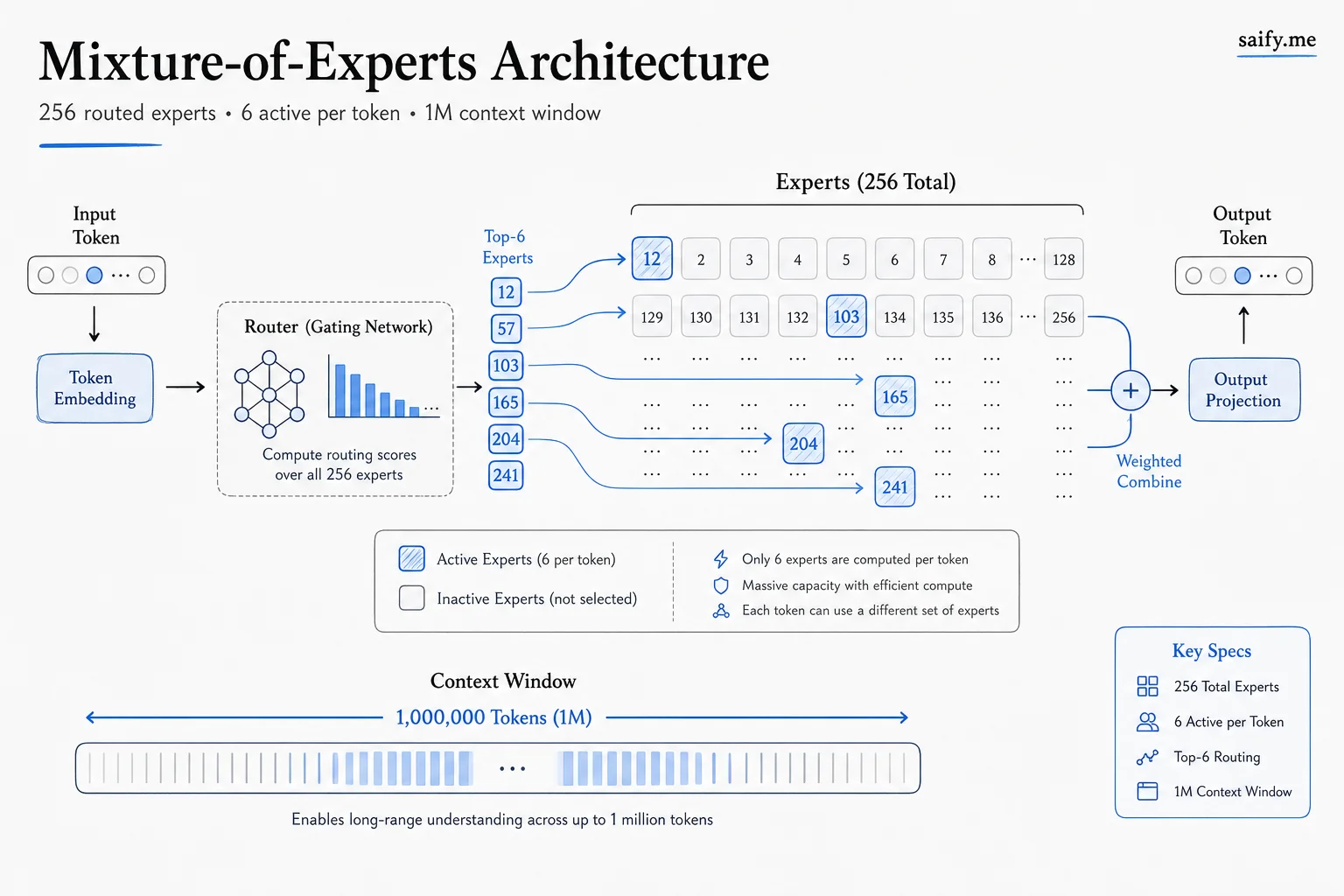
| Architecture | MoE (256 routed + 2 shared experts, 6 active) | Same family |
| Context | Up to 1M tokens (64K / 256K on Tinker) | Up to 1M |
| Inputs | Text, image, audio | Text, image, audio |
| License | Apache 2.0 | Apache 2.0 |
| Training data scale | ~45T tokens (text, image, audio, video) | Similar recipe |
Outputs are text only today. Inputs are where the native multimodal story lives. You feed screenshots, recordings, or documents into one checkpoint instead of routing through three services.
Why open weights first matters for applied work
BenchLM's July coverage nailed the unusual part: full weights arrived first, not a gated API with weights promised later. BF16 and NVFP4 checkpoints are downloadable. NVFP4 targets NVIDIA Blackwell efficiency. The honest label is "open weight," not open source training data. Still, for downstream teams, downloadable weights change the procurement conversation.
Thinking Machines partnered across the inference ecosystem so you are not stuck on one host:
- Together AI, Fireworks, Modal, Databricks, Baseten for hosted APIs
- Tinker for fine-tuning (their training platform)
- SGLang, vLLM, TokenSpeed, Unsloth, Hugging Face transformers for self-host recipes
That spread matters when a client already standardizes on vLLM in Kubernetes or wants Unsloth on a single A100 box.
Controllable thinking effort is the production knob
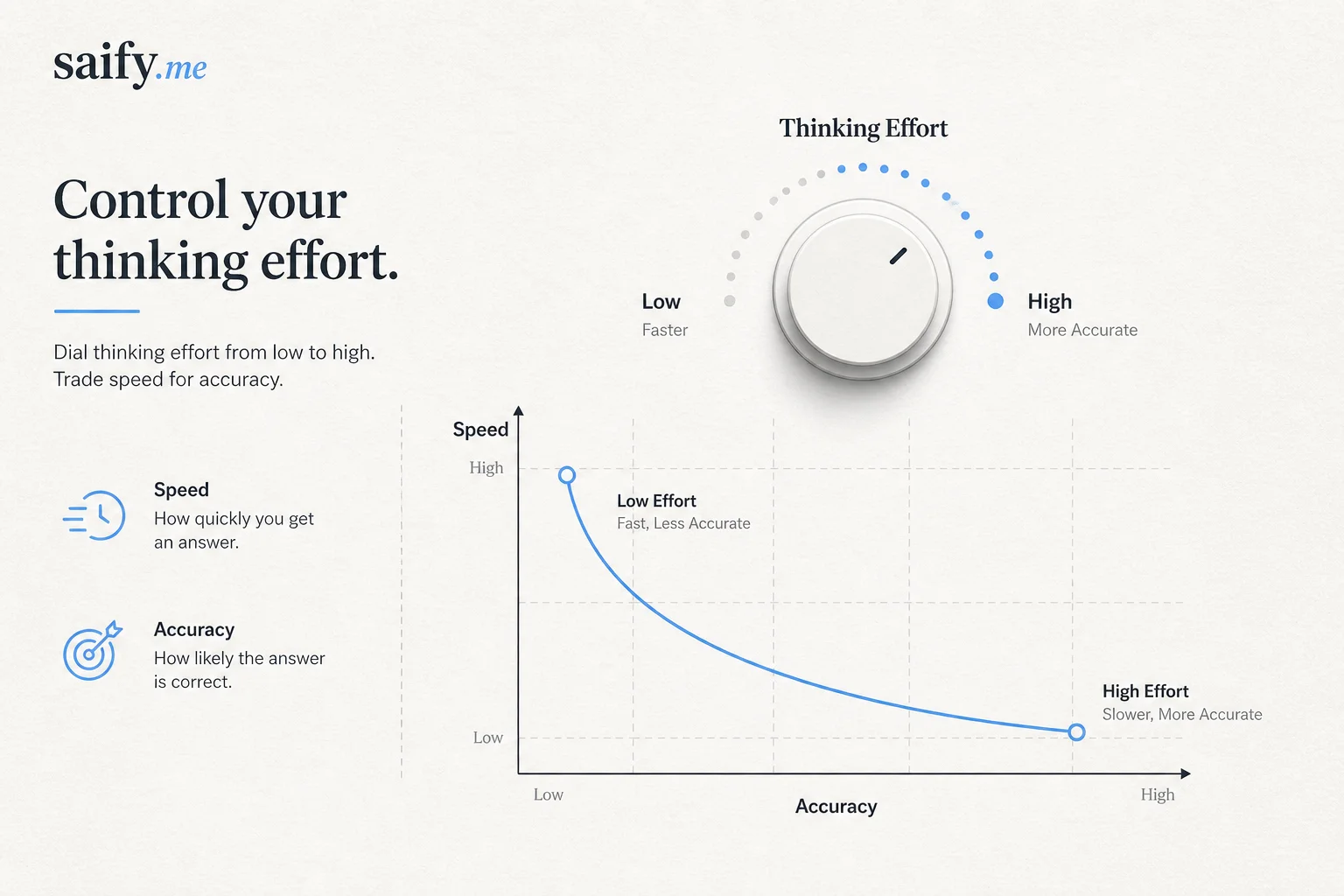
Inkling's controllable thinking effort is the feature I would wire into agent harnesses first. Dial reasoning up for hard evals. Dial it down for routing, summarization, or cheap first-pass tool selection.
The model card reports results at effort=0.99 for benchmarks. In practice, you trade tokens for latency. Same score, fraction of the tokens, when you accept lower effort. For agent loops that fire dozens of micro-calls, that knob is not cosmetic. It is margin.
Audio and vision without a separate pipeline
Inkling posts top open-weights audio scores on VoiceBench, MMAU, and AudioMC in Thinking Machines' July benchmarks. It transcribes, follows spoken instructions, and reasons over recordings inside the same forward pass family as text.
For vision, the pitch is agentic coding and tool use with image input, not a separate captioning sidecar. If you are building a support agent that accepts screenshots of error dialogs, that native path removes an integration failure mode I see constantly in client RAG stacks.
Inkling-Small (276B total, 12B active) previewed alongside the main release for lighter workloads. Thinking Machines claims it matches the larger model on many benchmarks at roughly quarter size and 3x cheaper per output token on Tinker. Worth watching if your fine-tune budget is real.
Benchmarks without leaderboard theater
Inkling's public comparisons include Nemotron 3 Ultra, Kimi K2.5/K2.6, GLM 5.2, DeepSeek V4 Pro, Gemini 3.1 Pro, Claude Fable 5, and GPT 5.6 Sol. Inkling sits mid-pack on several reasoning rows, strong on audio, competitive on agentic coding and tool use.
I read that as intentional. Murati's team is not selling SOTA bragging rights. They are selling a customization substrate with multimodal inputs, long context, and permissive licensing.
Hardware reality check: full NVFP4 deployment starts around 600 GB VRAM per community deployment notes. This is not a MacBook model. It is a fine-tune and serve target for teams with real GPU budgets, or a hosted API customer who wants weights-backed portability.
How I would use Inkling in a client stack
- Private document + screenshot agent. Fine-tune on Tinker for a client's ticket taxonomy. Serve with vLLM behind an internal gateway. Audio optional for call-center QA later without retooling architecture.
- Effort-aware router. High effort for compliance review passes. Low effort for triage and metadata extraction in the same harness.
- Multimodal eval baseline. Before paying for closed APIs on every vision call, run Inkling NVFP4 on Blackwell and compare latency and dollar cost against your current stack.
Related local-agent context: on-device 27B agents for pocket hardware versus Inkling for datacenter-class multimodal fine-tunes. Different tiers, same privacy story.
What to watch next
Inkling is "just the start" per Thinking Machines' launch post. Inkling-Small moving from preview to full release will matter for teams without 600 GB clusters. Integration depth on Tinker (what fine-tunes actually ship to production APIs) is the other gap I would probe on a discovery call before committing a quarter of GPU spend.
If you are evaluating open multimodal bases for a product that cannot leak customer media to a third-party API, Inkling belongs on the short list. Not because it wins every chart. Because one architecture, three modalities, Apache 2.0, and a thinking-effort dial are the primitives applied teams actually customize.
Want help scoping a private fine-tune or inference path for multimodal agents? Book a free discovery call.