
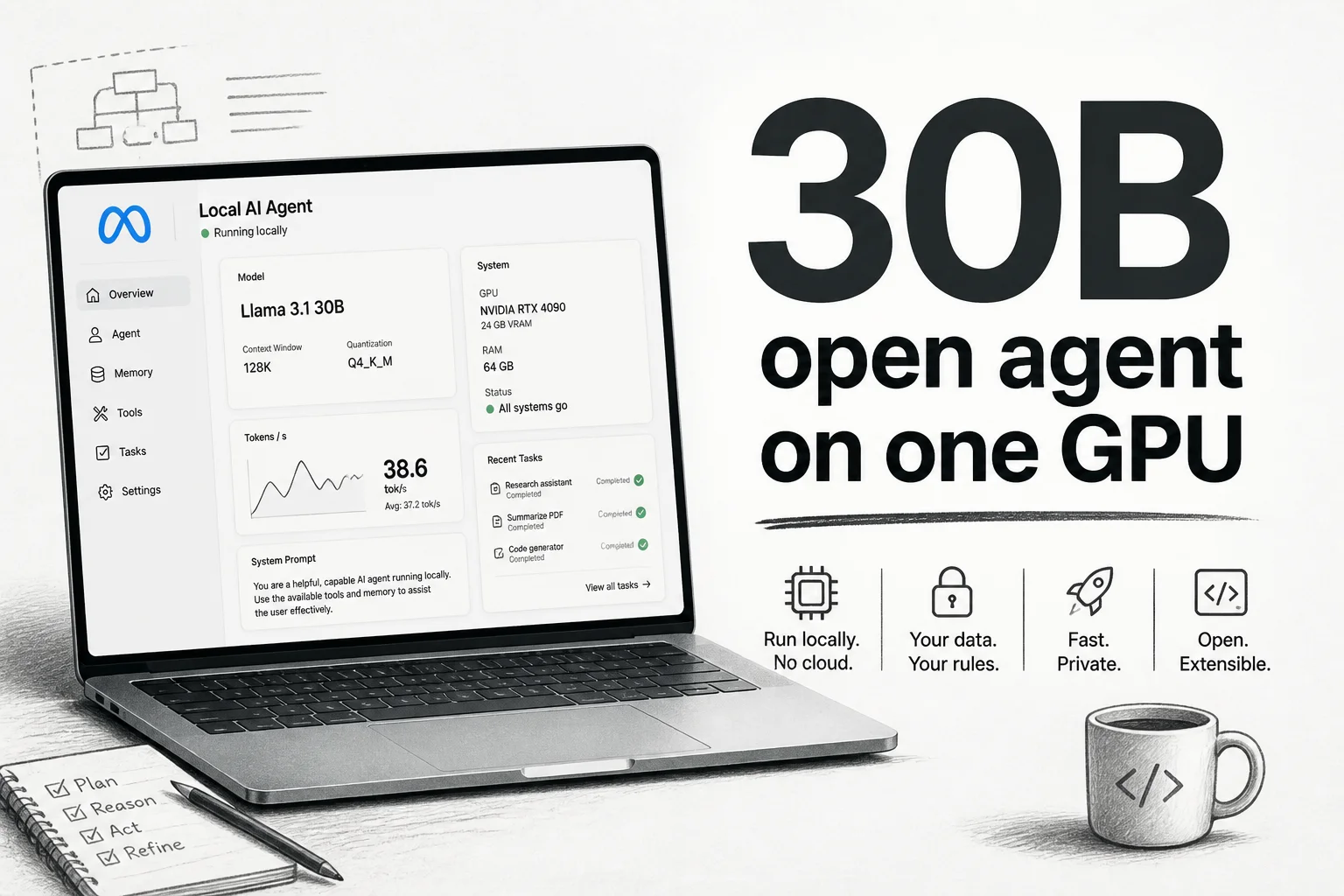
Meta went back to open weights this week, but the product story is not nostalgia. Muse Glimmer is a 30B model built for always-on local agents: tool loops, screenshots, retries when something breaks, and no per-token bill at the end of the day.
I ship agents for SMB operators who care about data leaving the building. That is why this launch caught my attention more than another cloud leaderboard slide.
What Glimmer actually is
Muse Glimmer is a dense causal transformer from Meta Superintelligence Labs, not a tiny chat wrapper. The Hugging Face model card lists roughly 29.6B language parameters plus a dedicated perception encoder for interleaved text and images. Context is configured for 131,072 tokens, which is the kind of headroom agent harnesses burn through fast.
Meta released it under Apache 2.0, the most permissive license they have used for an open model so far. Weights, GGUF quant builds, and deployment recipes are live now. Integrations for llama.cpp, MLX, and ExecuTorch were rolling out in the days after launch.
The larger Muse Spark family is still mostly cloud-side, but Mark Zuckerberg's essay frames open weights as a U.S. competitiveness issue. Alexandr Wang said Spark 1.2 weights are publishing soon. Glimmer is the on-ramp developers can download today.
Why local agents need a different training target
Cloud models win on raw reasoning breadth. Local agents win when they survive a Tuesday afternoon of real work:
| Capability | Why it matters in production |
|---|---|
| Sequential tool calling | Agents die when schema fidelity drops after the fifth function call |
| Failure recovery | A booking API 404 should trigger a retry plan, not a hard stop |
| Multimodal input | Screenshots, PDFs, and charts show up in ops workflows, not just chat |
| Scaffold compatibility | You already picked OpenClaw, Claude Code, or a custom harness |
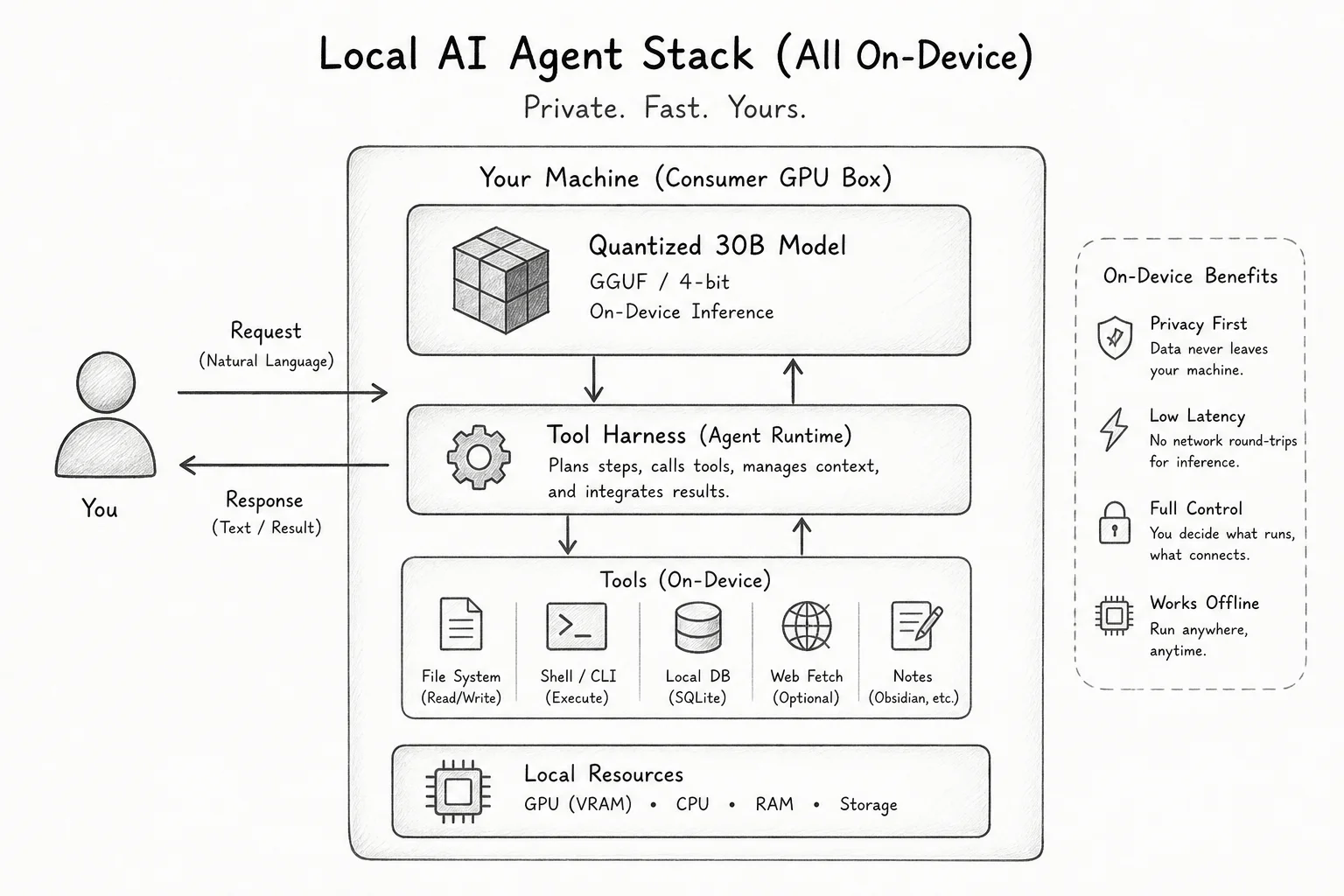
Meta trained Glimmer with logit distillation from Muse Spark, then mid-training on longer agent traces, then post-training across coding, reasoning, and tool-use domains. The developer blog is blunt about the design constraint: memory on a single consumer GPU, not a datacenter row.
That shows up in two engineering bets I would copy in client work:
- Quantization to ~4-bit so the language model sits under 20 GB, leaving room for KV cache, the vision encoder, and the drafter.
- Speculative decoding with DFlash so long reasoning chains do not feel like watching paint dry on local hardware.
Meta published speed numbers on MacBook M4 Max, M5 Max, and an RTX 5090. Treat those as vendor baselines. Your job is still to benchmark on the machine your user actually owns.
Benchmarks worth reading (and what to ignore)
Meta compares Glimmer against Gemma 4 and Qwen 3.6 at similar parameter counts on agentic suites like DeepSearch QA, MCP-Atlas, τ-Bench, and SWE-Bench style coding tasks.
I do not ship based on one vendor table. I do use those categories as an eval checklist:
- Can it finish a multi-step web + file task without human babysitting?
- Does tool JSON stay valid after ten turns?
- When curl fails, does the agent diagnose or hallucinate success?
The official demo that impressed me is mundane on purpose: discover Home Assistant services, inspect an AV receiver, and build a dashboard. That is the right shape of proof for applied AI. Not a poetry contest.
How I would wire it this week
Meta's quickstart path is straightforward:
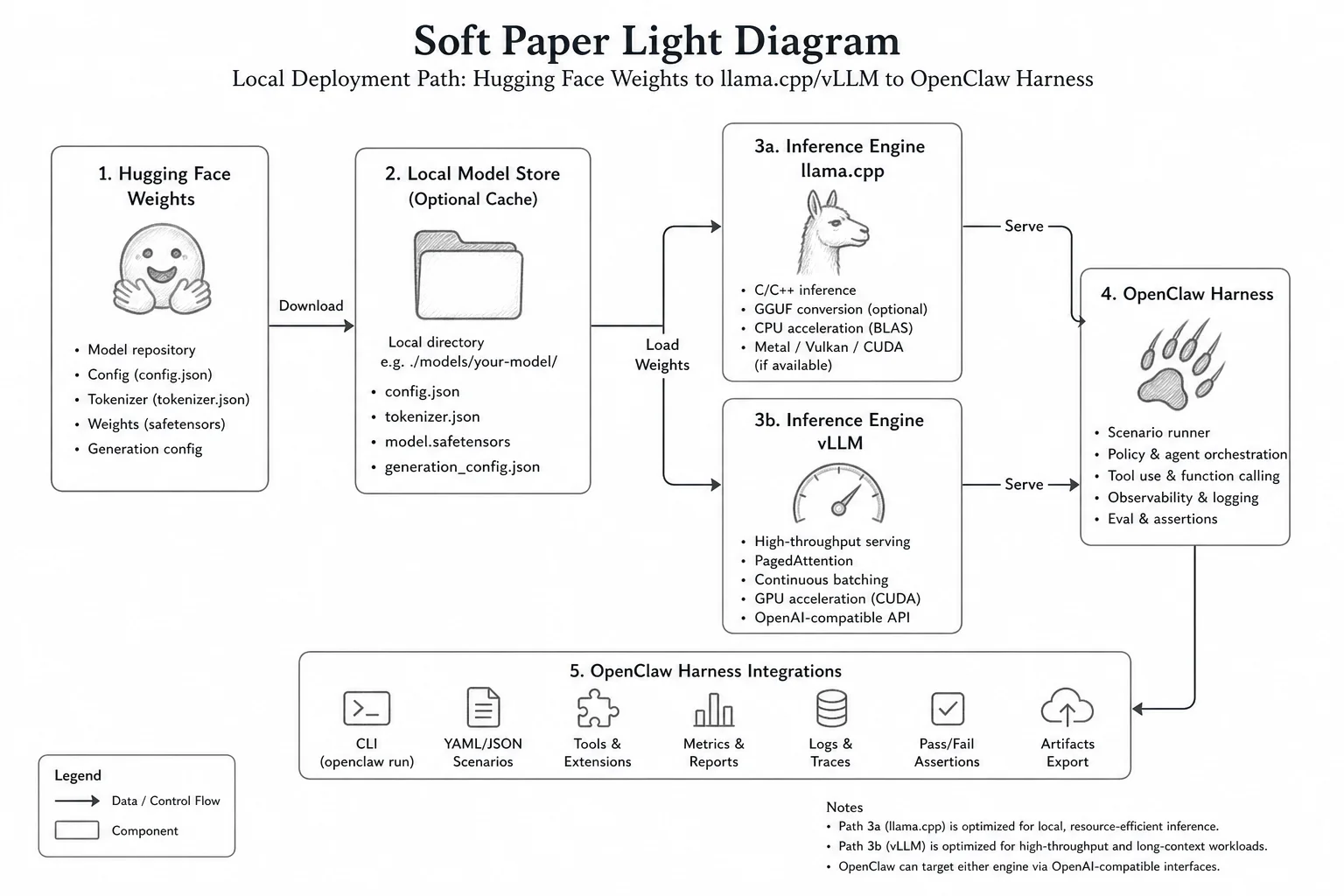
- Pull weights from Hugging Face.
- Serve with Ollama, LM Studio, vLLM, or llama.cpp.
- Point your harness at the local OpenAI-compatible endpoint.
They spotlight OpenClaw as a reference integration. Install, set the provider to your local endpoint, and give it a multi-tool prompt (weather + headlines + scheduled push). The interesting part is refusal behavior on destructive shell commands, not the demo fireworks.
For teams already running local stacks, this slots next to posts I have written on Qwen3 8B coding agents and the broader routing economics conversation. Glimmer is heavier, but it is the first Meta open drop in 2026 that is explicitly agent-native rather than "here is a chat model, good luck."
Open source politics vs your sprint plan
Zuckerberg's essay argues concentrated AI power is risky and that slowing U.S. releases helps foreign open ecosystems race ahead. Whether you agree with the geopolitics or not, the practical takeaway for builders is simpler: you now have a permissively licensed 30B agent checkpoint you can fine-tune, air-gap, and ship without negotiating enterprise API terms.
That matters for:
- Clinics and law firms that cannot send patient or matter data to a shared API
- Factory or warehouse pilots where Wi-Fi is flaky
- Cost-sensitive automation where token spend would kill the ROI
It does not mean local is free. You still pay in GPUs, engineer time, eval harnesses, and support when quantization eats accuracy on your niche tools.
What I would test before recommending Glimmer to a client
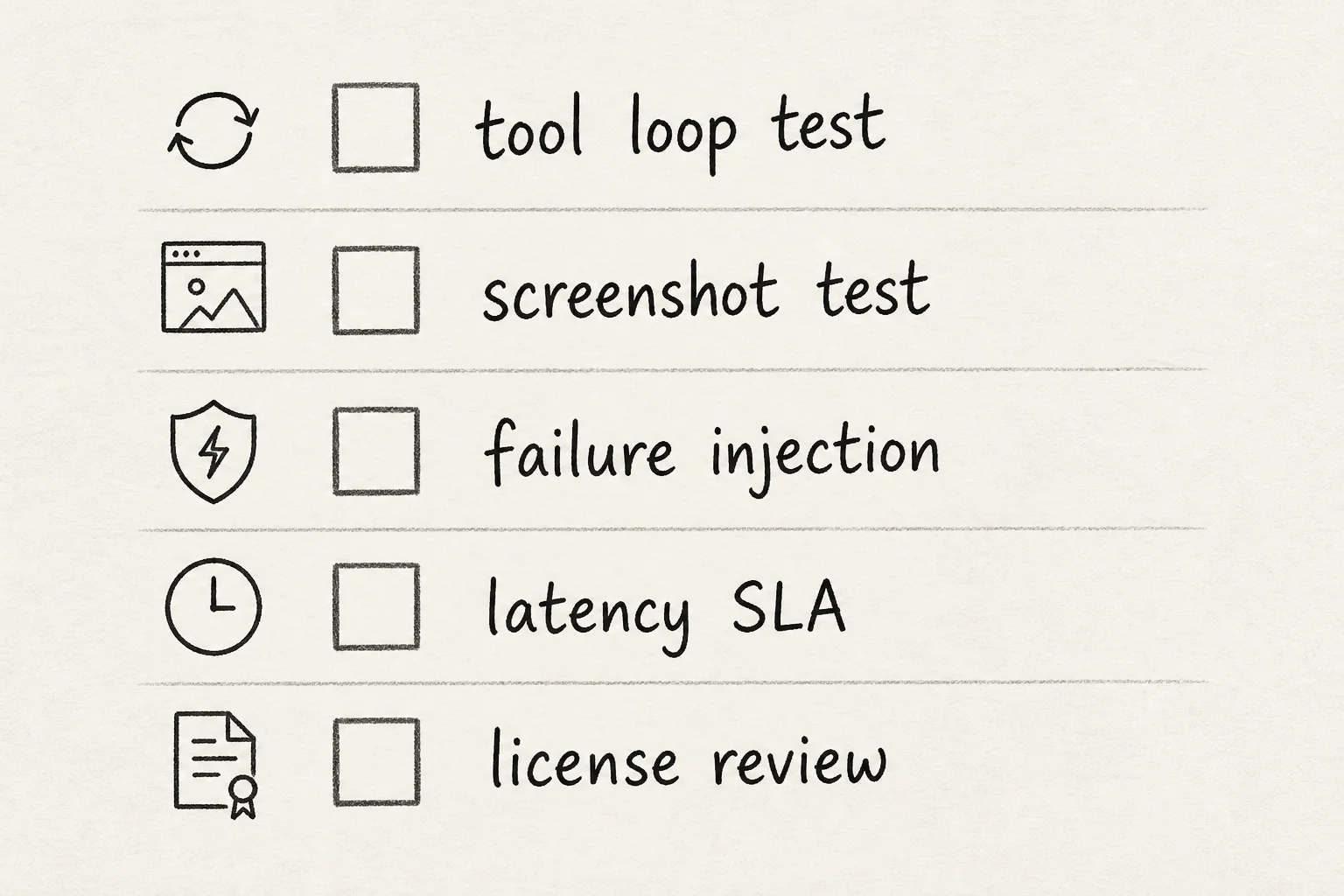
Here is the checklist I would run on a 24 GB machine before I put this in a proposal:
| Test | Pass criteria |
|---|---|
| CRM or booking API tool loop | 10+ sequential calls without schema drift |
| Screenshot + form extraction | Correct field mapping on a real internal admin UI |
| Failure injection | Revoke API key mid-run; agent recovers or escalates cleanly |
| Latency | First useful action under the SLA your user expects |
| License review | Apache 2.0 fits the client's redistribution plan |
If Glimmer fails those, I would still route cloud for hard reasoning and keep local for the 80% traffic that is repetitive tool work. Same hybrid pattern as frontier vs workhorse routing, just with weights on disk.
Bottom line
Meta's open-source turn in 2026 is not Llama nostalgia. Glimmer is a bet that agent loops belong on the device, with tool reliability and recovery baked into the training target. Spark going open next would raise the ceiling. Glimmer gives you a downloadable floor you can benchmark this week.
If you are designing a local agent for ops or product and want a second pair of eyes on harness choice, memory budget, or eval design, book a free discovery call. I will tell you honestly whether local is saving money or just moving complexity onto your plate.