
Most "computer use" APIs hand you a general model, a screenshot loop, and a prayer.
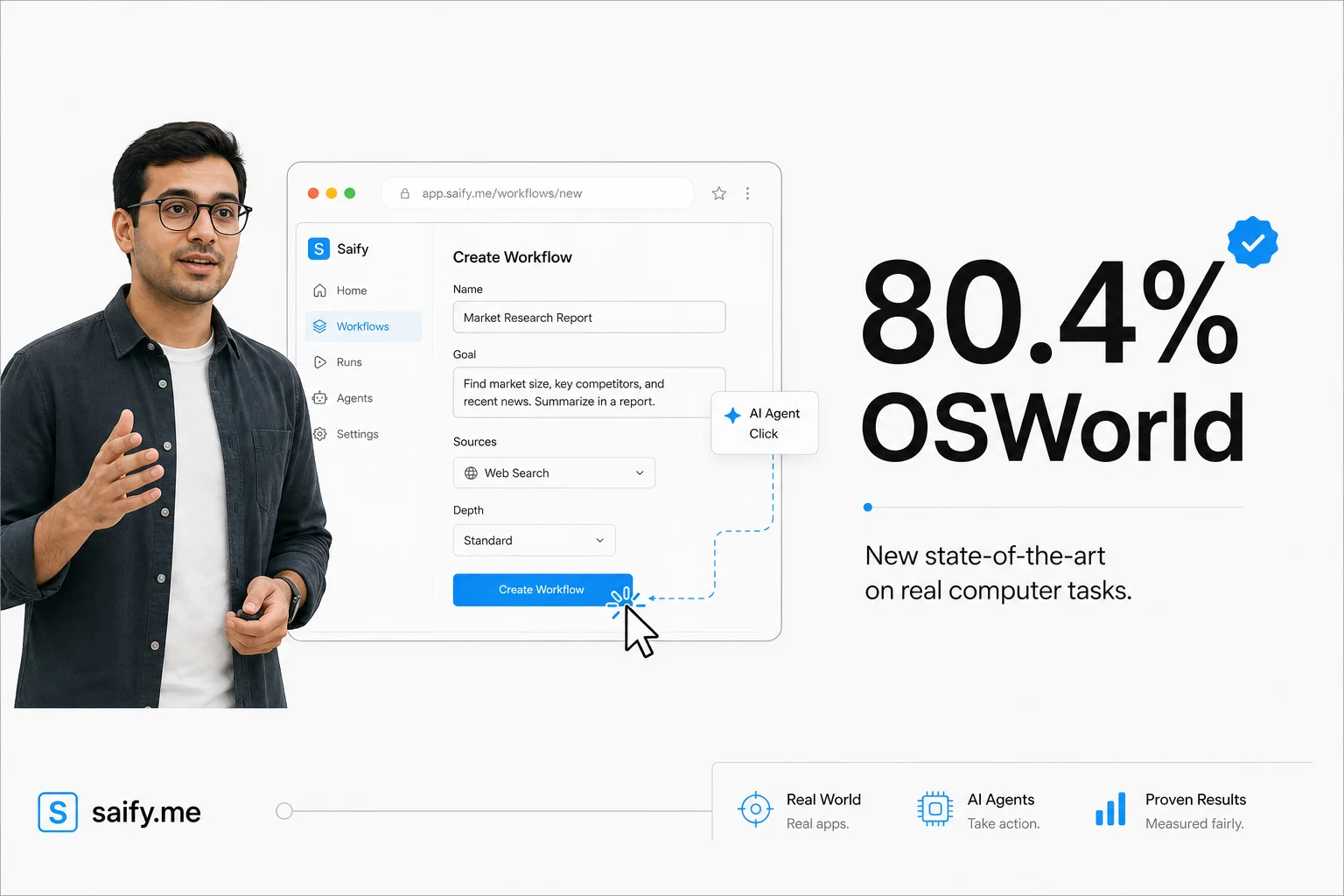
H Company's Computer-use Agents, launched July 16, 2026, flip the contract. You describe the task and where it runs. They ship the agent, the sandbox, and a model family called Holo tuned for GUI work. Their headline number is 80.4% on OSWorld-Verified for the h/web-surfer-flash preset, with pricing charts that claim better cost per million output tokens than comparable general models.
I do not treat OSWorld as a production SLA. I treat it as a signal that the team optimized for clicking, not for chat.
What you actually get
H Company bundles four integration surfaces:
| Surface | Best for |
|---|---|
| REST API + Python/TypeScript SDK | Product backends, batch jobs |
hai CLI | Quick terminal experiments |
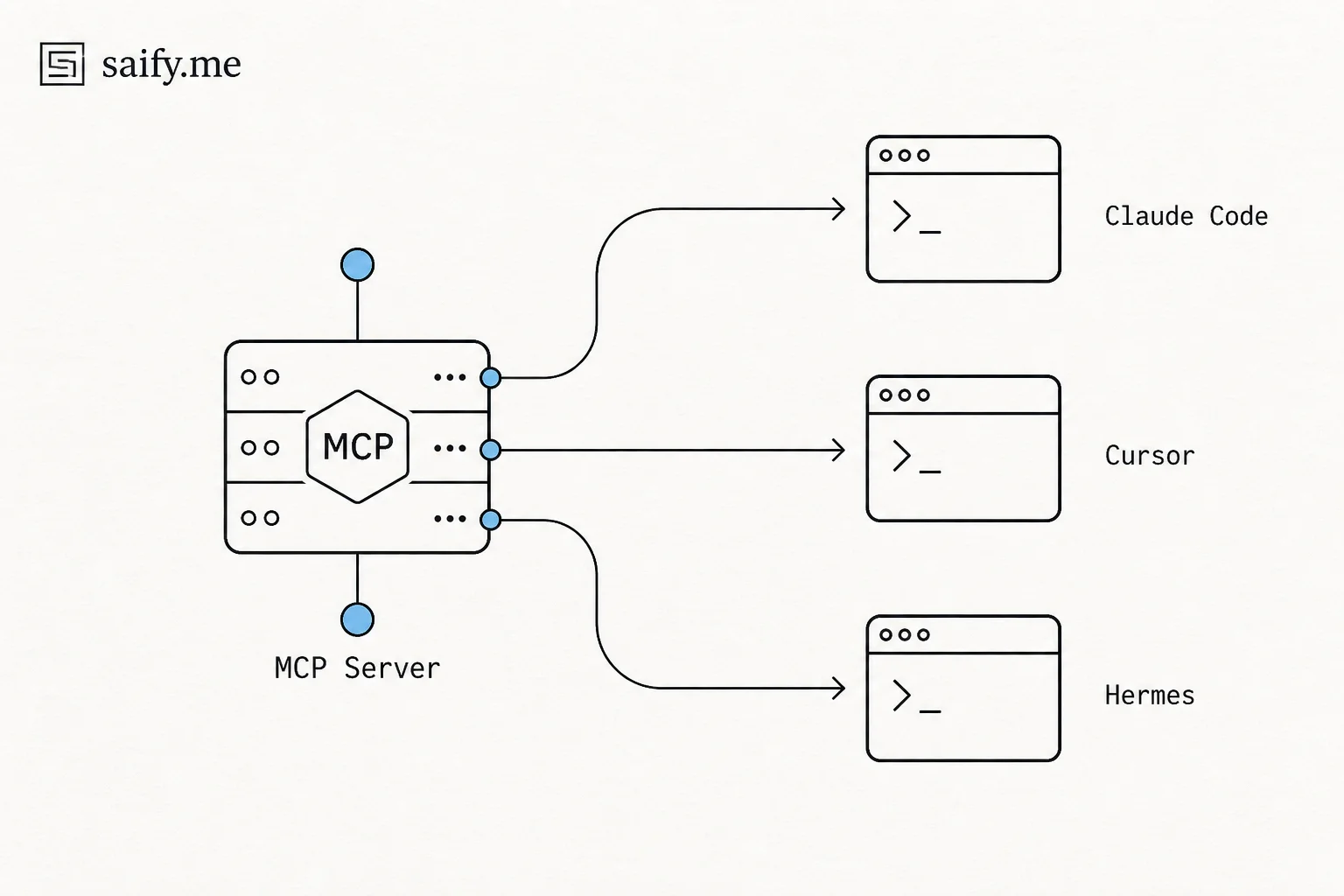
| MCP server | Claude Code, Cursor, Hermes without custom HTTP glue |
| HoloTab Chrome extension | Human-in-the-loop browsing in a side panel |
The Python shape is intentionally boring:
from hai_agents import Client

client = Client()
result = client.run_session(
    agent="h/web-surfer-flash",
    messages=(
        "On Google Flights, find the cheapest direct flight from Paris (CDG) "
        "to Tokyo (NRT) this Saturday. Return the airline and the price."
    ),
)
print(result.answer)
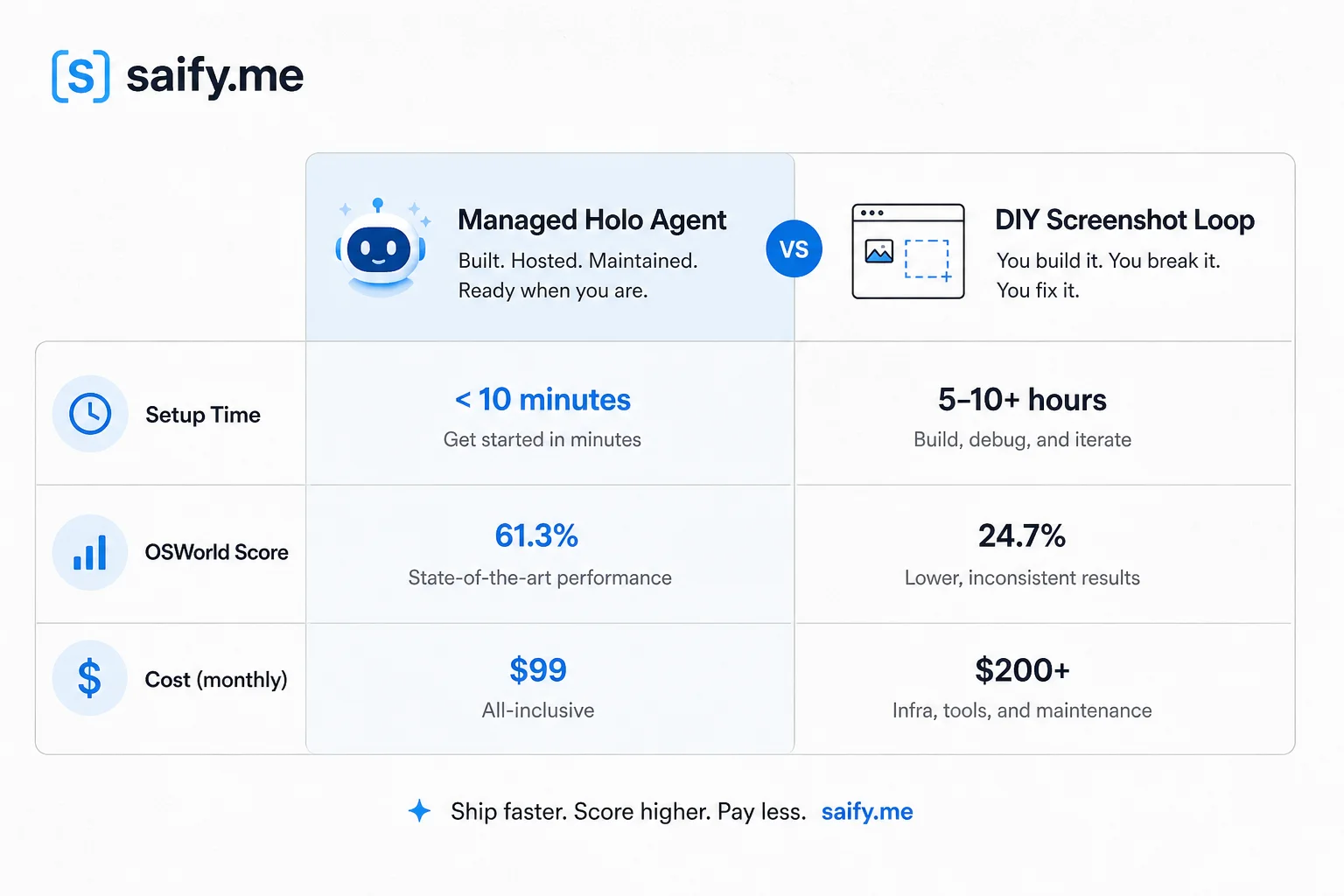
That is the whole pitch for many teams: no agent loop, no sandbox provisioning, one API key. H Company says most developers get a first agent live in under thirty minutes.
Presets, skills, and subagents
The platform is not one monolithic prompt. You configure model, environment, skills, and instructions once, then call the agent by name. Presets cover visual browsing, extraction, and research. Skills stack. Specialist subagents handle delegation instead of cramming every tool into a single thread.
Every run is visible in their console, which matters when you are debugging "why did it click Purchase twice."
Use cases H Company keeps highlighting:
- QA testing on a live URL with findings you can wire into CI
- Web extraction into typed shapes you define
- Web actions that verify success after fills and clicks
They publish demos on GitHub, including apartment hunting across Craigslist plus native WhatsApp desktop and accessibility testing with degraded vision controls.
HoloTab vs the API
HoloTab is the productized Chrome extension: side panel, routines, autopilot chores. The API is the same Holo stack without the extension UX.
For client work I split them:
- HoloTab when a non-engineer needs to watch the agent work
- Computer-use Agents API when cron, CI, or a backend service needs unattended runs
Where I plug it into my stack
The digest headline was "plugs into Claude Code, Cursor, Hermes." That is the MCP path. I keep HTTP MCP transports for anything that touches customer tenants. Stdio MCP is fine for local HoloTab experiments.
This sits beside other harness choices I have written about:
- BrowserCode when I want CDP as a coding primitive inside OpenCode
- Anthropic Claude computer use batch actions when the workload already lives on Claude's managed runtime
- Cursor cloud agent subscriptions when the goal is "ship the PR," not "click this form"
H Company wins when the task is visual ops on arbitrary sites and I do not want to own browser infrastructure.
Reliability and cost claims to verify yourself
H Company's marketing leans on OSWorld-Verified and token pricing curves. Before I put customer traffic on it, I run three checks:
- Your sites. OSWorld is not your checkout flow. Replay ten real internal URLs with flaky third-party widgets.
- Your latency budget. Managed sandboxes add network hops. Measure end-to-end task time, not model tokens alone.
- Your approval gates. Event planning demos stop for human approval before irreversible actions. Copy that pattern for production.
The API is free to start; enterprise paths exist for dedicated capacity. Support is support@hcompany.ai and a public Discord.
What I would ship next
If I were wiring this for a lead-gen client this week:
- QA agent on staging after every deploy (Holo preset + CI webhook)
- Extraction agent for supplier portals that refuse clean APIs
- MCP entry in Cursor for internal ops playbooks that still need a human reviewer on writes
Computer-use agents are not new. Managed runtimes with benchmark-backed GUI models and honest MCP entry points are what moved this from demo to "I might delete my Playwright macro folder."
If you are comparing harnesses for a fleet that touches real desktops and browsers, book a free call. I will map Holo, BrowserCode, and Claude computer use to your approval model before you pay for three sandboxes.