
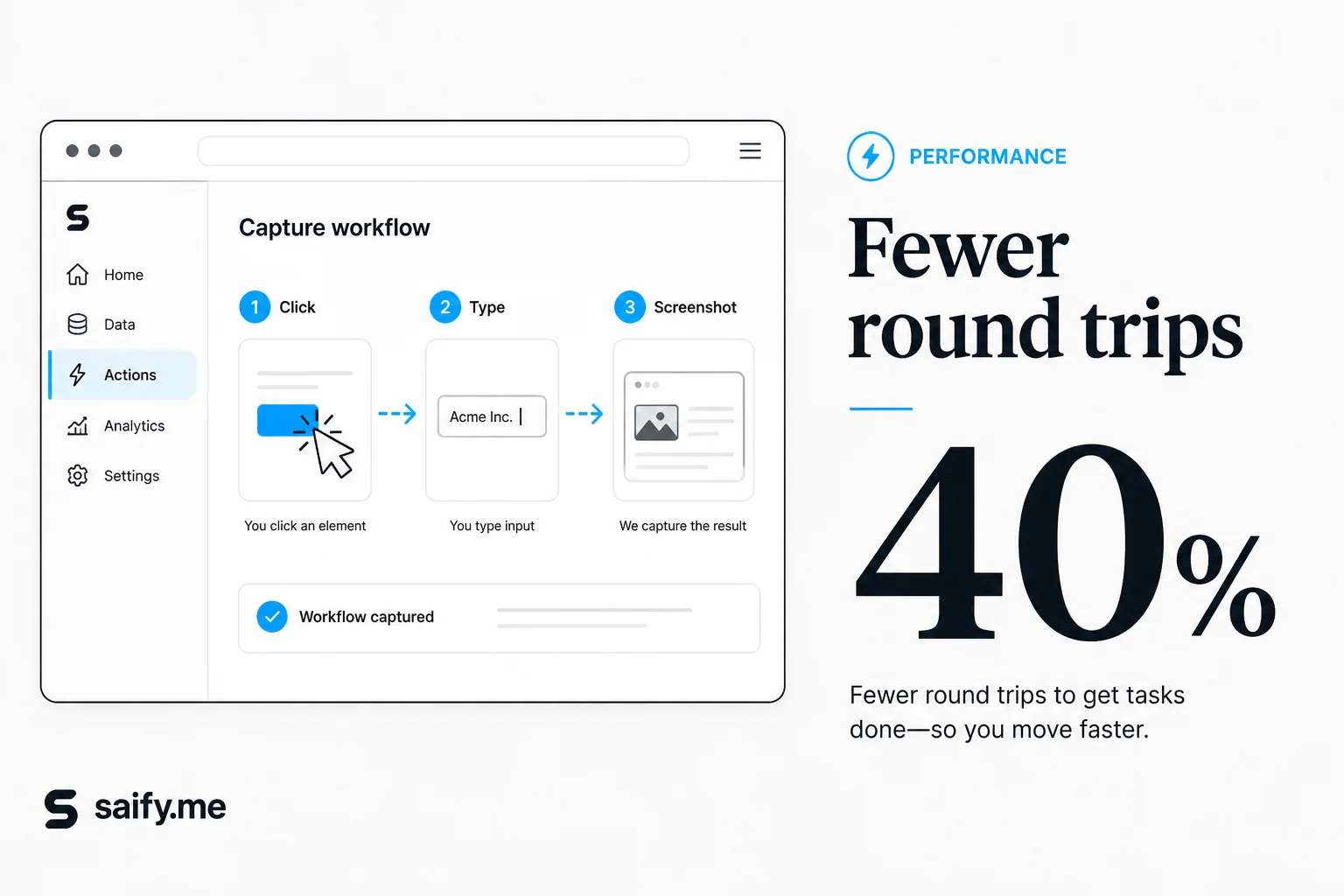
Desktop agents were chatty.
Screenshot. Model call. Click. Model call. Type. Model call. Screenshot again.
Each action was a full round trip through the API. Latency stacked. Cost stacked. And most harnesses treated every response as one tool invocation because that was all the old loop needed.
On August 20, 2026, Anthropic moved computer use, browser use, the Skills API, and the Files API to general availability on the Claude Platform. The computer use update that matters for builders is batch actions: Claude plans a short sequence and returns multiple member tool_use blocks in a single response. Your application executes them in order, not in parallel.
Anthropic's GA announcement
and the computer use tool docs
describe the contract. If your harness still grabs only the first tool_use block, you will not see the efficiency win. You may see confusing partial failures on the second turn.
Old loop vs batch loop
| Step | One-action-per-turn (old) | Batch actions (new) |
|---|---|---|
| 1 | Model returns click | Model returns click + type + screenshot |
| 2 | You execute click, return result | You execute click, then type, then screenshot |
| 3 | Model call again | Model call once with full observation |
| Round trips per 3 UI steps | 3 | 1 |
The response shape looks like parallel tool use, but execution is sequential. Later actions depend on earlier ones. If click fails, you stop and do not run type or screenshot.
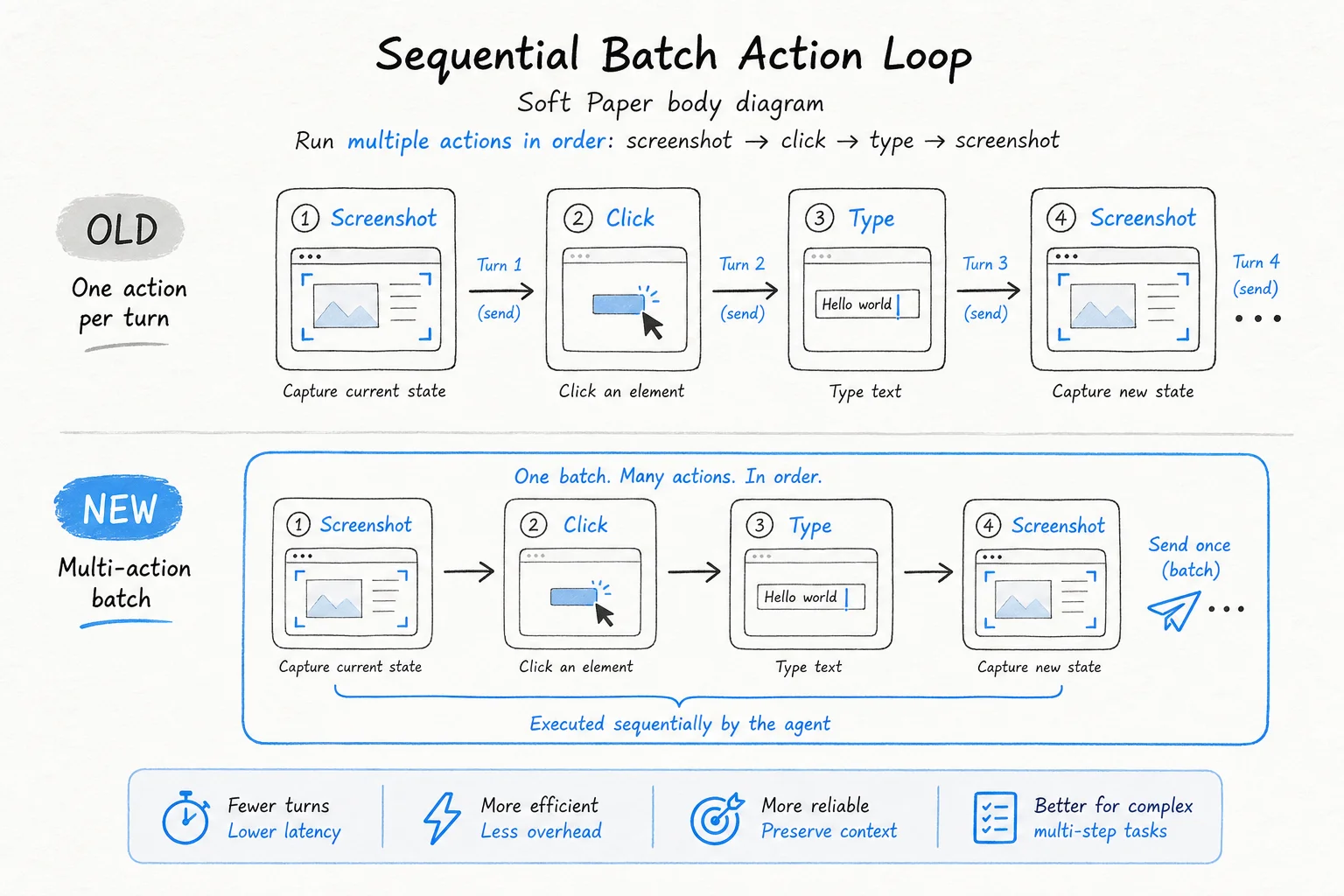
Anthropic typically ends batches with a screenshot so the model sees the new UI state. If a batch omits it, you can attach a screenshot to the last tool_result yourself. That saves a round trip compared to waiting for Claude to ask.
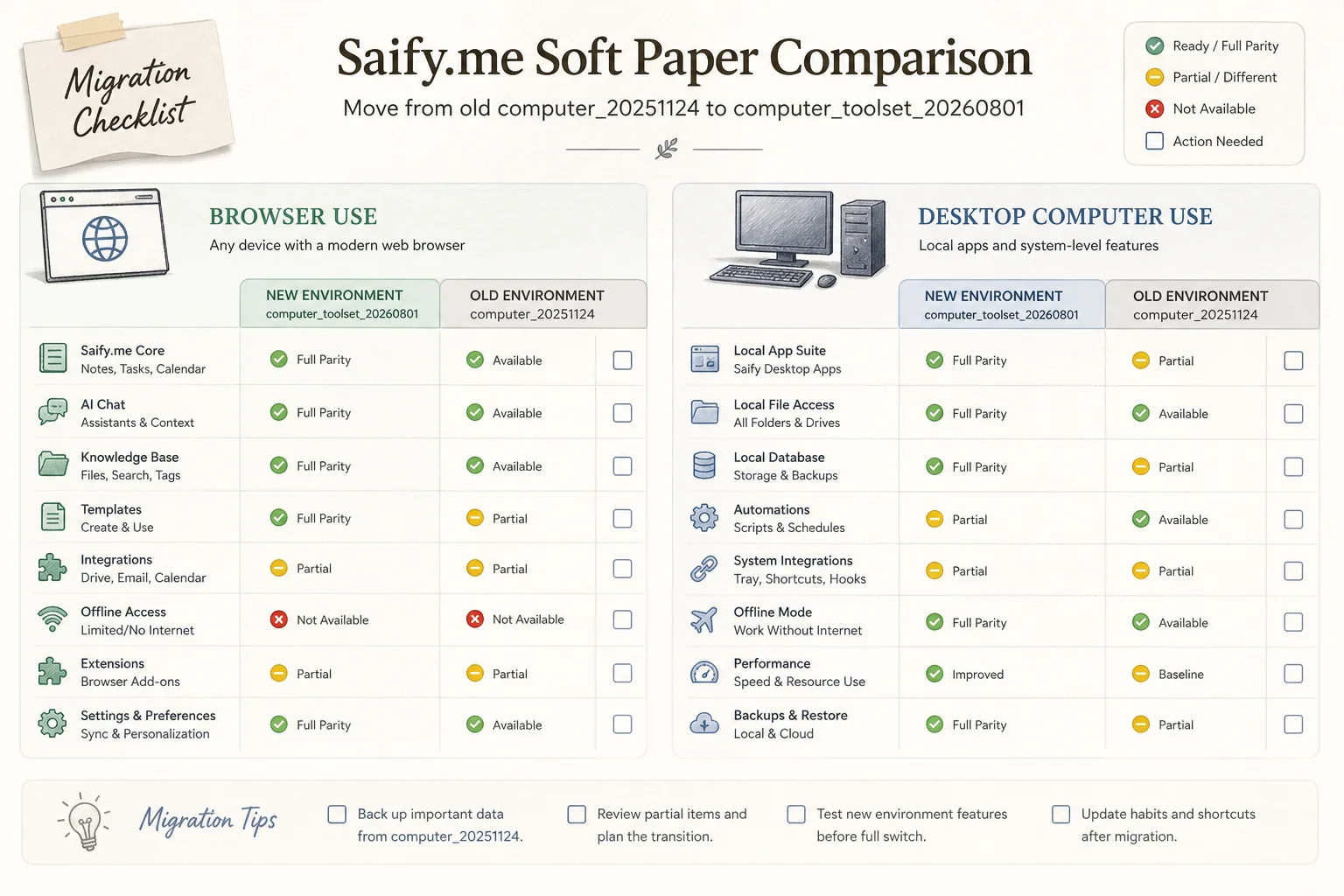
Toolset migration: computer_toolset_20260801
Batch actions live in the new toolset:
| Item | Value |
|---|---|
| Toolset ID | computer_toolset_20260801 |
| Member tools | 17 tools (screenshot, click, type, scroll, etc.) |
| Definition overhead | ~4,500 tokens (budget for this in context) |
| Legacy beta | computer_20251124 (migrate off for batch behavior) |
Migration is mechanical but unforgiving:
- Register the new toolset in your API calls.
- Parse all member
tool_useblocks withtoolset_name: "computer". - Execute in list order; fail fast on errors.
- Return one
tool_resultper executed action.
If you are still on Codex for Windows desktop QA, the gap is narrowing. I covered Codex foreground takeover in Codex computer use on Windows. Anthropic's batching is the same efficiency story on the Claude side: fewer model calls per finished task.
Browser use vs full desktop computer use
GA also shipped a browser use tool inside the same family. It targets web apps with page structure, not just pixels.
| Tool | Best when |
|---|---|
| Browser use | Flow stays inside a tab (forms, SaaS admin, in-page QA) |
| Computer use | Native apps, installers, OS settings, cross-app flows |
Browser use shares multi-action turns. Prefer it when you never leave the browser surface. Fall back to full computer use for installer wizards or desktop apps.
Skills API and Files API at GA (context for the same release)
Computer use batching is the loop change. The same launch also made procedural and file tooling production-grade:
| API | GA capability | Builder consequence |
|---|---|---|
| Skills API | Upload and version custom skills | Ship team playbooks without self-hosting sandboxes |
| Files API | 1 TB per org, 5x rate limits, auto expiration | Reference PDFs by ID instead of re-uploading every request |
| Computer use | HIPAA-eligible under BAA (per Anthropic) | Healthcare-adjacent desktop automation opens slightly |
Skills run in Anthropic's code execution sandbox. Files API IDs replace "attach the same 40-page PDF on every request" patterns. None of that replaces batch execution logic, but it reduces surrounding glue code in agent products.
Economics: why 20-40% round-trip reduction matters
Early-access users quoted 20-40% fewer round trips per task. Anthropic does not publish that as a universal benchmark. The gain depends on:
- How many UI steps fit in one planned batch.
- Whether Claude's sequence is correct (wrong batch costs retry latency).
- Your screenshot policy (end-of-batch vs explicit ask).
For cost modeling, count model calls, not just tokens. A batch turn can emit multiple tool calls but still one assistant message. If your billing dashboard counts API requests, this is a direct win.
For latency-sensitive QA loops, shaving one third of round trips can pull a five-minute smoke test under three minutes. That changes whether humans stay engaged during agent runs.
Failure modes in your harness
| Mistake | Symptom |
|---|---|
Execute only first tool_use | Second turn errors; no efficiency gain |
| Parallelize batch members | Broken UI state, race on focus |
| Ignore fail-fast rule | Later actions run on wrong element |
| Skip screenshot after batch | Model hallucinates stale UI |
| Stay on old beta toolset | No batch actions at all |
Batch actions are powerful because they assume your executor is deterministic. If your sandbox drifts between steps, Claude's plan is wrong even when the model is right.
What I would implement this week
- Feature flag
computer_toolset_20260801on a staging VM. - Log batch depth per task (how many member calls per turn).
- Compare round trips and wall time against the old loop on five real internal QA scripts.
- Add screenshot attachment on the last result when batches omit it.
- Route browser-only flows to browser use before defaulting to desktop takeover.
Vertex AI and Microsoft Foundry integrations are rolling out on similar timelines. If you are multi-cloud, pin toolset IDs per provider and test batch parsing on each SDK.
If you are wiring Claude or Codex agents into real QA, ops, or internal tools, book a free discovery call. I help teams migrate harness loops without breaking production sandboxes.