
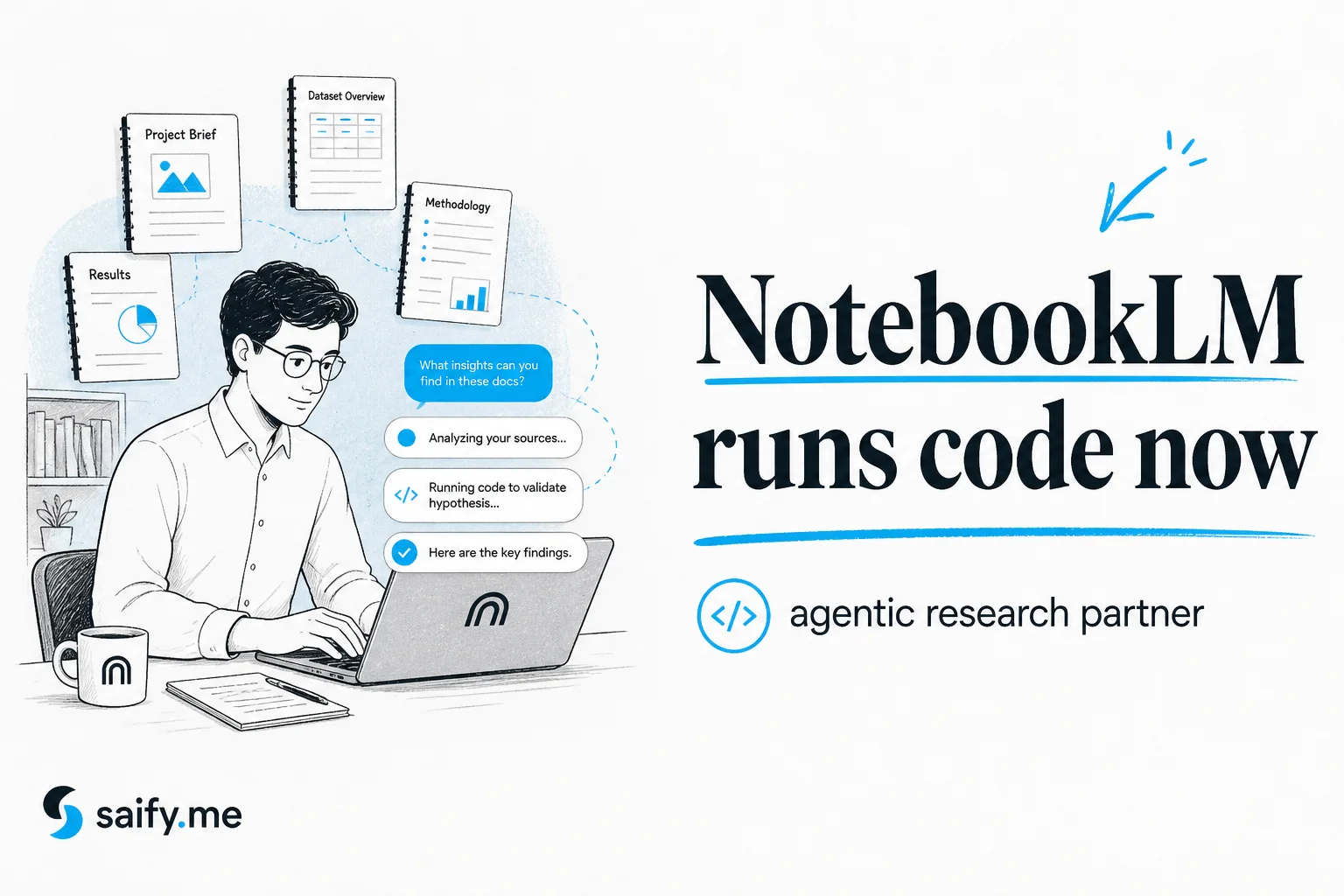
For two years NotebookLM was the tool I recommended when someone already had sources and wanted grounded Q&A.
On June 8, 2026 Google flipped the default use case. NotebookLM now behaves more like a research agent: it can hunt sources, run code, and ship finished files, not just chat over uploads.
From document reader to agentic partner
The product story is agentic AI in the plain sense: you give a goal, the system plans multi-step work without you micromanaging each prompt.
Three engine changes landed together:
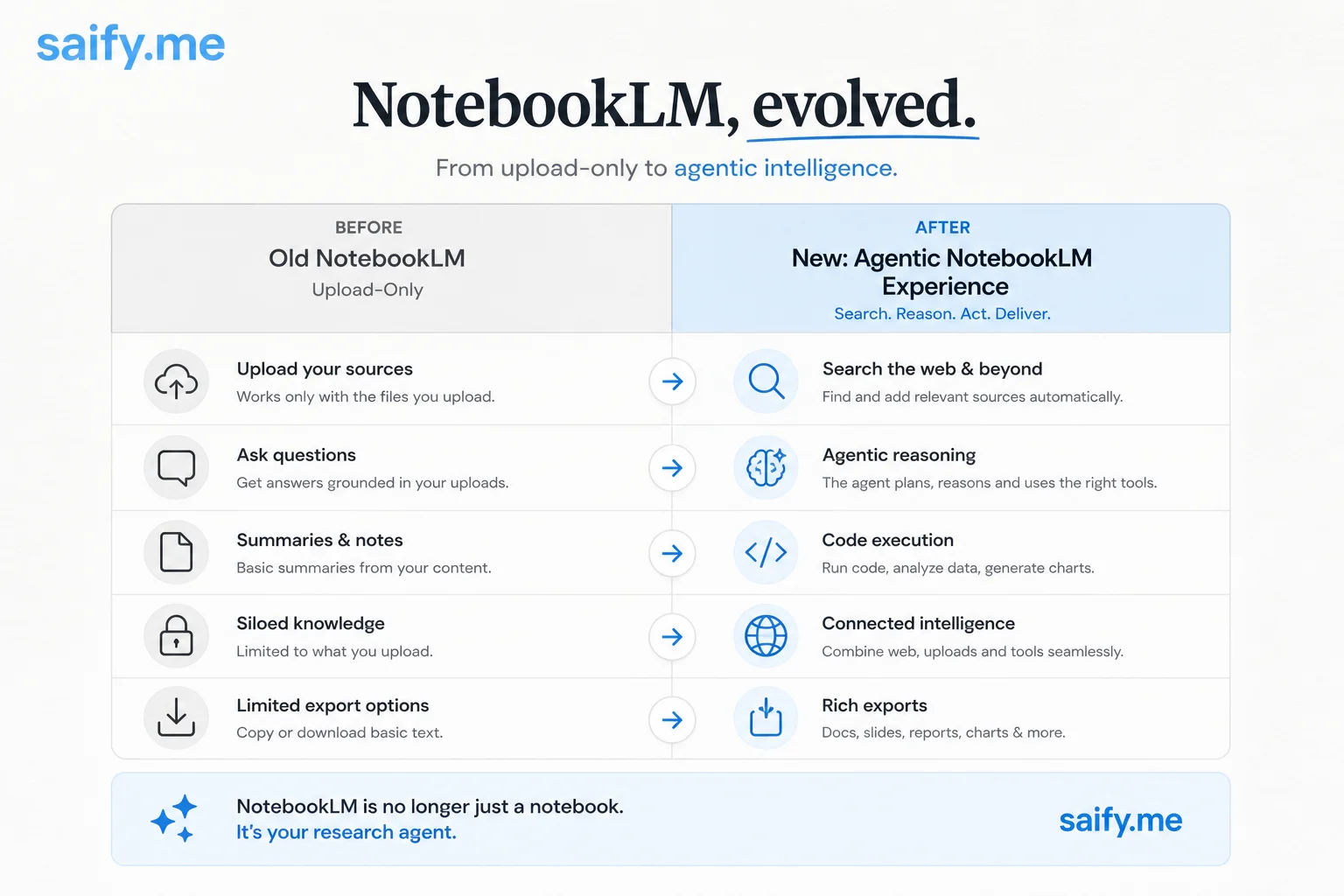
| Capability | Before (Gemini 3 era) | After (June 2026) |
|---|---|---|
| Model stack | Gemini 3 | Gemini 3.5 + Antigravity |
| Code execution | None in-notebook | Secure cloud computer per notebook |
| Starting point | Bring your own sources | Start from a question in chat |
| Reasoning visibility | Hidden | Step-by-step thinking in UI |
| Exports | Limited | 12+ formats including Office files |
Google says internal comparisons beat the prior NotebookLM in over 65% of head-to-head tests. I treat vendor win rates as directional until I replicate on my own projects.
The cloud computer inside every notebook
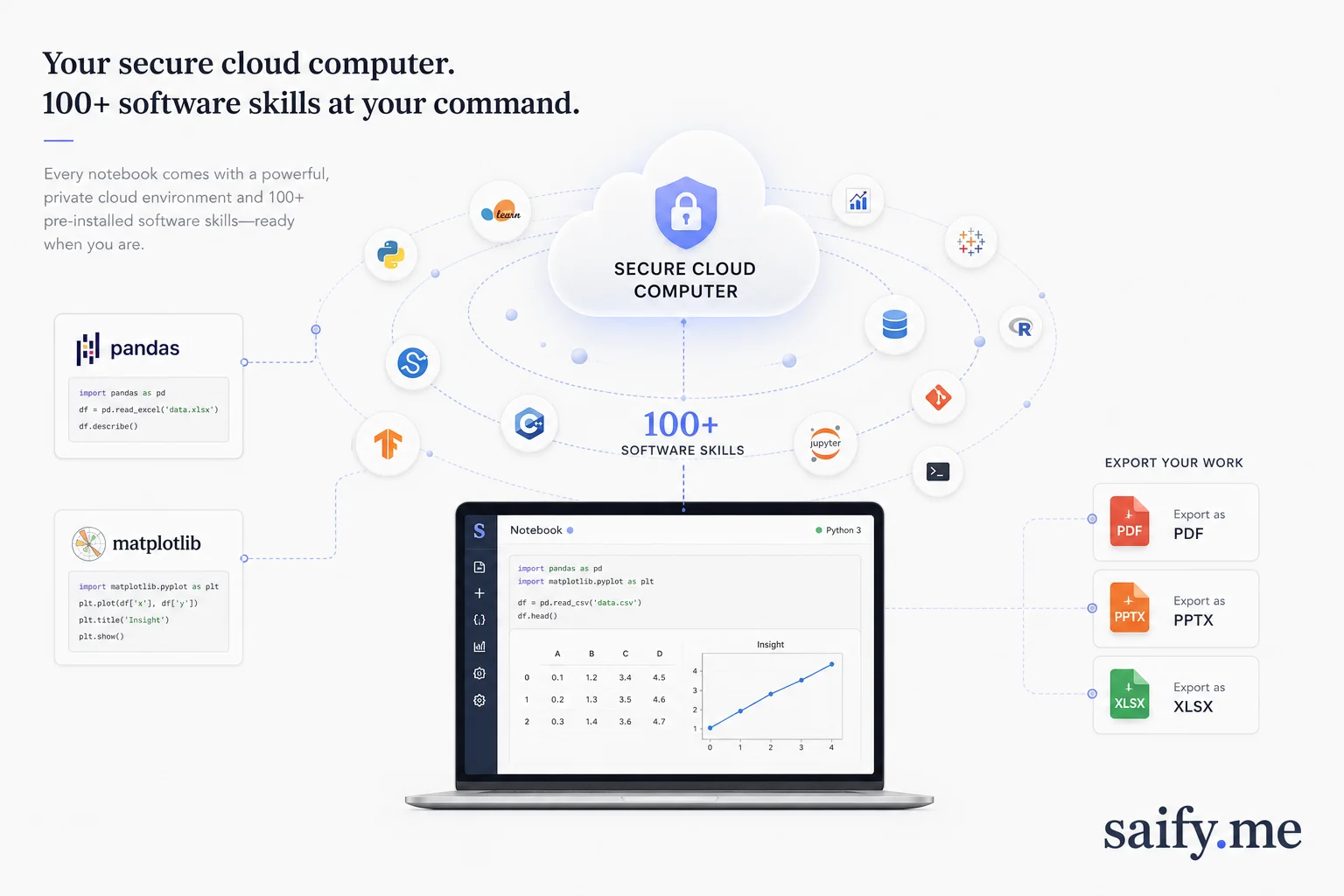
Each notebook now connects to a secure cloud runtime. NotebookLM can write and execute code for analysis, not just quote your PDFs.
Google bundles 100+ curated software skills into that environment. Think pandas-style data wrangling, chart generation, and format conversions without you wiring a local Jupyter stack.
That matters for messy real data:
- Country-level datasets with conflicting column formats
- Web research plus code cleanup in one thread
- Charts and a PDF report as deliverables, not a chat summary
9to5Google's launch recap walks through the researcher workflow Google demoed: find context on the web, run analysis in code, export visualizations.
Chat-driven source discovery
Previously NotebookLM was weakest when you had a vague topic and zero files.
Now you can start with loose questions. The agent guides source building in chat, including:
- Primary sources in other languages
- Related works by an author you just discovered
- High-quality web pages via Google Search, with your approval before import
This extends the earlier "Discover" feature into a first-class onboarding path. You are not forced to front-load uploads before the tool becomes useful.
The Verge noted you pick which discovered sources to import, which keeps humans in the loop on provenance.
Exports that look like work, not homework
New output formats include:
- Documents: PDF, DOCX
- Spreadsheets: XLSX, CSV
- Presentations: PPTX
- Data viz: PNG, SVG
- Structured data: JSON
- Images from Nano Banana generation flows (PNG, JPG, GIF per Google's blog)
For consultants and analysts, the shift is from "smart summary" to artifacts you can email.
Antigravity under the hood
NotebookLM's upgrade rides on Google Antigravity, Google's agent-first coding IDE direction. You do not need Antigravity installed to benefit, but the shared stack explains why code execution showed up inside a notes product.
Gemini 3.5 supplies the reasoning layer. Antigravity supplies agent orchestration patterns Google already dogfoods for multi-step tool use.
Who gets it and what I watch
Rollout started June 8, 2026 for:
- Google AI Ultra subscribers
- Workspace business customers with AI Ultra or AI Expanded Access
Broader tiers are "over time." If you are on a free or mid tier today, assume lag.
My checklist before I trust NotebookLM on client research:
- Source approval. Auto-discovered web pages can be wrong or stale. Keep import gates on.
- Code sandbox limits. Unknown CPU caps and package allowlists can block niche libraries.
- Data residency. Cloud execution means sensitive uploads leave your laptop. Match your compliance bar.
- Reproducibility. Export the code NotebookLM ran, not just the chart PNG.
Where this fits my stack
NotebookLM is not replacing custom RAG pipelines for regulated client data. It is a fast layer for exploratory research when speed beats perfect control.
I still wire production knowledge bases with explicit retrieval, auth, and audit logs. For a founder drafting a market map over a weekend, agentic NotebookLM is a credible starting point.
Pair this with agentic coding economics thinking: the model is cheap relative to analyst hours if exports are actually usable.
If you want help deciding when to use NotebookLM versus a custom research agent on private data, book a free discovery call.