
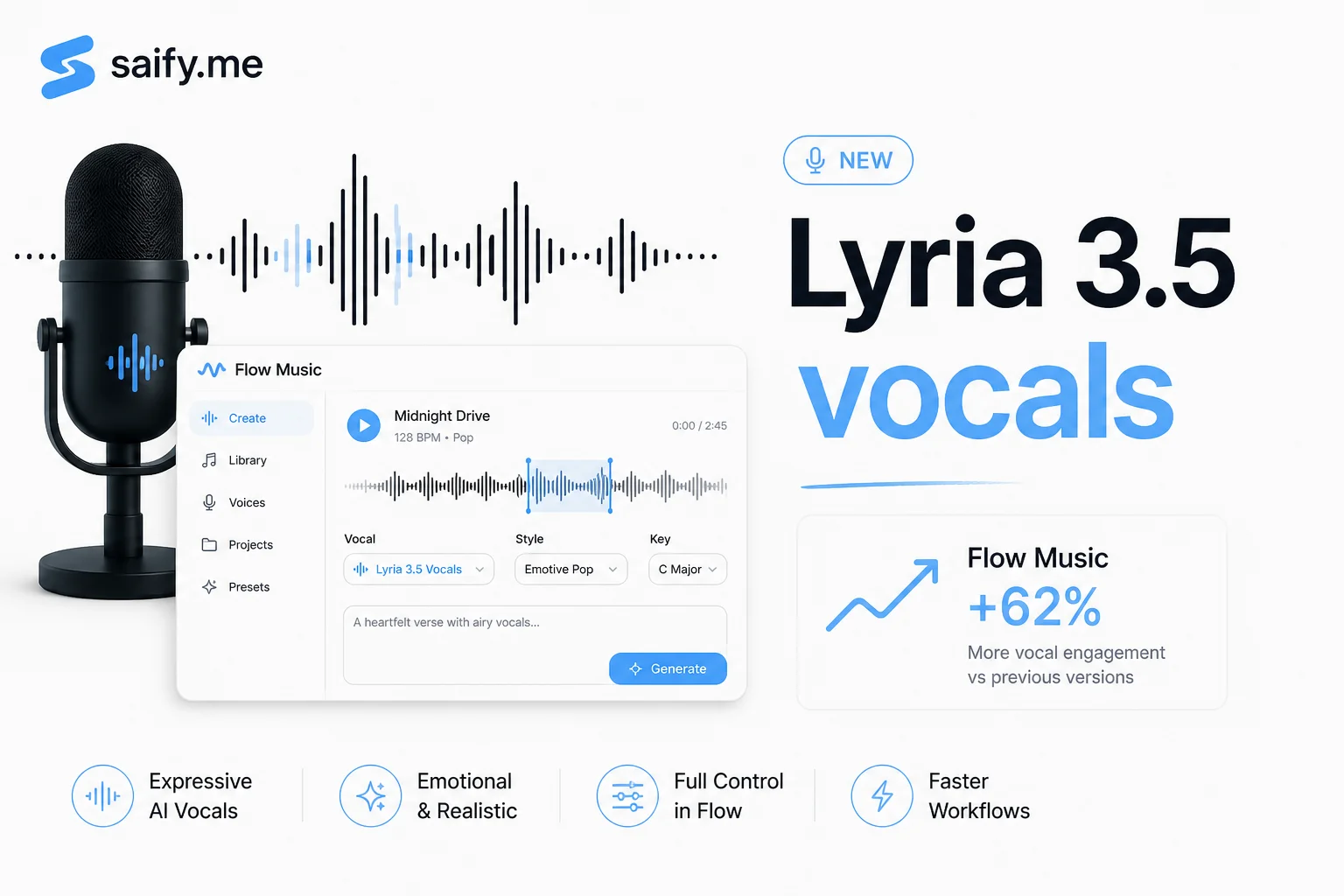
Google's music models keep landing in creator tools first, APIs second. On July 29, 2026, Google announced Lyria 3.5 in Flow Music with upgrades across musicality, lyrics, vocals, and tempo control.
I do not ship chart hits. I ship generative audio inside products: onboarding loops, ad variants, localized voiceovers, and short-form social clips. Lyria 3.5 matters because vocal quality is the line between "AI background track" and "user keeps the sound on."
What Google says changed in 3.5
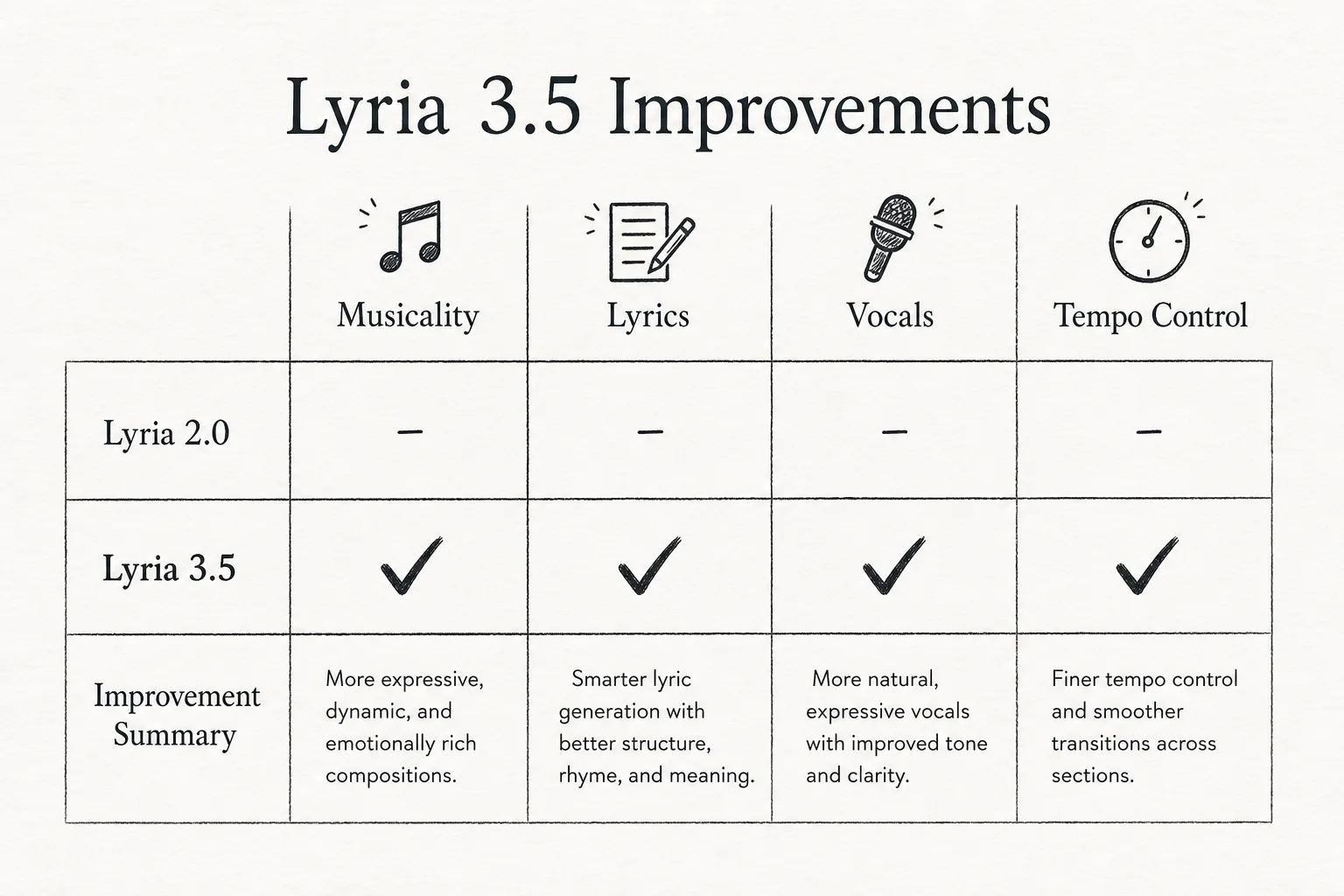
The launch post lists four concrete deltas:
| Area | Improvement |
|---|---|
| Musicality | Richer, more natural melodic structures |
| Lyrics | Better prompt adherence and song structure |
| Vocals | More expression, emotion, and pronunciation |
| Control | Easier tempo and duration targeting |
That is the right checklist for product QA. Most teams fail on pronunciation (brand names, SKUs) and structure (chorus repeats, bridge timing), not raw fidelity.
Flow Music as the delivery channel
Google Labs has been bundling generative media into Flow surfaces instead of dropping weights on Hugging Face. Flow Music is the consumer-facing lane where creators prompt full tracks.
For builders, that pattern repeats across Google:
- Ship inside a Labs product
- Gather usage and safety data
- Later expose API or enterprise paths
If you are comparing vendors, read Lyria alongside Pika audio models and voice stacks like Cartesia Sonic. Music and speech are merging in short-form pipelines (MoneyPrinterTurbo-style workflows).
Product tests I would run before betting a feature
Brand name stress test. Generate ten tracks that must say your product name, a city, and a competitor name. Score mispronunciations. Lyria 3.5 explicitly markets pronunciation gains.
Structure adherence. Ask for verse-chorus-verse with a 30-second hook. Measure whether outputs respect duration controls without awkward cuts.
Emotion match. Same lyrics, three prompts: calm tutorial, hype ad, melancholy story. Vocal nuance is the 3.5 headline.
Rights and attribution. Flow Music outputs still need license review for commercial use. Google has been conservative on indemnity compared to some startups. Legal sign-off before auto-publishing.
Latency and edit loop. Creators tolerate slower music gen more than voice agents. For apps with realtime preview, benchmark time-to-first-audio against your SLA.
When Lyria beats a startup model
| Scenario | Lyria 3.5 angle |
|---|---|
| Google Workspace adjacent creative suite | Native Flow integration |
| Teams already on Google Cloud AI | Consolidated billing path later |
| Vocal-forward marketing clips | 3.5 pronunciation focus |
| Strict safety and policy review | Big-lab moderation stack |
When I would still pick another stack
| Scenario | Alternative |
|---|---|
| API-first product with tight SLA | Dedicated audio API vendor |
| Fully custom fine-tuned voice + music bundle | Separate TTS + music models |
| Open-weight local inference | Not Lyria's current lane |
| Ultra-cheap mass variants | Watch Pika and open audio checkpoints |
Tie-in to the broader model week
Lyria 3.5 dropped the same digest week as Grok Voice Think Fast 2.0 and Moonshot's mega-round. Audio is no longer a side quest. Every frontier lab wants speech, music, and video in one customer relationship.
For SMB operators, the near-term win is still boring: better hold music, training clips, and ad variants without hiring a studio for every revision.
If you are wiring generative audio into a lead site, course, or voice product, book a free discovery call. I help teams pick models that survive legal review and sound good on phone speakers, not just in a blog demo.