
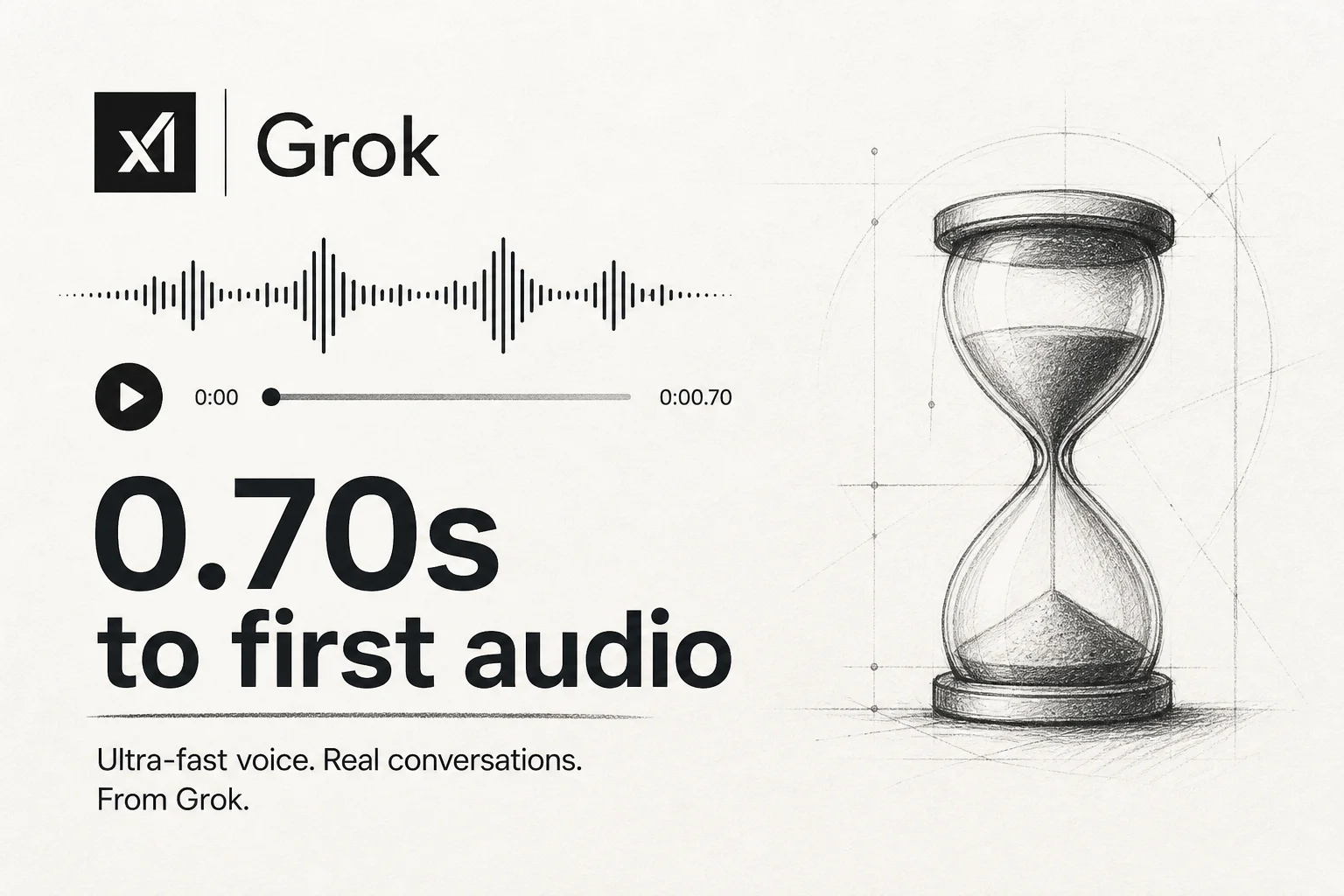
Voice agents live or die on two numbers: does it sound human enough and how long is the awkward pause before the caller hears a reply.
On July 29, 2026, xAI (now marketed as SpaceXAI after the July rebrand) shipped Grok Voice Think Fast 2.0, a speech-to-speech model that reasons while it talks. Benchmarks look strong. Pricing moved. And on August 5, the grok-voice-latest alias flips to 2.0 whether you are ready or not.
I build voice receptionists and ops automations for SMBs. Whenever a vendor ships a new realtime stack, I run the same checklist: latency on noisy phone lines, tool-call reliability mid-sentence, and what the invoice does when traffic doubles.
What changed from 1.0 to 2.0
Think Fast 2.0 is not a polish release. xAI rebuilt the interaction model around parallel reasoning and speech generation.
Old pattern: listen, transcribe, think, synthesize, speak. Sequential gaps add up.
New pattern: start speaking while reasoning continues, fire tool calls earlier in the turn, keep fuller duplex behavior (listen while talking) steadier.
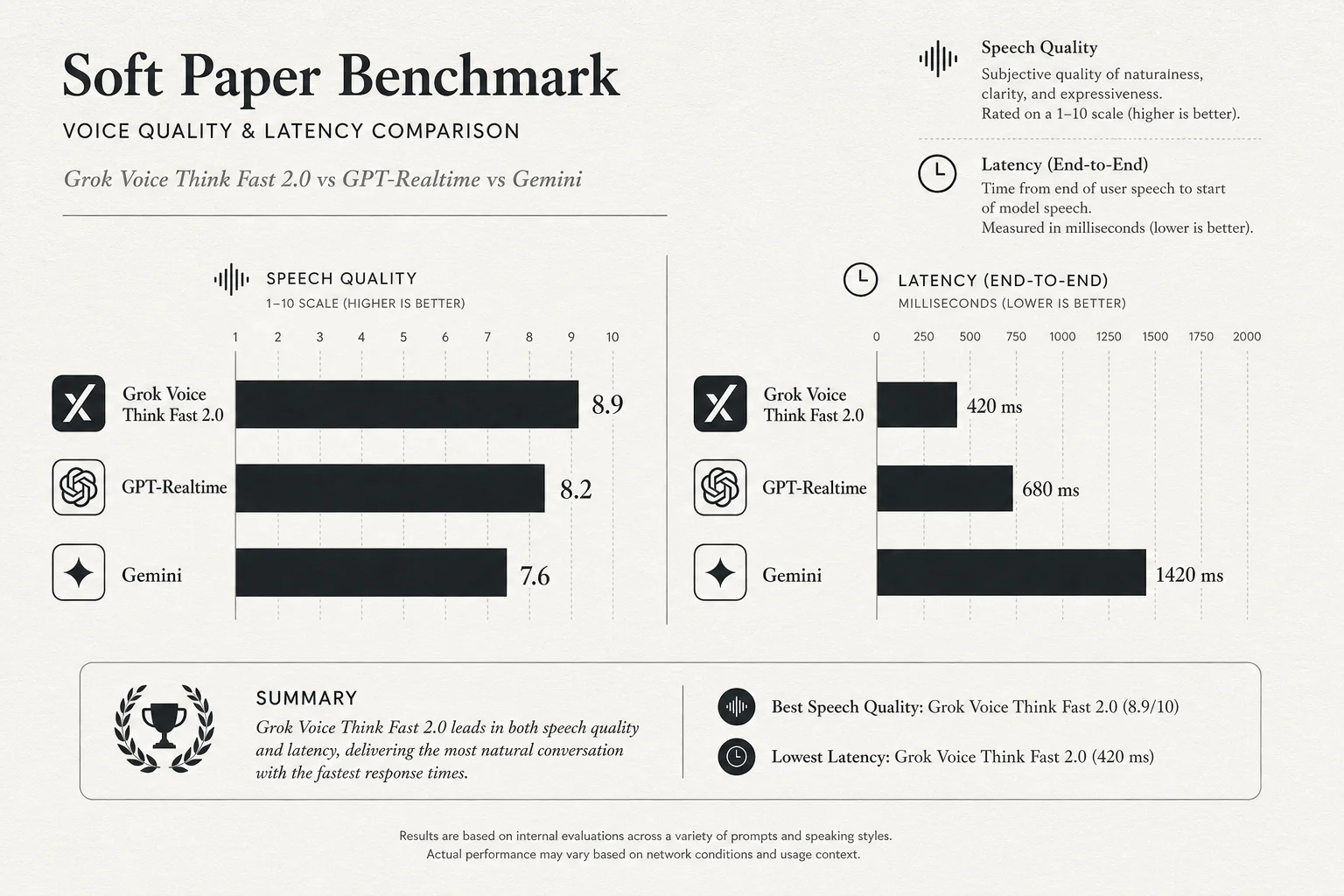
| Metric | Think Fast 2.0 | Think Fast 1.0 | GPT-Realtime-2.1 High | Gemini 3.1 Flash High |
|---|---|---|---|---|
| AA speech-to-speech quality | 82.9% | 75.7% | 79.1% | 69.5% |
| Agentic τ-voice bench | 56.5% | 52.1% | 45.7% | 37.7% |
| Time to first audio | 0.70s | 1.25s | (not listed) | 2.98s |
| Price per audio minute | $0.08 | $0.05 | varies | varies |
xAI also claims roughly 60% fewer reasoning tokens than 1.0 at the median, which matters when you are multiplying by minutes on a phone tree.
Primary announcement: Introducing Grok Voice Think Fast 2.0
Speech-to-speech vs the STT-LLM-TTS stack
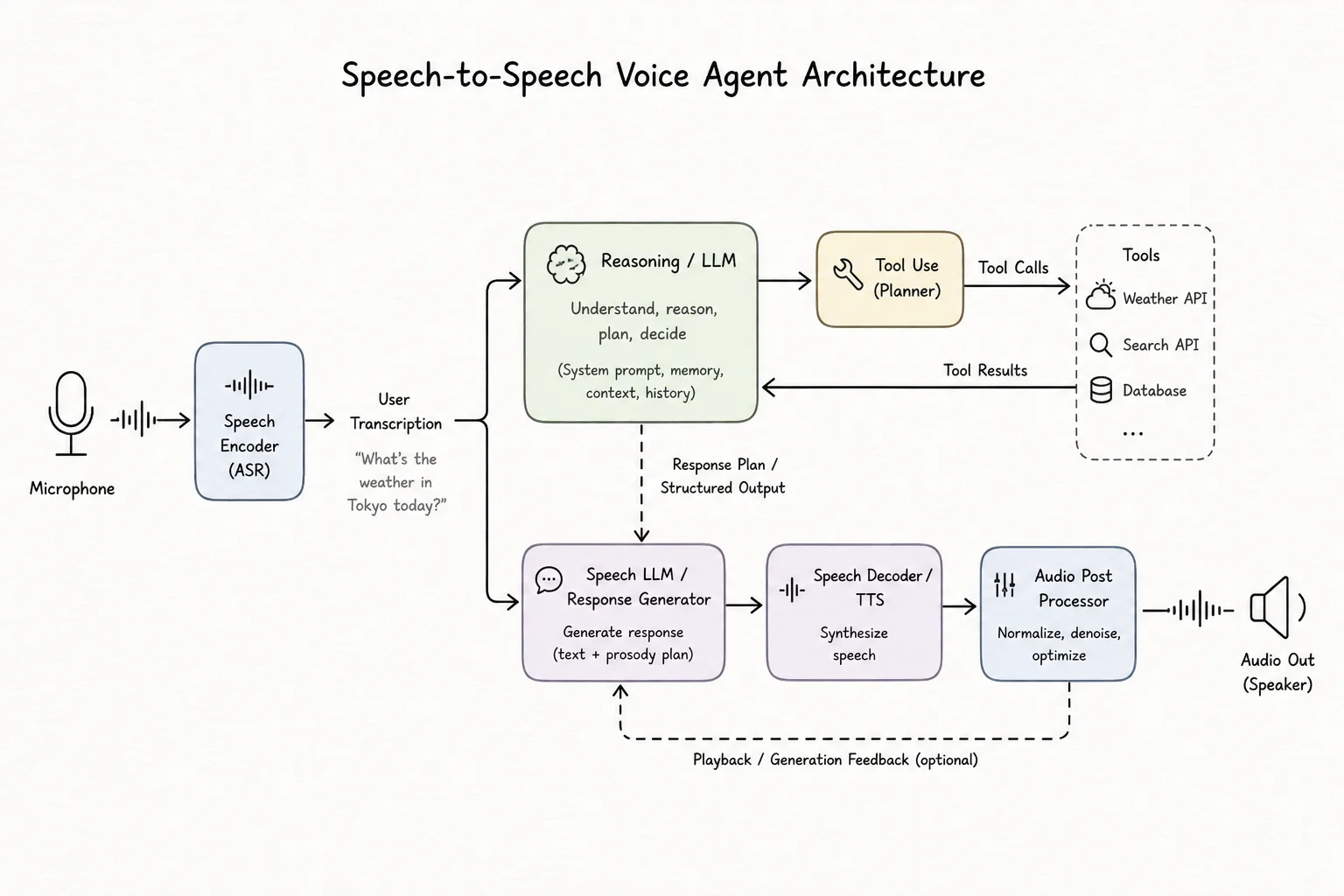
Most voice bots I inherit from DIY builds chain three vendors: speech-to-text, a text model, text-to-speech. It works until callers notice the lag or the prosody breaks on interruptions.
Speech-to-speech collapses that pipeline. You stream audio over a WebSocket (wss://api.x.ai/v1/realtime) and get audio back. Tool calls, MCP hooks, and function routing sit in the same session.
That is the same architectural bet OpenAI Realtime and Google Gemini Live make. The difference this week is xAI publishing head-to-head numbers and a production migration date.
For builders, the integration surface matters as much as benchmarks:
- Pin the model ID. Use
grok-voice-think-fast-2.0, notgrok-voice-latest, in anything customer-facing. Aliases change price and behavior. - Test binary audio transport on your noisiest real line before you trust lab latency.
- Verify tool timing when the model speaks before the function returns. Parallel speech plus slow CRM APIs can produce confident-sounding wrong answers.
Docs: xAI Speech to Speech API
The August 5 migration is a pricing event
This is the part finance will miss if engineering does not flag it.
| Setting | Before Aug 5 | After Aug 5 |
|---|---|---|
grok-voice-latest | Resolves to 1.0 | Resolves to 2.0 |
| Price | $0.05 / min audio | $0.08 / min audio |
| To stay on 1.0 | Default | Pin grok-voice-think-fast-1.0 |
A 60% price jump on the default alias with no code change is exactly the kind of surprise I warn clients about in AI chatbot and voice cost planning.
xAI's own A/B test on Starlink phone sales reported higher conversion and support containment. Treat that as a hint to run your own golden-path recordings, not as your KPI.
When I would test Grok Voice 2.0
Good fit:
- Inbound sales or support lines where sub-second first audio reduces hang-ups
- Agentic flows that call search, CRM, or calendar tools mid-conversation
- Teams already on xAI who want better duplex without rebuilding the telephony layer
Stay cautious:
- Regulated industries needing mature audit trails and BAAs (verify contracts yourself)
- Ultra-budget IVR replacements where $0.08/min dominates total cost
- Apps that only need scripted TTS (a cheaper cascade may suffice)
I still benchmark Retell, Vapi, OpenAI Realtime, and Gemini Live per client because phone quality, accent handling, and CRM latency differ by market.
No single leaderboard row wins every deployment.
A practical eval script
If you have a voice agent in production, run this before switching defaults:
- Record ten real calls (or role-play with background noise).
- Measure time to first audio and time to correct answer after a tool call.
- Log cost per completed outcome (booking, ticket created, qualified lead).
- Compare 1.0 pinned vs 2.0 on the same prompts and telephony route.
- Only then flip
grok-voice-latestor migrate aliases in staging.
// Pin the version in production. Do not rely on grok-voice-latest.
const MODEL = "grok-voice-think-fast-2.0";
const WS_URL = `wss://api.x.ai/v1/realtime?model=${MODEL}`;
The bigger picture
Voice is where AI spend and AI risk meet the customer. Faster models raise conversion. They also raise the cost of a hallucinated promise delivered confidently at 0.70 seconds.
Grok Voice Think Fast 2.0 looks like a real step for agentic phone workflows, not just a benchmark slide. The August 5 alias change means "do nothing" is still a decision, and it costs more per minute.
If you are choosing a voice stack for reception, lead chase, or after-hours booking, I help teams run these evals against real CRM and calendar integrations, not demo scripts. Book a free discovery call if you want a second opinion before you migrate.