
Video models got cheap fast. Audio stacks did not keep pace, especially when you need sync, not just a WAV file on disk.
Pika's August 2026 launch targets that gap with four foundation audio models and a blunt pricing story: up to 20× more cost-efficient than alternatives on some tasks, because they optimized training and few-step inference instead of passing GPU bills straight through.
I build voice and media automations for clients. When a vendor leads with unit economics this aggressively, I read the benchmarks before the blog adjectives.
The four-model split
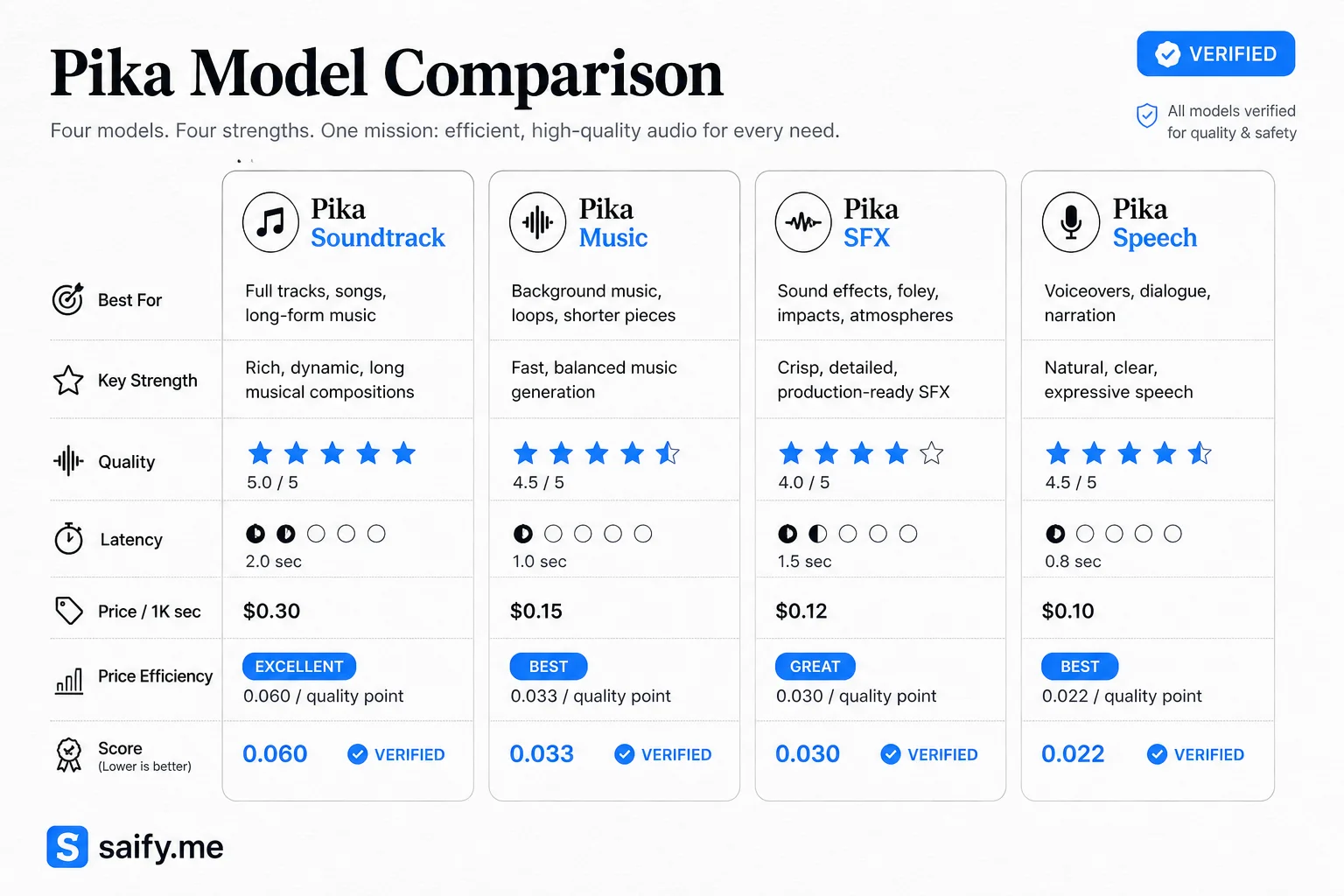
| Model | Job | Standout spec |
|---|---|---|
| Pika Soundtrack | Video → synced music, SFX, ambience, VO | 0.617 s wall time per generated second (vendor benchmark) |
| Pika Music | Prompts, lyrics, voice refs → full songs up to 6 min | ~6.21 s to generate 90 s of audio |
| Pika SFX | Natural-language Foley and designed effects | Up to 20 s at 44.1 kHz stereo; ~0.847 s end-to-end |
| Pika Speech | Expressive TTS + short voice clones | 48 kHz, up to 5 min; RTF ~0.02 in local tests |
You can chain them: Soundtrack for scene bed, SFX for one perfect detail, Speech for narration, Music for score. That composability matters more than any single leaderboard number.
Soundtrack is the hard problem
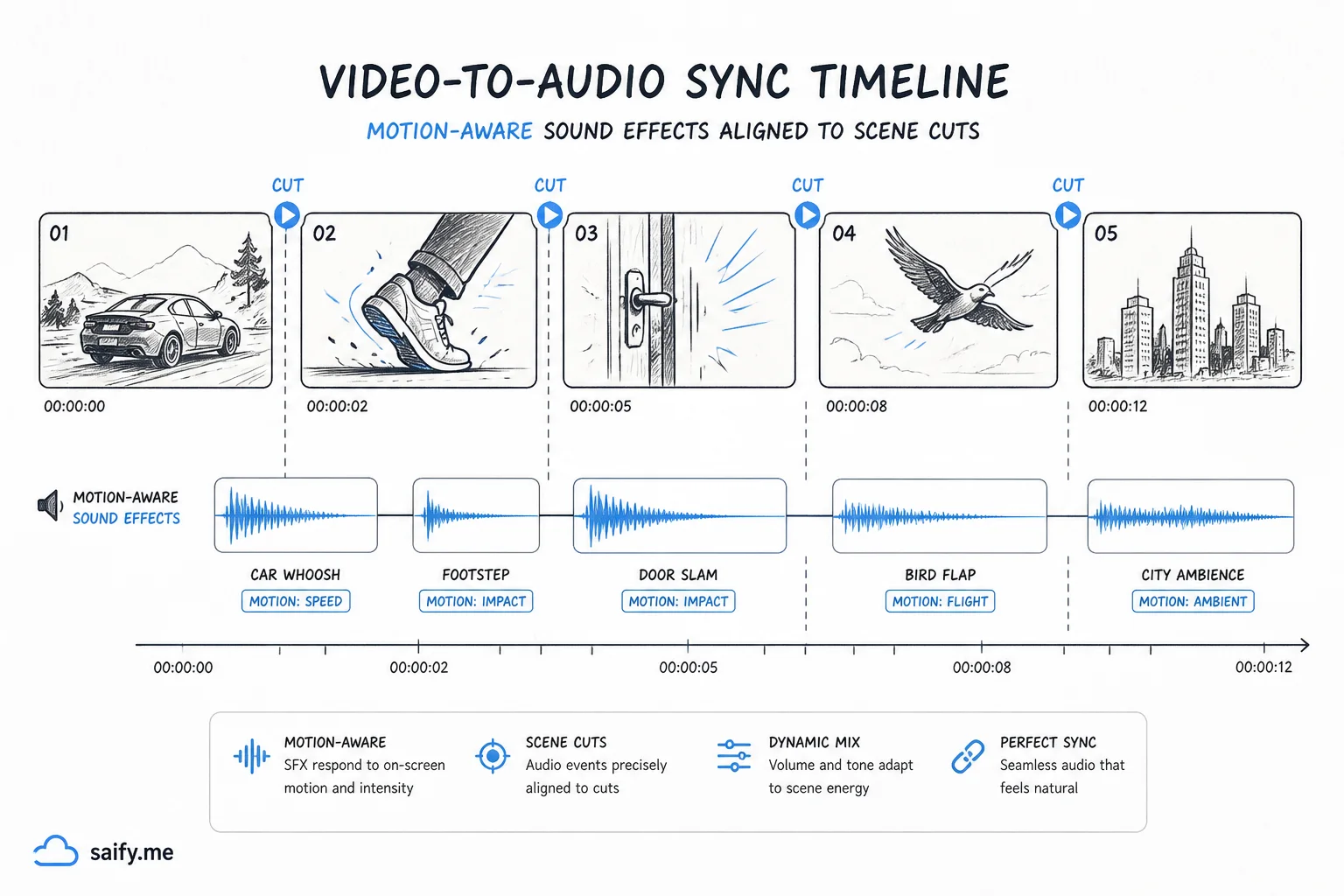
Silent video shows what happened. Sound makes you feel it. Video-to-audio is not "generate audio with video attached." The model must understand motion, place layers on a timeline, and keep sync through cuts.
Pika claims strongest semantic alignment and lowest audiovisual desync versus LTX-2.3 Foley V2A, HunyuanVideo-Foley, and MMAudio v2 on their full-duration benchmark (529 seconds of video). Take vendor benchmarks with salt, but the 0.617 s per generated second figure is the one I would try to reproduce on a five-clip pilot.
For short-form content shops, that latency profile is the difference between batch overnight and iterate while the editor is still in the timeline.
Speech pricing vs the voice stack you already know
Pika positions Speech against ElevenLabs v3, Cartesia, ElevenLabs Turbo, and Fish Audio. Claimed advantages range from 2× to 9× cost efficiency depending on competitor and tier.
If you run outbound voice agents or dubbing pipelines, list price is only half the story. You still need:
- Latency under your turn-taking budget
- Clone quality on 3–10 second references
- Consistent pronunciation on product names
- Fallback when the API hiccups mid-call
Pika's real-time factor (~0.02) is attractive for draft reads. Production voice stacks I ship still keep a human QA pass on first customer-facing prompts.
SFX and Music for product teams
SFX is the underrated wedge. Games, edtech, and marketing tools burn cash on one-off Foley. Sub-second generation at 44.1 kHz stereo makes "try ten glass-break variants" affordable.
Music composes lyrics, voice references, and instrumental refs into one model instead of three subscriptions. Six-minute ceiling covers most social spots and tutorial beds.
Neither replaces a composer for brand campaigns. Both can replace stock-audio roulette in rapid prototyping.
How I would evaluate before switching
All pricing comparisons in Pika's post are dated August 14, 2026 against competitors' public list prices. Your enterprise deal may look nothing like list.
Pilot plan I use:
- Pick one workflow (e.g., 30 s product demos needing auto SFX).
- Measure sync drift on your actual footage, not demo reels.
- AB voice clones against your current TTS on 20 scripted sentences with proper nouns.
- Log failure modes (hallucinated ambience, clipped transients, robotic stress patterns).
- Price the retry tax when generations need manual fixes.
Cheap per second loses if engineers spend an hour fixing each minute of audio.
Where this lands for voice & ops work
Pika is betting that generative media should be accessible, not premium-priced forever. For agencies and AI builders, that means audio stops being the line item you hide from the client SOW.
It also pressures incumbents. When Speech claims 9× efficiency versus ElevenLabs v3, the response will be new tiers, caching, or bundled video+audio. Shop the market quarterly, not annually.
If you are stitching video agents, dubbing pipelines, or interactive demos, Pika Audio is worth a API Club trial. Bring your own clips, your own brand names, and a spreadsheet. Marketing ratios are a starting point, not a procurement sign-off.
Book a free discovery call if you want help benchmarking TTS and SFX vendors against a real voice workflow, not a demo script.