
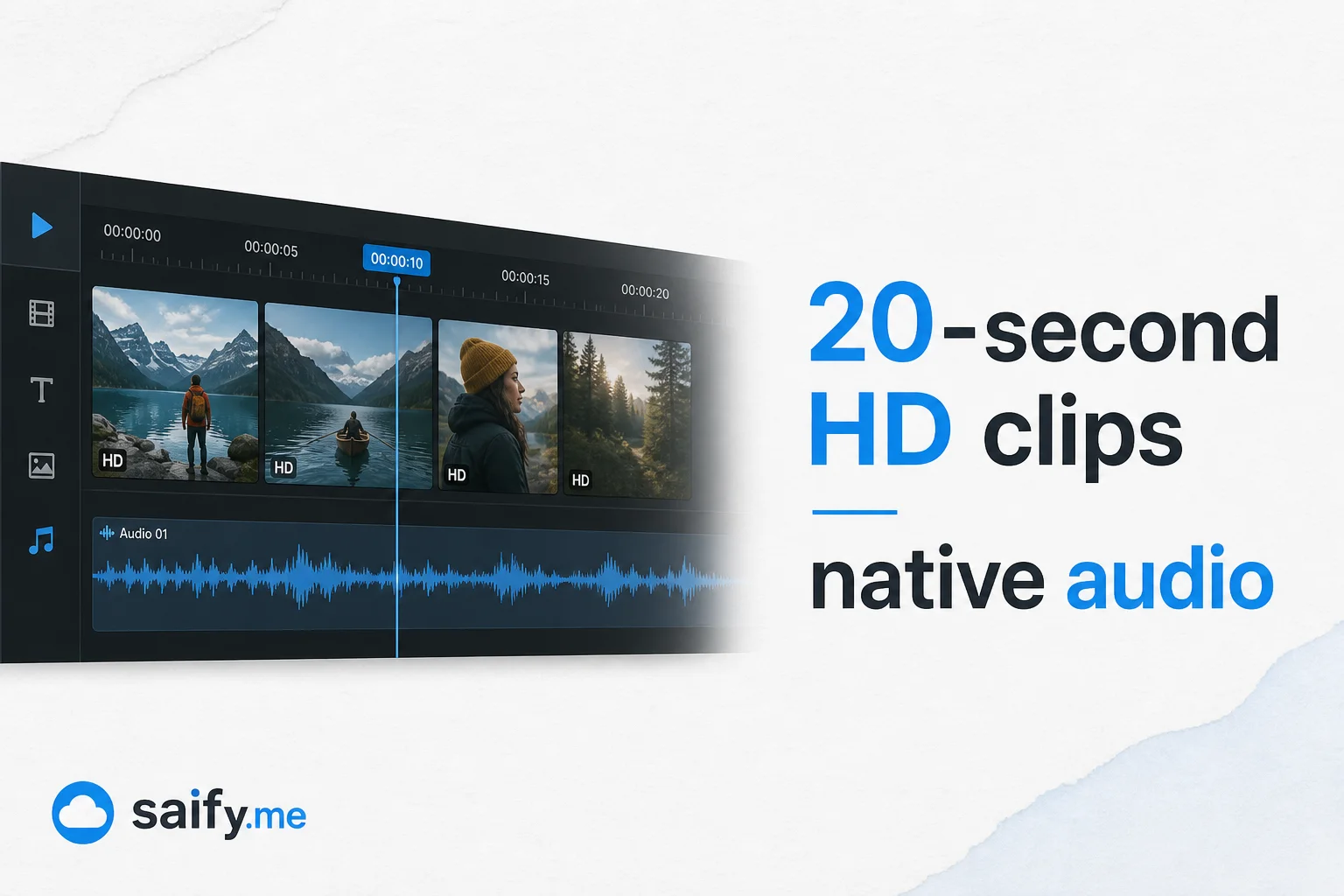
Text-to-video tools used to mean silent B-roll with uncanny motion. Black Forest Labs is betting the next step is one frontier multimodal model that generates picture, sound, and scene logic together.
On August 5, 2026, BFL opened FLUX 3 Video for general access via the BFL API and select partners. Clips run up to 20 seconds at HD resolution, with Full HD through upscaling and native audio baked into the same generation pass.
I care because client projects keep asking for short product explainers, localized promos, and storyboards that cannot wait for a full post-production loop. A single API that handles dialogue and camera moves is closer to a production pipeline than a demo toy.
What shipped in Part 1 (generation)
BFL's launch post positions FLUX 3 as a "reality model," not a cinematic filter. Outputs can look raw, playful, or documentary-like instead of default neon sci-fi.
Core capabilities in the first GA slice:
| Mode | What it does |
|---|---|
| Text-to-video | Complex prompts with natural motion and scene logic |
| Image-to-video | Animate a still, or chain keyframes |
| Video continuation | Feed up to 4s of video+audio; model extends motion and dialogue |
| Multi-shot | Switch scenes and camera angles inside one clip |
| Audio + dialogue | Speech, SFX, ambient beds generated with frames |
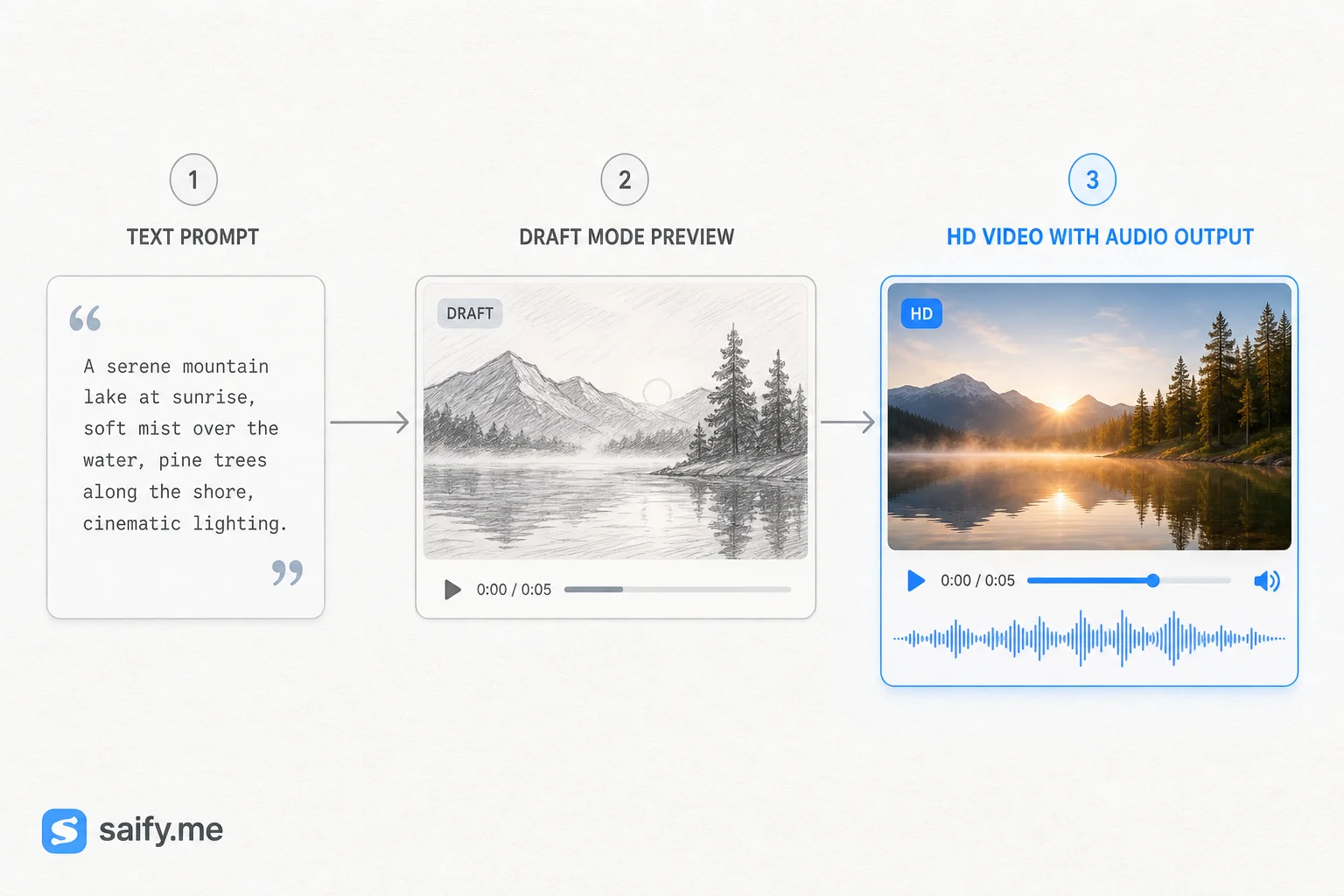
| Draft mode | Fast cheap preview; full-quality render matches approved draft |
Draft mode is the operator feature. Iterate creative direction at a fraction of full render cost, then lock composition before spending on final quality.
Language and lip sync as a product surface
BFL lists a wide language set with lip sync, not just subtitles. That matters for:
- Localized ad variants without re-shooting talent
- Education clips where mouth movement must match narration
- Social cuts where bad lip sync kills trust instantly
Multilingual support includes English dialects, Chinese, Spanish, French, German, Japanese, Portuguese, Russian, Italian, Indonesian, Turkish, Hindi, Punjabi, and more per BFL docs.
For applied teams, the test is not demo quality on English marketing copy. It is whether Hindi or Spanish prompts keep accent and timing stable across regenerations when you tweak the script.
Benchmark claims (and how to read them)
BFL says human raters preferred FLUX 3 Video against existing SOTA on text-to-video and image-to-video tasks. Internal evals claim leads over prior leaders on T2V and ties with Seedance 2.0 on I2V.
Vendor benchmarks are directional. I still run my prompts: product rotation shots, talking-head explainers, UI mockups animating into motion, and dialogue with on-screen typography.
What impressed me in the spec sheet is world knowledge grounding for documentary-style clips from short prompts. That is the same wedge Google's Veo family pushes. BFL is explicitly targeting education and short-form factual content, not only ads.
Safety and release process
BFL worked with third-party partner Cinder on pre-release evals across modalities, including NCII and CSAM risk classes. That is table stakes for any vendor selling video generation at scale in 2026.
Operators should still layer policy classifiers on outputs before auto-publishing. See Mistral Shieldstral for the open-weights moderation pattern if you self-host gates.
Roadmap: image, dev weights, richer controls
BFL teased next releases:
- Combined image, video, and audio reference conditioning
- FLUX 3 Image for still generation and editing
- FLUX 3 Dev open-weight variant
The Rundown digest noted open weights "dropping soon" for video. BFL's own post sequences Dev weights on the roadmap, not in the first video GA. Plan API access now; plan self-hosting when Dev ships.
Docs: BFL FLUX 3 documentation. Model hub: FLUX 3 overview.
Where I would use it in client work
| Use case | Fit | Caveat |
|---|---|---|
| Storyboard-to-animatic | Strong | Lock keyframes early |
| Localized promo variants | Strong | Verify lip sync per locale |
| Long-form narrative | Weak at 20s cap | Plan stitching + continuity checks |
| Regulated medical video | Risky | Human review + policy filters required |
Pair with cost controls: draft mode for exploration, full render only after script sign-off. Same discipline I use for image APIs that charge per megapixel.
Pricing and competitive context
BFL did not attach public per-second pricing in the launch post. Compare against other HD video APIs using your actual prompt distribution, not headline per-second tables from press pieces.
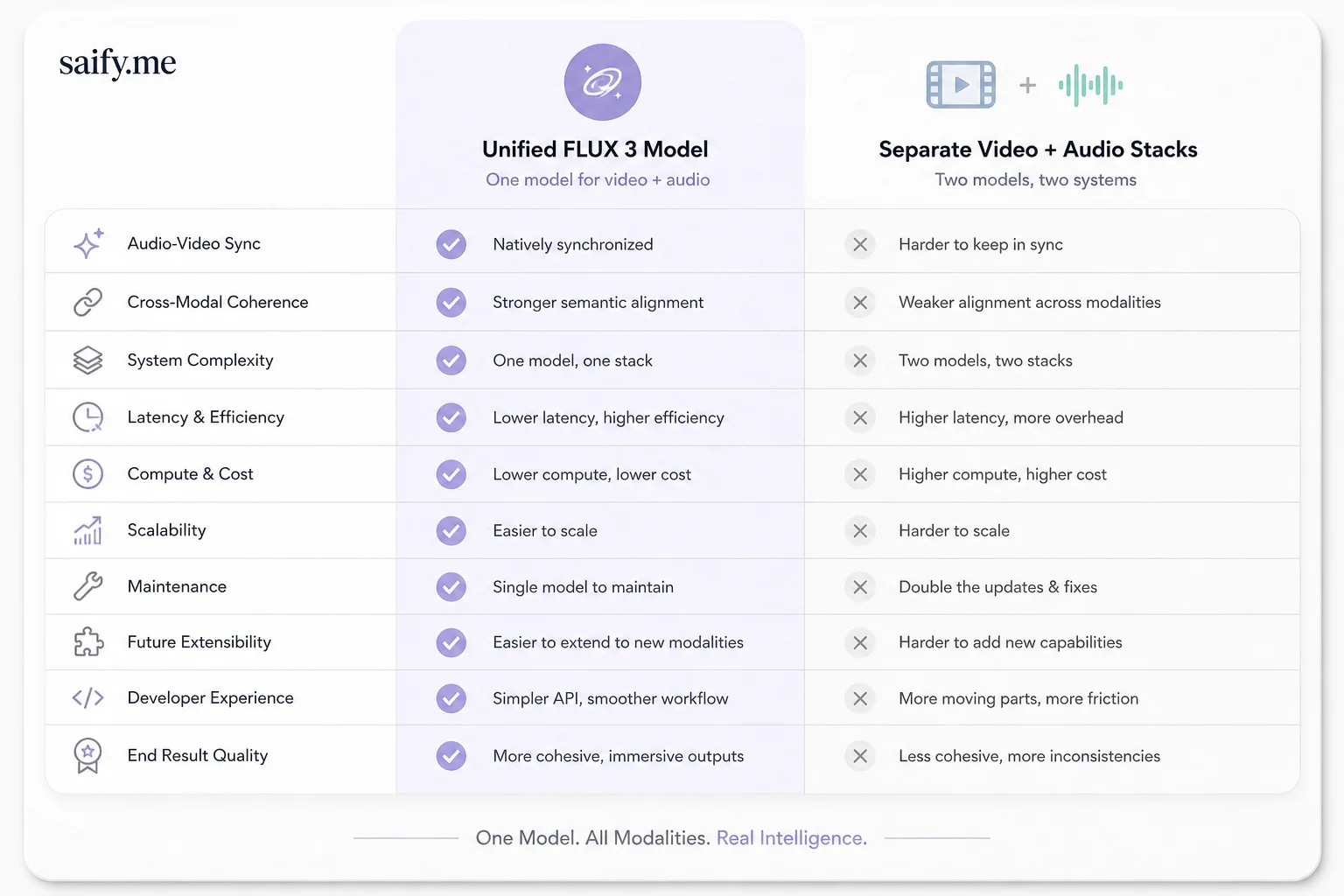
Alibaba's Wan3 and Google's Veo family keep pushing price per second down. FLUX 3's differentiation is audio-native generation and multi-shot coherence inside one model call. If you already pay for separate TTS, music, and video stacks, unified billing may simplify ops even if raw video cost is similar.
If you are wiring generative media into a Next.js lead site or product onboarding flow, book a free discovery call. I help teams choose when to generate, when to shoot real footage, and when to cache renders so marketing does not melt the inference budget.