
Apple and OpenAI are fighting in public over something bigger than a hiring dispute. They are fighting over who gets to ship the device layer after the smartphone.
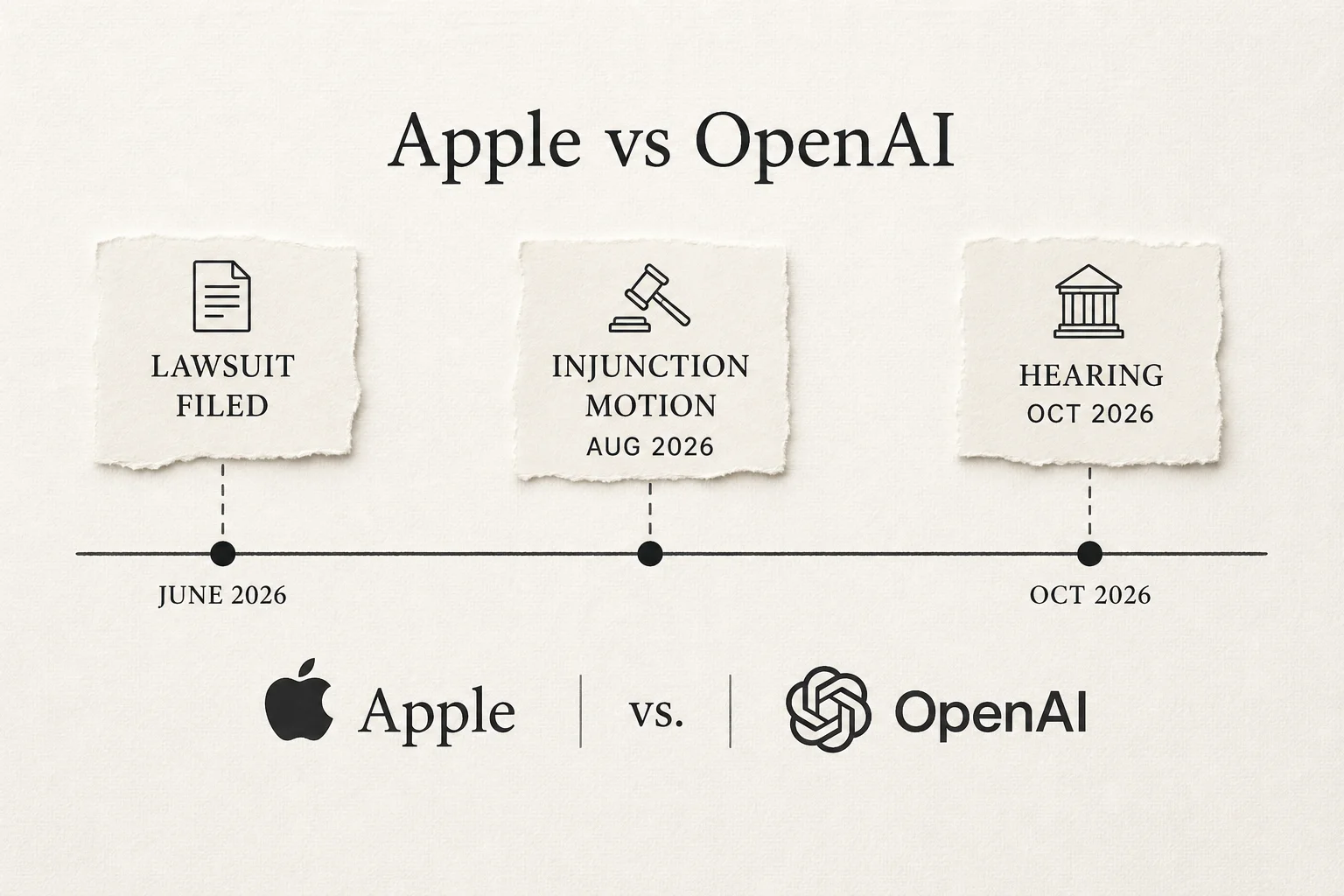
On August 4, 2026, Reuters reported that Apple asked a U.S. judge for a preliminary injunction to bar OpenAI and two former employees from using alleged trade secrets in OpenAI's hardware efforts. OpenAI answered the same week with a blog post that reads less like legal boilerplate and more like a counter-punch.
I do not pick sides in courtroom filings. I do read them for signals about where product bets are moving. This case is a map.
What Apple alleges
Apple sued OpenAI last month, naming two former employees:
- Chang Liu
- Tang Yew Tan
The complaint alleges they took Apple trade secrets to help OpenAI's push into consumer devices, including work tied to OpenAI's device unit io Products.
Apple's August motion, filed in federal court and visible on CourtListener , seeks more than damages. It asks the court to halt that hardware work while the case proceeds.
The motion also pushes for:
- Depositions of Liu, Tan, OpenAI, and io Products
- Forensic images of devices used by the defendants
Apple expanded the cast list, naming 11 additional ex-employees who may have seen or joined the alleged misappropriation. One screenshot shows files captured before an OpenAI interview.
That detail matters if you have ever done enterprise offboarding. Screenshots before interviews are exactly what forensic teams look for when trade secret cases get serious.
How OpenAI framed its response
OpenAI's public answer, Apple is getting this wrong , hits three themes:
- We did not want Apple secrets and do not have them
- Apple's own staff contacted a departed engineer asking for files after he left
- Apple is blaming an individual for offboarding gaps Apple should have closed
OpenAI called the suit "careless, aggressive, and oddly personal." That tone tells you how much OpenAI thinks an injunction would hurt io Products timelines.
Legal merits belong to judges. Product strategists should notice the ** asymmetry**: Apple sells the world's most profitable phone ecosystem. OpenAI sells intelligence without owning the pocket hardware yet. An injunction that slows io Products is a strategic win even if Apple eventually loses on the merits.
Why this is not just gossip for Silicon Valley
Strip the personalities and you get a clean industry question:
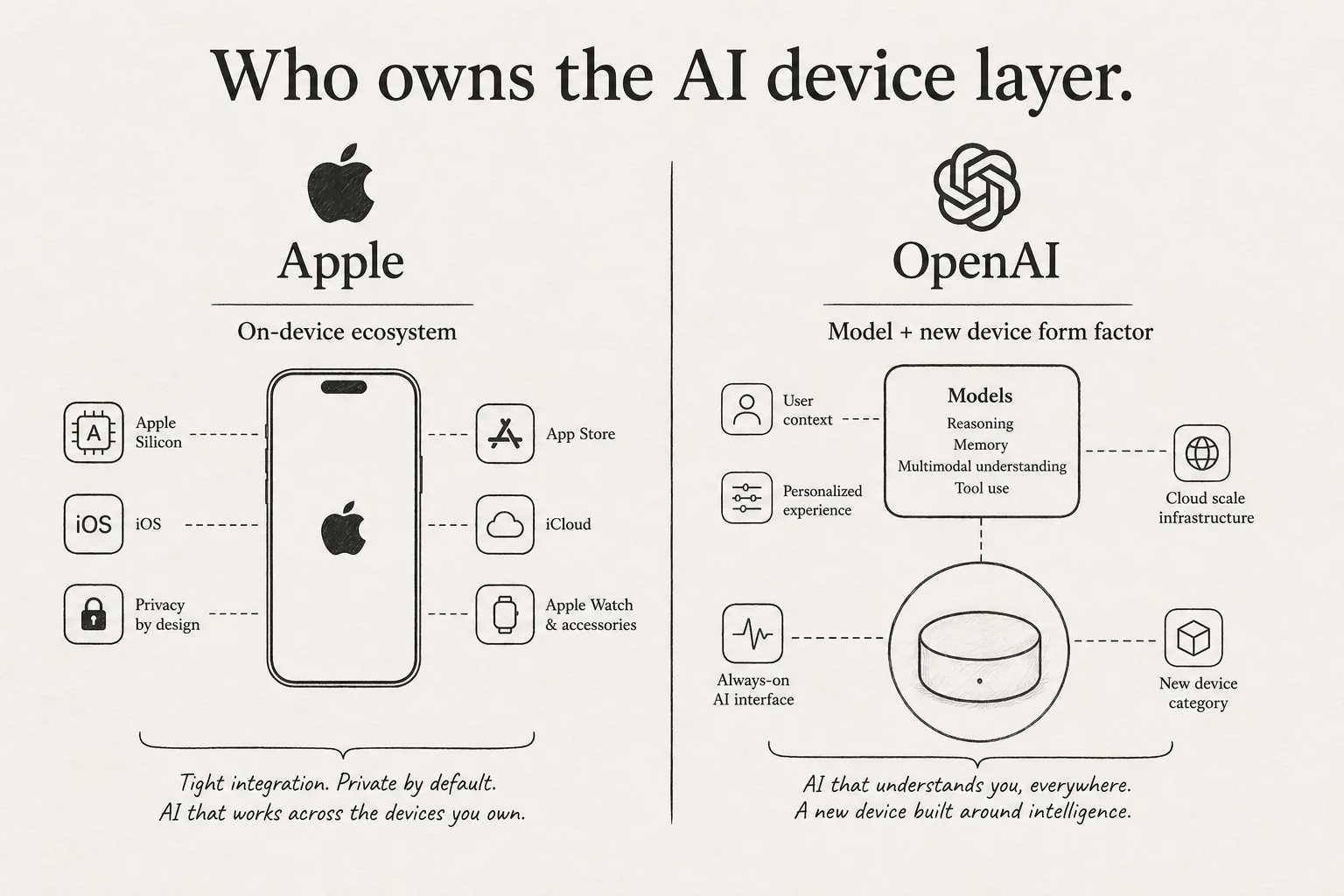
If conversational AI becomes the primary interface, does the device look like an iPhone with a better assistant, or a new form factor owned by a model lab?
Apple's bet has been on-device privacy, silicon, and distribution. OpenAI's bet has been model quality and developer mindshare, now extending into physical products through io Products.
Trade secret fights show up when incumbents believe a competitor skipped years of R&D by walking out the door with files. They also show up when challengers believe incumbents use litigation to buy time.
Both can be true at once.
| Stakeholder | What they gain if they win the narrative |
|---|---|
| Apple | Slow OpenAI hardware, signal deterrence to other departures |
| OpenAI | Keep io Products shipping, paint Apple as litigious and sloppy |
| Developers | Clarity on whether new AI-native devices arrive on a 12 or 36 month horizon |
| Enterprise buyers | Another reason to avoid betting the stack on one vendor's device story |
What we still do not know
Court filings and blog posts leave huge gaps:
- What io Products is actually building (wearable, phone-adjacent hub, ambient home device) stays vague
- Which specific secrets Apple claims were taken are redacted or summarized at a high level in public docs
- Whether the injunction will issue before a full trial
The hearing date cited in coverage is October 1, 2026. Expect more docket drops and PR posts between now and then.
Lessons if you build on top of these platforms
Most of my clients are not io Products or Apple Silicon teams. They still feel cases like this in three ways:
1. Platform risk is hardware now, not just API pricing
If you are planning a voice-first front desk or a field app that assumes always-on ambient capture, watch who owns the microphone stack. An OpenAI device shift could change defaults for wake words, on-device models, and privacy copy overnight.
2. Talent mobility has legal tail risk
Hot teams poach. Trade secret litigation is the incumbent response. If you hire from a competitor, document clean-room processes and ban "bring your laptop from last job" folklore. I have seen startups treat that as HR paperwork until a cease-and-desist arrives.
3. Multi-vendor architecture stays the hedge
Apple vs OpenAI is a reminder that model labs and phone OEMs are diverging. Architect so you can swap STT, LLM, and TTS providers without rewriting your CRM glue. The agent tooling docs from Anthropic and OpenAI's platform guides both assume you will orchestrate multiple services. Your ops stack should match that assumption.
How I would watch the next 90 days
Without betting on outcomes, these are the milestones worth tracking:
| Date / event | Why it matters |
|---|---|
| Oct 1, 2026 hearing | Injunction yes/no changes io Products urgency |
| Deposition leaks / sealed excerpts | Reveal how much device work actually relied on Apple know-how |
| OpenAI device demos or FCC filings | Real SKUs beat lawsuit rumors |
| Apple Intelligence roadmap updates | Shows whether Apple doubles down on on-device models vs partner models |
If you are choosing a platform for a multi-year voice or agent deployment, treat lawsuit noise as a schedule risk, not as entertainment.
Bottom line
Apple's injunction motion is an attempt to freeze a competitor's hardware timeline using trade secret law. OpenAI's response is an attempt to paint Apple as the villain while keeping io Products moving.
The underlying fight is who defines the AI-native device. Smartphones took a decade to settle form factors. We are earlier in that curve for agent-first hardware.
I help operators ship AI that works on today's phones and desk phones, not tomorrow's io gadget. If you want a stack review that assumes vendors will sue each other, book a free call at cal.com/saifyxpro .