
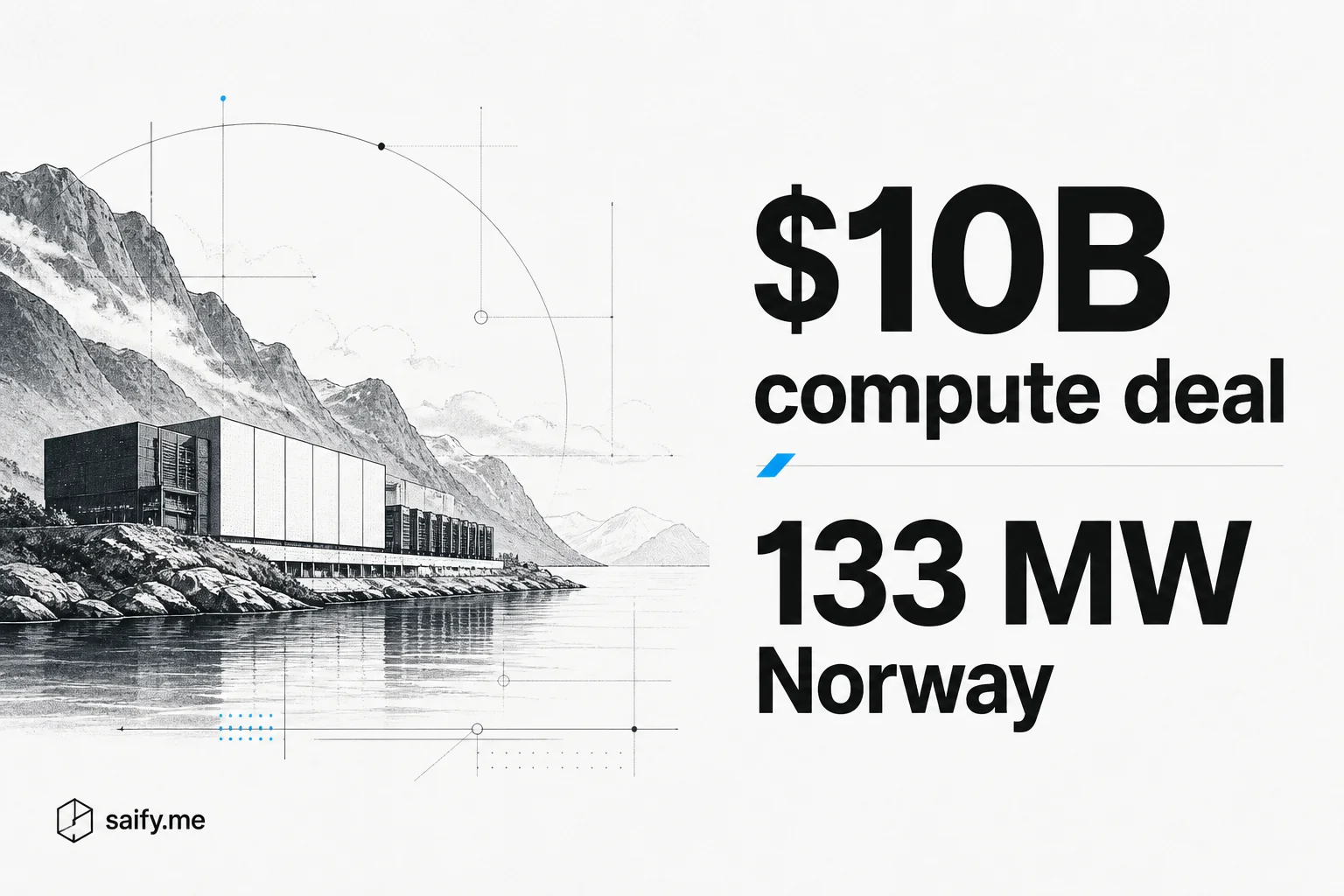
When a seven-month-old startup lands a $10 billion, six-year compute contract with a frontier lab, the story is not just "more GPUs." It is how AI infrastructure gets financed when credit, geography, and chip cadence all move at different speeds.
TechCrunch and Bloomberg reported on August 4, 2026 that Anthropic signed for capacity from Volta Infra Holdings. Volta had announced a $10 billion deal with an unnamed AI lab earlier the same day, delivered with Bitcoin miner Bitdeer Technologies at a Norwegian site.
Anthropic declined to comment publicly. Treat the lab identity as reported, not confirmed on Anthropic's blog. The infrastructure numbers are still useful for anyone modeling inference supply chains.
Deal snapshot
| Item | Reported detail |
|---|---|
| Counterparties | Volta Infra, Bitdeer (site operator), unnamed frontier lab (reported: Anthropic) |
| Term | Six years |
| Value | ~$10 billion capacity commitment |
| Site | Tydal, Trøndelag, Norway |
| Capacity | 133 MW (some reports cite ~121 IT MW) |
| Silicon | Nvidia Vera Rubin systems |
| Volta valuation | ~$2.4B post-money after $300M raise |
Norway matters for power economics and European footprint. Nordic hydro-heavy grids have been attracting AI buildouts for years. For Claude customers in the EU, a Norway anchor is also a sovereignty narrative: capacity that does not sit exclusively in US hyperscaler regions.
Why Volta exists
Volta is not trying to be AWS. Founders Ricard Boada and Sofia Gumuzio came from Brookfield-style infrastructure finance. The pitch: lease AI capacity and structure the balance sheet so labs can book multi-year GPU blocks without every deal riding on their own corporate credit.
That matches what we saw in Google's compute SPV structures and private credit backstops elsewhere in 2026. Bytes Europe reported a $1.3 billion credit package from JPMorgan affiliates and another global institution tied to the Volta/Bitdeer stack, decoupling project risk from Anthropic's balance sheet.
For builders, the pattern is clear: frontier training and inference are project finance problems dressed as cloud contracts.
Anthropic's compute map keeps widening
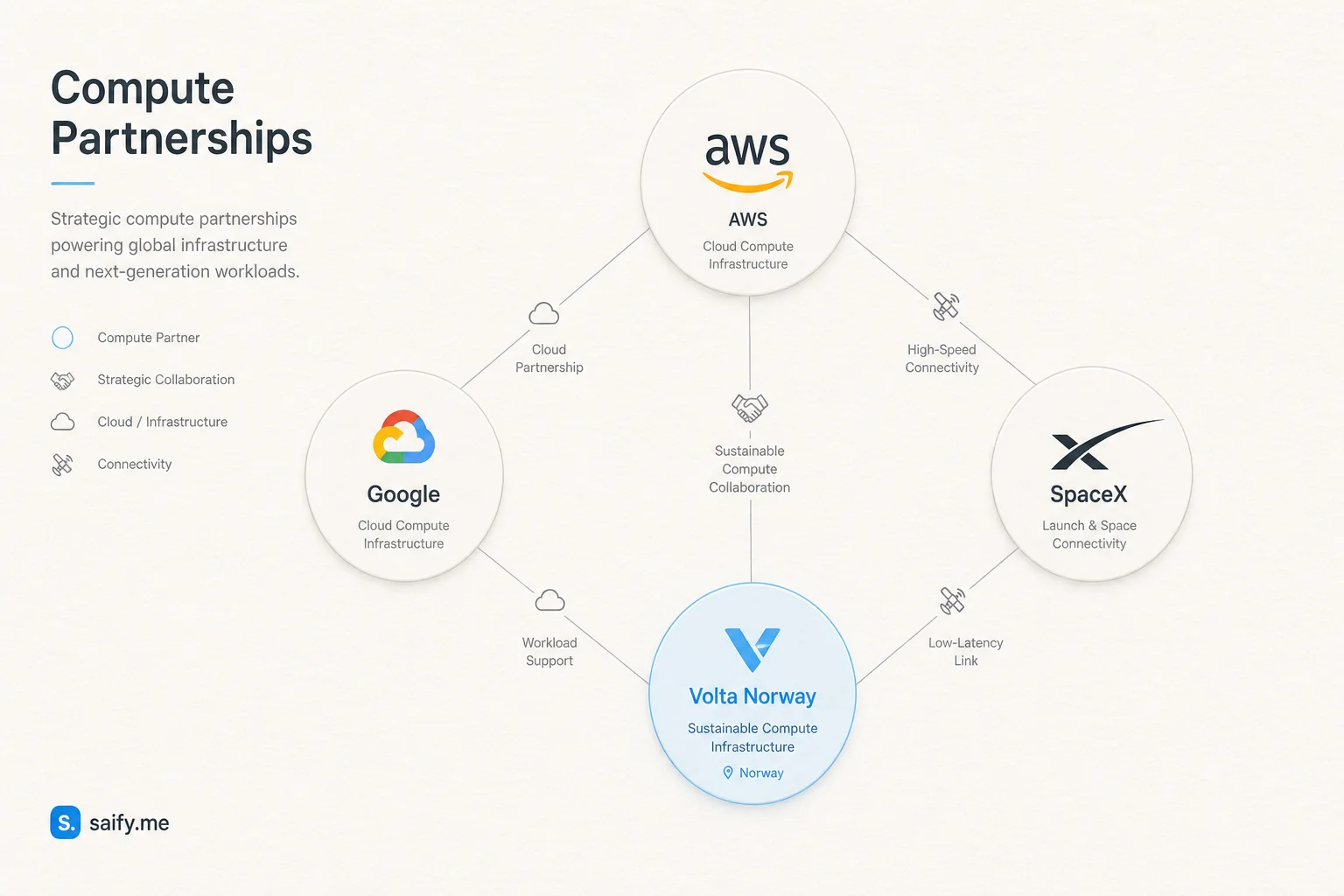
Volta is one node in a crowded graph. Reported or announced Anthropic supply includes:
| Partner | Role |
|---|---|
| Amazon AWS | Trainium2 at scale (Project Rainier) |
| Google Cloud | TPU capacity via structured deals |
| SpaceX | Colossus-linked capacity in Memphis |
| AMD | MI450 / Helios rack-scale paths |
| Microsoft Azure | Tens of billions in committed spend |
| Volta / Bitdeer | Vera Rubin in Norway |
Bloomberg also reported talks with Meta for additional capacity worth up to $10 billion over two years. None of that reduces Volta's importance. It shows how labs stack optionality instead of betting on one chip generation or one region.
Vera Rubin and the Nvidia cloud partner lane
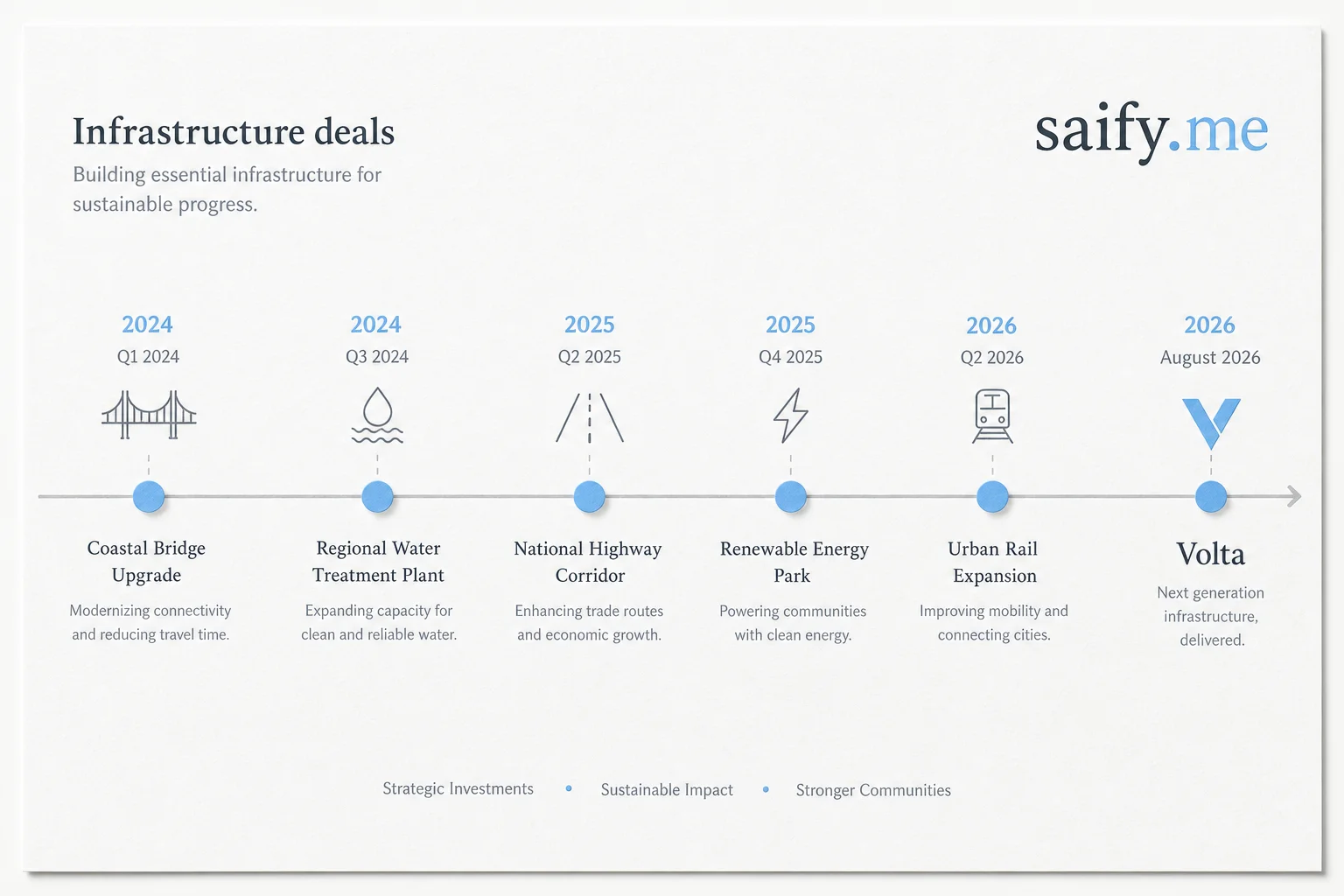
Volta sits in Nvidia's cloud partner ecosystem: AI-native hosts standardizing on Nvidia silicon. Vera Rubin is the next architecture slot after Blackwell-heavy builds dominated 2025 headlines.
For applied teams, the chip name is less important than availability lag. Models ship to API customers months before every training cluster upgrades. Anthropic's Fable and Mythos tiers already showed how export controls and capacity shocks can reroute model access overnight. More geographic and vendor diversity is risk management, not vanity.
What operators should watch
-
Contract concentration. If your Claude workload is EU-sensitive, ask providers about region routing over the next 18 months. Norway may show up in enterprise data sheets even before public SKUs rename regions.
-
Price pass-through. $10B headline numbers are capacity reservations, not your invoice next month. Still, long-term capex waves eventually surface in per-token pricing or enterprise minimums.
-
Startup counterparty risk. Volta is seven months old. Credit backstops and Bitdeer's operating role matter. Enterprise procurement should read the SPV structure, not just the press release.
-
Open-weight pressure. Anthropic sells closed API access while open models ride cheaper inference elsewhere. Compute megadeals are how closed labs defend margin while open weights flood GitHub.
Bottom line
The Volta deal is a financing and geography story wrapped in a GPU headline. Frontier labs are not buying "cloud." They are buying timed access to scarce watts and wafers, often through vehicles too new to list on a stock exchange.
If you are architecting multi-model production stacks and want help stress-testing vendor lock-in, book a free discovery call. I map inference routes the same way I map agent permissions: assume the default path breaks, then design the fallback before you need it.