
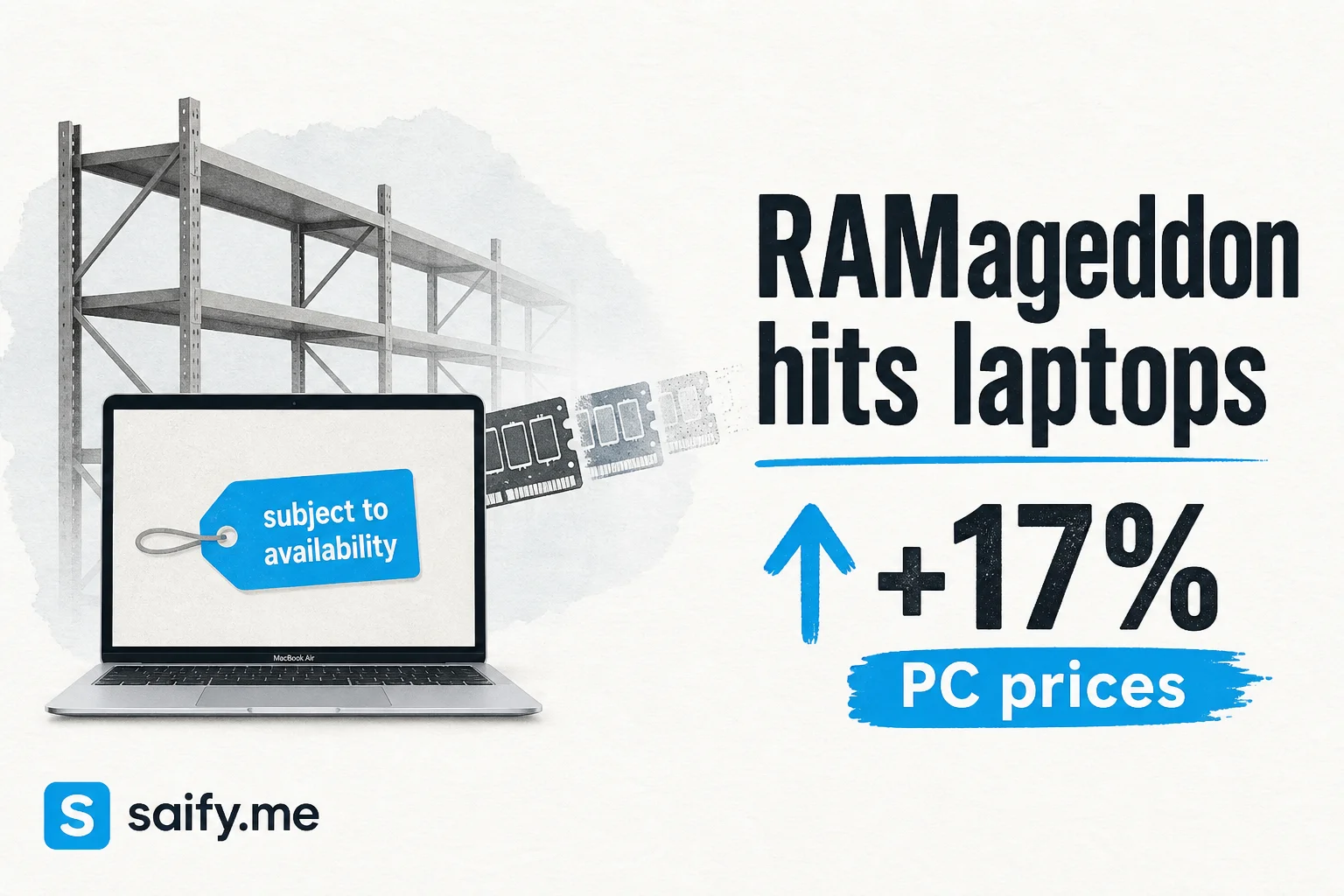
Apple put "subject to availability" on its own MacBook Air listings. That is not normal Apple behavior. It is what happens when the same memory chips that power your laptop are being vacuumed up by AI data centers with deeper pockets and longer contracts.
The tech press calls it RAMageddon. I call it a reminder that AI infrastructure is not abstract. It competes with physical components on real supply chains, and right now the hyperscalers are winning.
The MacBook Air is the canary
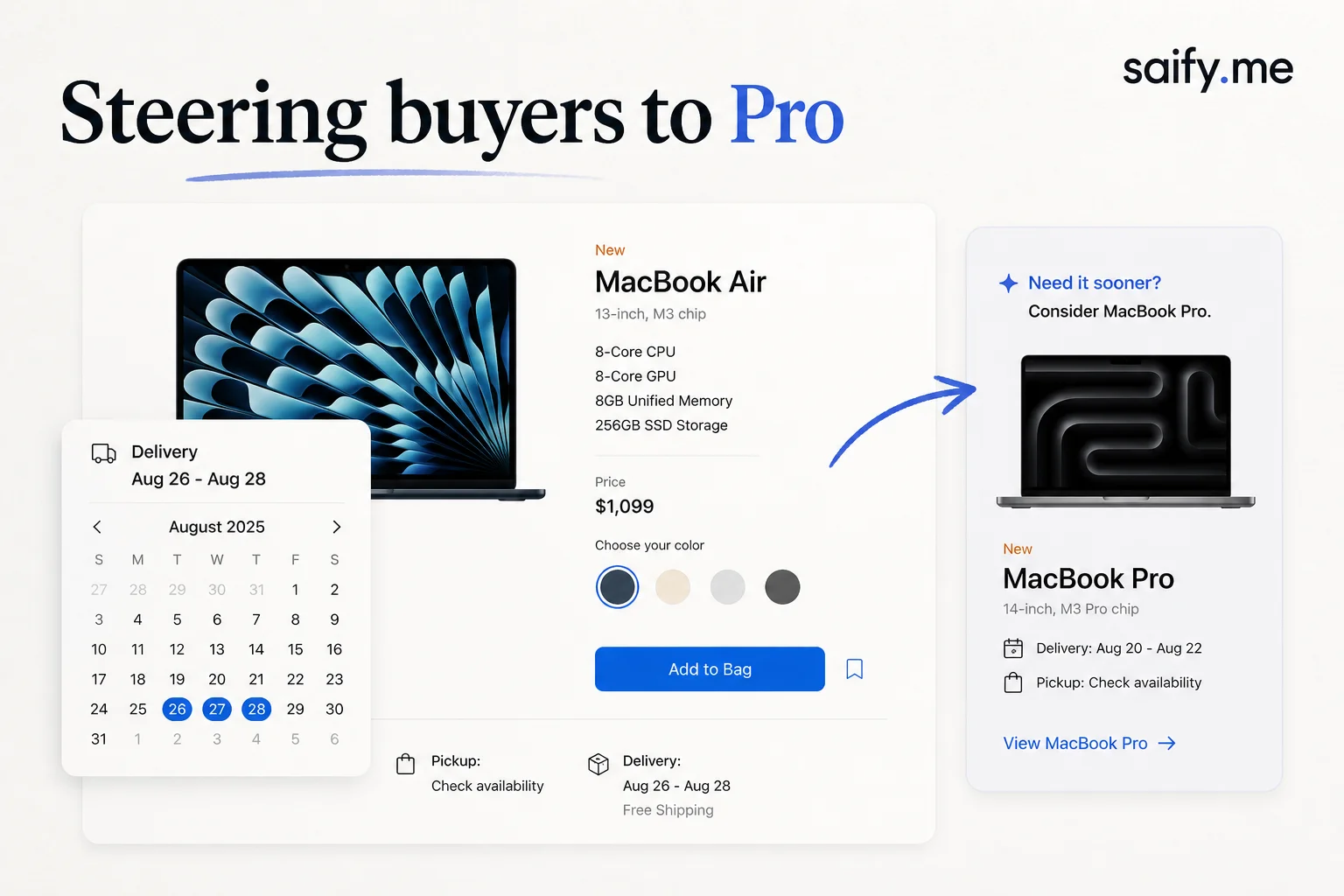
Bloomberg reported in early August 2026 that MacBook Air retail and online availability has slipped into late-August delivery windows. That is unusual for Apple's highest-volume laptop line.
Apple is actively steering customers toward the entry-level MacBook Pro, even adding "subject to availability" warnings on Air product pages. The company is also reportedly prioritizing production of the 14-inch MacBook Pro ahead of an anticipated M6 refresh.
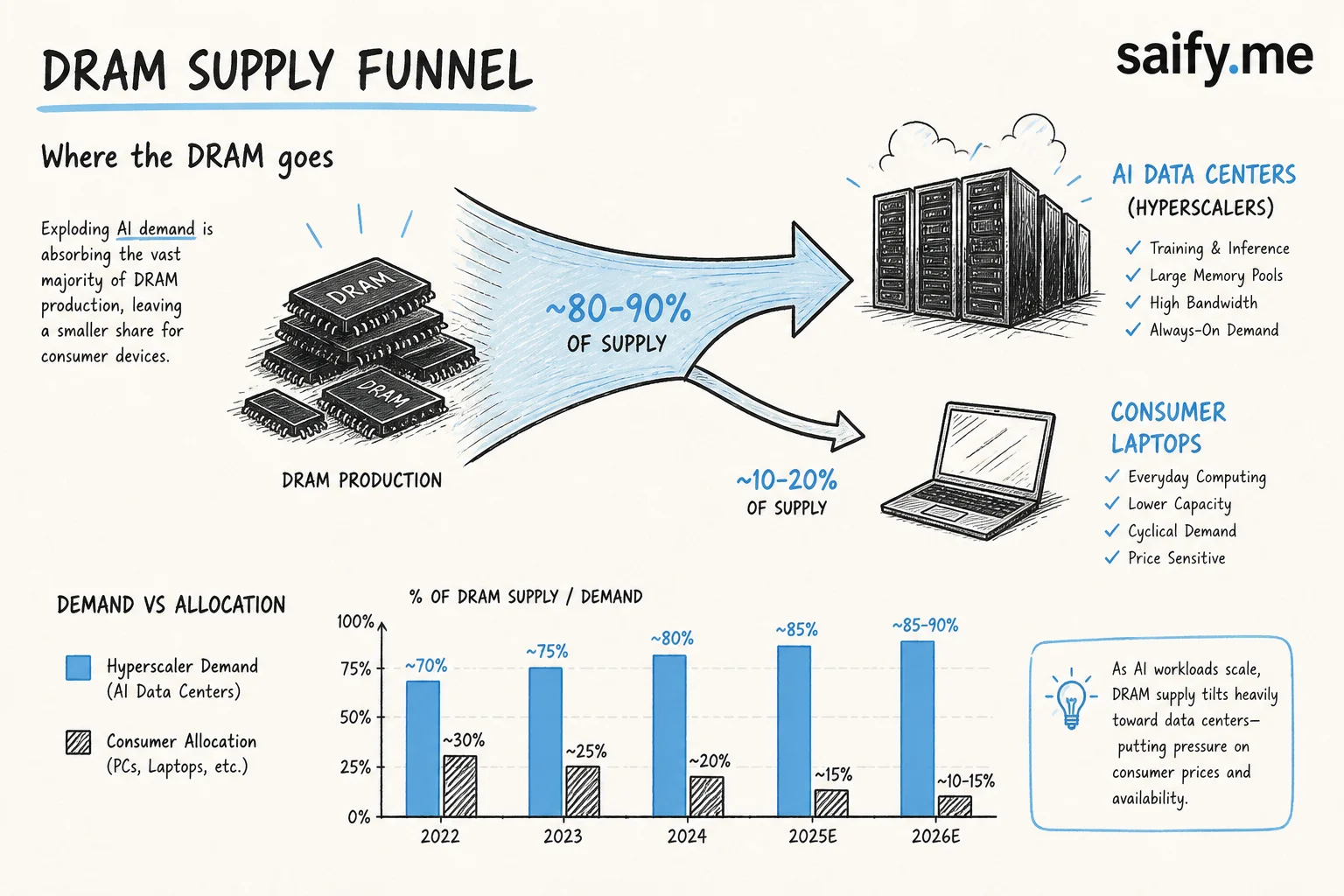
Engadget tied the shortage to a broader memory crunch: hyperscalers and AI data centers are soaking up DRAM and related components, leaving consumer OEMs fighting for allocation.
If you have been shopping for a dev laptop this fall, you are not imagining the friction. You are competing with AWS, Microsoft, Google, and Meta for the same silicon.
What Gartner thinks happens next
The data center boom is pulling memory makers toward high-margin AI customers. DRAM, HBM (high-bandwidth memory used in AI accelerators), and storage supply are all under pressure.
| Forecast | Gartner estimate |
|---|---|
| PC price increase (2026) | +17% |
| Smartphone price increase (2026) | +13% |
| Sub-$500 PC segment | Could disappear by 2028 |
Budget hardware gets hit first. Manufacturers either raise prices, delay launches, or kill low-margin SKUs. The Rundown Tech newsletter summarized the industry logic: for years, cheap memory made cheap computing possible. AI rewrote that bargain by turning a commodity component into a scarce strategic asset.
Winners: hyperscalers with cash to lock up supply. Everyone else: higher prices, longer waits, fewer entry-level options.
Why this matters if you build AI systems
I spend a lot of time helping clients choose between cloud APIs, local inference, and hybrid setups. RAMageddon changes the math on all three.
Local inference got harder, not easier. Running a 7B or 13B model on a laptop was already a trade-off between RAM, thermals, and battery. When OEMs ship fewer RAM-heavy configs and charge more for the ones they do ship, "just run it locally" becomes a budget line item, not a free tier hack.
Cloud inference has its own memory tax. GPU instances with enough HBM for large-context workloads were never cheap. Tighter supply means reservation pricing and spot volatility get worse. If your agent architecture assumes you can always throw more context at the model, your unit economics may break before your code does.
Hardware planning is part of AI architecture now. I have started asking clients three questions earlier in discovery:
- What is your monthly inference spend ceiling, including memory-heavy workloads?
- Do you need on-device inference, or is that a nice-to-have?
- If laptop refresh cycles stretch from 3 years to 4+, does your internal tooling still work on older RAM configs?
These used to be IT procurement questions. They are now product architecture questions.
The SpaceX angle (and why Musk cares)
The same digest that flagged MacBook Air shortages also covered SpaceX's proposed Terafab mega-factory in Texas, with filings suggesting up to $119 billion in long-term investment for in-house advanced semiconductors and compute.
Musk's reasoning, as reported: existing chipmakers are not expanding fast enough for his companies' AI and robotics needs. If Terafab gets built, it would supply Starlink, robotaxis, Optimus, and AI data centers from one vertical stack.
We already covered Terafab's Texas chip fab plans in an earlier post. RAMageddon is the demand-side mirror: when you cannot buy enough chips on the open market, you either pay more, wait longer, or build your own fab. Most teams only have the first two options.
What I am telling clients this quarter
Right-size context windows. Long-context models are powerful and expensive in every sense. Trim what you send. Cache what repeats. Summarize history instead of shipping full transcripts on every call.
Lock cloud spend early. If you are scaling agents in production, negotiate committed use or reserved capacity before Q4 refresh cycles make everything more expensive.
Do not assume cheap endpoints forever. The $500 Chromebook dev environment was already dying. RAMageddon may finish it. Standardize on a minimum RAM spec for internal tools and document it.
Treat memory like latency. It is a constraint you design around, not a problem you fix later. I have seen more production incidents from "we ran out of VRAM on the batch job" than from model quality regressions.
The bigger picture
Amazon crossed $3 trillion market cap the same week MacBook Airs went scarce. AWS posted $42.2B in revenue with 39% operating margins. The money flowing into AI infrastructure is not theoretical. It shows up in component allocation meetings that Apple product managers attend.
If you are a founder buying laptops for a 10-person team, this feels like annoyance. If you are an applied AI engineer designing systems, it is a signal: the physical layer under your stack is contested.
Plan accordingly.
Book a free discovery call if you want help right-sizing an AI architecture before memory costs eat your margin.