
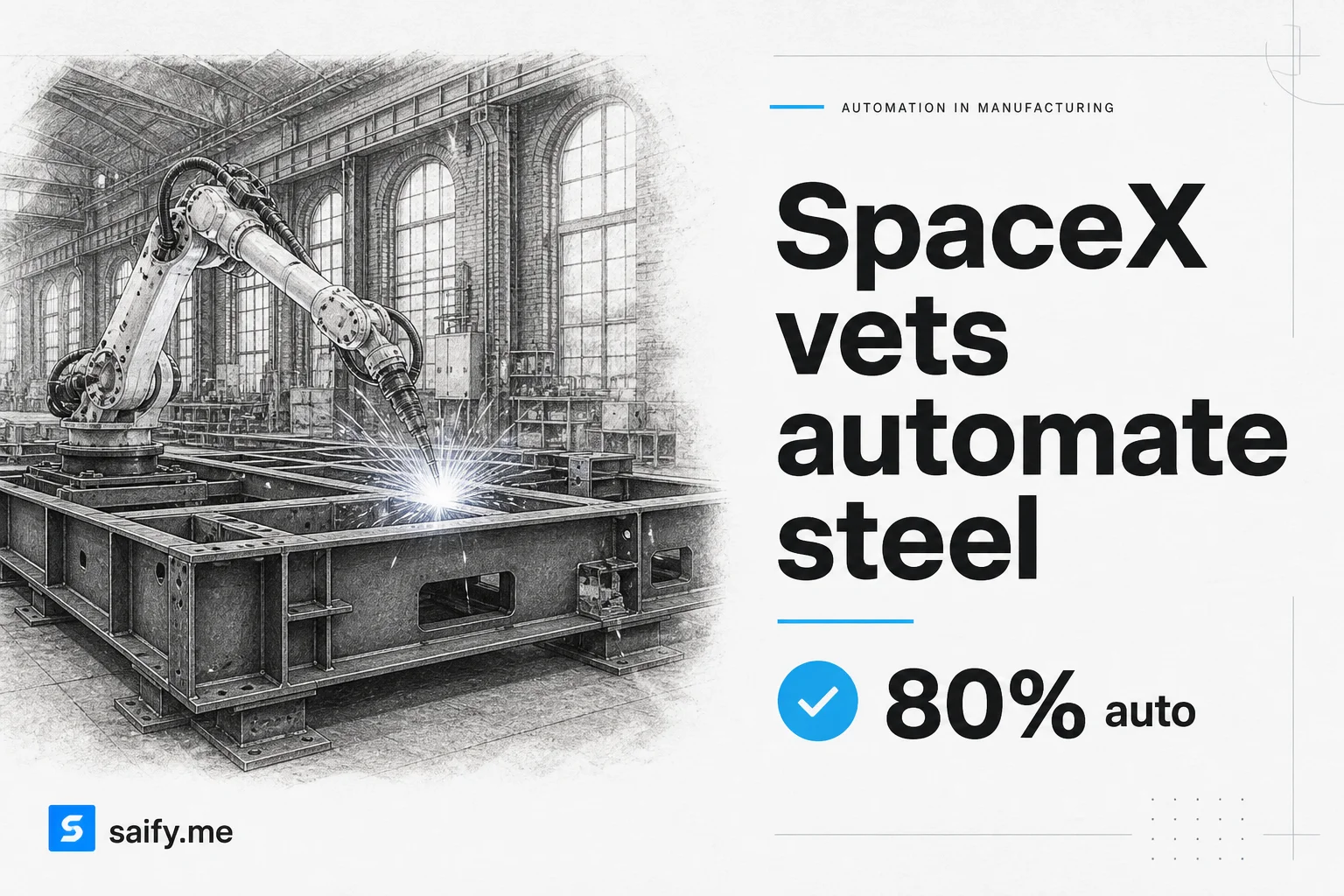
Rocket engineers do not usually pivot to welding sheds in Cincinnati. 1872 did, and the bet is bigger than a single factory: AI data centers and modular nuclear plants need steel faster than America's welders can show up.
The company emerged from stealth in July 2026 with $15M in seed funding and Factory One in a 1903 Camp Washington industrial building. Ars Technica and Engineering News-Record both framed it as a test of whether software-first manufacturing can close a skilled-labor gap the American Welding Society says needs 320,000+ new welders by 2029.
The product: boring steel skids, strategic demand
1872's first SKU is deliberately unglamorous: steel skids, the rectangular frames that sit under modular buildings, data halls, and plant equipment.
CEO Dan Summers told press the team picked skids because they are lower precision than aerospace parts, which leaves headroom for automation to learn without blowing a rocket-grade tolerance budget.
Customers are not public yet, but the stated targets are:
- AI data center builders racing to add capacity
- Small modular reactor (SMR) projects that need fabricated steel on aggressive schedules
That pairing is not accidental. Both sectors are capex booms with physical bottlenecks after the PowerPoint phase.
Factory OS: software names only SpaceX alumni would use
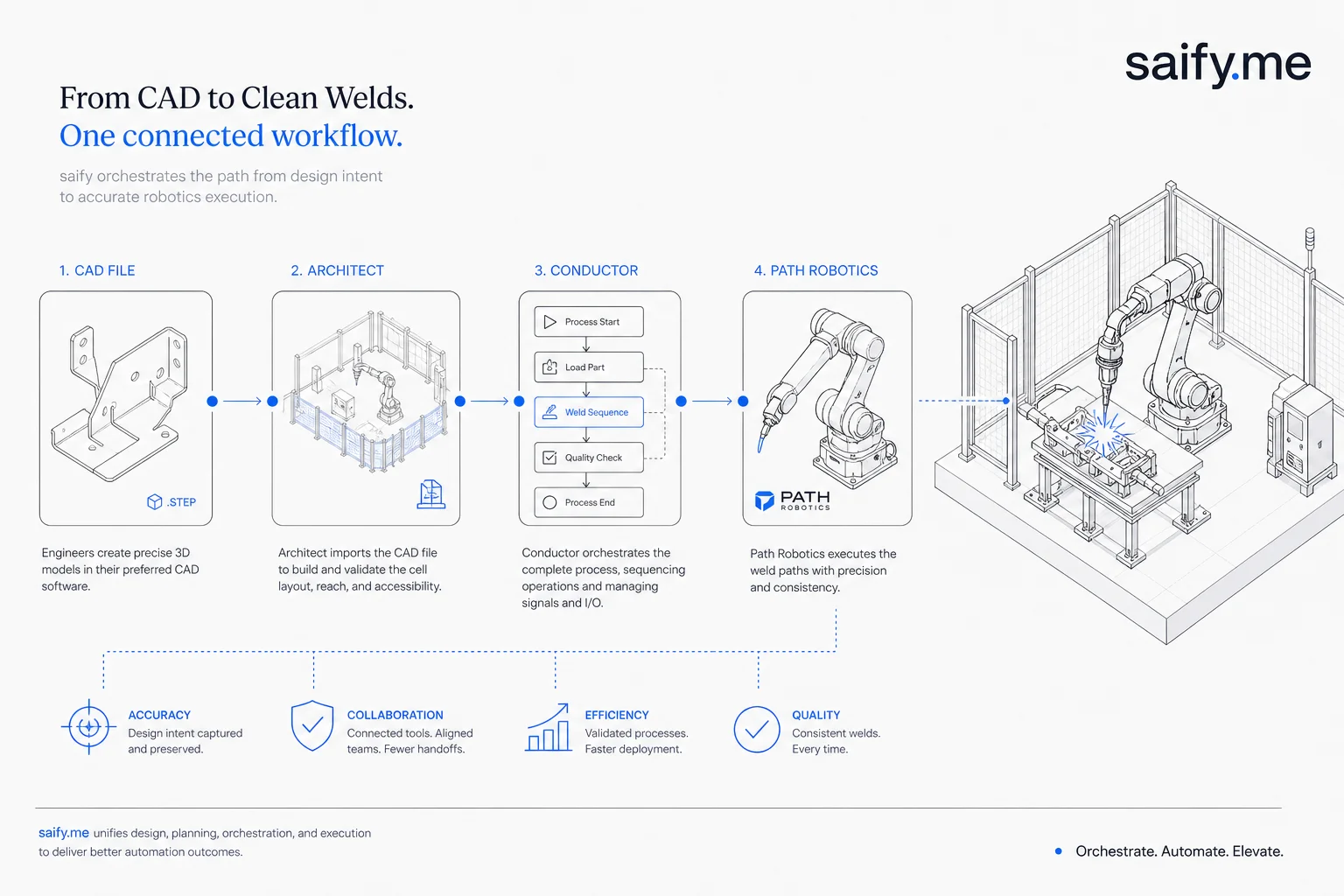
1872's stack, per interviews and the company site:
| Layer | Role |
|---|---|
| Architect | Ingests customer CAD, prices jobs, sources materials, builds production schedule |
| Conductor | Executes the plan: moves material, coordinates robots, tracks state on the floor |
| Path Robotics | Columbus-based partner supplying Obsidian robotic welding cells |
| Human welders | Still in the loop for complex work while robots handle structural weldments |
Summers' line to ENR: most fabricators drop automation into manual workflows. 1872 wants automation at the core, with AI agents trained to think like welders, buyers, and planners maintaining Factory OS.
That is the same vertical integration playbook he used integrating Raptor engines on Super Heavy, just aimed at 7,300-pound weldments instead of methane turbopumps.
The team already completed a 40-foot by 8-foot structural skid as a first production run (7,300 lbs of welded steel, per local press), using it to stress-test fixtures, software, and robotic cells.
Economics: $0.12 vs $0.78 per weld inch
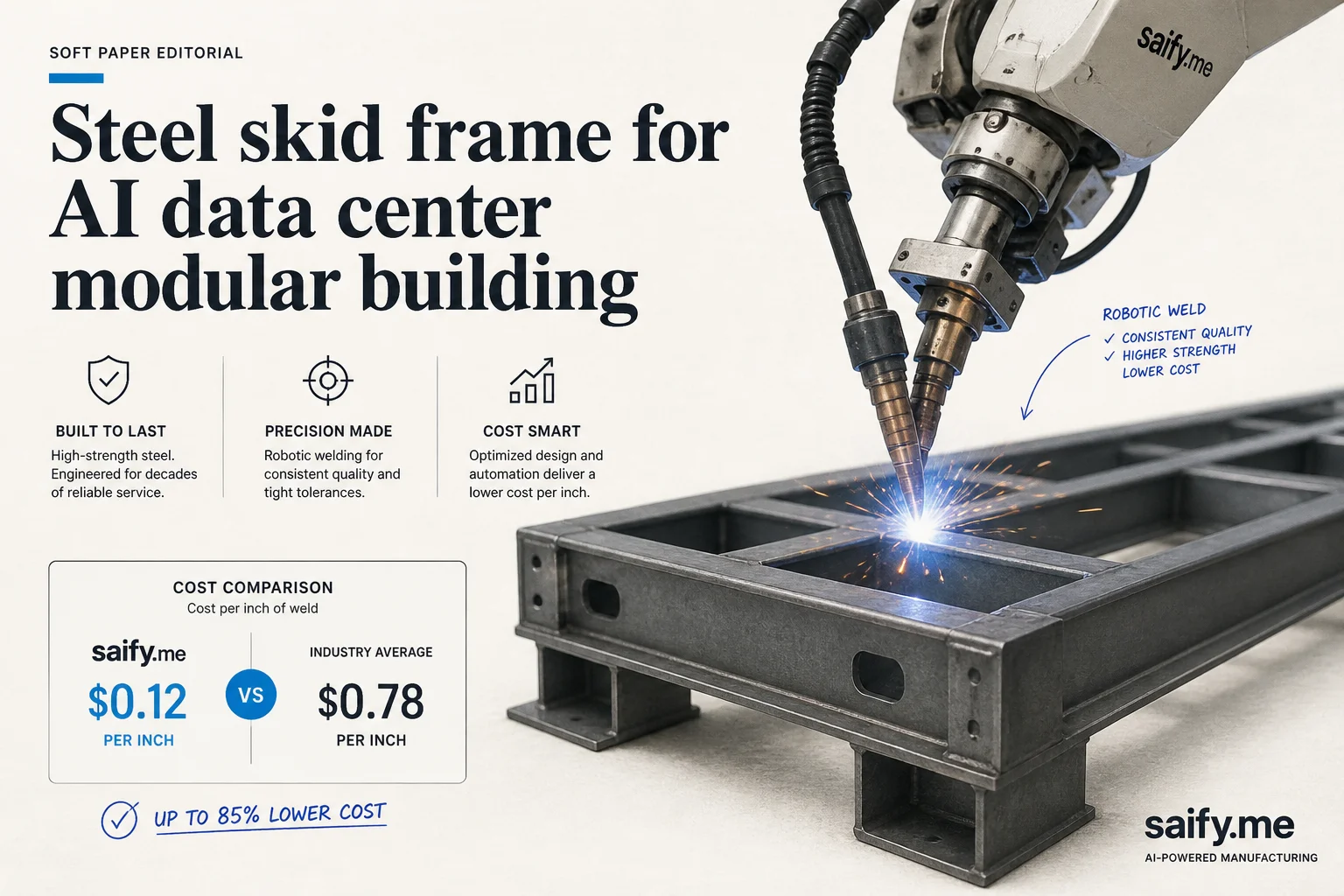
EdgeX reporting on Path Robotics cited roughly $0.12 per weld inch robotic vs $0.78 by hand, an ~85% cost reduction if yields hold.
I treat vendor math as a hypothesis until you see rework rates. Still, the order of magnitude is why investors cared: steel fabrication is a margin business where labor availability, not demand, is the choke point.
1872 told press it may stop at ~80% autonomous operations by 2027 if chasing the last 20% of tasks is not worth the engineering cost. That is a refreshingly honest autonomy target. Not everything needs a humanoid. Some lines need a robot arm and a sane stopping point.
Why this belongs on an applied AI blog
No large language model welds steel. But the pattern is exactly what I ship for clients:
1. Digital thread from file to floor. Customer CAD becomes schedule, BOM, and machine commands. Agents that only chat are useless if they cannot touch the work order system.
2. Orchestration beats single-task models. Conductor is the product. The welder is a tool node.
3. Labor reallocation, not labor denial. Summers told ENR skilled welders should move to harder assemblies while robots run repetitive structural welds. That is how I talk about voice agents: automate the reschedule call, keep humans on angry-customer exceptions.
4. Physical AI needs eval in production. They manual-ran the process first, then automated. Same advice I give teams jumping straight to autonomous coding agents without baseline metrics.
Risks on the floor
- $15M seed is enough to prove Factory One, not to nationalize steel fab.
- Customer anonymity until "full autonomous production" in 2027 means revenue is still a black box.
- Welding quality liability in data center foundations is existential if a skid fails in seismic load cases.
- Hiring mix (robotic technicians + manufacturing engineers) competes with every other Midwest automation shop.
The takeaway
1872 is a case study in applied physical AI: SpaceX-style software/hardware integration aimed at a labor shortage, not a viral humanoid demo.
If you are building AI products, steal the architecture story (Architect + Conductor + constrained tools) even if you never touch a weld gun.
Need agent orchestration or ops automation that connects to real systems, not just chat? Book a free discovery call and we can map where software should own the workflow end to end.