Blood draws are one of the most routine procedures in medicine. They are also one of the hardest to staff consistently.
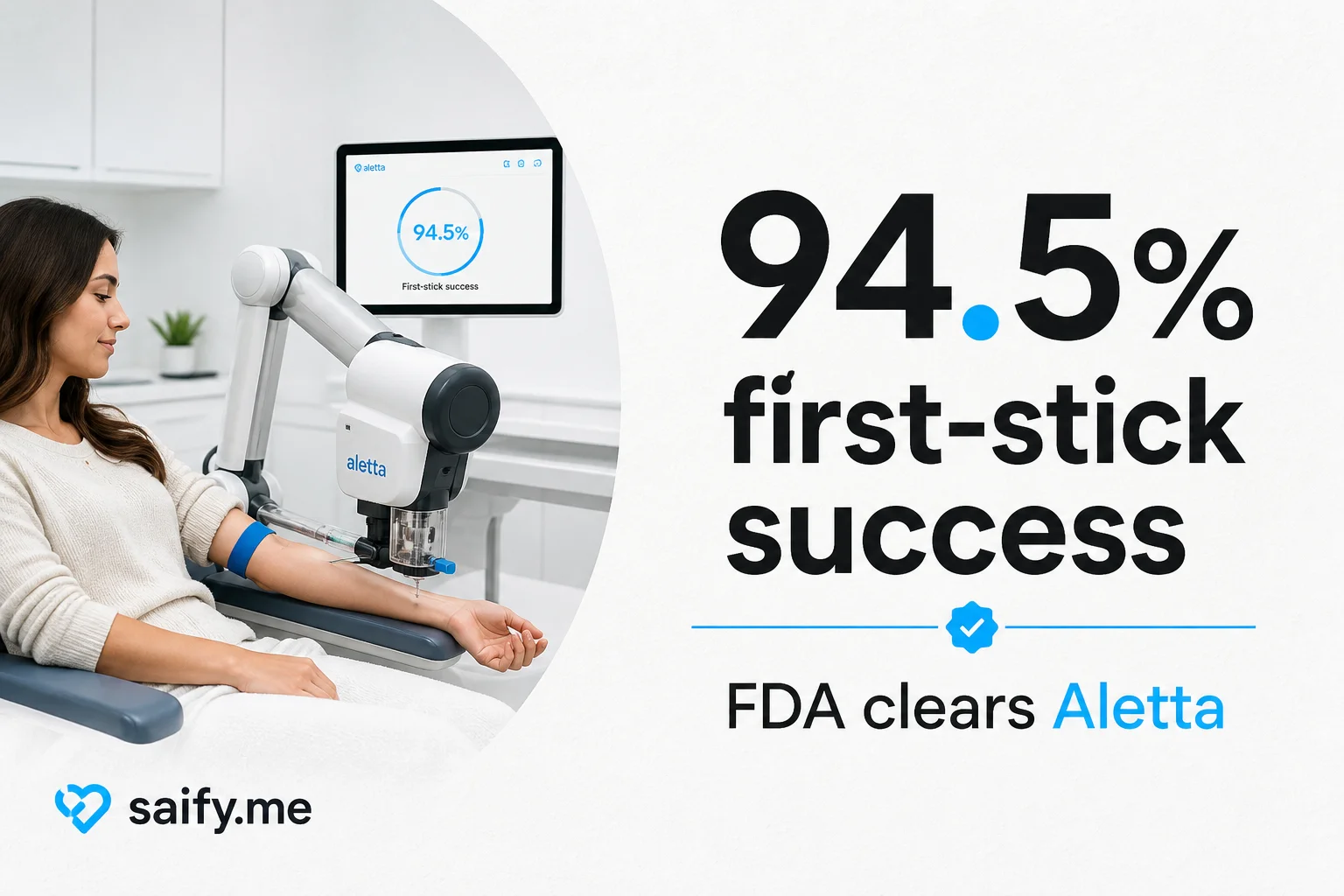
On August 20, 2026, the FDA granted De Novo authorization to Vitestro's Aletta, the first U.S. clearance for a fully autonomous blood draw system. Not assistive robotics. Not a semi-automated holder. The robot finds the vein, sticks the needle, fills the tubes, and bandages the patient.
That is a new device category, not a faster cart.
Vitestro FDA authorization announcementWhat Aletta actually does
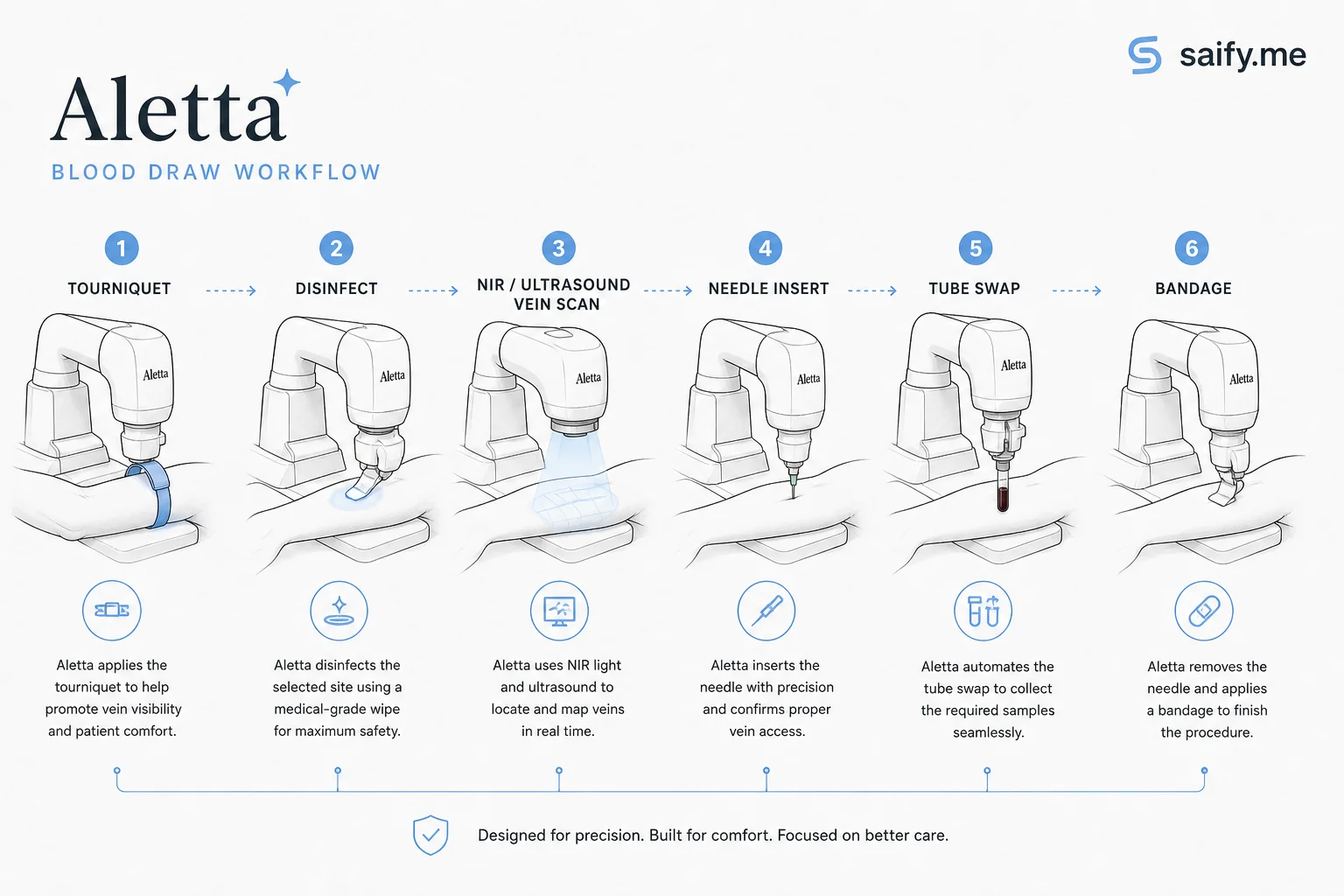
Aletta combines hardware and perception in a single closed loop:
| Step | How Aletta handles it |
|---|---|
| Vein location | Near-infrared, ultrasound, and Doppler to separate veins from arteries |
| Prep | Automatic tourniquet and skin disinfection |
| Insertion | Guided needle placement |
| Collection | Tube swapping during draw |
| Cleanup | Needle disposal and bandage application |
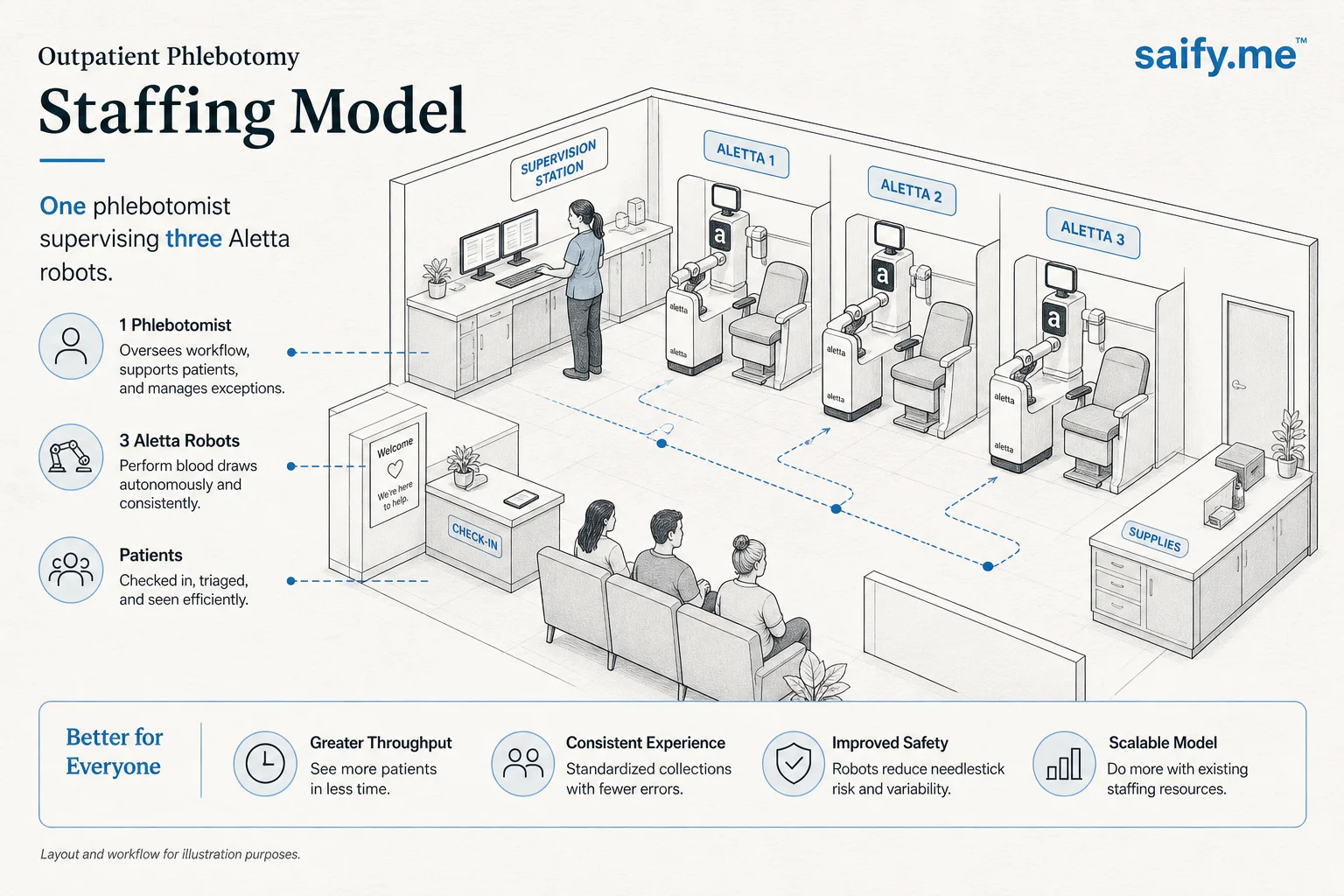
The system is cleared for adult outpatient blood draws. A trained phlebotomist can supervise up to three robots at once.
The trial numbers clinics will ask about
Vitestro ran a 1,633-patient multicenter trial. When Aletta identified a suitable vein, first-stick success hit 94.5%.
That is the number procurement teams will screenshot. It is also the number you should interrogate:
- Success is conditional on suitable vein identification. Hard sticks still exist.
- Outpatient adults are not the full phlebotomy universe (pediatrics, ICU, emergency).
- Workflow integration (labeling, exceptions, patient anxiety) matters as much as stick rate.
Still, 94.5% with autonomous needle control is a different conversation than "robot arm holds the vial while a human aims."
Engadget on Aletta's clinical workflowWhy this is an ops story, not just a gadget story
Phlebotomy departments do not fail because clinicians lack skill. They fail because volume outruns staffing:
- Morning lab rushes stack waits
- Experienced phlebotomists burn out on repeat sticks
- Rural and outpatient sites struggle to hire
Aletta's staffing model (one human, three robots) is the interesting ops lever. It is the same pattern I push in voice AI deployments: automate the repetitive motor loop, keep humans on exceptions and patient trust.
Regulatory path and rollout timing
Aletta was already CE-marked and in clinical use across Europe. The FDA De Novo creates a new U.S. device classification for autonomous phlebotomy.
Vitestro says U.S. commercial rollout comes after manufacturing scale-up and a planned U.S. multicenter trial for additional evidence. Europe leads deployment; the U.S. follows.
For builders in healthcare automation, note the sequencing:
- Prove safety in structured outpatient settings
- Win a new regulatory category, not a 510(k) me-too
- Scale manufacturing before marketing hype
That is slower than a SaaS launch. It is also why hospitals trust it.
What applied AI teams can learn
Even if you never touch a needle, Aletta is a clean case study in multimodal edge AI:
| Layer | Aletta pattern | Your project analog |
|---|---|---|
| Sensing | NIR + ultrasound + Doppler fusion | Camera + mic + CRM context fusion |
| Actuation | Precision robotics on human tissue | API writes, ticket updates, voice responses |
| Supervision | 1 human : 3 robots | 1 operator : N agent sessions |
| Regulation | De Novo with clinical endpoints | HIPAA, SOC2, or FDA SaMD path |
The hard part is not the model. It is the closed loop with liability attached.
My take
I have helped clinics think through voice agents and intake automation. Phlebotomy is messier: invasive, high-anxiety, and unforgiving of edge cases.
Aletta's FDA win matters because it moves robotics from "assist the human" to "perform the routine procedure autonomously under supervision." That is the bridge between factory arms and patient-facing medical work.
Watch the U.S. trial data, not the press release photos. Stick rate in easy veins is table stakes. Stick rate across real outpatient chaos is the product.
If you are automating patient-facing workflows and want a sanity check on where robotics ends and software should start, book a discovery call.