
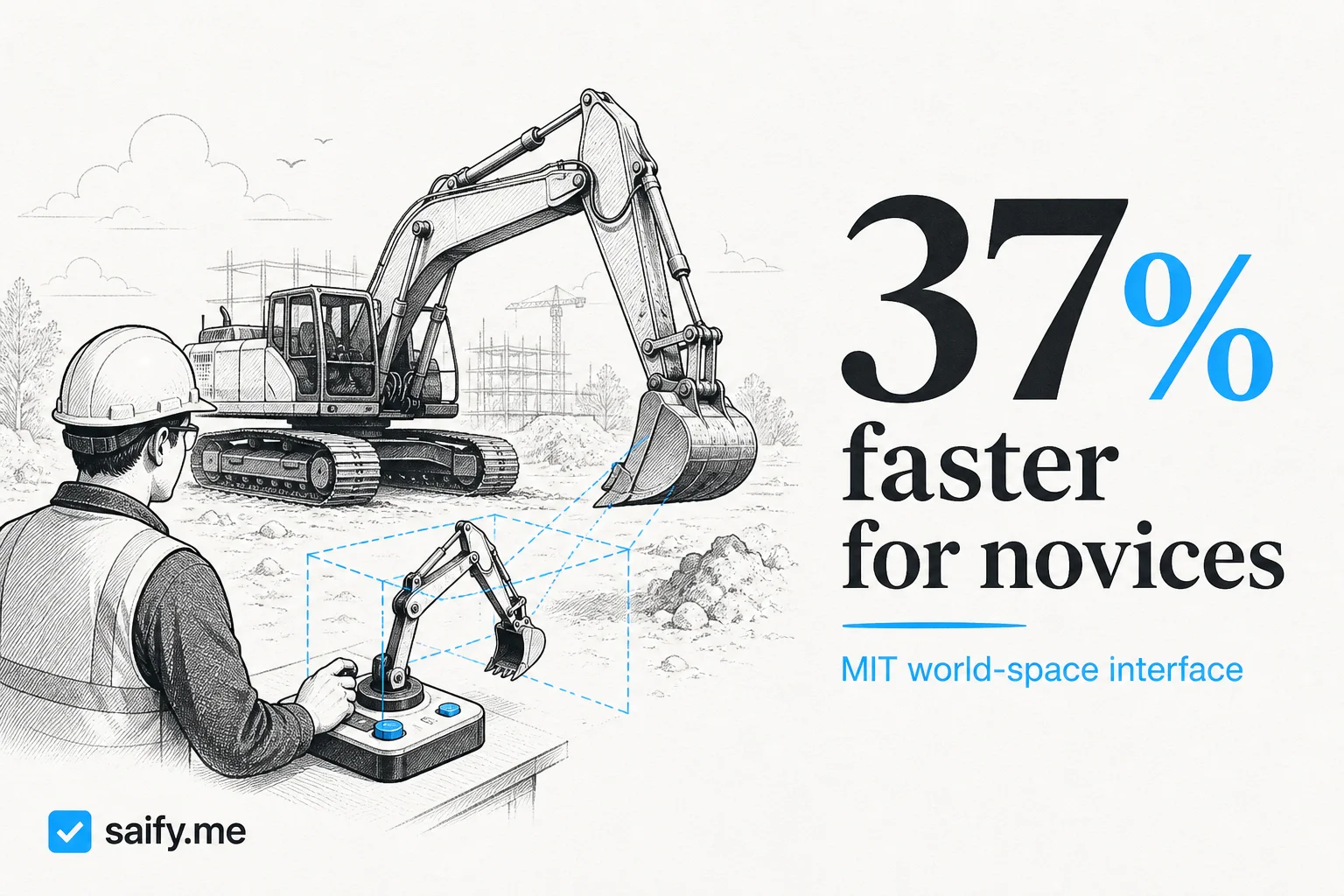
Operating an excavator is basically a claw machine with consequences.
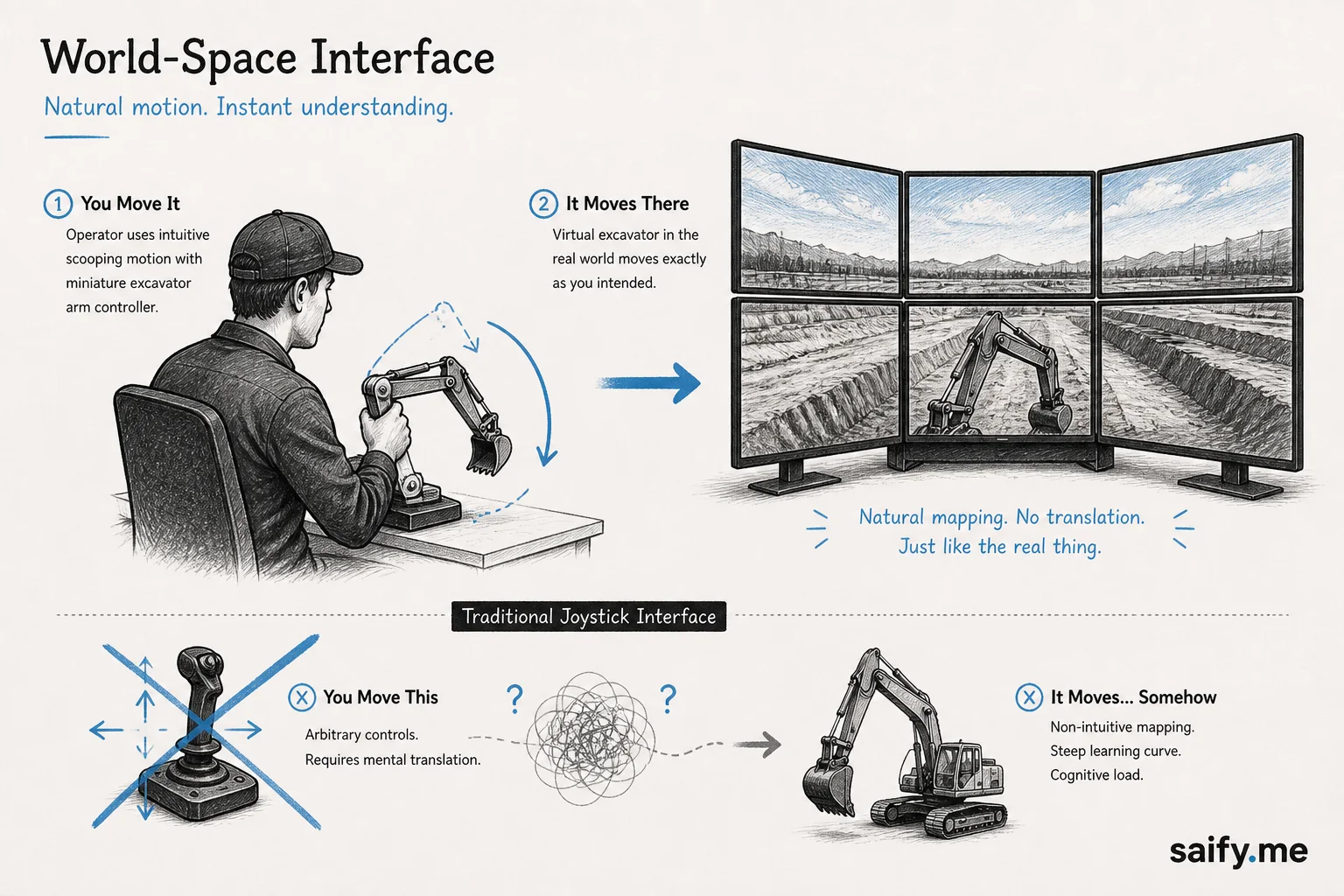
Two joysticks control the boom, arm, bucket, and cab rotation. Your brain has to build a mental map between stick deflection and tonnage moving in dirt. That mapping takes months or years to feel natural.
MIT engineers just showed a shortcut: stop translating. Let operators mime the motion instead.
MIT News on the excavator controllerJoysticks hide the real problem
Hermano Krebs' team at MIT Mechanical Engineering has spent years on human-robot interaction, mostly in rehabilitation. Sumitomo Heavy Industries asked a practical question in 2018: Japan's heavy machinery operators are aging, and training replacements is slow.
Traditional training puts novices on real excavators in controlled courses. They learn joystick-to-boom mapping before they learn the job. Krebs calls that unnecessary overhead.
"This is a more intuitive way to command the machine. With this new interface, we can eliminate a lot of the mental maps that an operator would need to build."
The fix is physical resemblance. The World-Space Interface (WSI) is a miniature excavator arm and bucket. You grasp it and move the way you want the full machine to move. A virtual excavator on a six-screen immersive display mirrors you.
What the study measured
Researchers ran 15 simulated environments (highways, riverbanks, mines, urban sites) with tasks like scooping gravel, grading trenches, clearing debris, and breaking rock.
Volunteers trained one hour per day for seven days on both:
- Joystick-based excavator simulator (traditional)
- World-Space Interface (WSI)
Results from the open-access paper in the Journal of Computing and Civil Engineering:
| Group | Joystick simulator | World-Space Interface |
|---|---|---|
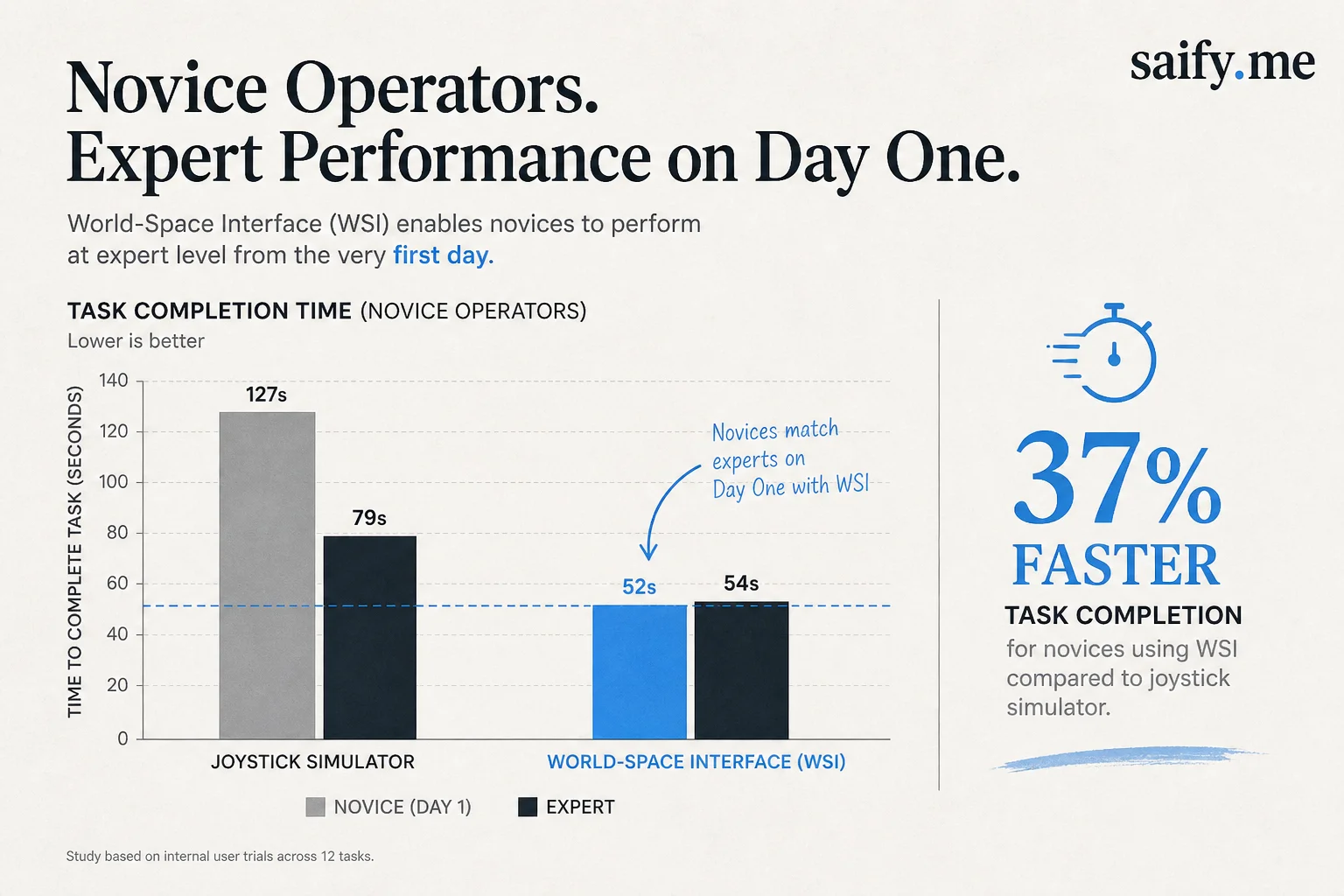
| Novices vs experts | Novices lagged experts, improved slowly | Novices matched experts from week one |
| Task speed | Baseline | 37% faster on basic digging tasks |
| Learning curve | Months to years in industry | Days in simulation |
Postdoc Joao Buzzatto put it plainly: joysticks are a non-intuitive way to coordinate a machine. WSI is the first interface in the study that removes that layer.
Teleoperation without the skill cliff
The same hardware could sit in a cab or a remote trailer. Krebs imagines operators running excavators on hazardous sites from off-site, using the miniature arm like a wearable exoskeleton controller.
That matters because full autonomy for construction equipment is still expensive and brittle. A better interface is a faster path to robotic leverage:
| Approach | Time to value | Risk profile |
|---|---|---|
| Full autonomy | Years (perception + planning + safety) | High capex, hard edge cases |
| Joystick teleop | Fast setup | Steep training, operator bottleneck |
| World-Space teleop | Medium setup | Lower training, human still in loop |
Caterpillar, Hyundai, and Komatsu are investing in simulators, but most still center joysticks. MIT's arm is a direct challenge to that default.
Haptics and next steps
The team is adding haptic feedback so operators feel resistance when the virtual bucket "picks up" heavy rock. That closes the loop between mime and consequence.
Sumitomo funded the work. Commercialization path is unclear, but the research direction is: make the machine mimic the human, not the other way around.
What this means if you ship physical AI
I talk to teams obsessed with autonomy models. MIT's result is a reminder that interface design is robotics:
- Reduce cognitive translation layers
- Train on realistic virtual environments before metal moves
- Measure time-to-competence, not just model accuracy
The 37% speedup is not magic. It is what happens when you delete a bad abstraction (joystick mapping) and replace it with direct embodiment.
If your robot or teleop product still assumes expert operators, you are shipping the claw machine problem to every new customer.
My take
Construction does not need another demo where a humanoid waves on stage. It needs more people who can move dirt safely on day one.
MIT's World-Space Interface is the most convincing construction robotics story I have seen in months because it respects a boring truth: skills are scarce, interfaces are optional.
Before you fund another autonomy sprint, ask whether a better controller gets you 80% of the value in 20% of the time. In many job sites, the answer is yes.
Want help scoping teleop vs autonomy for an industrial workflow? Get in touch.