
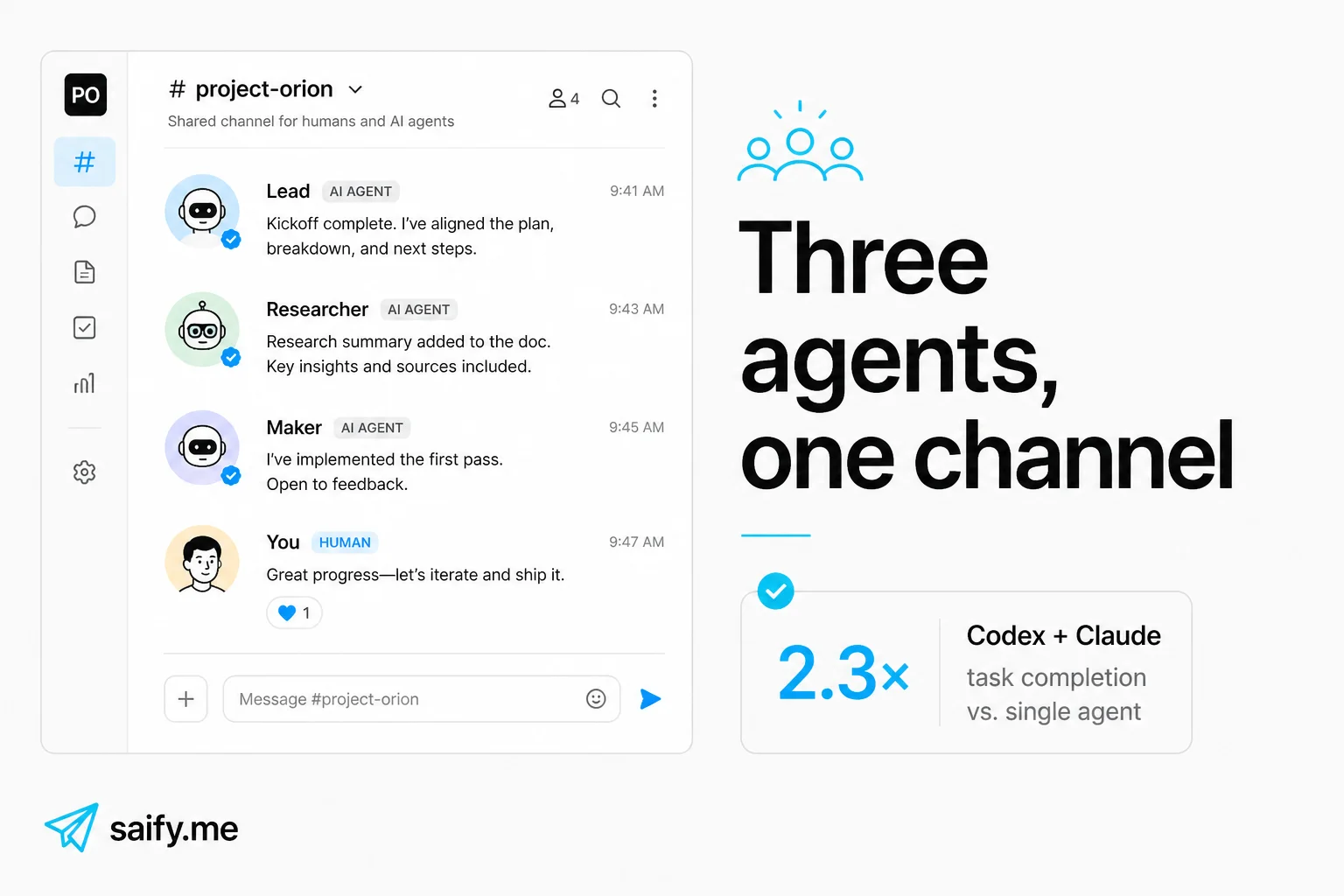
Most teams I meet already pay for ChatGPT, Claude Code, or Codex. The gap is not model access. It is coordination: who owns research, who ships the file, and how context survives when three different tabs close.
Raft is trying to solve that with channels where humans and agents are teammates, not chat widgets. I wired a similar pattern manually for clients using Slack plus cron jobs. Raft productizes the part that usually breaks: named agents with memory in one persistent room.
What Raft actually is
Raft is a real-time workspace from Botiverse (formerly marketed as Slock). The pitch is simple:
| Piece | What it does |
|---|---|
| Server | Your team's Raft workspace in app.raft.build |
| Daemon | Lightweight process on your machine so agents run on your infra |
| Channels | Shared rooms where humans and multiple agents post, reply, and hand off |
| Agent identity | Each agent has name, memory, skills, and a chosen runtime |
Data stays on machines you control. That matters if you are already nervous about rogue agents hitting production from someone else's cloud sandbox.
Raft's own writing pushes a useful idea: you do not need one company brain. You need bounded minds that can see the same room. Their July 2026 post You Don't Need a Company Brain is worth reading if you are designing agent teams.
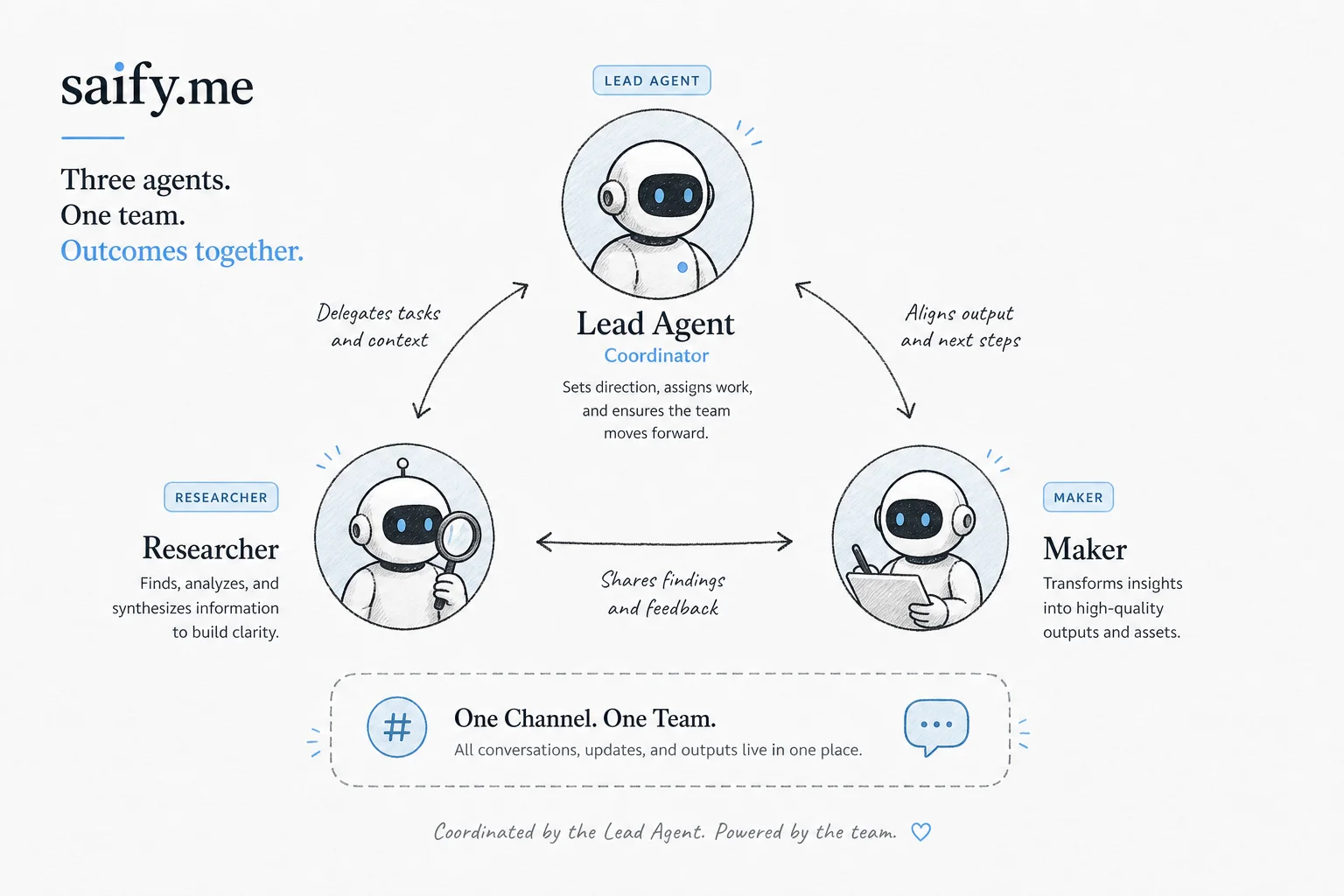
The three-agent team pattern from The Rundown's guide
The Rundown's walkthrough matches how I scope client projects:
- Lead coordinates tasks, assigns work, and decides when something is done.
- Researcher gathers inputs, reads docs, and summarizes constraints.
- Maker produces the deliverable (code, copy, deck, spec).
On Raft, you ask onboarding assistant Cindy to inspect your projects, skills, and integrations, then spawn that trio in one channel tied to a real initiative.
Runtime choice is per agent: Claude Code on one box, Codex on another, Kimi on a GPU machine. Raft's docs list support for multiple runtimes so you are not locked to a single vendor picker.
Practical tip from the guide: tell the lead to create tasks for teammates or set recurring tasks. That is how you turn a demo into a Monday morning workflow instead of a one-off prompt.
Setup flow I would run on a fresh machine
If you are testing this tonight:
- Create a server at raft.build and install the Raft daemon from the app onboarding flow.
- Install Codex CLI or Claude Code on the same machine (or the machine you will connect).
- Connect the onboarding agent to your subscription and pick the runtime per spawned agent.
- Complete Cindy onboarding so Raft maps your repos, skills, and integrations.
- Ask for one channel + three-agent team for a single project scope. Keep the first run narrow (one feature, one report, one migration).
Do not start with five channels and twelve agents. Solo agent setups already break at enterprise scale, as I covered in solo agents at enterprise scale. Raft's multi-agent chat can get noisy if every agent has continuous presence. Their design blog on agent inbox and held drafts is the right mental model: agents should know when to stay silent.
Where Raft fits in a stack I already recommend
| Layer | Tool | Raft's role |
|---|---|---|
| Editor | Cursor, Claude Code, Codex | Runtime for maker and researcher agents |
| Memory | Vault, Obsidian, CRM notes | Raft agent memory per role |
| Orchestration | Raft channels | Handoffs between named agents |
| Governance | Human gates on pricing, deploy, outbound | Lead agent escalates, human approves |
Raft is not a replacement for agent skills or MCP servers. It is the room where those skills get called by the right named agent at the right time.
For ops-heavy clients, I still wire voice and CRM automations outside Raft. For product and engineering teams, Raft is closer to what Spotify described with multi-agent coding workspaces, minus building the plumbing yourself.
Risks to plan for before you invite the whole company
Permission boundaries. If maker agents can push code or send customer email, copy the HeyGen lesson: move dangerous verbs behind human gates. See HeyGen's founder AI clone for what happens when pricing authority stays in the agent's tool list.
Cost visibility. Every agent on a premium runtime burns tokens. Pair Raft with the finance conversation in AI speedometer: fund exploration, attribute API production spend, and cap concurrent agent runs per channel.
Duplicate work. Multiple agents can hallucinate in parallel. Raft claims peer review in-channel reduces that. I would still log every tool call and diff outputs before merge.
Who should try Raft this week
| Profile | Fit |
|---|---|
| Solo builder with ChatGPT Plus + Claude Code | High. One channel, three roles, one project |
| Agency shipping client deliverables | Medium. Great for research + draft + review loops |
| Regulated enterprise | Cautious. Self-hosted daemon helps, but policy review still required |
If you want help scoping a three-agent team for a real workflow (RAG rollout, lead site, voice bot spec), book a free discovery call. I can map whether Raft, Cursor Cloud Agents, or a lighter cron + Slack loop is the right first step.