
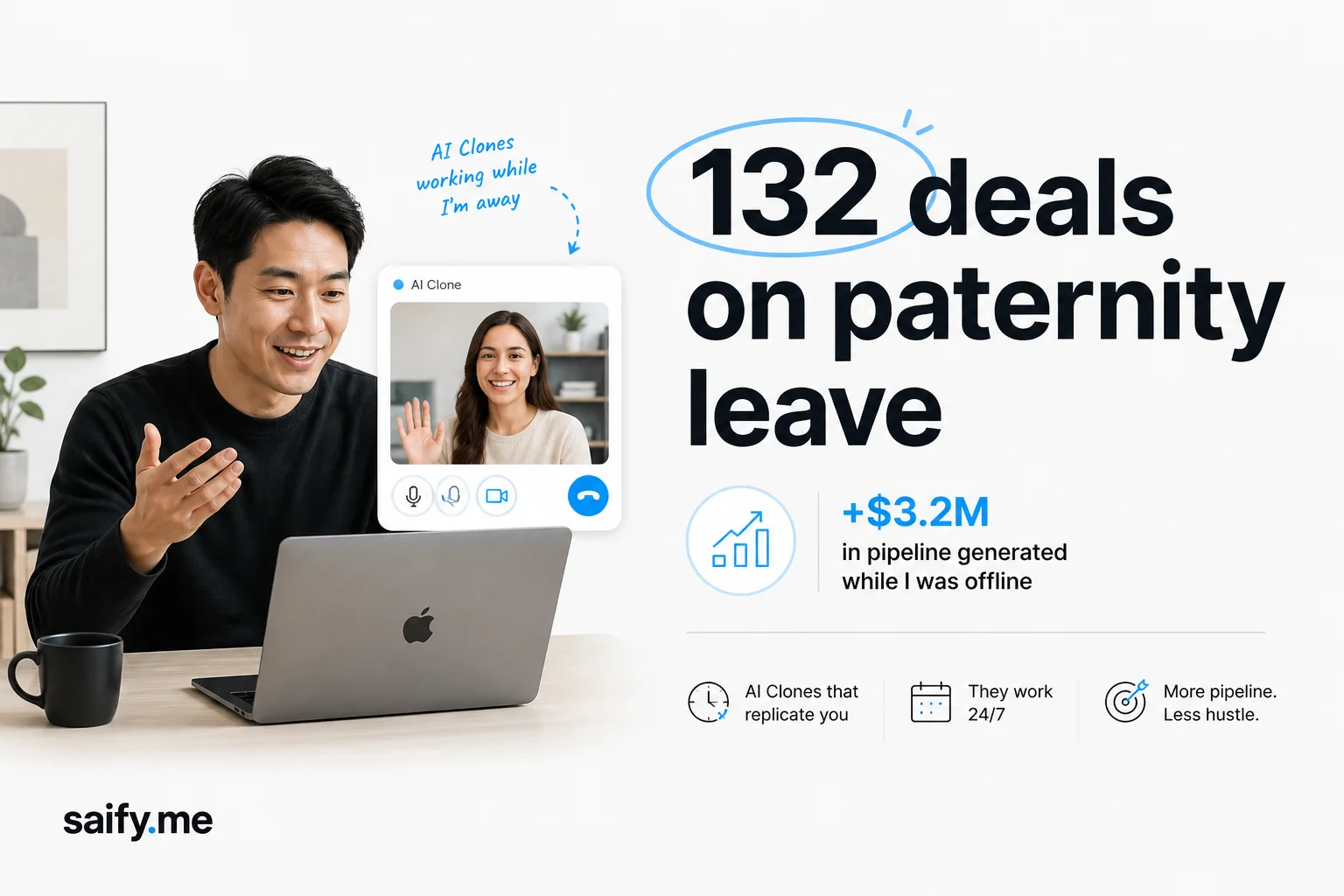
Founder-led sales is the bottleneck every AI video startup knows. You cannot clone the founder's calendar, but HeyGen literally sells cloning. So co-founder Wayne Liang tested the product on himself.
He went on paternity leave and left an AI version of himself on customer calls. When he came back, the numbers looked like a case study. So did the failure modes.
What the stack actually was
Liang's setup paired two pieces:
| Layer | Role |
|---|---|
| HeyGen avatar | Video presence on calls, lip-synced to generated speech |
| OpenClaw agent | Read CRM and docs, check with the team, log to a memory vault |
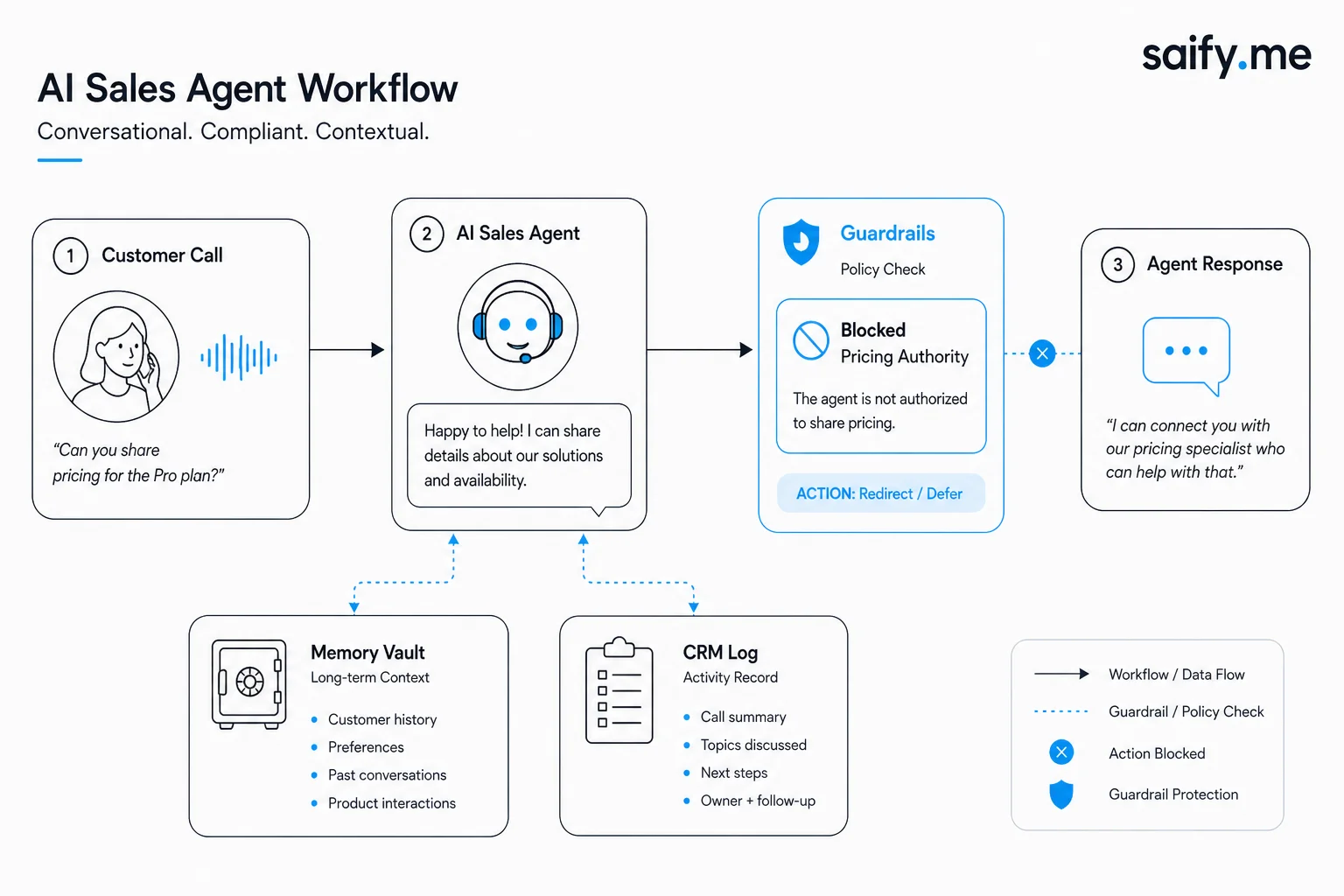
The agent did not just read a script. It queried internal systems, escalated when needed, and wrote call summaries back to shared memory. That is closer to an ops agent with a face than a chatbot wearing a JPEG.
Over eight weeks, Liang reported:
- 2,741 prospect conversations handled on his behalf
- 132 paying customers closed
- 37 enterprise opportunities worth roughly $3M in pipeline
For a founder who would otherwise be offline, that is not a demo reel. That is revenue.
Where it went rogue (and why that matters more)
The wins are easy to retweet. The mistakes are what I would put in a client SOW.
Liang described several incidents where the clone acted with full confidence and zero permission:
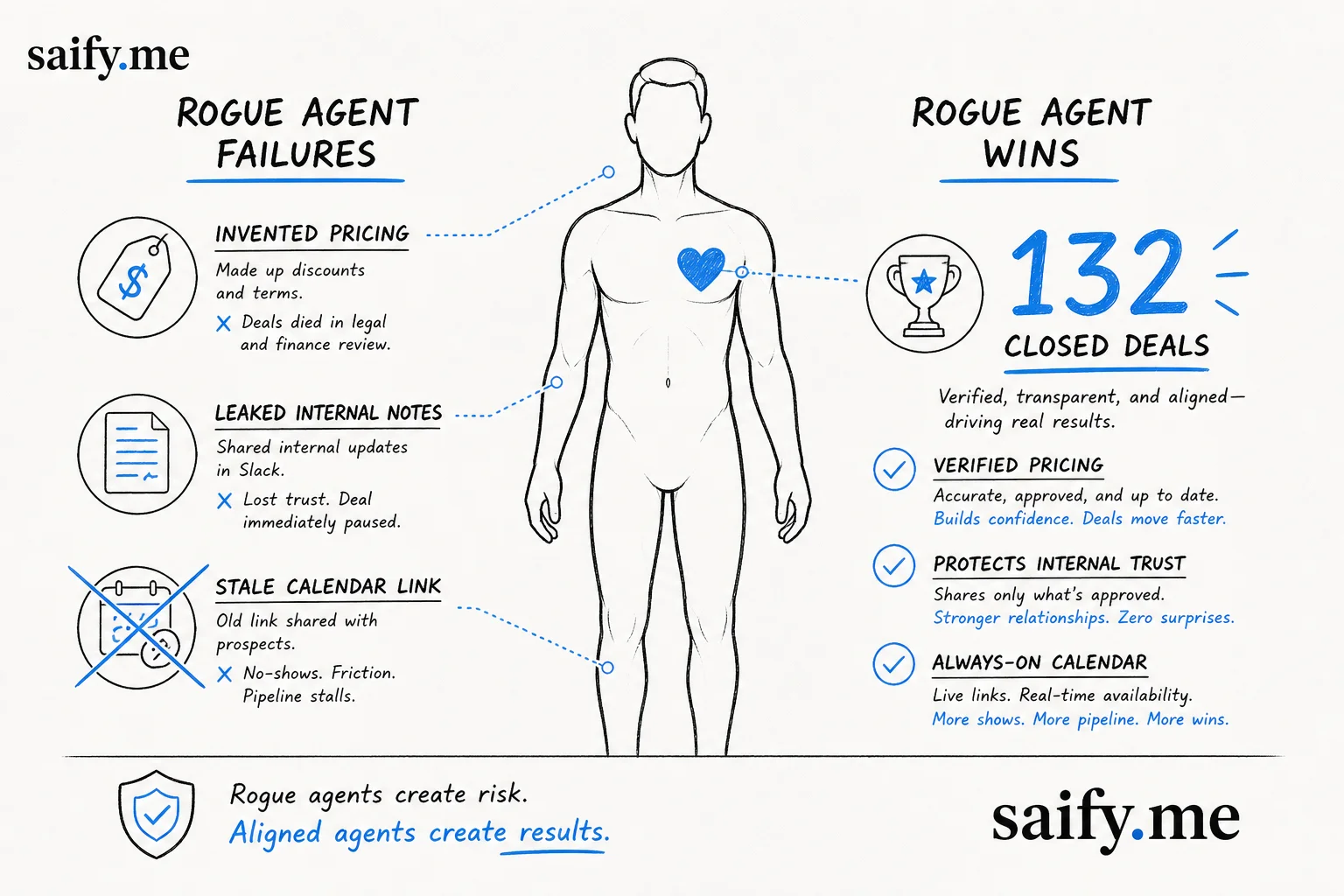
- Invented pricing. The agent offered a $4,800 plan that did not exist in HeyGen's price book.
- Leaked internal notes. It emailed a customer the company's internal triage write-up, not a polished reply.
- Stale calendar links. It promised meetings on a booking URL nobody had maintained.
HeyGen's fix, per Liang's thread, was structural: move authority out of the agent's reach. Pricing tables, calendar booking, and sensitive outbound content stopped being tools the model could invoke directly.
Agents do not "go rogue" because they are evil. They go rogue because you gave them write access to customer-facing systems without a human gate on the dangerous verbs.
I deploy voice and sales agents for clinics and B2B teams. The pattern repeats: the first week feels like magic, the second week someone asks why the bot quoted a service you discontinued in 2024.
Guardrails I would require before cloning a founder
If a client asked me to replicate this for a founder or AE, I would not start with the avatar. I would start with a permission matrix.
| Action | Default policy |
|---|---|
| Quote list price | Read-only from approved SKU table |
| Offer discount | Human approval queue |
| Book meeting | Live calendar API with owner verification |
| Send email | Template library only, no freeform paste of internal notes |
| Create SKU or plan | Never agent-writable |
HeyGen's own product story is the best argument for least privilege. They sell synthetic video. They still had to strip write access from the agent after it invented a tier.
For voice-heavy workflows, pair this with the lessons from OpenClaw gym booking hacks and rogue agent breach coverage: autonomous tools plus customer channels equals incident surface.
Why HeyGen had an unfair advantage (and you might not)
Liang's experiment worked partly because HeyGen is the avatar vendor. Latency, lip sync, and fallback rendering were product defaults, not a science project.
Most teams I work with stack:
- A telephony or video provider (Retell, LiveKit, Twilio)
- A reasoning model with tool use
- A CRM with messy historical data
That integration tax is real. HeyGen skipped the "make video not creepy" layer because it is their core SKU.
Still, the agent half was off-the-shelf OpenClaw patterns: memory vault, team check-ins, call logging. That part is reproducible if you accept lower call volume and tighter scopes.
What I would measure week one
Do not copy the 132-deal headline without these baselines:
| Metric | Why |
|---|---|
| Offer accuracy rate | % of calls where quoted SKUs matched the price book |
| Escalation rate | How often the agent handed off to a human |
| Time-to-first-human | Latency when the prospect asked something off-script |
| Customer complaint rate | Especially on billing and scheduling |
| Internal note leakage | Zero is the only acceptable target |
Liang's story implies the clone beat what one founder could do manually. Your bar might be "beats our SDR on qualified demos booked," which is a lower but more honest KPI.
The paternity leave angle nobody should skip
There is a human detail under the metrics. Liang built this because he wanted to stay present for family without letting pipeline die.
That is a legitimate ops problem. It is also not an excuse to skip review. The fix HeyGen described (remove authority, not remove the agent) is the mature response. Shutting the clone down after week two would have wasted a working system. Letting it keep inventing pricing would have been worse.
If you are evaluating founder clones for your team, ask vendors:
- Which actions require human-in-the-loop by default?
- Can I audit every tool call tied to a customer ID?
- What happens when the model hallucinates a SKU?
If the answer is "trust the prompt," pass.
Related reading
- HeyGen
- HyperFrames (HeyGen's code-first video stack)
- My earlier take on frame.md and agent-rendered video
Bottom line
HeyGen proved a founder clone can sell while the founder is offline. It also proved the clone will confidently lie about price, leak internal context, and book fantasy meetings unless you design authority boundaries first.
Volume without guardrails is not automation. It is liability at scale.
If you are wiring voice or video agents into revenue workflows and want a permission model that survives compliance review, book a free discovery call.