
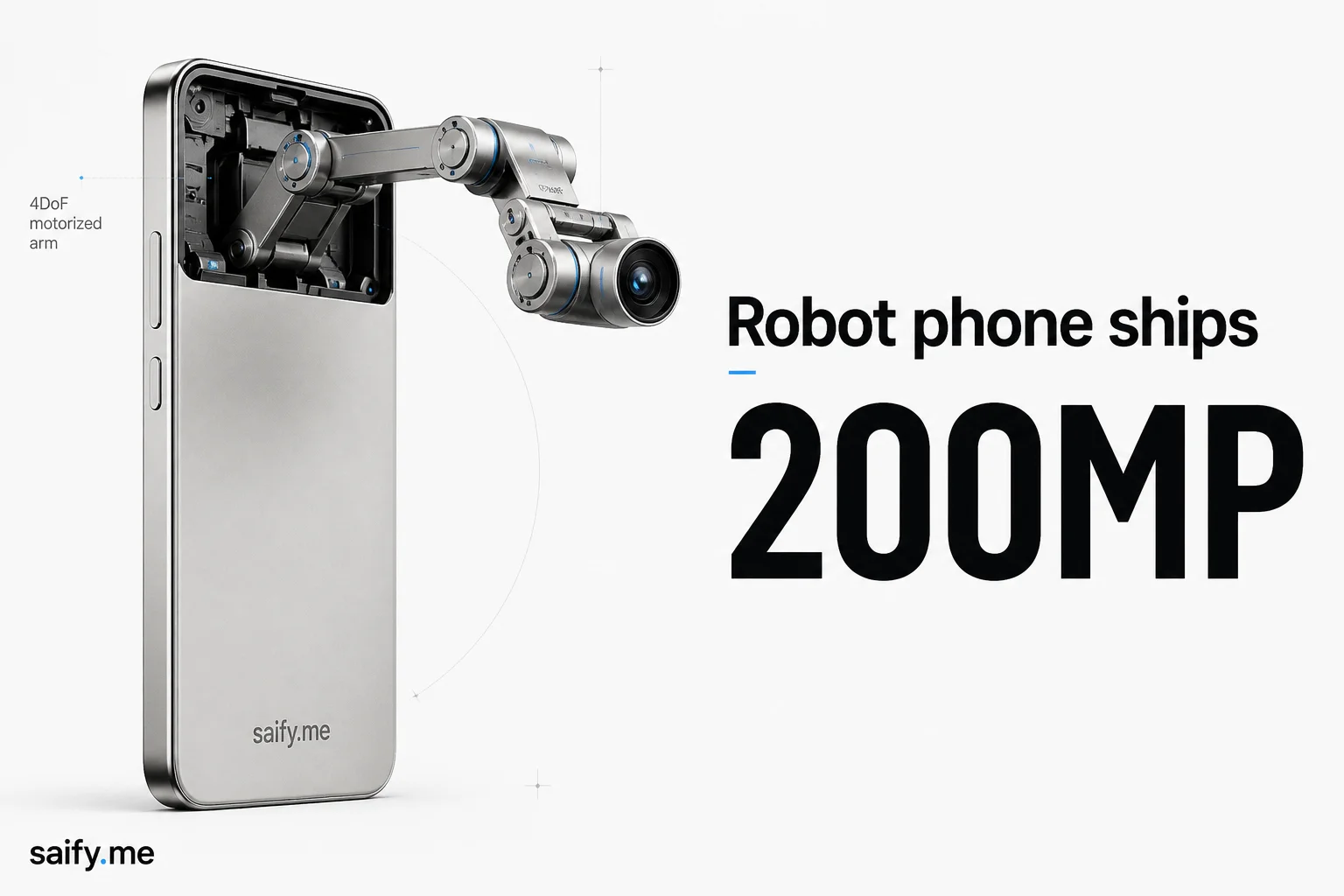
A smartphone camera that pops out, tracks your face, and wiggles at you sounds like a gimmick until you price the engineering.
Honor's Robot Phone finally ships in China on August 18, 2026. The headline feature is not another megapixel bump. It is a motorized titanium gimbal that hides inside the chassis and decides where to point on its own.
For applied AI engineers, that is the interesting line. Perception, tracking, and physical actuation are now in a consumer device you can buy, not a lab demo or a warehouse pilot.
What actually ships
Honor's launch announcement frames the product around embodied interaction. The specs that matter for builders:
| Spec | Detail |
|---|---|
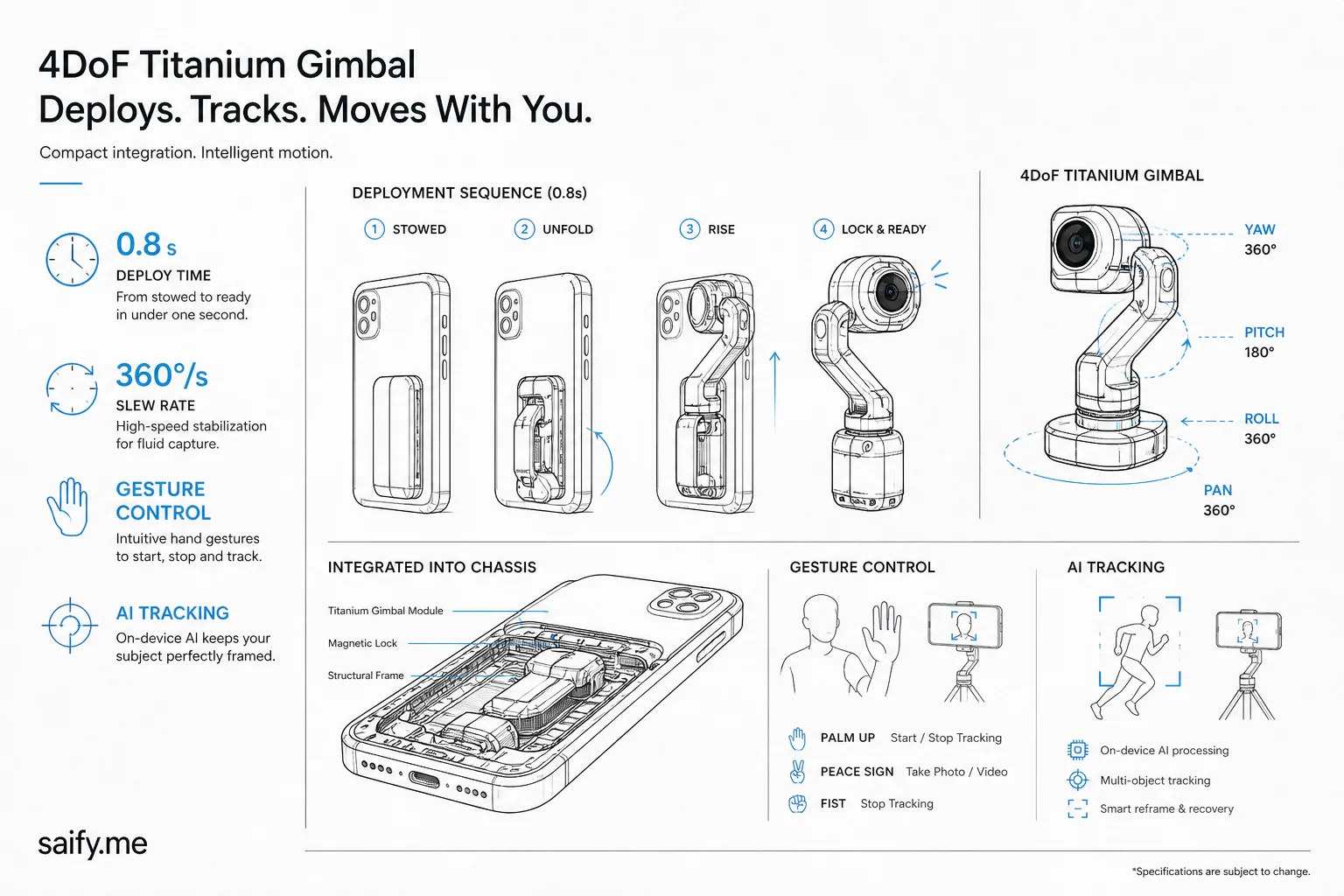
| Gimbal | 4DoF titanium arm, deploys in 0.8 seconds |
| Motor | 2.6g drive, up to 360°/second slew |
| Cameras | Dual 200MP rear (main + telephoto) |
| Modes | Tilt lock, FPV, spinshot, AI subject tracking |
| Audio | Four-mic array steers capture toward where the lens looks |
| Software | MagicOS with YOYO Robot Mode |
| Chip | Snapdragon Elite Gen 5 with custom cooling |
| Battery | 7,060mAh |
| Display | 6.3-inch OLED, up to 6,800 nits peak brightness |
| Price | ¥9,999 to ¥12,999 (~$1,400 to ~$1,820) |
| Storage | 12GB/512GB or 16GB/1TB |
Honor says the mechanism required 60+ production stages, 100+ precision components, and 100+ patents. That is not marketing fluff. Miniaturizing a gimbal inside a phone chassis is a manufacturing problem, not just a software one.
YOYO Robot Mode and the embodied stack
YOYO Robot Mode bundles what Honor calls multimodal perception, contextual understanding, gesture recognition, and physical movement. In practice:
- Gesture deployment launches the arm without touching the screen
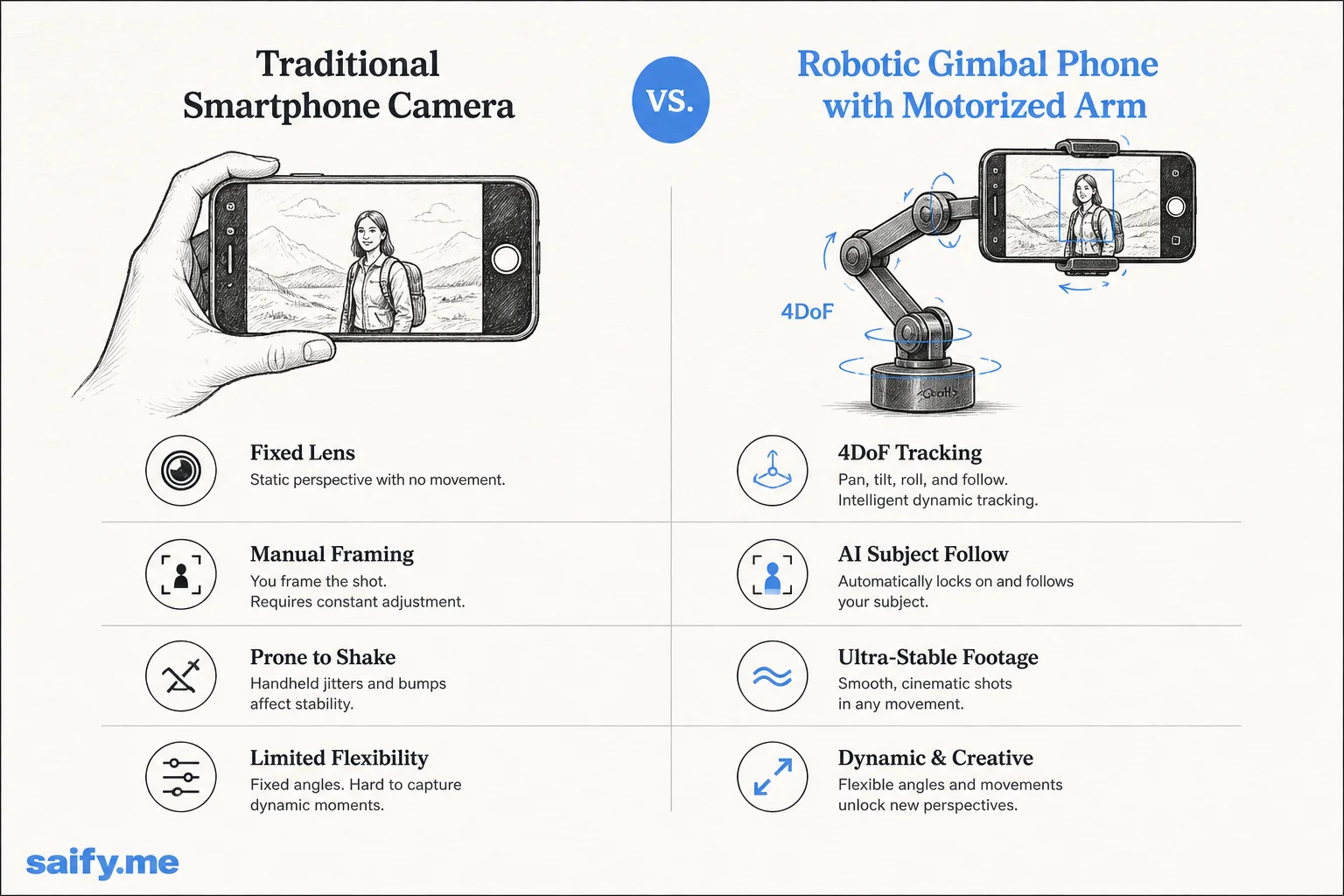
- AI subject tracking pans and tilts to follow people in frame
- Cinematic modes (FPV, spinshot) use the arm's range of motion
- Anthropomorphic cues (head wiggle, dance moves) show up in demos
Engadget attended a hands-off demo in March where the robo-cam danced to music and nodded on command. Cute, yes. But the underlying stack is the same loop every embodied system needs: sense, decide, act, repeat.
If you have shipped voice agents or browser agents, the pattern should feel familiar. The actuator changed from a speaker or a DOM click to a titanium arm.
Cinema partnerships and RAW output
Honor partnered with Arri, a professional cinema camera maker, for noise reduction, wider dynamic range, and RAW file output with real-time preview.
That matters because the buyer profile is not only TikTok creators. Wedding videographers, indie filmmakers, and field journalists want gimbal moves without carrying a gimbal. A phone that outputs RAW and tracks subjects autonomously collapses two bags of gear into one pocket device.
Third-party platform opening
Honor says it is opening the platform to third-party developers who can build on the gimbal, perception stack, and embodied-interaction APIs.
That is the line I would watch. Consumer hardware with an SDK is how ecosystems form. If Honor ships stable APIs for:
- Gimbal pose and velocity control
- Subject tracking metadata
- Gesture event streams
- Multimodal context (vision + audio direction)
then indie apps could do things the stock camera app never will. Think accessibility tools, sports coaching overlays, or retail scan-and-track workflows.
Honor's two-track embodied AI strategy
The Robot Phone is the pocket-sized branch of a bigger tree. Honor entered the humanoid race earlier in 2026 with backflipping robots (see coverage in The Rundown Robotics).
| Track | Expression | Buyer today? |
|---|---|---|
| Consumer phone | Motorized perception + actuation in a flagship | Yes (China) |
| Humanoid robots | Full-body embodied AI for labs and showcases | No |
The phone is a much smaller expression of the same strategy, but it is one consumers can actually purchase. That shipping constraint forces discipline. Software that fails on a $1,500 phone gets reviews. Software that fails on a stage demo gets applause.
What this means for applied AI builders
Three takeaways if you build perception or agent systems:
Latency budgets get tighter on mobile. A gimbal that feels laggy will get compared to DJI pocket gimbals, not to last year's phone camera. Your tracking loop needs to run fast enough that the arm does not overshoot.
Multimodal alignment is product, not research. Steering four microphones toward wherever the lens looks is the same problem as aligning ASR with UI focus in a voice app. Get the fusion wrong and the "smart" feature feels dumb.
Embodied APIs need failure modes. What happens when the arm jams, overheats, or loses track? Honor offers a year of free gimbal replacements in China. Your app layer still needs graceful degradation.
Price and availability reality check
At ~$1,480 to ~$2,075, this is not a mass-market impulse buy. It sits in the same band as foldables and pro camera rigs. China-only launch also means most readers cannot buy it yet.
Still, the product establishes a reference point. When someone asks "where is embodied AI shipping?", you can point to a phone with a patent stack and a preorder page, not just a humanoid GIF.
The bottom line
Honor put a motorized, AI-directed camera inside a consumer phone. That is embodied AI at a scale and price point the humanoid race has not reached for home buyers.
If you are designing perception stacks, mobile agents, or physical-AI product roadmaps and want help separating keynote demos from deployable systems, book a free call. I map what actually ships in consumer and ops contexts, not just what trends on robotics Twitter.