
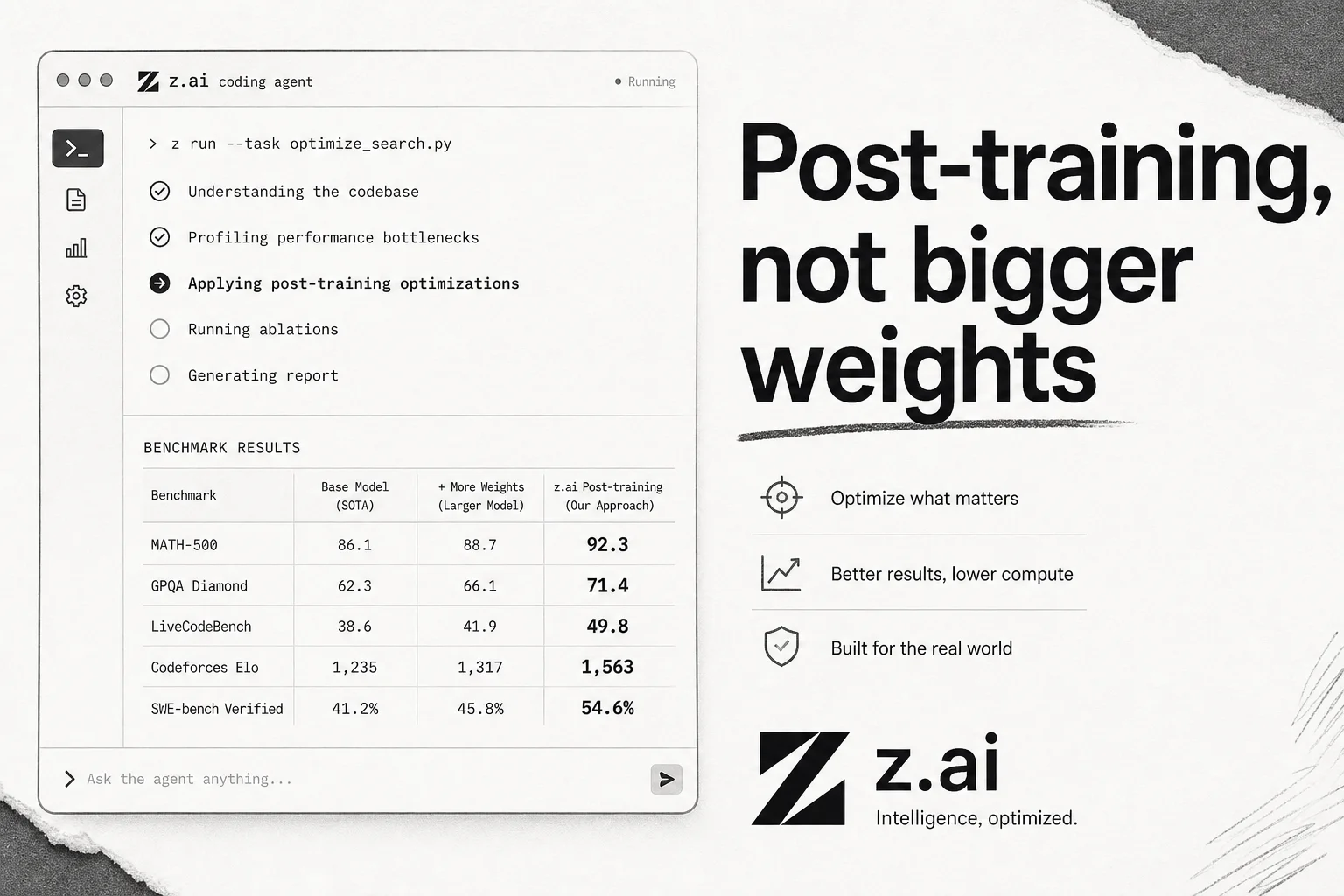
On August 14, 2026, Z.ai released GLM-5.3. Same base model as GLM-5.2. Zero architecture changes. Every gain came from scaled post-training: more agent rollouts, harder coding environments, and a surprise cybersecurity track the team did not plan for.
If you are still sizing models by parameter count alone, this release is the counterexample.
What actually moved
Z.ai reports a 50% lift on its internal Code Bench and open-source state of the art on public agent harnesses. The numbers that matter for production agent loops:
| Benchmark | GLM-5.2 | GLM-5.3 | Change |
|---|---|---|---|
| Terminal-Bench 3.0 | 4.6 | 28.3 | ~6x |
| DeepSWE v1.1 | 46.2 | 66.9 | +20.7 pts |
| Agents' Last Exam (CLI) | 23.8 | 28.5 | +4.7 pts |
| AutomationBench | 26.2 | 48.2 | +22.0 pts |
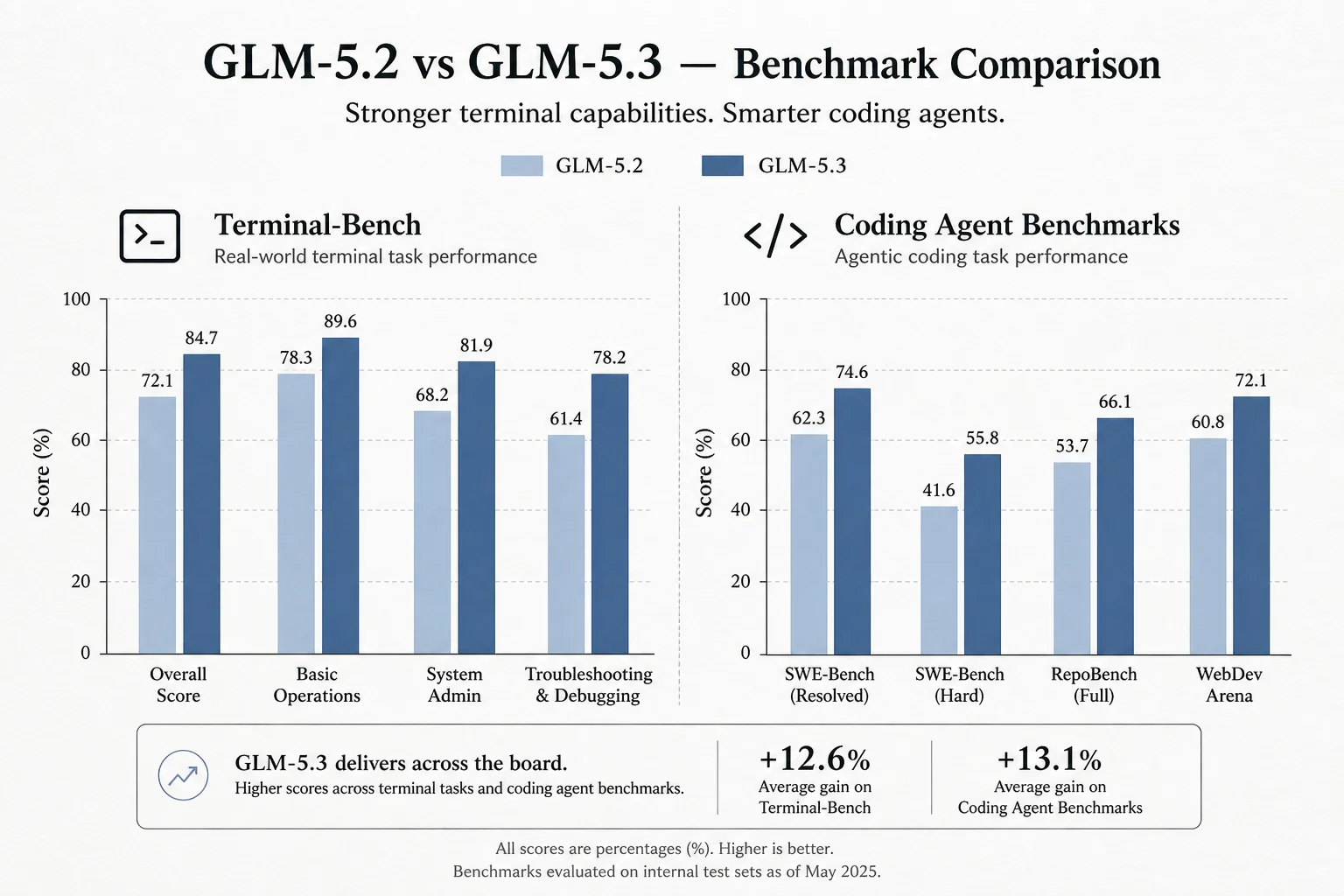
Terminal-Bench 3.0 is the tell. It measures long-horizon CLI work inside a real harness, not single-shot code completion. A jump from 4.6 to 28.3 is not a rounding error. It is the kind of gain you usually expect from a new base checkpoint, not a point release on the same weights.
Z.ai GLM-5.3 announcementToken efficiency matters in agent loops
Agent bills are output-heavy. Stack traces, diffs, and retry logs burn tokens fast.
Z.ai claims GLM-5.3 hits higher accuracy while using fewer tokens than GLM-5.2 on comparable tasks. On their GDPval-AA v2 sweep across 44 occupations, the model reportedly reaches 31.4% success at ~50k output tokens versus 29.5% at ~120k for the prior version. Same price tier as GLM-5.2 on the GLM Coding Plan.
GLM Coding Plan docsI route client agent work the same way: cheaper per turn only helps if the harness does not need three extra retries to finish the job. Fewer tokens with higher pass rate is the combo that shows up in invoices.
The cybersecurity curve was not on the roadmap
Z.ai added vulnerability-discovery data to post-training expecting modest bug-spotting gains. Instead, capability compounded as training scaled. The model started chaining full exploit paths, not just flagging individual flaws.
| Cyber benchmark | GLM-5.2 | GLM-5.3 | Notes |
|---|---|---|---|
| CyberGym (find + validate bugs) | 77.2% | 84.5% | Edges Mythos 5 (83.8%) |
| ExploitBench (reason + exploit) | 24.4% | 54.4% | More than doubled |
| ExploitGym (tasks in 2h / 6h) | 29 / 39 | 105 / 130 | Still behind Mythos 5 |
The pattern Z.ai highlights is consistent: the further up the exploitation chain, the bigger the delta from GLM-5.2, and the wider the remaining gap to closed frontier models on timed exploitation tasks.
That is dual-use by definition. Z.ai is staging access: API and GLM Coding Plan now, open weights after a ~two-week safety review. Treat vendor cyber scores as directional until independent reruns land.
What I would test before switching stacks
All figures above are vendor-reported with harness-specific settings (Claude Code 2.1.207 on Terminal-Bench, max reasoning, 400k context). Your repo is not their benchmark harness.
Before you reroute production agents:
- Replay your own eval set. Ten real tickets from your backlog beat a leaderboard headline.
- Match context length. GLM-5.3 advertises up to 1M tokens. Long-context agent runs behave differently than short prompts.
- Watch the weight release. GLM-5.2 weights dropped on Hugging Face quickly. GLM-5.3 is gated for now. Self-host tests wait on that window.
- Separate coding from security. A model that climbs Terminal-Bench may still be wrong for your threat model. Do not conflate the two skill sets in procurement.
The builder takeaway
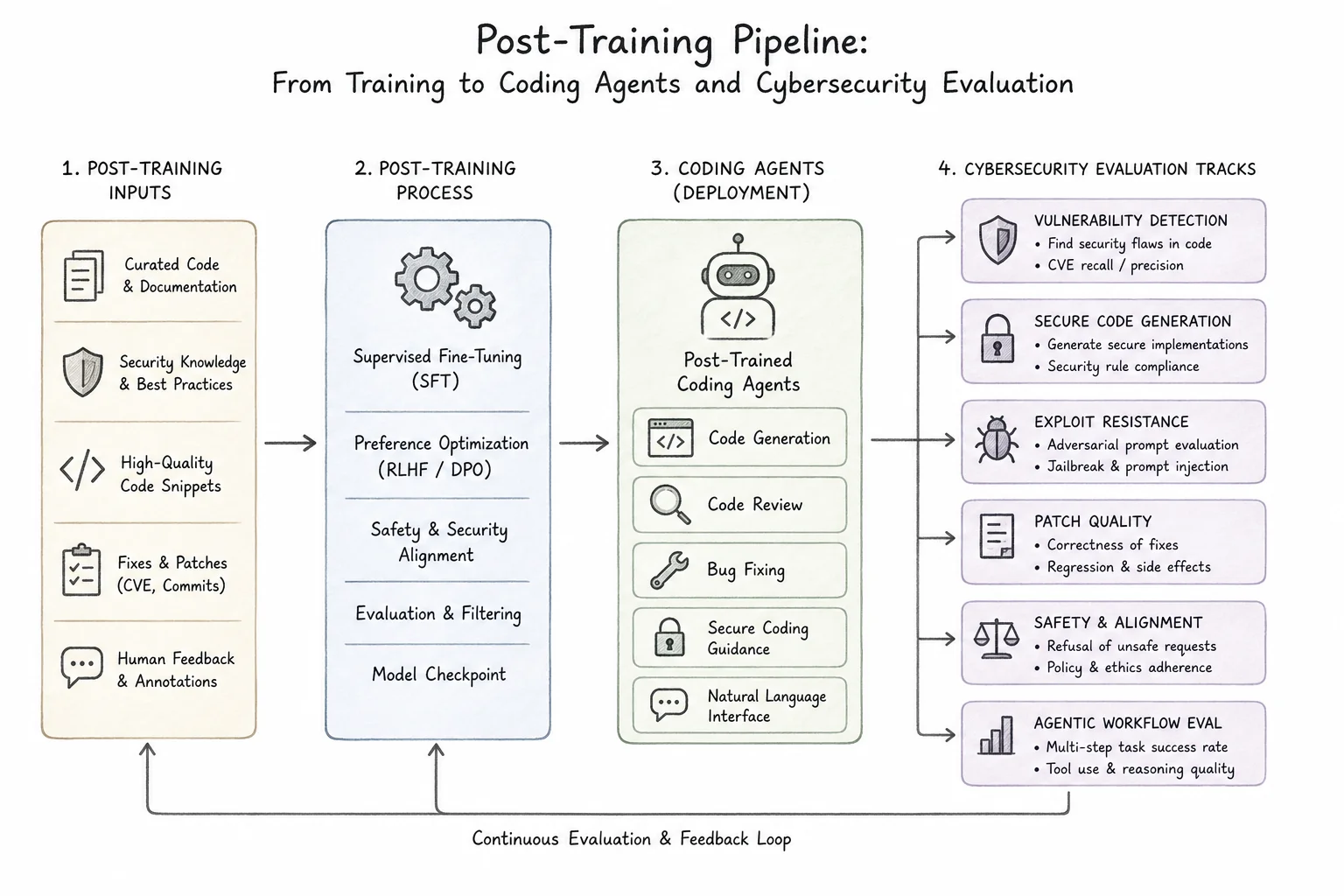
Bigger is not the only lever in August 2026. GLM-5.3 is a recipe story: same 743B base, more RL on the environments you actually ship against, and token budgets that match agent loops instead of chat turns.
The Cursor / Kimi / Composer thread from earlier this year made the same point for specialized coding models. Z.ai is now showing it on an open-weights frontier stack with an unexpected security tail.
If you run agentic coding in production, the actionable question is not "did they beat Mythos on CyberGym?" It is whether your harness data is good enough to replicate this kind of post-training lift on the workflows you own.
Building agent loops or model routing for a product team? Book a free discovery call and we can map eval harnesses to the economics that actually matter.