
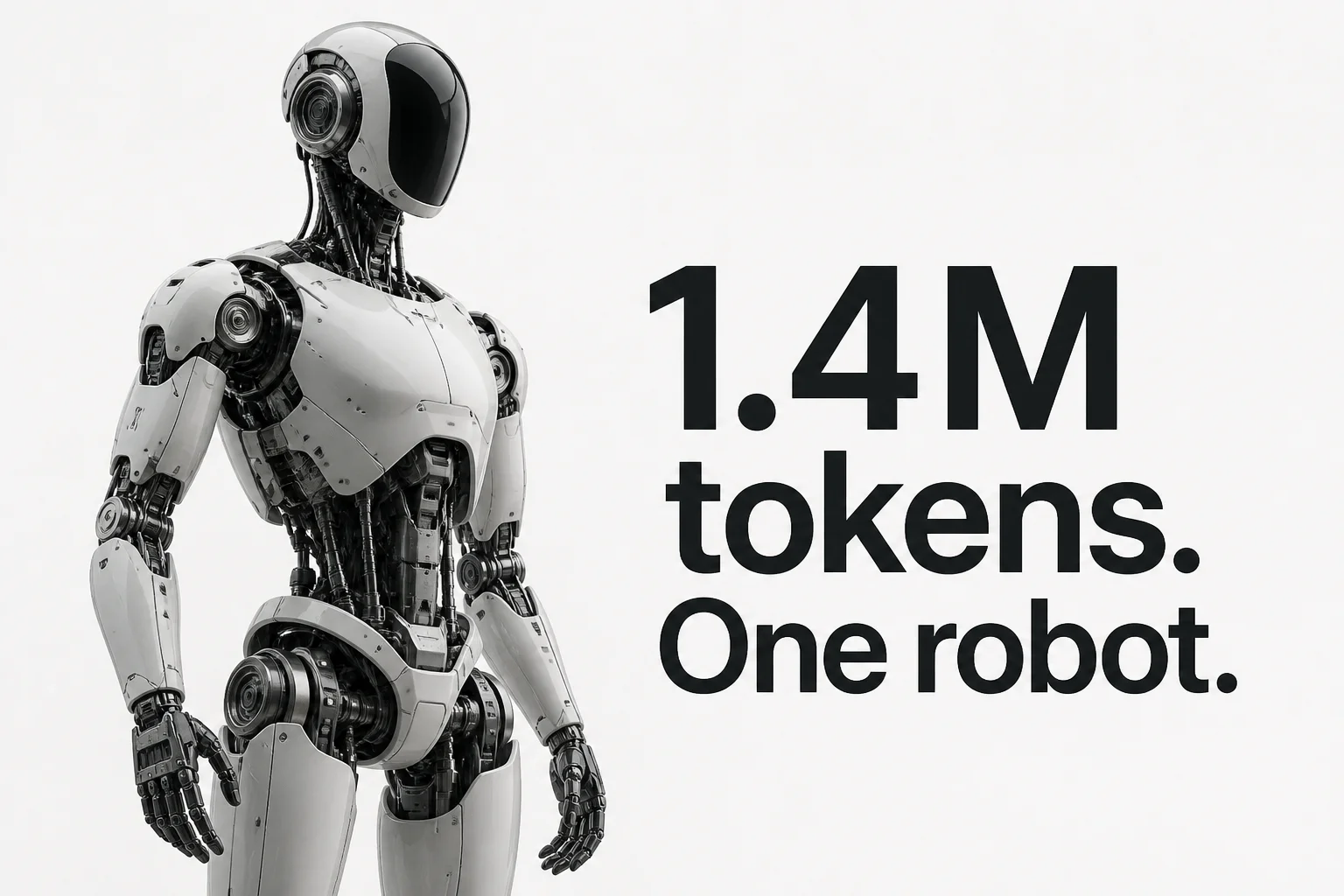
Jake Fitzgerald posted a thread that broke my usual skepticism filter. He asked Claude Fable 5 to design a humanoid robot. Two hours and 1.4 million tokens later, he had concept renders, exploded assembly views, animation, and open-source CAD tooling to inspect the output.
The prompt was not vague. It named Unitree-like proportions, 25 to 30 degrees of freedom, aluminum and composite structure, dexterous hands, and a clean industrial look on a white studio background.
That is a systems engineering brief, not "draw me a robot."
What the demo actually contained
From the thread archived on UnrollNow, the deliverables stacked up fast:
| Output | What it implies |
|---|---|
| Concept renders | Industrial design direction, proportions, joint exposure |
| Exploded views | Parts thinking, not a single mesh sculpt |
| Motion animation | Kinematic intent, not a static poster |
| STEP viewer + skills | CAD interchange path builders can open |
| URDF + SRDF | Robot description formats simulators understand |
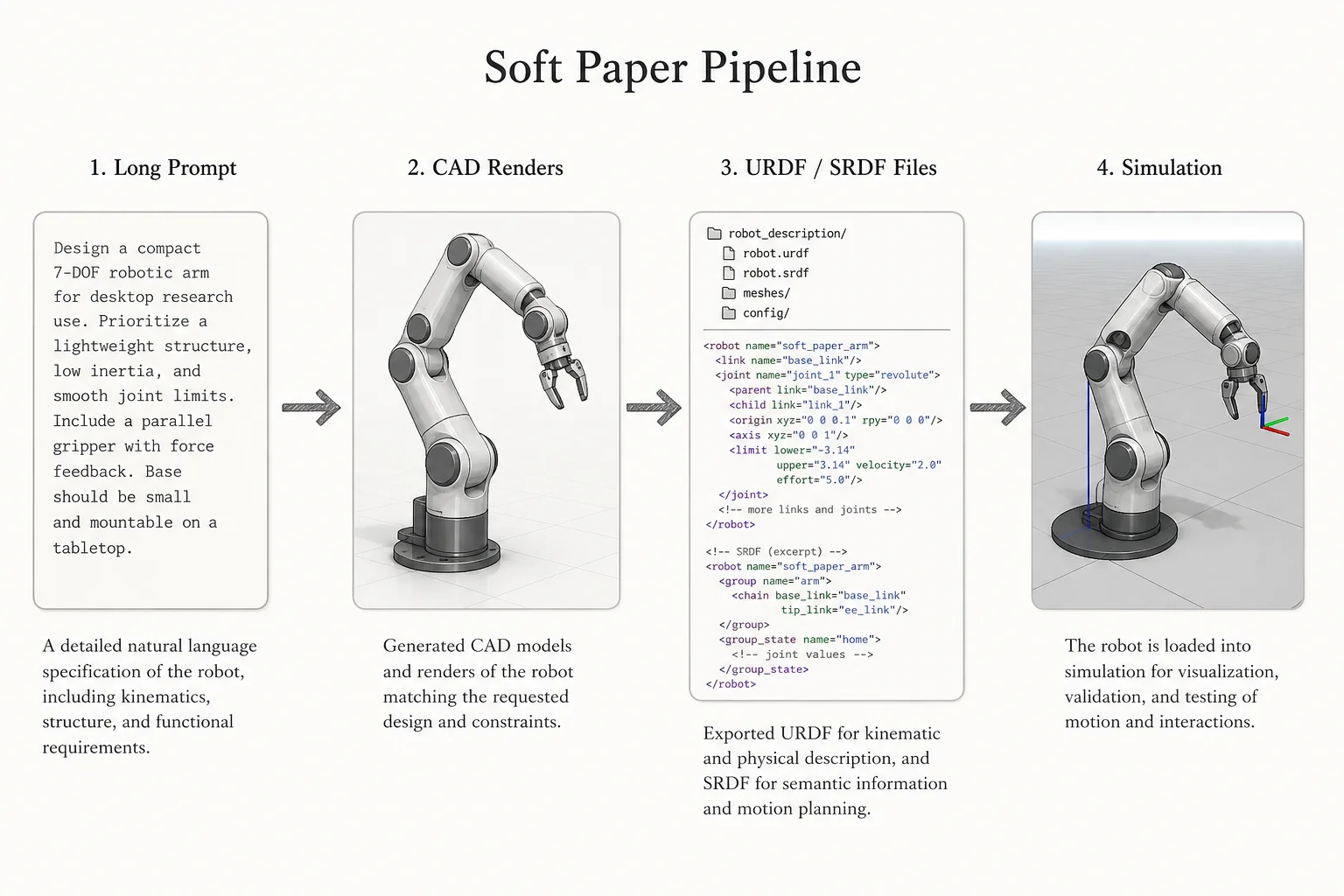
Fitzgerald noted the CAD skills and STEP file viewer are open source, with code for the 3D model available for inspection. That matters. Viral robotics demos often die as MP4s. This one left artifacts.
Why 1.4M tokens is the headline
A million-token context window is easy to quote and hard to internalize. 1.4M tokens used means the model stayed in extended reasoning across:
- Mechanical layout decisions
- Visual styling iterations
- Documentation strings for downstream tools
- Likely multiple self-corrections we do not see in the highlight reel
For comparison, most agent tasks I run in production die at a few hundred thousand tokens unless I manually chunk work. Hardware design wants continuity. Changing thigh length in minute 90 should not contradict minute 10.
That is the bet behind Fable-class models: depth over chatty speed.
What this is not
Let me save you a comment thread:
- Not a factory-ready BOM. Concept CAD and URDF are steps toward simulation, not a supplier list with tolerances and vendor quotes.
- Not validated physics. Pretty animation does not prove your actuators won't melt.
- Not cheap at scale. 1.4M tokens is a research budget, not a per-ticket customer support cost.
I still find it useful. Early mechanical programs burn months on alignment before anyone cuts metal. Collapsing the first coherent visual and kinematic story into an afternoon changes how teams argue about feasibility.
Parallel demos worth knowing
Fable 5 robotics chatter in the same news cycle included other builders:
- Robot arm assemblies with pick trajectories animated end to end
- PX4 flight stacks with telemetry narratives (closer to embedded than CAD)
- 3D printable models edited in browser CAD tools
The through-line is long-horizon mechanical or systems output, not a single STL export.
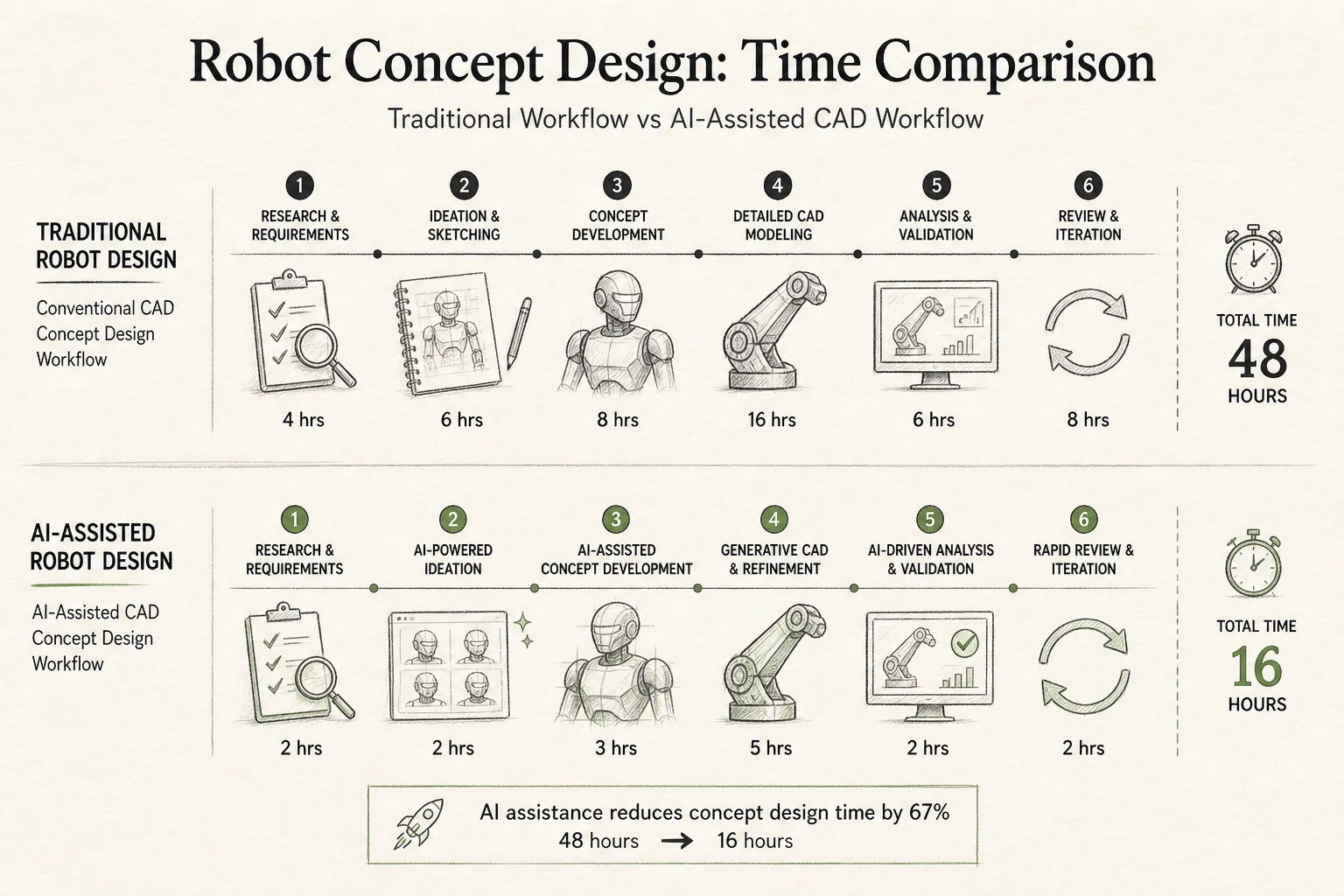
How I would use this on a real robotics program
If a client asked me to integrate this into an R&D workflow, I would not skip human review. I would restructure week one:
- Prompt with constraints you can test. Mass budget, DOF count, sensor head requirements, no-logo industrial look. Vague aesthetics waste tokens.
- Export to your canonical toolchain early. URDF into Gazebo or Isaac, STEP into your PDM if the import is clean enough.
- Assign a mechanical owner to red-line. Treat the model like a junior industrial designer who never sleeps and sometimes hallucinates fasteners.
- Log token spend like compute. 1.4M tokens is line-item R&D, not invisible SaaS margin.
Robotics + applied AI positioning
This story sits in my Applied AI shipping pillar because the buyer question is operational: "Can we compress design iteration before we commit to tooling?"
Voice agents and CRM bots pay the bills in my practice. Robotics demos shape what executives believe is possible. When a board member sees a humanoid explode-view after a two-hour session, they ask why internal software projects take six months. Fair question.
Safety and export control reality
Humanoid platforms sit in a sensitive category for many jurisdictions. Using frontier models to draft hardware is not inherently unlawful, but your compliance team still owns export classification, supplier due diligence, and field testing.
Document who generated what. Keep human sign-off on anything that leaves the building.
Bottom line
The 1.4M token number is meme-able. The useful part is the artifact bundle: renders, kinematic files, inspectable code paths.
That is closer to how I want agents to work in serious engineering: not one perfect answer, but a workspace of interconnected outputs a specialist can challenge.
Resources:
If you are exploring agents for hardware, simulation, or ops tooling and need a production-minded integration plan, book a free call. I am biased toward things that survive contact with compliance and maintenance teams.