
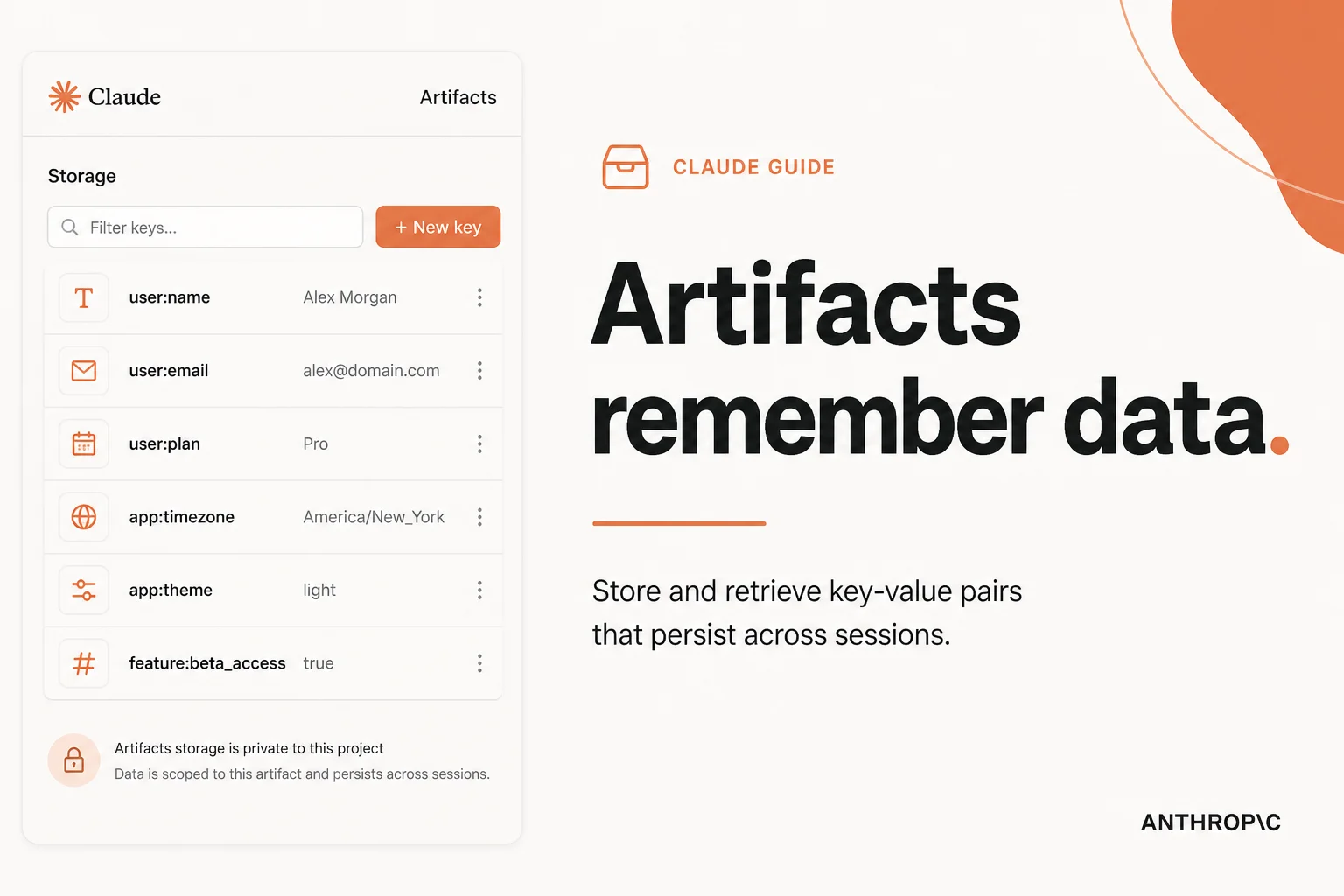
A full Claude Fable 5 system prompt leaked in early June 2026. Most coverage focused on model names and safety tiers. I kept scrolling for the builder-facing detail: artifacts now get persistent storage.
That one section changes what you can ship inside Claude without spinning up a backend. Journals, habit trackers, lightweight leaderboards, shared team boards. All theoretically possible from a single HTML artifact if you follow the rules in the prompt.
What window.storage actually is
According to mirrors of the leak on asgeirtj/system_prompts_leaks and CL4R1T4S, artifacts expose a small async API:
| Method | Purpose |
|---|---|
window.storage.get(key, shared?) | Read a value |
window.storage.set(key, value, shared?) | Write a value |
window.storage.delete(key, shared?) | Remove a key |
window.storage.list(prefix?, shared?) | List keys |
Values are text or JSON strings. Keys must stay under 200 characters with no whitespace, slashes, or quotes. Each value caps at 5MB. Operations are rate limited, so the prompt nudges you to batch related fields into one key instead of spamming dozens of tiny writes.
Personal vs shared scope
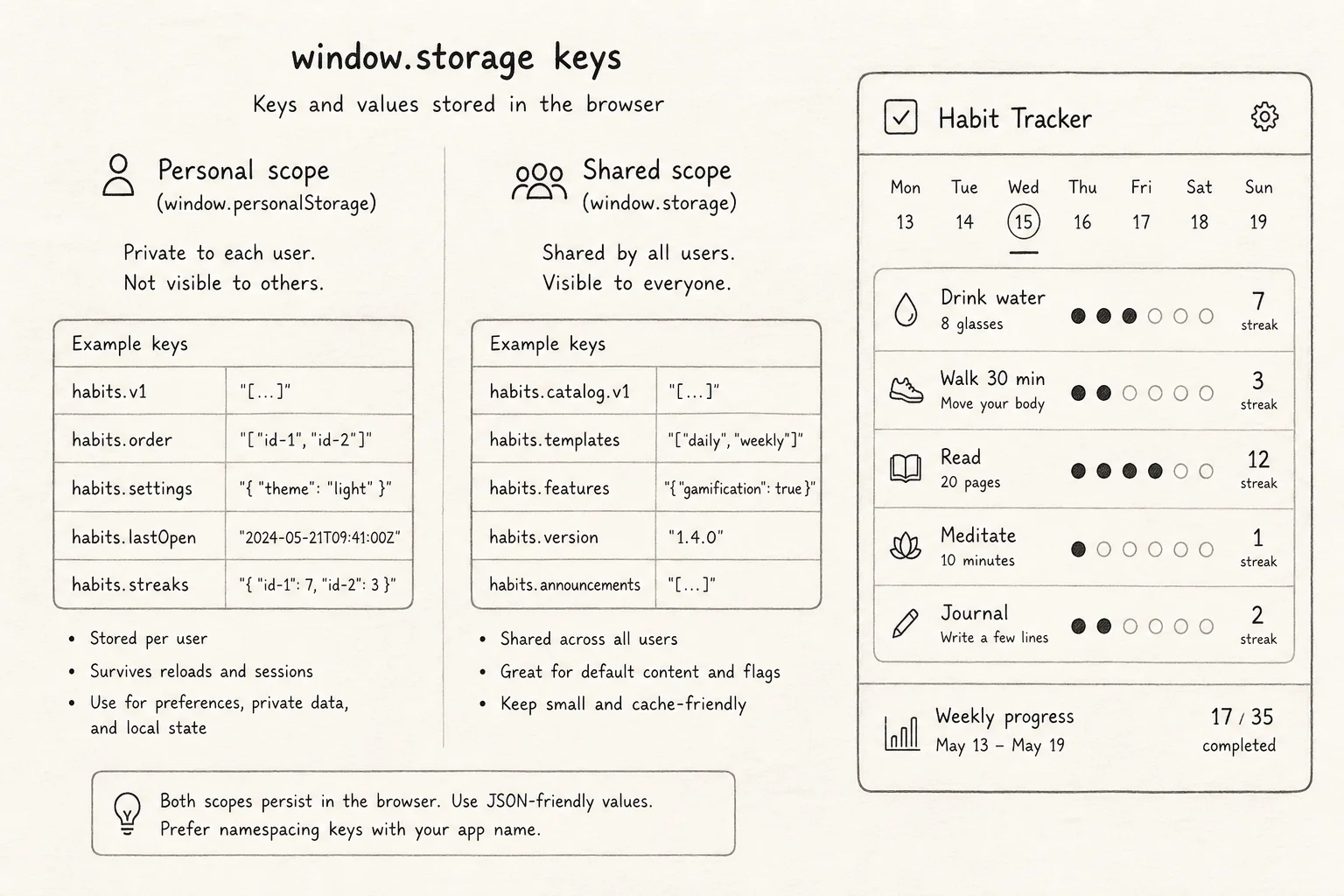
The shared flag is the interesting product decision:
shared: false(default): private to the current user. Good for journals, personal dashboards, draft content.shared: true: visible across users. Good for team leaderboards, shared kanban states, classroom tools.
That is basically row-level security expressed as one boolean. Simple for prototypes. You still need to think about abuse on shared keys if you publish an artifact widely.
What you must not do
The prompt is blunt about browser storage:
NEVER use localStorage, sessionStorage, or ANY browser storage APIs in artifacts.
Claude's artifact runtime does not support them. If you paste tutorial code that calls localStorage, the artifact breaks in production even if it works on your laptop.
The approved pattern is window.storage with try/catch on every call. Missing keys throw instead of returning null, which is annoying but at least explicit.
try {
  const result = await window.storage.get("entries:2026-06-11");
  const data = result ? JSON.parse(result.value) : [];
} catch (err) {
  console.error("Storage read failed", err);
}
Why this matters if you ship lightweight tools
I build a lot of "just need a form and a database" internal tools for clients. Half the time the real cost is auth, hosting, and compliance for something five people will use.
Stateful artifacts are not a replacement for Postgres. They are a fast lane when:
- The audience already lives in Claude.
- Data volume is small and non-sensitive.
- You want a UI prototype tomorrow, not next sprint.
Examples I would actually try:
| Use case | Storage pattern |
|---|---|
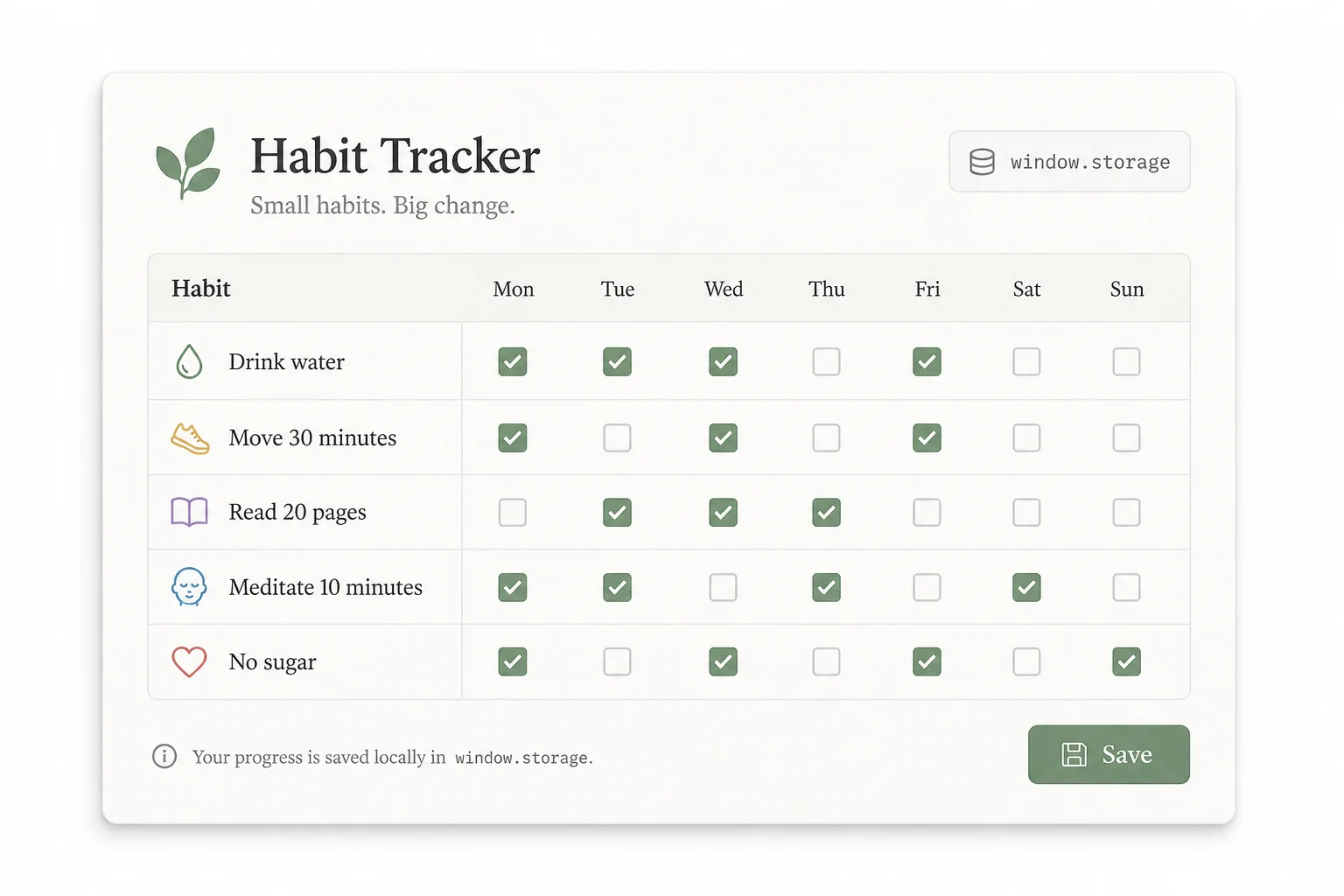
| Weekly ops checklist | Personal keys per week, JSON arrays |
| Sales call scoreboard | Shared keys, append-only events |
| Prompt experiment log | Personal keys with version tags |
| Client onboarding tracker | Shared keys per workspace (if Anthropic exposes workspace scope) |
Separate the leak from the product surface
Worth saying clearly: the leaked file describes the Claude.ai consumer chat prompt, not the raw API default. Anthropic's API docs still expect you to bring your own persistence layer for production apps.
Also treat leaked prompts as snapshots. Anthropic patches them. The storage API might gain limits, pricing, or UI affordances that are not in yesterday's mirror.
If you want the official story on artifacts, start with Anthropic support docs and release notes rather than a GitHub dump. Use the leak as a map of what engineers were told to implement in June 2026, not as a contract.
Mythos vs Fable (one paragraph, because everyone asks)
The same leak names Claude Mythos 5 as a sibling tier with fewer consumer safety wrappers for approved orgs. Fable 5 and Mythos 5 reportedly share weights; the packaging differs.
For builders, the storage API is a product feature on the chat surface. The tier drama matters more if you are evaluating enterprise risk than if you are prototyping a tracker.
Practical checklist before you ship an artifact
- No localStorage hacks. Use
window.storageonly. - Wrap every call in try/catch. Failures should degrade UI, not white-screen the artifact.
- Batch writes. One JSON blob per logical record beats 50 micro-keys.
- Avoid secrets. This is not a vault. Do not store API keys or PII you would not paste into chat.
- Plan an exit ramp. If the tool works, rebuild on your stack with real auth when usage grows.
My take
Persistent artifacts are the first feature in a while that makes me rethink "just spin up a Supabase project" for internal demos. The API is tiny on purpose. That is a feature. You can teach a PM to reason about keys and scopes in ten minutes.
The leak is messy optics for Anthropic. For applied engineers, it is a readable spec for a capability that was hard to discover from marketing pages alone.
Further reading:
If you want help turning a prototype artifact into a production app with proper auth and data boundaries, get in touch. That migration path is where most of my client work actually lives.