

On July 14, 2026, Anthropic announced a $10 million CAD commitment to Canadian research. The money shows up as Claude API credits, not a grant with publication strings attached. Anthropic stated it will not control research directions or findings.
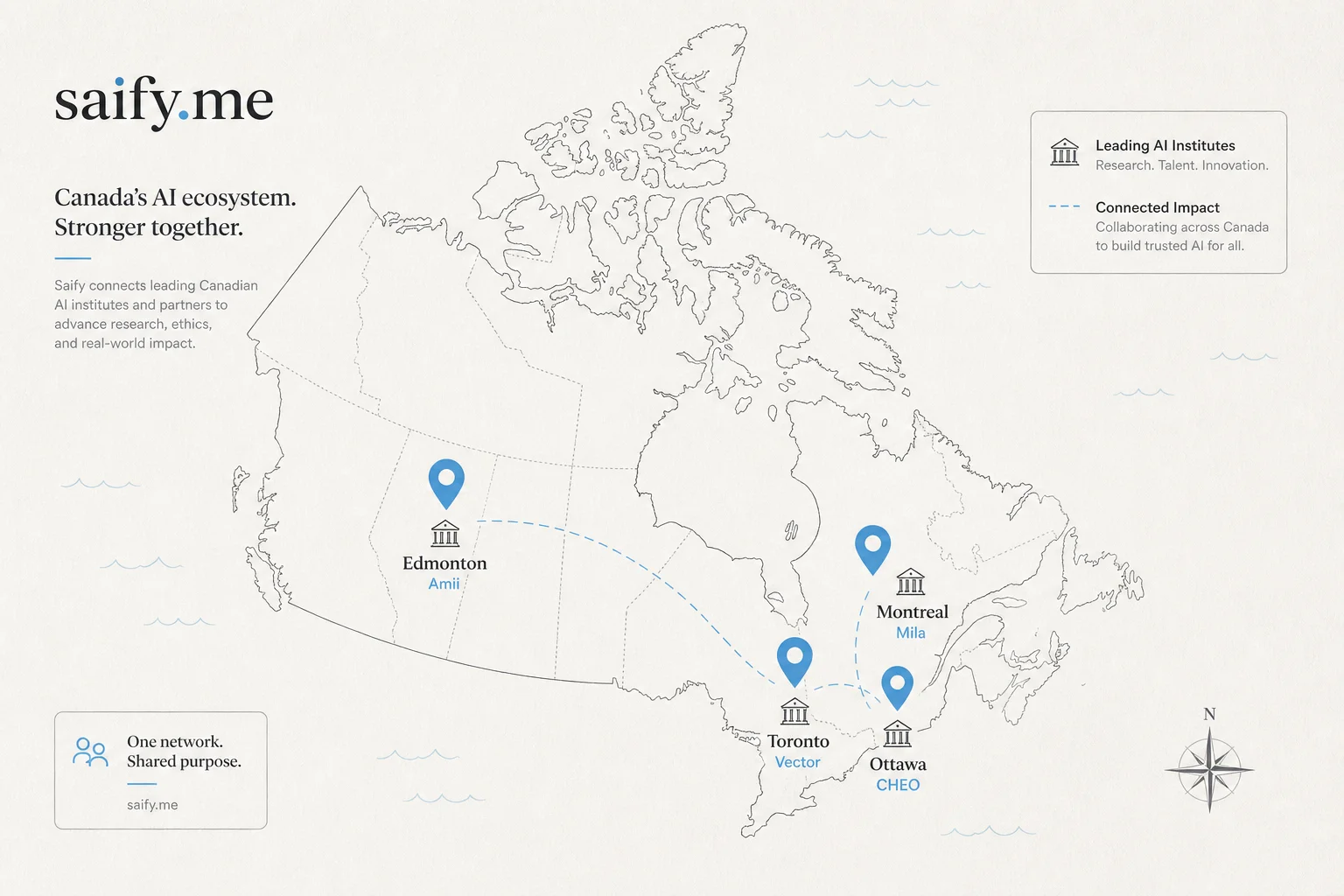
That matters if you build in Canada or sell into Canadian regulated sectors. The country's three national AI hubs (Edmonton, Montréal, Toronto) plus hospital and university partners just got a funded runway to run serious Claude experiments without burning internal IT budget on tokens.
Who gets what
Eight organizations were named in the first wave:
| Partner | Location | Focus areas named by Anthropic |
|---|---|---|
| Amii | Edmonton | Reinforcement learning, AI trust and safety, sector adoption |
| Mila | Montréal | Responsible AI, health, sustainability, multi-agent systems, robotics |
| Vector Institute | Toronto | Trust and safety, health and science |
| CHEO | Ottawa | Children's health AI, predictive treatment models |
| CAMH | Toronto | Mental health AI applications |
| Université Laval | Québec City | Quebec French and Indigenous languages |
| University of Toronto | Toronto | Peer-reviewed credit distribution |
| University of Saskatchewan | Saskatoon | Agriculture, public health, quantum computing |
More partnerships are promised in the months ahead. This is a first tranche, not a closed list.
The startup angle most founders will miss
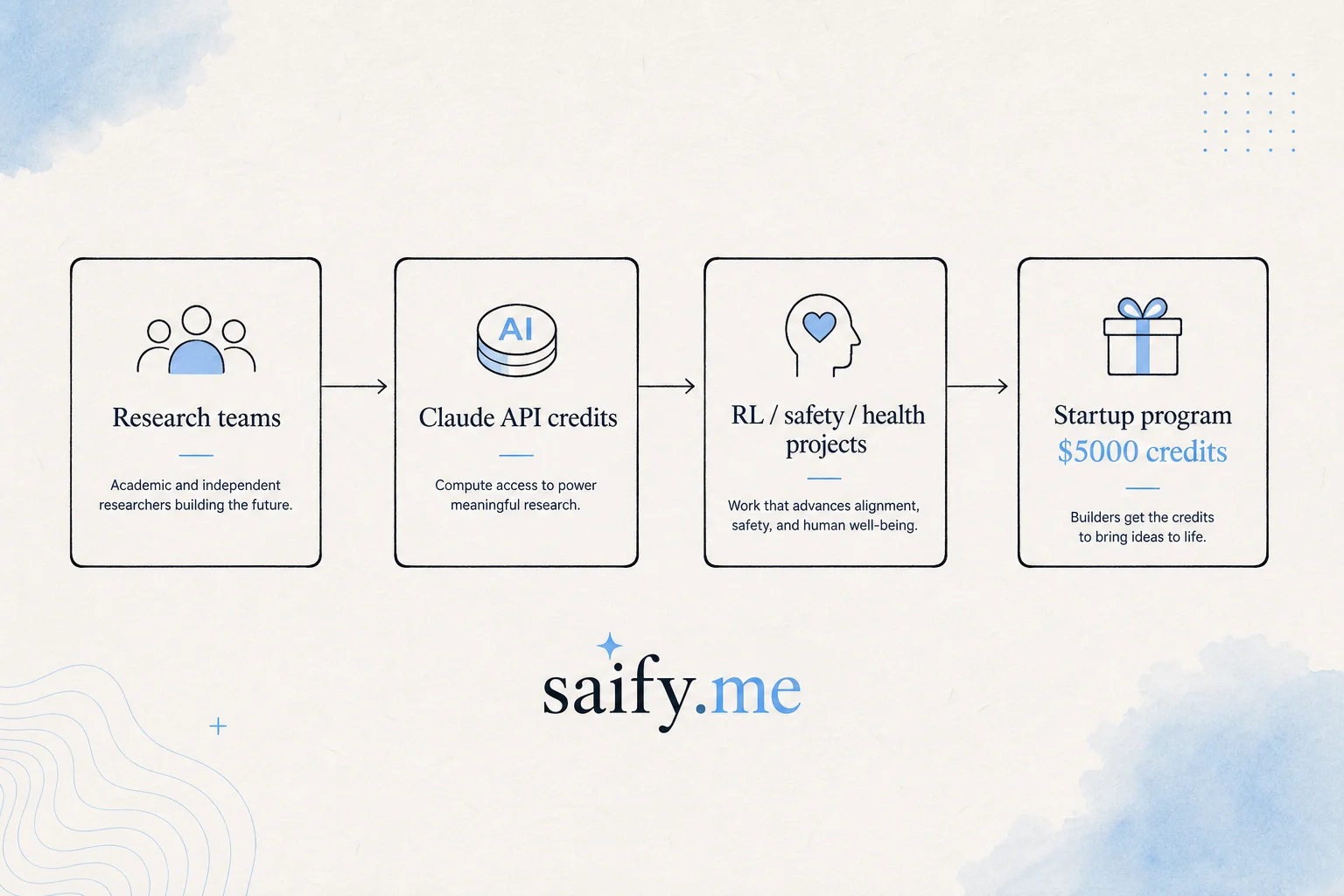
The headline number is $10M CAD for institutes. The operational lever for builders is Anthropic for Startups.
Anthropic is adding Amii, Mila, and Vector to that program. Affiliated Canadian startups are slated to receive at least $5,000 USD in API credits each. If you are already connected to those hubs through incubators, faculty labs, or alumni networks, that is free Claude capacity worth applying for before you renegotiate your OpenAI line item.
I work with founders who treat model spend like rent: fixed, unquestioned, reviewed once a year. Credits at the institute level change the research budget. Startup program access changes the shipping budget. Both reduce the friction to run eval harnesses, agent prototypes, and red-team passes on Claude without a CFO meeting.
No strings attached: what that actually means
Anthropic's language is explicit: funding research without controlling directions or findings. Politically, that is a response to a country that punches above its weight in AI history (Hinton, Bengio, Sutton, and the safety culture around them).
Practically, for applied engineers, it means:
- You may see more Canadian-authored evals and safety papers run on Claude, not just on open weights
- Health and language partners (CHEO, CAMH, Laval) signal Claude moving into high-stakes domains with institutional oversight, not Twitter demos
- Reinforcement learning work at Amii aligns with the same week AlphaSignal highlighted modular RL training stacks
None of that guarantees better models tomorrow. It does increase the supply of credible, domain-specific Claude benchmarks coming out of Canada.
Canadian usage context from the Economic Index
The same announcement shipped Canada's first Anthropic Economic Index country brief. Two numbers stood out in third-party summaries:
- Canada ranks #8 globally by Claude.ai consumer volume (~2.6% share)
- Per-capita intensity among top countries is #2, behind only the US
Canadians are not just reading about AI. They are using Claude at a rate population size alone would not predict. Funding domestic research on the same stack users already adopt is coherent distribution strategy, not charity.
What I would do if I were shipping from Toronto or Montréal
- Check institute affiliation paths for startup credits before you sign annual API commits elsewhere
- Track Laval's low-resource language work if you serve Québec or Indigenous-language communities. Model behavior in French Quebecois is still a product gap for many US-trained stacks
- Watch health partners for eval templates you can reuse in your own HIPAA or PHIPA-sensitive agent designs (process patterns, not patient data)
- Plan for open-weight parity anyway. Canadian sovereignty and client requirements will still push GLM, Qwen, and Kimi into production beside Claude
Anthropic's Norway compute deal and this Canadian credit package rhyme: frontier labs buying influence and goodwill in regions that produce both talent and policy scrutiny.
Bottom line for applied teams
This is not a model release. It is infrastructure for experiments that need frontier API access at institutional scale. If you are an applied AI engineer selling into Canada, the actionable pieces are startup credits, upcoming public research outputs, and health/language eval culture crossing into commercial expectations.
If you are scoping agent work for Canadian clients and want help mapping model choice, residency, and eval plans to your compliance story, get in touch. The credits exist; the architecture still has to be yours.