
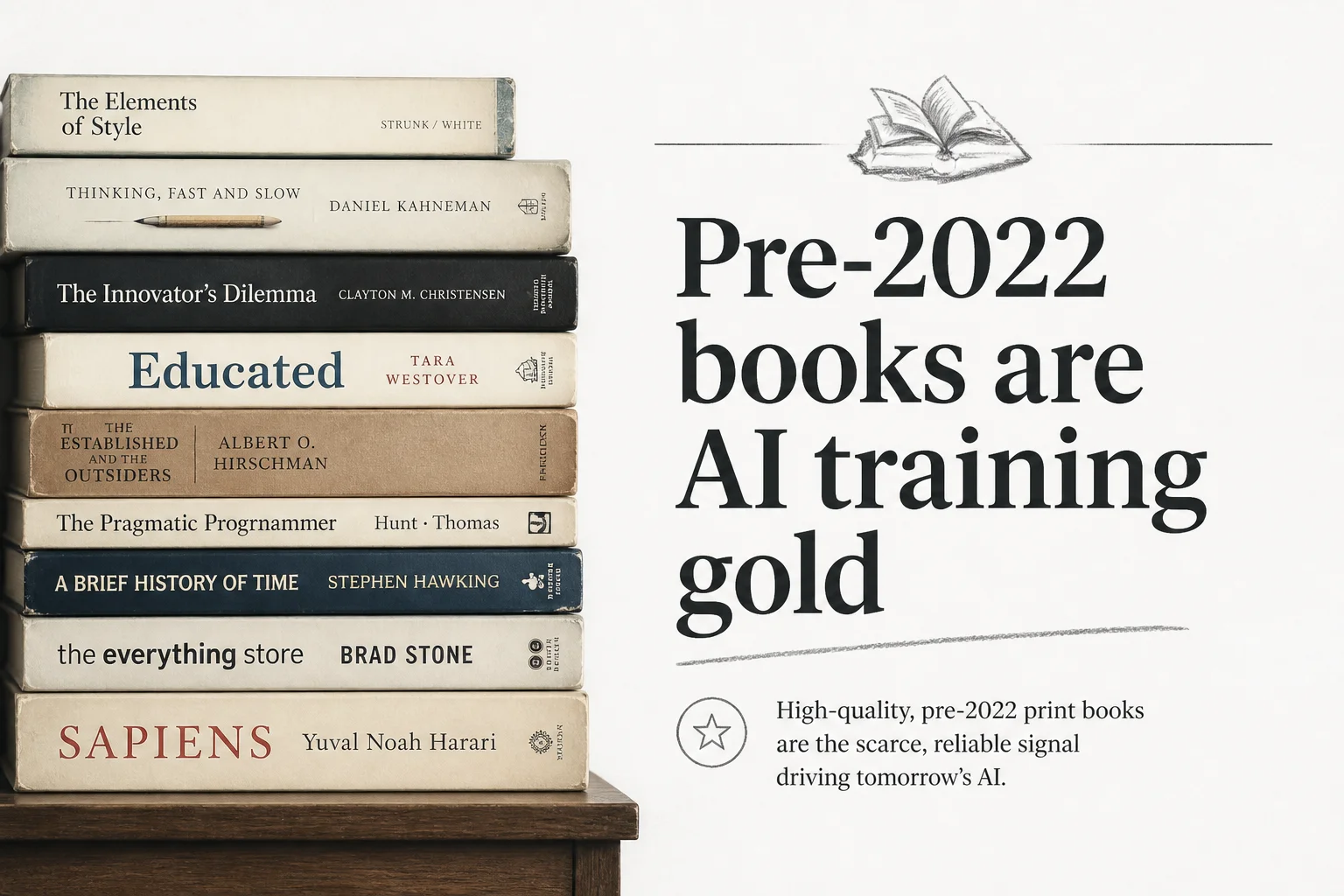
Used bookstores are seeing something strange. Shops that normally sell a dozen titles a week are moving hundreds, sometimes thousands. Buyers want pre-2022, low-circulation books with odd niche titles. Many owners suspect AI companies are behind it.
They might be right. And the legal path that made this hunt rational started with Anthropic's Project Panama.
Primary reporting: 404 Media on the used-book buying spree. Court docs: Authors v. Anthropic ruling (PDF). Settlement: AP on the $1.5B Anthropic settlement.
The Panama playbook
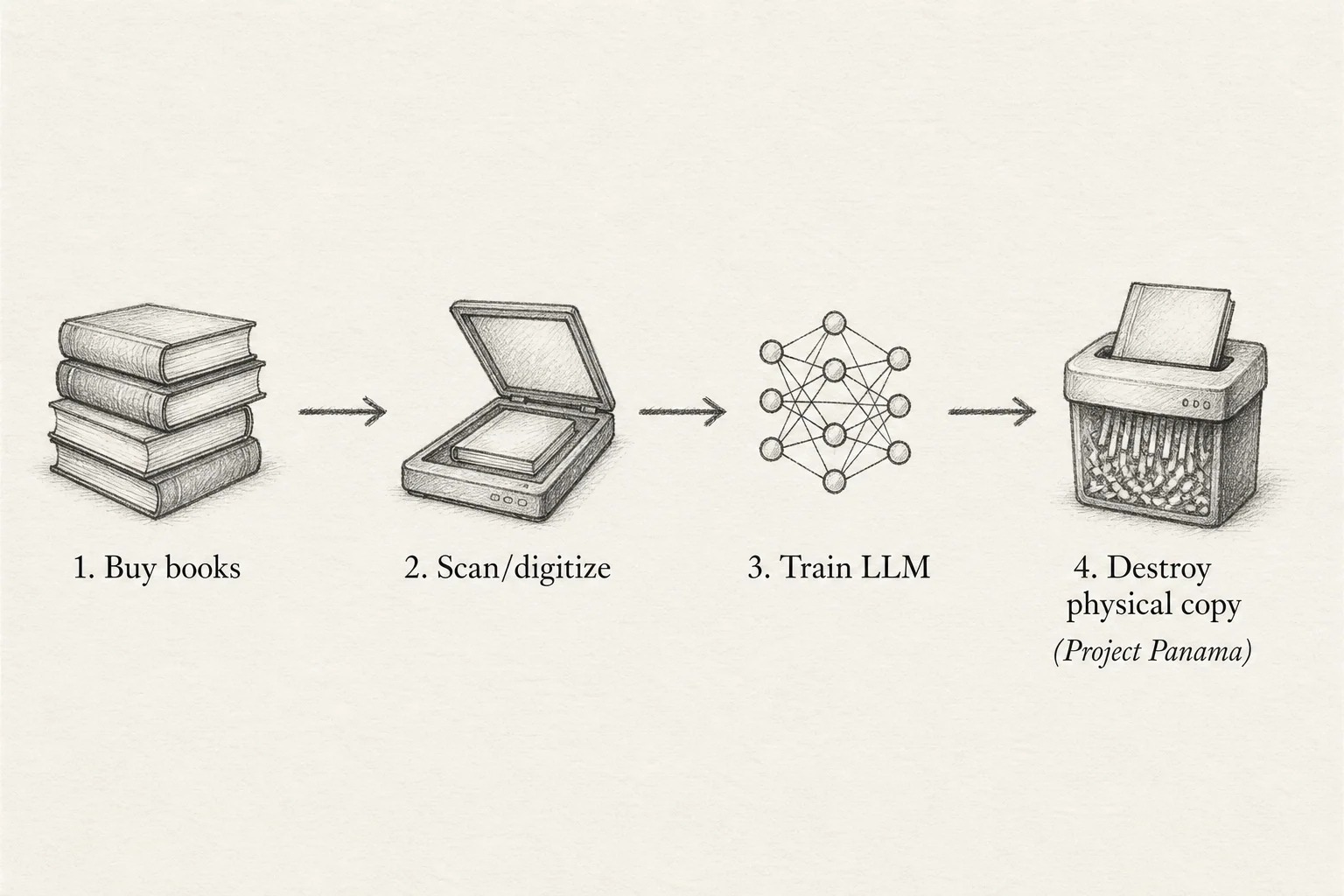
Court filings from 2025 described an internal Anthropic program called Project Panama. The workflow was blunt:
- Purchase physical books (millions of them)
- Scan and digitize
- Use the text for LLM training
- Often destroy the physical copies in the process
A federal judge ruled last summer that training on copyrighted books can be fair use when the books are legally acquired. Anthropic still paid a $1.5 billion settlement for using pirated copies (~$3,000 per book for claimed works). The company highlighted the fair-use piece; authors highlighted the piracy bill.
Either way, the precedent shifted incentives. If legal purchase + scanning is defensible, the scarce input becomes books nobody already scraped.
Why pre-2022 printed books specifically
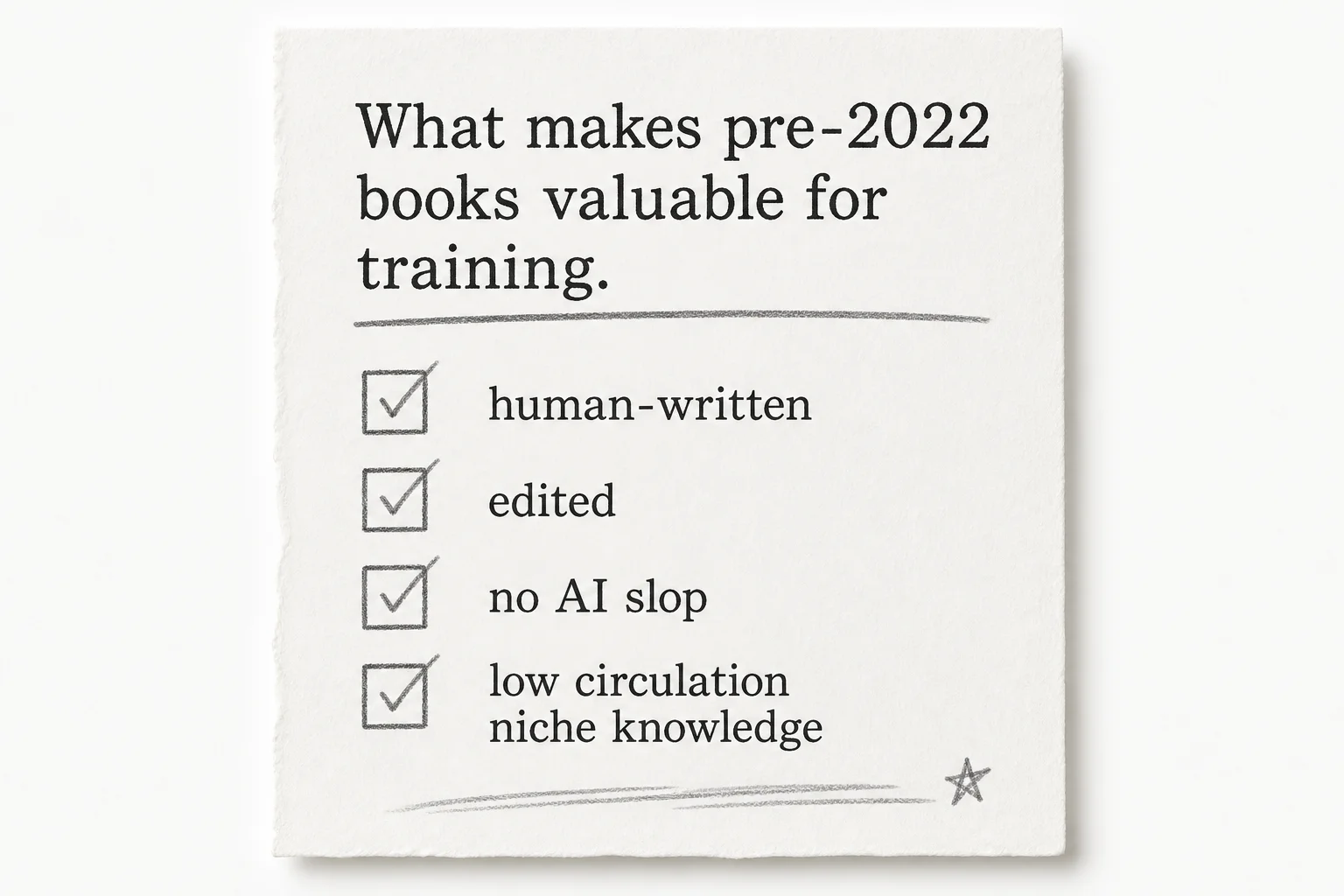
The web is filling with AI-generated text. Models trained on that slop can amplify it. Printed books from before the generative flood are treated as human-curated, edited, domain-specific knowledge.
404 Media quoted a book-metadata vendor pitch (since removed) that framed the value plainly: dense, authoritative text structured in ways crawlers do not replicate. ISBNdb pulled a landing page titled "Printed Books For Your LLM Dataset Needs" after public pushback, but the demand signal already leaked.
| Property | Pre-2022 printed book | Modern web crawl |
|---|---|---|
| Human editorial gate | Yes | Mixed |
| AI slop risk | Low | Rising |
| Niche domain depth | High in long tail | Thin or duplicated |
| Legal acquisition path | Buy + scan | Terms-of-service maze |
| Discoverability | Low circulation = overlooked | Already in Common Crawl |
What this means if you build with AI (not train foundation models)
Most of my clients are not buying pallets of obscure paperbacks. They still feel second-order effects:
RAG quality. If your private knowledge base mixes human docs with AI-generated drafts, retrieval quality drifts. Treat source provenance like a feature, not paperwork.
Licensing audits. Enterprise buyers increasingly ask where training data came from. Vendors with clean acquisition stories win procurement.
Long-tail expertise. Niche printed manuals, local regulations, and industry handbooks that never hit the web can be gold for domain agents. If you have them digitized, you are sitting on differentiation.
Ethics and optics. Bulk-buying used books while destroying copies reads cold, even when legal. Brand risk is real even when copyright law cooperates.
A practical takeaway for applied teams
Foundation labs chase terabytes. Applied teams should chase curated, attributable corpora:
- Scan your own SOPs, call transcripts (with consent), and deal histories
- Prefer human-reviewed sources over "write me a wiki with ChatGPT" dumps
- Tag documents with
source,created_at, andauthor_typein your vector DB metadata - Re-index when you detect synthetic drift in upstream content
/* Add to your chunk table or sidecar metadata */
source_type      /* human_authored | ai_assisted | unknown */
published_before /* date cutoff if you care about pre-slop text */
license          /* owned | licensed | public_domain */
The uncomfortable question
If the best remaining clean text sits on shelves in small bookshops, who gets paid? Authors won settlement money for piracy, not for legal bulk purchases. Used stores get revenue; original writers often do not.
That gap will keep generating lawsuits and weird market behavior. For builders, the lesson is simpler: provenance is becoming a moat. The model that sounds smart on generic web text is table stakes. The model (or RAG stack) grounded in verified human knowledge still wins niche work.
Need help designing a RAG corpus with clear provenance for ops or customer-facing agents? Book a free discovery call.