
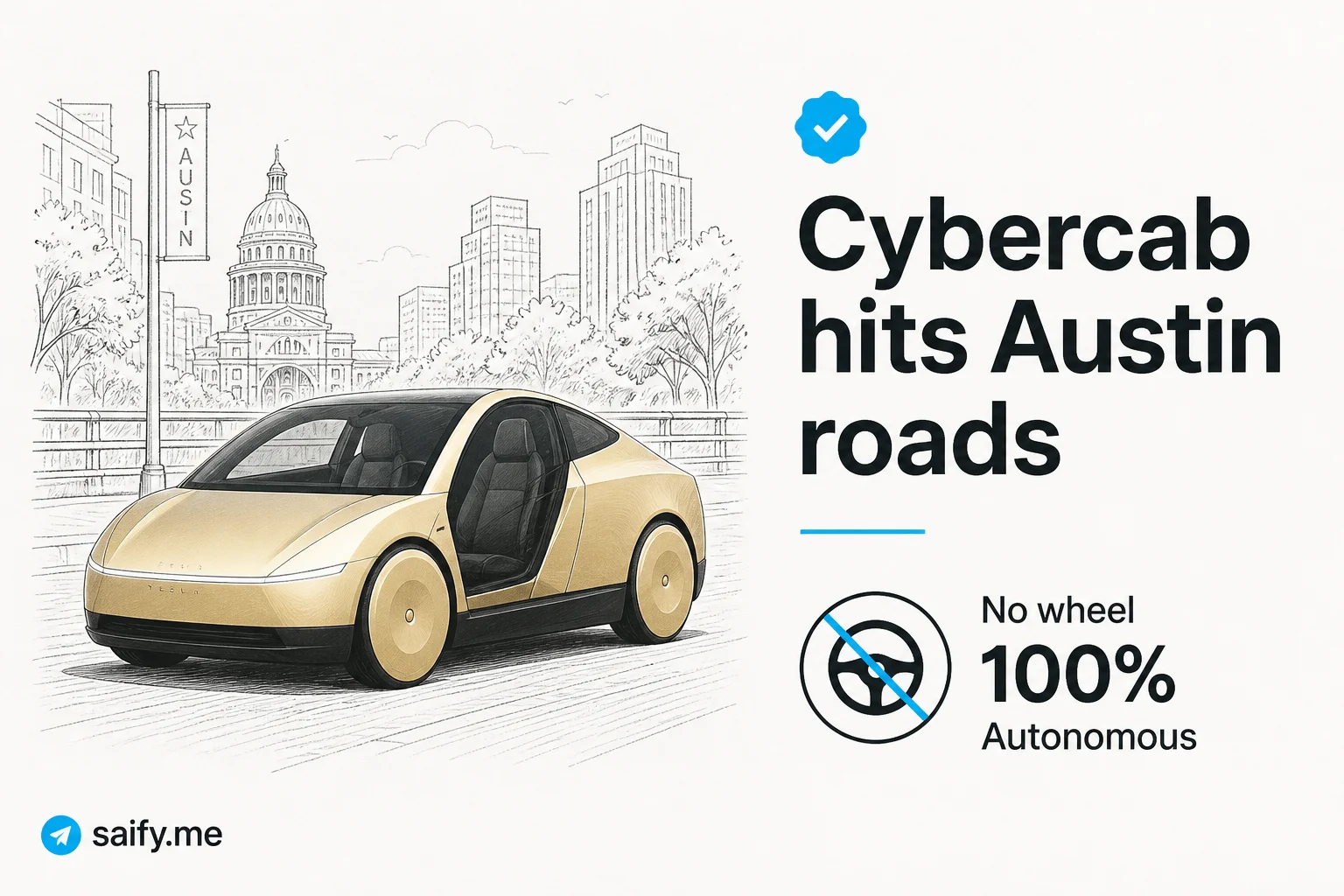
Tesla told employees the Cybercab hits Austin public roads in August 2026. First rides go to staff. A few days later, the golden two-seater joins the existing Robotaxi service that today runs mostly on retrofitted Model Ys.
The hard part is not putting a weird car on the street. It is proving you can run it without a human who can grab a wheel that does not exist.
What Tesla is actually launching
Reuters summarized The Information's report
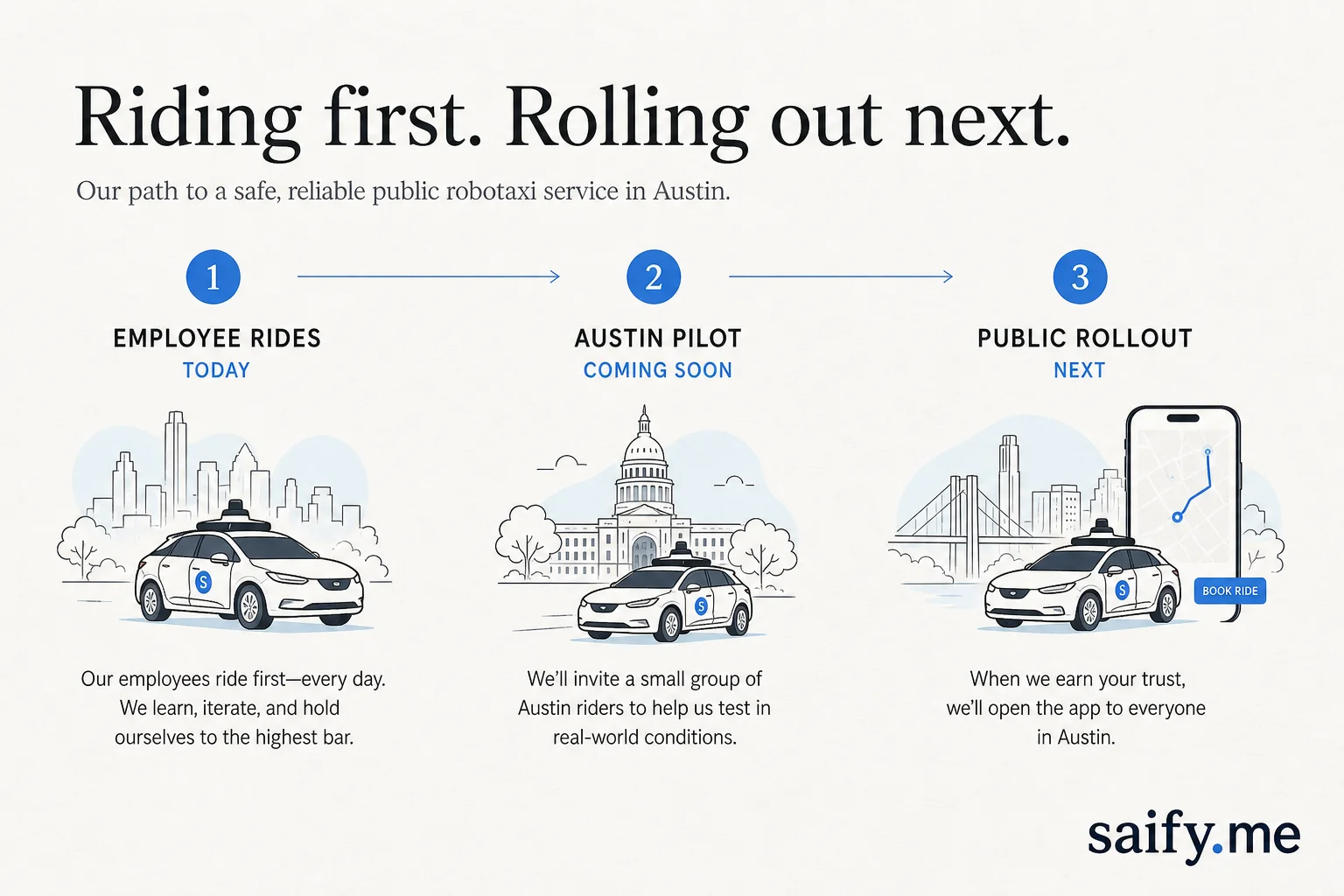
Tesla will start with employee trips on public roads in Austin, then fold Cybercabs into the paid Robotaxi app shortly after.
That sequence matters. Employee pilots are a pressure valve. They let you log edge cases, train first responders, and fix remote-assist workflows before a stranger rates you one star because the car hugged a curb.
Tesla has been running related prep for weeks:
- Test drives and private-campus employee rides since July
- Emergency training with Austin first responders on how to move a wheel-less vehicle (city spokesperson confirmed to The Verge)
- Production-version Cybercabs testing on public roads since June
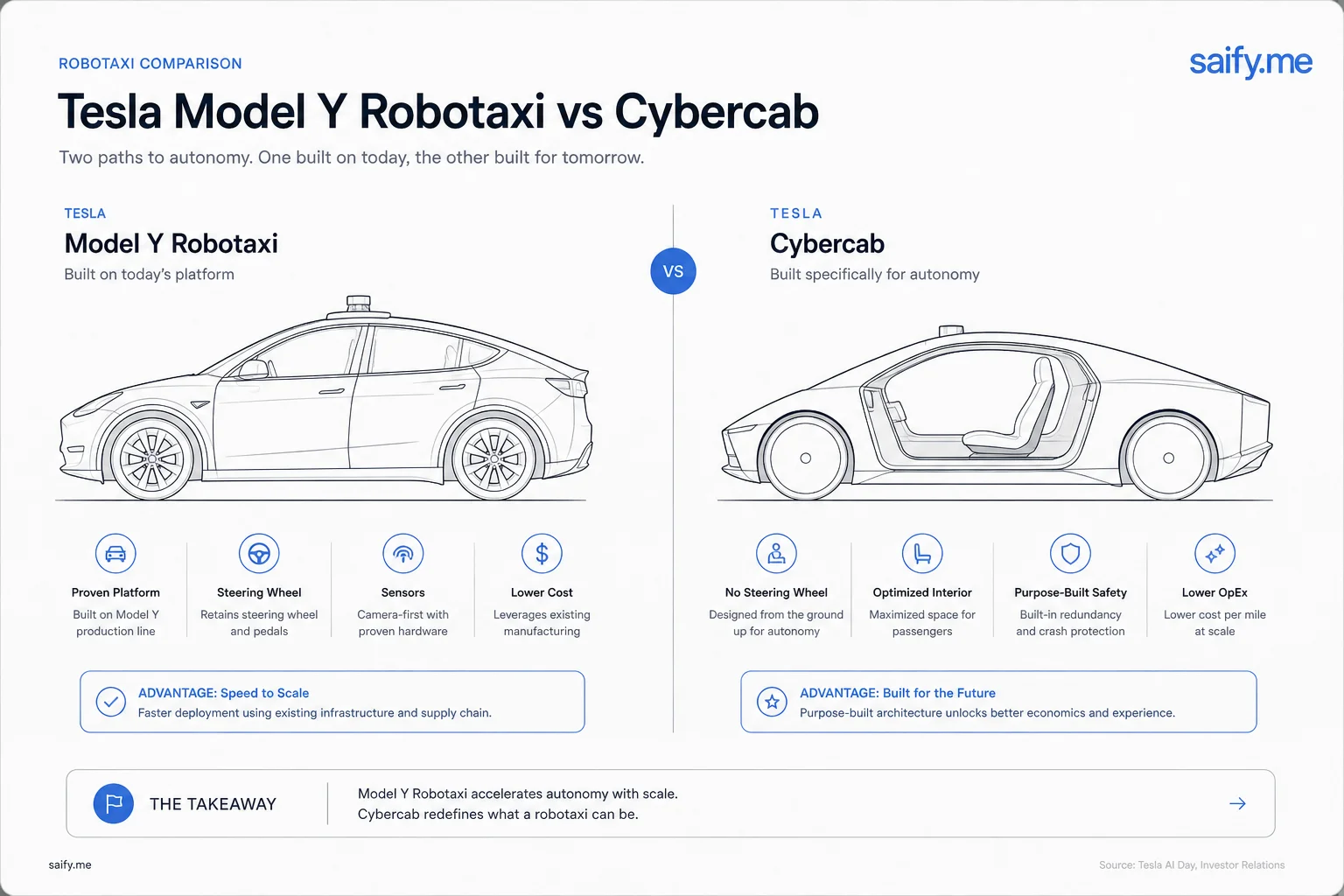
Cybercab vs Model Y robotaxi: why build a new body?
The Model Y fleet is a retrofit story. Cameras, compute, and FSD stack bolted onto a mass-market SUV that still has a steering wheel in the garage.
Cybercab is the opposite bet:
| Attribute | Model Y Robotaxi | Cybercab |
|---|---|---|
| Seats | Five (typical) | Two |
| Controls | Wheel + pedals in vehicle | None in production intent |
| Purpose | Fast fleet scale with existing line | Optimized for cost per driverless mile |
| Failure mode | Human could intervene | Remote ops only |
Electrek's Fred Lambert put it bluntly: without autonomy, Cybercab is "virtually worthless." I agree. The asset only pays back inside geofenced zones where the stack is validated.
That is fine if you are Waymo with years of city-specific mileage. Tesla is still early on the odometer by third-party counts cited in press coverage (hundreds of thousands of driverless miles vs Waymo's nine-figure totals). Austin reportedly had on the order of 186 Model Y robotaxis registered before Cybercab units arrived, per Carscoops.
Federal rules: Zoox took the exemption path
The Verge contrasted Tesla with Amazon's Zoox, which received an NHTSA exemption to charge for rides in a purpose-built robotaxi (capped at 2,500 vehicles per year) after demonstrating equivalent safety.
Tesla appears to be pursuing self-certification instead. That avoids the production cap but also skips the federal finding Zoox obtained. For a two-seat pod with no manual controls, the regulatory path is part of the product.
I am not saying one route is better. I am saying your autonomy program inherits the compliance story, not just the neural net.
What applied AI teams should steal from this launch
Most of my clients are not building robotaxis. The pattern still shows up everywhere you ship high-stakes automation:
1. Staged exposure beats big-bang GA. Employee-only, then paid public, mirrors how I roll out agent tools: internal dogfood, shadow mode, limited production traffic.
2. Hardware and policy are coupled. A wheel-less car is a product requirement and a legal filing. Your "fully autonomous" invoice parser is smaller, but the same question applies: what happens when it fails in a regulated workflow?
3. Remote ops are not a cheat code. Tesla uses remote monitors who can intervene. That is an ops cost line item. Budget it like GPUs, not like magic.
4. Milestones love marketing calendars. Tesla's Robotaxi account ran a promotion through August 23: more rides, better odds to attend the Cybercab launch event. Shipping cadence and hype cadence are linked. Plan comms when you ship agent features too.
Risks still on the windshield
- Scale: Volume Cybercab production is expected later in 2026, not thousands of units on day one.
- Safety narrative: Austin expanded service to more cities, but national scrutiny on robotaxi incidents has not gone away.
- Capability ceiling: Cybercab does not expand FSD's validated geography. It only changes the metal around the same stack.
The takeaway
Cybercab on Austin roads is a real milestone: the first Tesla vehicle designed without a steering wheel, entering a public robotaxi SKU. It does not close the mileage gap with incumbents or the federal exemption question.
If you are building applied AI, watch how Tesla sequences people, policy, and remote assist. That trilogy shows up in every production agent, just without butterfly doors.
Shipping automation where failure has a dollar or legal cost? Book a free discovery call and we can design rollout stages that do not require a steering wheel for your ops team either.