
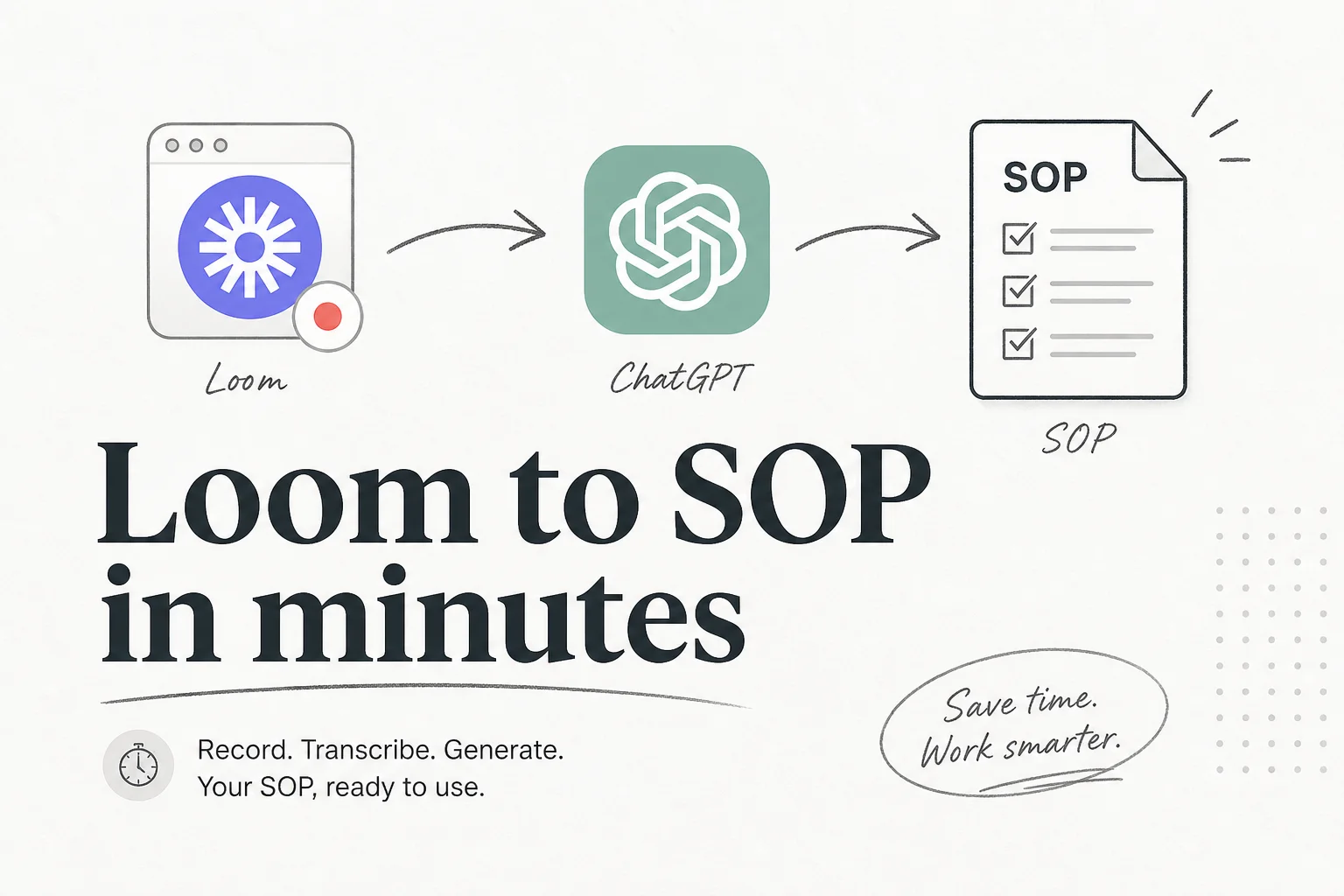
New hires should not learn your timesheet workflow from Slack archaeology.
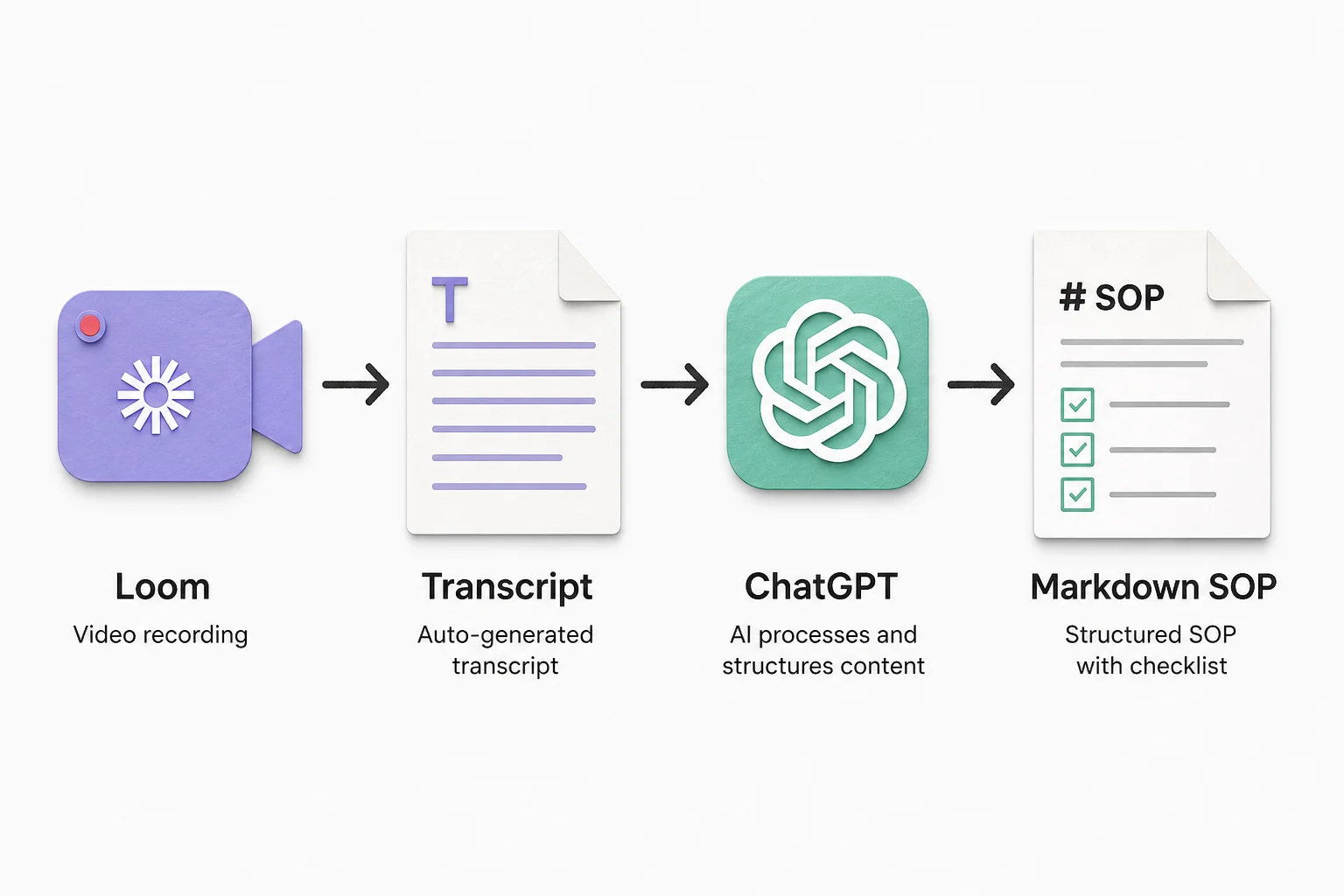
The Rundown's training guide this week walks through a pattern I use with clients: record once in Loom, transcribe, prompt ChatGPT, publish a checklist. No dedicated tech writer. No week-long documentation sprint.
If your team repeats the same clicks every Monday (reports, CRM updates, invoice exports), this is the fastest path from tribal knowledge to something searchable.
The five-step pipeline
The digest breaks it down cleanly. Here is the same flow with the failure modes I watch for.
1. Pick a repeatable task and record it
Choose work with a crisp definition of done: timesheet submitted, lead status updated, refund processed.
In Loom, narrate:
- Every click, including where people usually hesitate
- Decision branches ("if amount over $500, ask manager")
- Exceptions and error messages
- What "done" looks like on screen
Skip one-off heroics. SOPs are for tasks you want copied.
2. Clean the transcript in Loom
Raw transcripts include "um," wrong turns, and dead air. Loom's transcript editor lets you trim mistakes before export.
Garbage in still produces garbage out. Two minutes of editing saves twenty minutes of confusing steps downstream.
3. Paste into ChatGPT with a strict format ask
Drop the transcript into ChatGPT (or your internal assistant) with an explicit template:
Turn this Loom transcript into an onboarding SOP in Markdown.

Structure:
1. Purpose (2-3 sentences)
2. Links to systems and policies
3. Numbered steps (imperative voice)
4. Checklist the new hire can tick off

Audience: non-technical ops hire.
Keep steps atomic. Flag any step that needs manager approval.
The digest suggests Markdown because it pastes cleanly into Google Docs. I also like Notion when the team already lives there.
4. Fix gaps, then publish
AI drafts miss permission edge cases only your team knows. Run the SOP once yourself, or better, ask the newest hire to follow it cold.
Ship when they succeed with minor wording fixes, not missing steps.
5. Embed video where people work
Pro tip from the guide: in Notion, ask ChatGPT to format the page so the Loom embed plays inline. Video plus checklist beats either alone for visual learners.
See The Rundown's full walkthrough for the click-by-click if you want a template screen recording.
Example outline you can steal
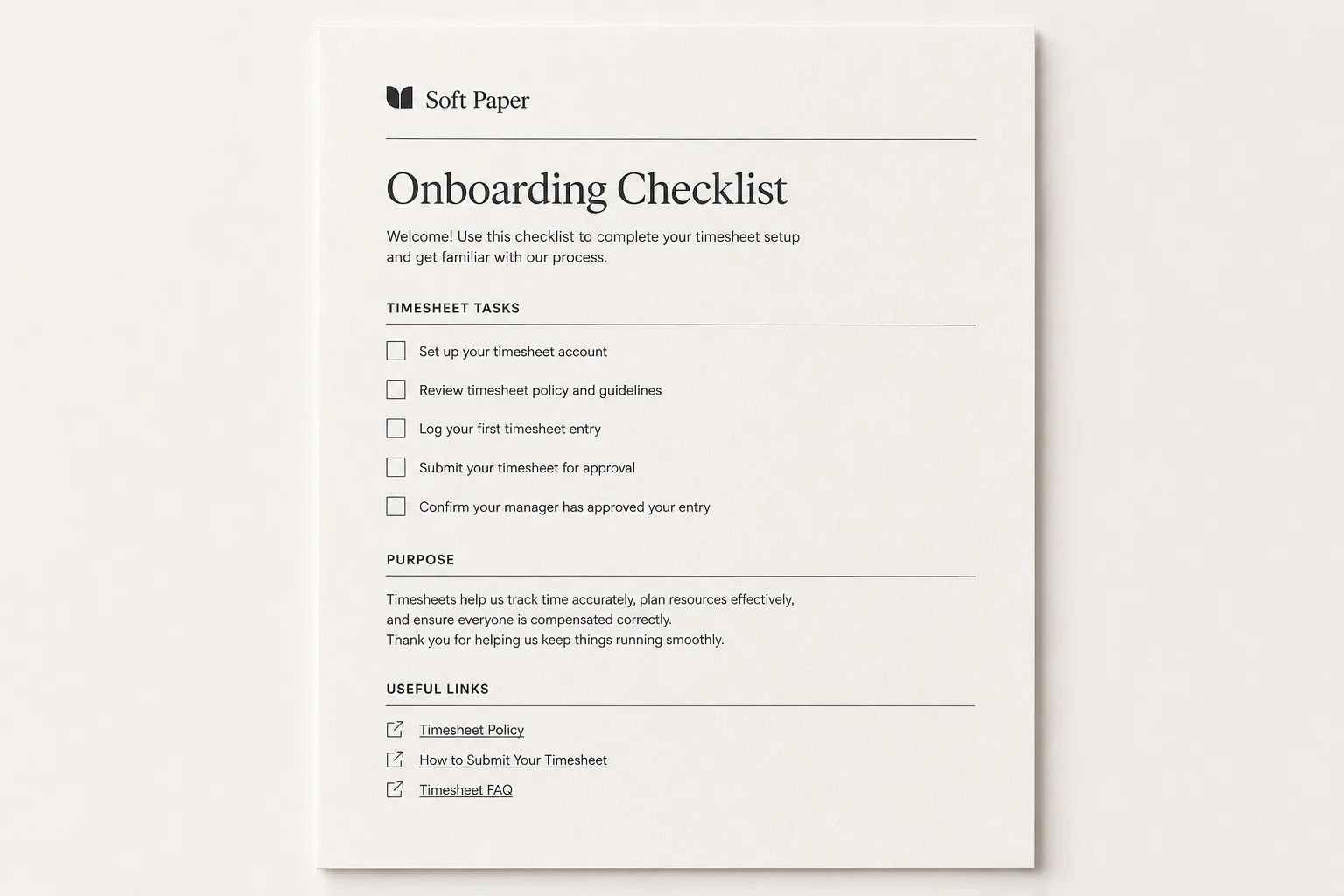
Here is a skeleton for a timesheet SOP:
| Section | Content |
|---|---|
| Purpose | Submit weekly hours by Friday 5pm so payroll closes without rework |
| Links | HR portal URL, policy PDF, Slack #payroll channel |
| Steps | Log in → select project codes → attach receipt scans → submit → screenshot confirmation |
| Checklist | [ ] All days filled [ ] Manager notified if OT [ ] Confirmation email saved |
ChatGPT fills the prose. You verify codes and names match reality.
Why this beats traditional documentation projects
Classic onboarding docs die because capture cost is too high. Loom removes the blank page. ChatGPT removes the formatting chore.
Pair with psychological reality: new hires fear looking dumb more than they fear the software. A private video plus checklist reduces Slack pings and cuts "how do I…?" loops that burn senior people.
From a marketing-ops angle (without hype): you are lowering cognitive load at the moment of performance, not adding another PDF nobody opens.
Limits and when to upgrade
AI SOPs are not compliance artifacts on day one. Do not treat ChatGPT output as SOX evidence without human review.
Upgrade path when:
- The task runs more than weekly at scale → automate with API or RPA
- Mistakes are expensive or irreversible → add approval workflows and test environments
- The UI changes every sprint → assign an owner to re-record monthly
Until then, Loom plus ChatGPT is enough to cut onboarding time materially. The digest claims half. My client projects often see the bigger win in fewer interruptions, not just faster first completion.
Tie-in to browser agents
In the same digest week, The Rundown highlighted ChatGPT's Chrome extension for DNS setup. That is the same philosophy: capture expert clicks, delegate the boring replay. SOPs document the path. Browser agents can eventually execute it. Start with docs you trust.
Need help turning ops tribal knowledge into automations that actually ship? Book a free discovery call.