
Talking-head demos are easy. Stable talking heads are hard.
Hands warp. Faces drift. Lip sync breaks after ten seconds. That is why most AI avatar products charge studio rates or hide behind cherry-picked clips.
LongCat-Video-Avatar 1.5 from Meituan's LongCat team is an open-source push toward production-grade audio-driven video. The May 2026 release upgrades the audio encoder to Whisper Large v3, adds 8-step distilled inference, and targets long-form stability, multi-character scenes, and stylized domains (anime, animals) without treating each as a separate product SKU.
For applied AI builders, the headline is practical: one image, one audio clip, one pipeline you can inspect, fork, and embed. Not a black-box API with a marketing landing page.
What changed in v1.5
The technical report frames v1.5 as engineering over architectural novelty. That is the right lens for shipping.
| Upgrade | Why it matters in production |
|---|---|
| Whisper Large v3 audio encoder | Better lip sync than the older Wav2Vec2 path |
| Step distillation to 8 NFE | Faster inference per frame at usable quality |
| RLHF and data curation | Less identity drift in longer clips |
| Multi-stream audio | Two speakers with separate audio inputs |
| Video continuation | Extend existing footage without a hard cut |
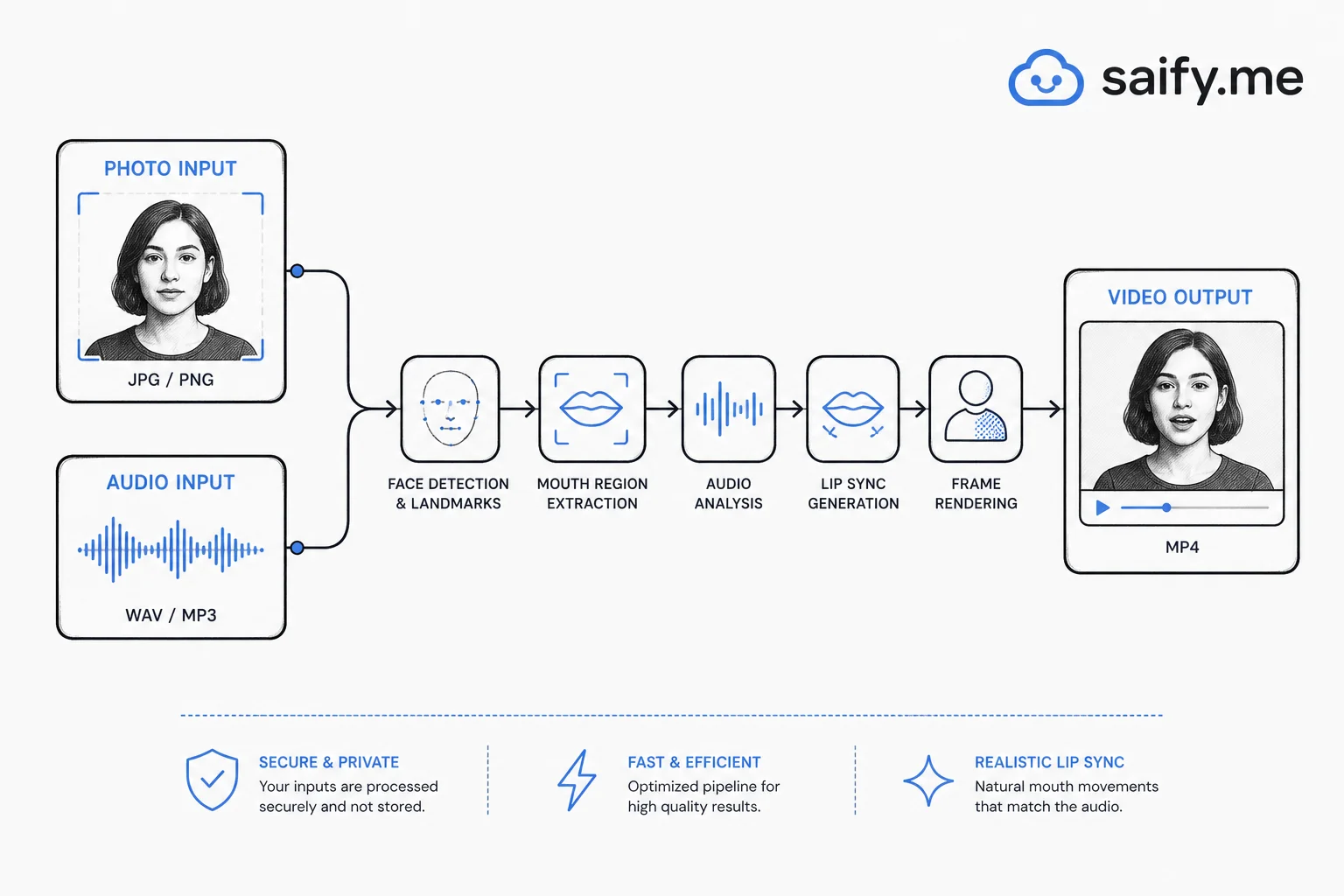
Native task modes include Audio-Text-to-Video (AT2V), Audio-Text-Image-to-Video (ATI2V), and continuation from prior frames. You can drive a broadcast-style host, an e-commerce product narrator, or a stylized character with the same stack.
Weights on Hugging Face and the project page document human evaluations against closed systems (HeyGen, OmniHuman 1.5, Kling Avatar 2.0 cited in the report). Open weights do not automatically beat closed APIs on every shot. They do let you audit failure modes instead of guessing.
How to run it (and the flags you cannot skip)
Clone the unified repo:
git clone --single-branch --branch main https://github.com/meituan-longcat/LongCat-Video
cd LongCat-Video
Download base and avatar weights:
pip install "huggingface_hub[cli]"
huggingface-cli download meituan-longcat/LongCat-Video --local-dir ./weights/LongCat-Video
huggingface-cli download meituan-longcat/LongCat-Video-Avatar-1.5 --local-dir ./weights/LongCat-Video-Avatar-1.5
For v1.5 avatar runs, the README is explicit:
- Use
--model_type avatar-v1.5(Whisper encoder, not the v1.0 Wav2Vec2 default). - Use
--use_distillfor the 1.5 distilled checkpoint. Required for the fast 8-step path. - Optional
--use_int8if you are squeezing VRAM.
Skipping --use_distill on a v1.5 job is a common "why is this slow and weird" failure.
Hardware honesty: 40 GB and 44 seconds per second
Self-hosting is not a laptop experiment. Community reports and the Alpha Signal digest align on rough economics:
| Resource | Typical expectation |
|---|---|
| VRAM | ~40 GB GPU class |
| Compute ratio | ~44 s GPU time per 1 s output video (varies by settings) |
| Hosted alternative | fal.ai API for teams without H100/A100 inventory |
That ratio matters for product planning. A two-minute onboarding video is not "run it overnight on a MacBook." It is a scheduled GPU job or an API invoice.
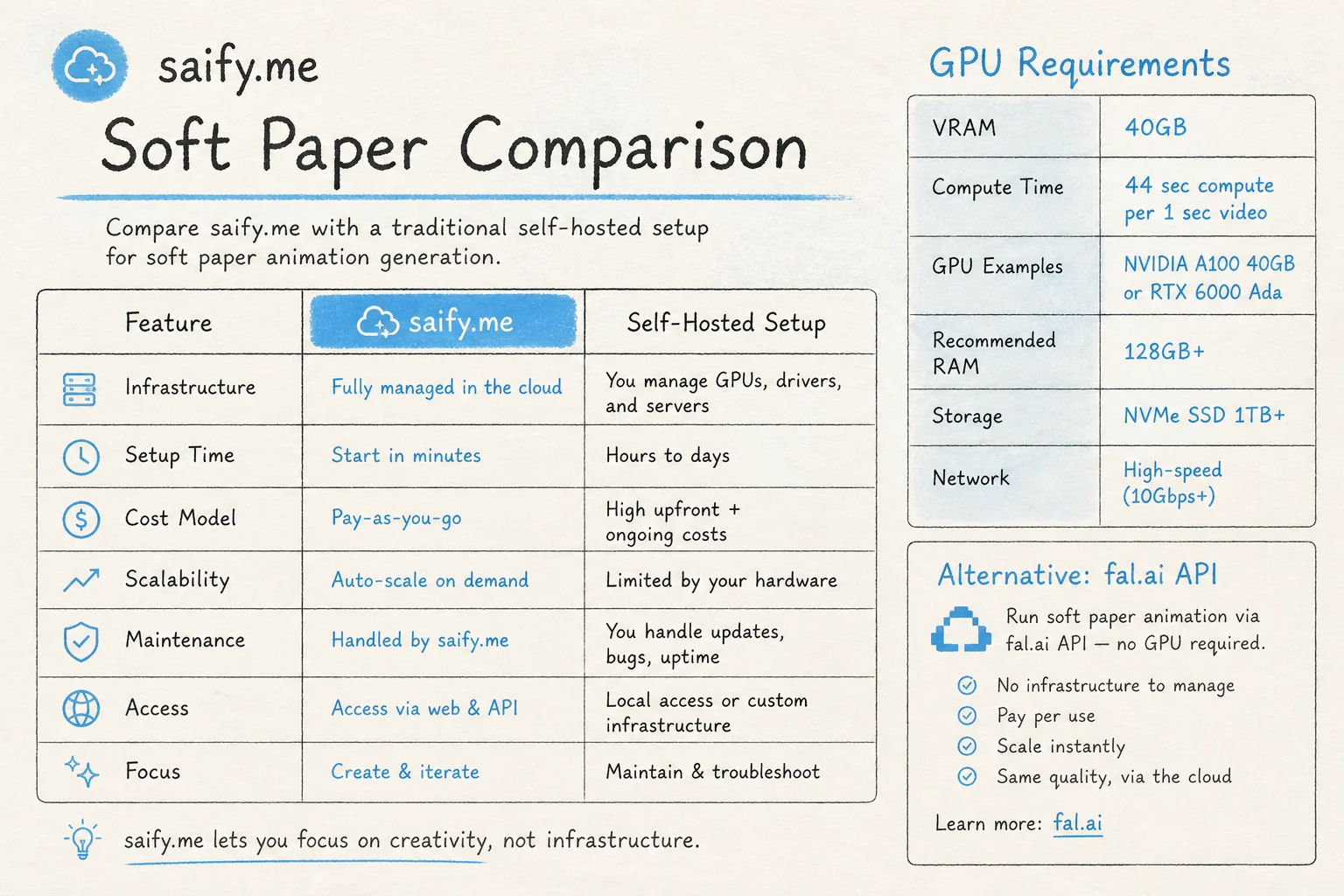
If your use case is occasional marketing clips, API offload often wins on total cost. If you are generating thousands of personalized outbound videos inside a CRM workflow, owning GPUs can still pencil out. Run the math with real clip length and concurrency, not demo durations.
Use cases that fit open avatar stacks
Where I would prototype LongCat first:
| Use case | Fit |
|---|---|
| Personalized sales outreach | Photo of rep + recorded script |
| Multilingual dubbing with same face | Separate audio streams per language |
| E-commerce product explainers | Still product hero + voiceover |
| Internal training | Slide avatar instead of full video crew |
| Stylized characters | Anime or animal avatars without a separate vendor |
Where I would stay cautious:
- Legal and consent for real people's faces (same bar as any voice clone stack).
- Broadcast lip-sync scrutiny where a single frame error fails QC.
- Real-time conversational avatars (this is batch video generation, not sub-200 ms TTS).
I have written separately about voice cloning economics in Fish Audio S2.1 Pro and consent stacks. Avatar video adds another layer: you are cloning motion and identity, not just audio.
LongCat vs closed avatar APIs
| Dimension | LongCat-Video-Avatar 1.5 (open) | Typical closed avatar SaaS |
|---|---|---|
| Weights | Inspectable, MIT-licensed | Black box |
| Infra | You operate GPUs or pay fal.ai | Vendor-hosted |
| Customization | Fork training and plugins | Template library |
| Lip sync quality | Competitive in paper benchmarks | Often polished UX first |
| Time to first pixel | Higher (weights + flags) | Lower (upload and click) |
Open source does not mean free at scale. It means control. For regulated industries or brands that cannot send executive headshots to a third party without a data agreement, inspectable weights are a feature.
What I would test before betting a sprint
- Identity lock: 60-second clip with head movement. Score drift at 10 s, 30 s, 60 s.
- Hand and object stress: scenes with gestures or product holds (classic failure zone).
- Multi-speaker: two audio streams, verify mouth assignment does not swap.
- Continuation: extend a clip and check seam artifacts.
- Cost model: compare fal.ai per-minute pricing vs owned GPU at your target volume.
If you pass those gates, wire generation behind a job queue with explicit retry and human QC on exports. Avatar video is still generative media, not deterministic rendering.
Building voice or video agents for ops, sales, or customer-facing flows? Book a free discovery call. I help teams choose between open weights, hosted APIs, and the consent gates that keep avatar pipelines shippable.